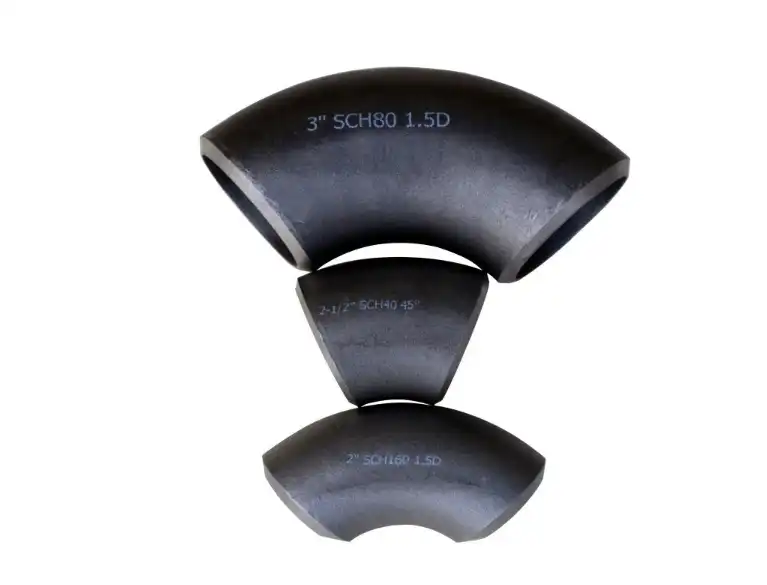
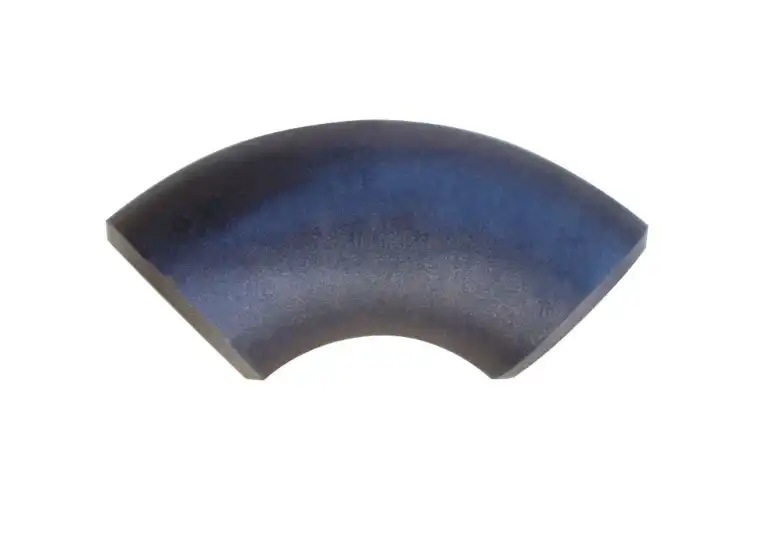
Concentric Reducer Carbon Steel: What Are the Best Factory Sources?
The best industrial sources for Concentric Reducer Carbon Steel parts are approved ones that have a history of meeting ASTM A234 WPB standards, have ISO 9001 certification, and can make advanced products. Leading providers usually can send to over 40 countries each year and can handle 16,000 tonnes of cargo each year. They also do full-dimensional tests according to ASME B16.9 standards. Oudi, which has been in business in Cangzhou since 1998, sets the standard for this. They make sure that each reducer meets important performance standards for oil, chemical, natural gas, and water conservation applications by combining special equipment manufacturing licenses with thorough non-destructive testing protocols. They do this while keeping prices low for international procurement teams.
Understanding Carbon Steel Concentric Reducers
What Defines a Carbon Steel Concentric Reducer?
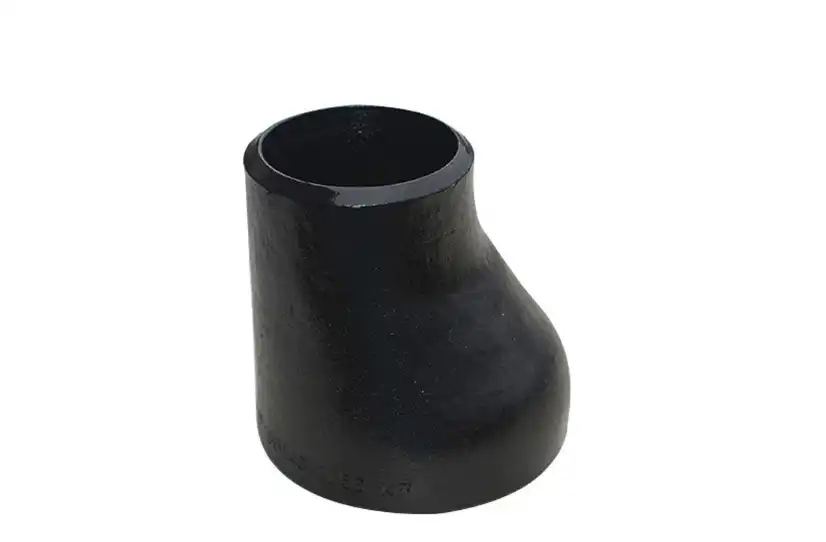
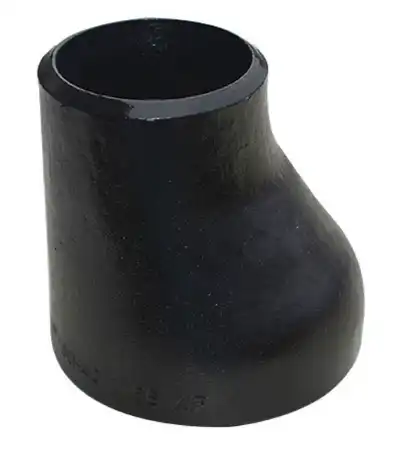
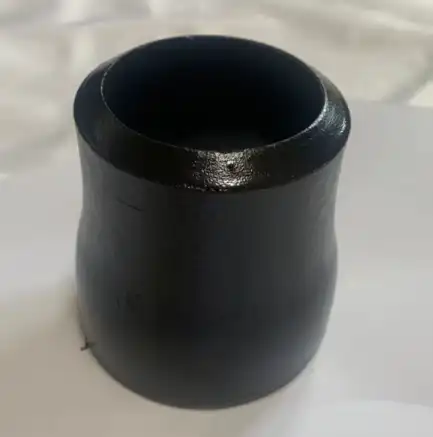
Concentric Reducer Carbon Steels are fittings that are intended to easily change pipe sizes along the same axis. This keeps fluid dynamics as smooth as possible. While eccentric types move the centres to keep horizontal lines from getting air pockets, concentric types stay perfectly aligned along the x-axis. This makes them perfect for placements in vertical pipes where gravity helps flow direction. The cylindrical shape reduces the speed evenly around the whole circle, making speed changes smoother without any dead spots.
Technical Specifications and Standards
These important butt-weld pipe fittings are described in ASTM A234 WPB/WPC standards, and their face-to-face sizes are controlled by ASME B16.9 rules. Carbon steel is popular because it has a high strength-to-weight ratio, lasts a long time, and doesn't rust or break when exposed to high temperatures and pressures, which are common in industrial settings. Material grades usually have low carbon content (up to 0.30%), which makes them easy to join without heating first. Manganese additions make the metal more flexible and resistant to pressure. Depending on the grade, the tensile strength can be anywhere from 60,000 psi (415 MPa) to 85,000 psi.
Standard pressure rates work with schedules from STD to XXS, and the wall thickness stays the same all the way through the reduction body. For widths less than 22 mm, bevel angles of 37.5° ±2.5° make deep entry welding easier. Dimensional compliance makes sure that parts made by different companies can be used interchangeably, which is a key part of multi-source buying plans.
Industrial Applications and Core Advantages
Much use of Concentric Reducer Carbon Steels is due to their ability to fix big problems in the business. Controlled turbulence reduction can help with hydraulic instability, but sudden changes in width can damage the system and make it less effective. When it comes to vertical support lines, where structural stability is still very important, equipment safety is especially clear. These parts are very good at withstanding high temperatures; they work well from -29°C to 427°C, making them useful for steam systems, cold uses, and moving high-temperature hydrocarbons. One of the best things about carbon steel is that it is the most cost-effective option compared to stainless steel or alloys in non-corrosive work settings.
Petroleum refining, chemical processing plants, natural gas distribution networks, water conservation projects, power production facilities and boiler making businesses all use these fittings a lot. Their ability to work in a variety of industries, such as construction and shipping, shows that they can handle different pressure levels and installation needs.
Comparing Carbon Steel Concentric Reducers with Other Materials and Types
Carbon Steel vs. Stainless Steel Performance
The choice of material has a big effect on both the total costs and the dependability of operations. While stainless steel grades are more expensive to buy, Concentric Reducer Carbon Steel is easier to work with and welds better than stainless steel grades. Even though stainless steel is better at resisting rust in harsh chemical conditions, carbon steel is still the best choice for hydrocarbon services, steam systems, and water uses where coatings on the outside are enough to protect the steel. Standard working temperatures don't change the tensile strength profiles much, but stainless steel versions keep their properties over a wider range of temps.
When corrosion doesn't require expensive materials, buying teams that are watching their budgets find that carbon steel is 40–60% cheaper than stainless steel versions. When hundreds of fittings are needed for big building projects, this cost benefit gets even bigger.
Concentric vs. Eccentric Reducer Applications
Knowing the main difference between Concentric Reducer Carbon Steel and eccentric reducers can help you avoid making mistakes during installation that cost a lot of money. Concentric types line up the centres of the entry and exit, making symmetrical flow patterns that work well for vertical pipes because gravity keeps air from getting trapped. One side of an eccentric reducer is shifted flat (top or bottom), and it is designed to work with horizontal pump flow lines to stop cavitation, which is a main reason why impellers break. When you use concentric reducers on horizontal pressure lines, air gets trapped at the tip. This damages the pump and makes the system less efficient.
The difference in shape leads to different hydraulic behaviours: circular designs work best for distributing pressure in vertical risers and downcomers, while eccentric designs control the buildup of vapour in horizontal runs. Choosing the right type based on direction and working conditions has a direct effect on how long equipment lasts.
Alternative Material Considerations
Alloy steel reducers are better at resisting creep at temperatures above 427°C, while copper and copper-nickel versions are better for use with saltwater and other acidic fluids. Each type of material meets different chemical compatibility needs, but carbon steel is the most common material for general-purpose industrial pipe because it is easy to find, easy to make, and has been used for decades and proven to work well.
How to Choose the Best Carbon Steel Concentric Reducer for Your Project
Critical Selection Parameters
To choose the right Concentric Reducer Carbon Steel, you need to carefully think about the project's pipe shapes, pressure levels, and carbon steel types. Start by matching the reducer end sizes to the plans of the pipes next to them. Making sure that the wall thicknesses are compatible stops stress concentration points from happening during operation. When choosing a pressure class, you need to think about the maximum allowed working pressure (MAWP) plus safety margins, which are usually 20 to 25 per cent above standard operating conditions. It is important to look into how changing temperatures affect the qualities of materials, especially in systems that go through a lot of thermal shocks.
Calculating the flow speed tells us if the rate at which the width changes causes too much turbulence or damage. Best practices in the industry say that changes should be made slowly to keep Reynolds numbers in a good range.
Certification and Checking the Quality
Mill test records (MTRs) that show the chemical makeup and mechanical qualities of a material are important for safety and compliance. Traceability and accountability are made sure by checking plant credentials like ISO 9001 quality management systems, ASME code stamps, and special equipment production licenses. In the People's Republic of China, a special equipment-making licence means that the government will closely watch over production.
Demanding paperwork packages should have measurement inspection reports, NDT results from ultrasonic or radiographic methods, and positive material identification (PMI) certificates that prove the grade is correct. These steps of validation stop fake materials from getting into supply lines, which is a constant risk in global buying.
Supplier Evaluation Criteria
Global B2B clients need to look at a supplier's dependability through a number of different views. Order fulfilment is based on production ability. For example, Oudi, which produces 16,000 tonnes of goods every year, can handle large project needs without any delivery delays. Lead times depend on whether the item is in stock or needs to be made to order. Standard sizes usually ship within two to three weeks, but custom-designed standards may take six to eight weeks.
Customer support services set high-quality providers apart from average ones. Technical advice during the development of specifications, quick contact across time zones, and problem-solving after the sale all show that the relationship is committed. When you need OEM capabilities and customisation choices for a project that standard catalogue items can't meet, like non-standard measurements, special material grades, or special testing needs, you can use these.
Top Factory Sources and Reliable Suppliers of Carbon Steel Concentric Reducers
Identifying Reputable Manufacturers
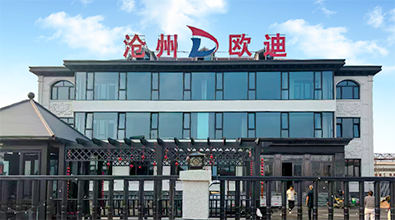
Finding makers with a history of meeting the needs of tough industrial markets is the first step in getting high-quality Concentric Reducer Carbon Steels. Established in 1998, Cangzhou Oudi Pipe Manufacture Co., Ltd. is a great example of the high-quality manufacturing needed for important pipe uses. Our building is 66,600 square meters and is in Mengcun Hui Autonomous County, which is known as China's "fitting capital." It is also 120 kilometres from Tianjin Airport and has direct highway access, which makes foreign shipping easy.
Certification, Authentication and Supplier Verification
Verifying seller certifications needs more than just accepting copies of documents. Get in touch with certification groups directly to make sure that your ISO registration is still current and covers what you need it to cover. When possible, compare the licence numbers for special tools with those in government records. Ask for client references from companies that work in similar fields and on similar-sized projects. Then, make some phone calls to find out how satisfied customers are with the quality of the product, how quickly it was delivered, and how helpful the technical support staff is.
Direct Factory Sourcing vs. Distributor Networks
Strategies for buying things have to weigh the pros and cons of working directly with factories against the ease of working with distributors. By cutting out middlemen and their markups, factory-direct buying usually saves between 15 and 30 per cent on costs. This is especially helpful for large purchases or projects that need to be done over and over again. Talking directly with production teams makes it easier to talk about customisation and solve technology issues without losing any information in translation. Lead times may be a little longer than with dealer stock programs, but this difference gets smaller when you order unique specs that need to be made, no matter where the parts come from.
Procurement Logistics and Order Planning
Order lead times usually range from 3 to 8 weeks, but they can be longer or shorter based on the difficulty of the specifications and the production schedule. Delivery windows are shorter when popular sizes are in stock, but they are longer when custom sizes, special materials, or non-standard testing needs are required. The benefits of buying in bulk go beyond lower unit prices. They also include priority ordering for production, dedicated resources for quality assurance, and flexible payment terms for long-term customers.
Maximising Value: Best Practices for Procurement and Long-Term Use
Quality Assurance and Inspection Protocols
Making sure the quality of a product needs strict inspection steps, such as checking the dimensions against the specifications in the buy order. Coordinate measuring tools (CMM), callipers, and radius gauges are all used to make sure that the dimensions meet ASME B16.9 standards. Material testing through PMI proves the correctness of the grade and stops the use of lower-quality alloys. Ultrasound, x-rays, or magnetic particle inspection, based on the needs, are all types of non-destructive testing that can find problems inside things that can't be seen with the naked eye.
Shipments must come with certification paperwork, such as material test records that link heat numbers to individual production batches. This makes it possible to find the root cause of problems that happen in the field years after the system was installed. We keep detailed records that help with lifetime quality control for the installed base of our clients.
Installation and Maintenance Best Practices
Service life is greatly increased by proper placement. Check the alignment before soldering to avoid creating forces that speed up fatigue cracking. Check the welding procedure standards (WPS) for the material grade to see what kind of preheating is needed based on the carbon equivalent numbers and the temperature outside. Post-weld heat treatment (PWHT) might be needed to meet pressure tank codes or for thick-wall uses.
As part of routine maintenance, the outside covering should be checked and reapplied regularly to stop rusting from the atmosphere. During planned shutdowns, an internal check finds erosion patterns, rust pitting, or deposit buildup that needs to be fixed. Common problems to avoid include not enough support, putting too much stress on the pipe, heat expansion and contraction cycles that are higher than expected, and changes in fluid chemistry that cause rust processes that were not expected.
Industry Trends and Future Considerations
As manufacturing technology keeps getting better, Concentric Reducer Carbon Steel products become more consistent and cost less. Automated welding systems make procedures more consistent while cutting down on the cost of labour. Three-dimensional modelling and computational fluid dynamics (CFD) models help find the best reducer shapes for each job, with the least amount of erosion and turbulence. Sustainability efforts push material optimisation. For example, lowering wall thickness when analysis allows lowers the amount of raw materials used and the pollution caused by shipping without affecting safety limits.
As the need for digital paperwork like 3D models, electronic MTRs with blockchain proof, and IoT-enabled tracking throughout supply chains grows, procurement pros should be ready for it. As businesses adopt digital transformation strategies, these new technologies make things clearer and make lifetime asset management easier.
Conclusion
To find good makers of Concentric Reducer Carbon Steels, you have to find a balance between scientific requirements, checking the supplier's certification, and evaluating their ability to do the job. The best plant sources have ISO 9001 certification, rights to make special equipment, and a history of exporting to tough industrial markets. Outstanding suppliers are different from average suppliers because they have more production capacity, better testing tools, and more thorough quality systems. With a 26-year history of production, a yearly capacity of 16,000 tonnes, and service for more than 300 users around the world, Oudi has the reliability and technical know-how needed for important piping uses. To be successful at procurement, you need to carefully evaluate suppliers, check their quality, and form partnerships with manufacturers who are dedicated to ongoing growth and customer happiness.
FAQ
What is the primary difference between concentric and eccentric reducers for carbon steel pipelines?
The main difference between these fits is the centerline orientation. Concentric Reducer Carbon Steels line up the middle of the inlet and exit, making a cone-shaped shape that works well for vertical pipes where uniform flow patterns improve hydraulic performance. When you use an eccentric reducer, the centres are moved apart so that one side stays flat (on top or bottom). This is done so that the top-flat shape stops air pockets from building up on horizontal pump flow lines, which can damage the impeller and cause cavitation. If you choose the wrong type based on the orientation of the pipe, it can cause practical problems like machine failure and less work getting done.
How can I be sure that the licenses that carbon steel reducer companies give me are real?
Verify certifications by getting in touch with the organisations that issued them. ISO registrars keep public records that prove the validity and scope of registrations. When you can, compare the licence numbers for special tools with records from the government office. Ask for client examples from similar businesses and conduct due research interviews to look at quality, delivery, and support experiences. Third-party inspection services, such as SGS, can do independent audits of your manufacturing capabilities and product checks before they are shipped. This is especially important for qualifying your suppliers for the first time or for large orders.
Can I order custom-sized concentric reducers directly from factories?
Reliable makers let you customise a lot more than just the measurements shown in their catalogues. Custom services include non-standard size combinations, wall thickness requirements, special material grades, changed edge angles, and marking systems that are made just for the project. For special manufacturing, the minimum order quantity is usually between 50 and 200 pieces, but this depends on how complicated the specifications are. Lead times are 2 to 4 weeks longer than for normal goods because tools need to be prepared and quality control tests need to be done. We keep technical support teams on hand to make sure that unique designs are made as cheaply and easily as possible.
Partner with Oudi for Premium Carbon Steel Concentric Reducer Solutions
Oudi offers approved Concentric Reducer Carbon Steels that are made to meet ASTM A234 standards. These are backed by ISO 9001 certification and special equipment production licenses, which make sure they meet international quality standards. Our modern NDT testing tools, ability to make 16,000 tonnes of products every year, and 26 years of experience in manufacturing help companies in over 40 countries in the oil, chemical, natural gas, and water conservation industries. As a seasoned manufacturer of Concentric Reducer Carbon Steel, we offer full customisation services, cheap factory-direct pricing, and expert support to help you meet the needs of your project from the initial planning phase to delivery.
To talk about your pipe needs, email our engineering team at oudi-04@oudiguandao.com. We offer full material tracking, dimensional inspection records, and the ability to change order amounts to fit the needs of your project. Because we are close to Tianjin Port, foreign supplies run smoothly, and our self-management import-export authority makes paperwork and customs procedures easier. Request a quote today to see for yourself why Oudi has been a valued partner for industry clients around the world since 1998.
References
1. American Society of Mechanical Engineers (2020). ASME B16.9: Factory-Made Wrought Butt-Welding Fittings. New York: ASME Press.
2. ASTM International (2021). ASTM A234/A234M: Standard Specification for Piping Fittings of Wrought Carbon Steel and Alloy Steel for Moderate and High Temperature Service. West Conshohocken: ASTM International.
3. Nayyar, M.L. (2019). Piping Handbook, 8th Edition. New York: McGraw-Hill Education.
4. Singh, R. & Kumar, S. (2018). "Performance Analysis of Concentric and Eccentric Reducers in Industrial Piping Systems." Journal of Pressure Vessel Technology, 140(4), pp. 041202-041210.
5. Mokhatab, S., Poe, W.A., & Mak, J.Y. (2019). Handbook of Natural Gas Transmission and Processing: Principles and Practices, 4th Edition. Oxford: Gulf Professional Publishing.
6. International Organisation for Standardisation (2015). ISO 9001:2015 Quality Management Systems — Requirements. Geneva: ISO Central Secretariat.

Need help finding the right solution with our experts. Please contact us.
SINCE 1998 Your Reliable Pipeline Manufacturer