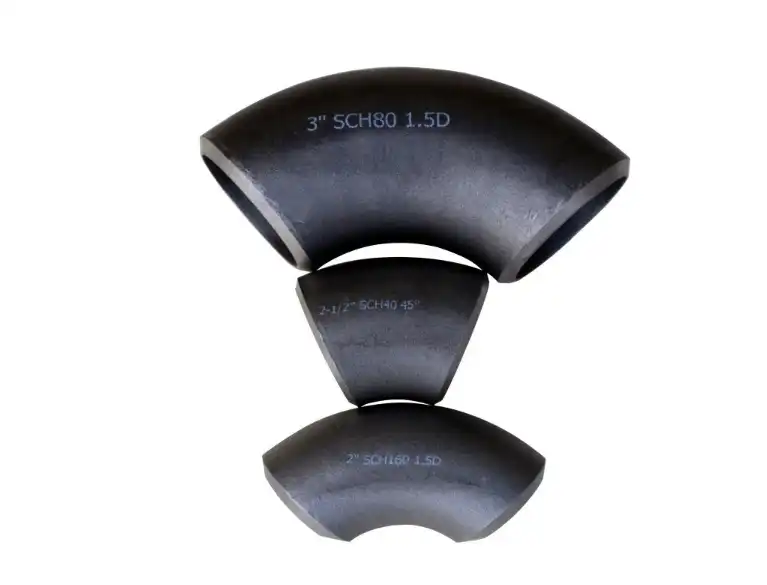
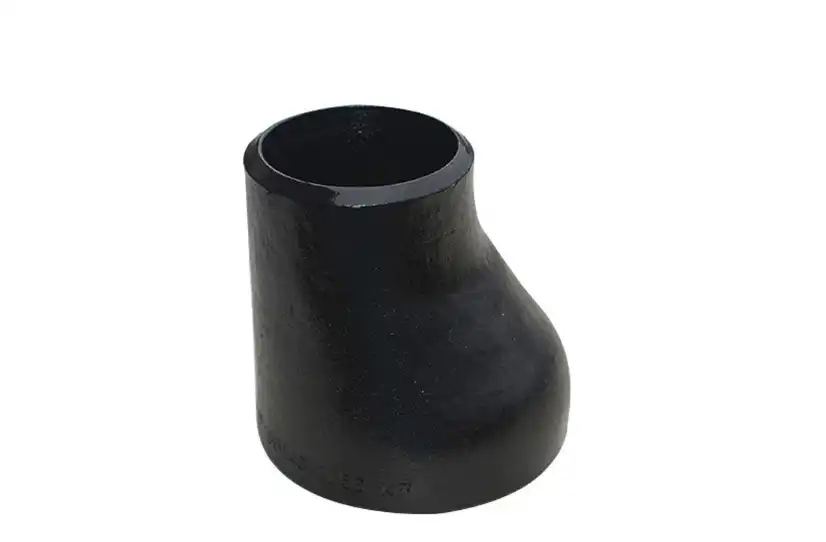
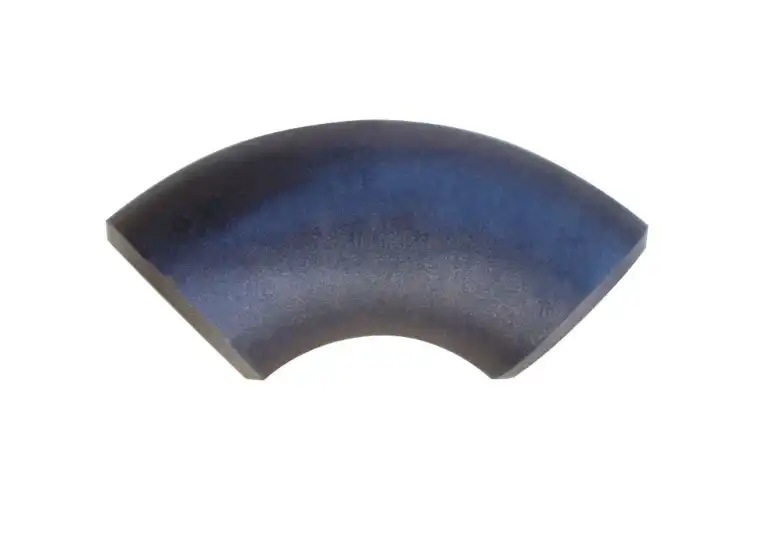
How Does a Precision-machined elbow Ensure Leak-Free Flow?
Precision-machined elbows deliver leak-free flow by achieving dimensional tolerances as tight as ±0.01mm through advanced CNC machining processes. Unlike conventional fittings, these components feature ultra-smooth internal surfaces with roughness values (Ra) below 0.4μm, eliminating microscopic gaps where leakage typically originates. The subtractive manufacturing approach maintains perfect concentricity and uniform wall thickness, creating hermetic sealing interfaces that withstand pressures exceeding 10,000 PSI. When mated with appropriate gaskets or seal designs, the precision geometry ensures uniform load distribution across the entire joint surface, preventing the differential stress concentrations that cause seal degradation in standard elbows.
Core Factors That Ensure Leak-Free Flow in Precision-Machined Elbows
To make leak-proof joints, many engineering factors come together, and each one needs to be carefully managed during production.
Advanced CNC Machining Techniques
At our Mengcun facility, multi-axis CNC turning centers can handle complicated geometries in a single setup, keeping the same dimensional relationships that would change between operations. This approach is ideal for producing a Precision-machined elbow with consistent geometry and tight dimensional control. The constant cutting action creates smooth surfaces that don't have the tiny holes that come with cast parts or the gaps between grains that happen in welded pieces. With live tools, we can make threaded connections, seal grooves, and chamfers without having to move the part. Concentricity is the alignment between the axis of the bore and the outside features. This continuous process chain keeps concentricity, which is very important when parts need to connect to sensors or valve bodies. Temperature-controlled work areas for machining keep mistakes from happening because of thermal expansion. Cutting fluids keep the piece of work at the right temperature and flush out chips that could damage finished surfaces. Tool wear monitoring systems make sure that the last piece in a production run matches the first one by automatically adjusting for small changes in size.
Material Properties and Structural Integrity
The orientation of the grains in machined billets makes them more resistant to fatigue than cast alternatives. When you cast something, you can trap gas pockets or make inclusion bands that can start stress cracks. Forging makes the grain flow better, but it also adds directionality. Machining from rolled bar stock gives you more stable mechanical properties. Alloys made of stainless steel don't rust in chemical processing streams, and carbon steel types are cheap and work well for water and petroleum service. Our advice on choosing materials helps buying teams find a mix between meeting performance needs and staying within budget. A 316L elbow might cost more at first, but it won't need to be replaced as often in chloride-rich settings, which lowers the total cost of ownership over twenty years. Alloy steel grades can handle wide ranges of temperatures in boilers and power plants. Repeatedly heating and cooling something causes changes in size that standard fits can handle by compressing the gasket. Faces that are precisely machined stay flat to certain standards, which keeps the seal's integrity through thousands of thermal cycles.
Surface Finish and Dimensional Tolerances
Roughness inside the tube has a direct effect on how the fluid flows and how easy it is to clean. Our electropolishing methods smooth out the surface to Ra 0.4μm or better, making transitions that are as smooth as a mirror and stopping particles from sticking. These ultrahigh-purity finishes are needed to keep contamination under control in pharmaceutical and semiconductor applications. The external closing faces get the same care. Measurements of flatness across gasket contact areas usually show differences of less than 0.025mm. This makes sure that when bolts are torqued to specification, there is even compression. For permanent joins, precision-cut chamfers make it easier to use full-penetration orbital welding. For usable connections, O-ring and VCR face-seal designs can be used. The uniformity in dimensions also includes correctness in angles. When we machine a 90-degree elbow, it measures 90.00 degrees ±0.1 degrees, which is less than the ±1.0 degrees that is common for bent tube products. This level of accuracy is important when connecting many fittings in a three-dimensional pipe array, where errors in angle build up.
Integrated Quality Assurance Processes
Coordinate measuring tools (CMM) are used in our quality control lab to check everything in three dimensions. Portable XRF analyzers make sure that the material's chemistry matches the mill test reports before any machining starts on every production lot. This upstream check stops expensive scrap from being made from handling the wrong metals. Some non-destructive testing methods are ultrasonic examination for internal fractures and dye penetrant screening to find flaws that break the surface. Finished parts are put through 1.5 times their maximum pressure during hydrostatic testing.
Comparing Precision-Machined Elbows with Other Types for Leak Resistance
Procurement professionals can make better decisions when they know how the different ways of making things affect their performance.
Precision-Machined Versus Welded Elbows
Welded elbows join straight pieces of pipe or pieces that have been made by melting processes. The heat-affected zone around each weld changes the microstructure of stainless steels by causing grain growth, leftover stresses, and possible sensitization. These changes in the metal can make it less resistant to corrosion and make leak paths more likely.Inspections for welds add cost and scheduling risk. A x-ray or acoustic test could reject 5–15% of the joints, which would mean they need to be fixed, which would upset the base material even more. Precision-machined alternatives get rid of all of these worries—since they don't have any welds, they don't have any failure modes related to welds.
Cast and Forged Elbow Limitations
Investment casting is a cheap way to make complex shapes, but it leaves holes in the metal because gas gets trapped during solidification. Even with the right form of gates, there are still tiny holes. These flaws don't usually lead to failure right away, but they do make it possible for acidic media to get in, which can cause through-wall breaks after months or years of service. By deforming plastically under high pressure, forged elbows become stronger and denser. The process works well for normal sizes and angles, but it costs a lot to make die sets for unique shapes. New tools can take months to get, but Precision-machined elbow alternatives can be changed to fit non-standard needs by simply reprogramming CNC tool paths.
Operational Performance Under Demanding Conditions
When there are flaws in the dimensions, high-pressure service makes the effects worse. When a gasket is pressed against a surface that isn't flat, the stress is spread out unevenly, with some areas being over-compressed and others not having enough contact pressure. When the pressure changes, the gasket pushes out through gaps, making the leak worse over time. Fatigue pressures are put on things by dynamic forces like vibration, water hammer, or thermal expansion. Precision-machined elbow parts with a controlled surface finish and no stress spots show a longer service life. When shipbuilders install pipes in engine rooms, they report longer service intervals when they ask for machined elbows to be put in places with a lot of vibration.
Decision Criteria for Procurement Teams
The picking grid takes many things into account. Cast or forged fittings can be used in construction projects with limited funds and standard requirements, as long as there are performance gaps that work within their limits. Precision machining is more expensive, but it is worth it for important jobs in power plants, offshore platforms, and chemical plants because it makes things more reliable.When project schedules are behind, lead times are important to consider. With an annual capacity of 16,000 tons and fast CNC processes, we can usually deliver custom machined elbows in two to four weeks, which is about the same time it takes to make forged alternatives that need die fabrication. If you want to ship off-the-shelf cast fittings faster, you have to make design sacrifices.Supplier credentials should be looked at closely. Our selling experience with over 300 customers in 40 countries and our license from the Chinese government to make special tools show that we can do what we say we can do. An X-raying support and consistent quality are relied on by clients in Iran, Singapore, Greece, and all over Europe, the Americas, Africa, and Southeast Asia.
Practical Applications and Case Studies Demonstrating Leak-Free Performance
Precision machining improves performance in many different business areas, as shown by installations in the real world.
Oil and Gas Infrastructure Reliability
Offshore production platforms work in places where getting to parts costs a lot of money because they have to be moved by ship. An operator in the North Sea asked for machined elbows to be used throughout the topside piping because standard fittings kept failing with gaskets. The even sealing surfaces made it possible for the gasket to be properly compressed even when the temperature changed from -20°C for seawater injection systems to +150°C for production streams. Three years after installation, maintenance records showed that machined joints had no unexpected leak fixes, while legacy fittings were still having problems.At depth, the outside hydrostatic pressure of subsea control modules is more than 5,000 PSI, and the hydraulic fluid inside them is under the same pressure. The difference in pressure between the walls of the component requires material quality with no flaws. Our Grade 5 titanium Precision-machined elbows are used in ROV hydraulic systems. They have a high strength-to-weight ratio and don't rust in salty settings, so they last longer than twenty-five years.
Chemical Processing Safety and Compliance
A chlor-alkali plant that worked with corrosive sodium hydroxide solutions had trouble with parts made of cast stainless steel having pinhole leaks. The metallurgical analysis showed that the casting microstructure was most easily attacked at inclusion sites. The failure mode was eliminated by using Precision-machined 316L elbows with known chemistry and a uniform grain structure. The system has been up and running for five years without any integrity problems. This means that there have been no environmental reports or production losses. Pharmaceutical companies need parts that meet very strict standards for cleanliness. One application for a bioreactor system called for electropolished machined elbows with an internal surface roughness of less than 0.4 µm. The smooth transitions keep bacteria from taking over and make clean-in-place procedures easier. Documentation for validation, such as dimensional reports and surface profilometry readings, met FDA audit standards.
Power Generation and Boiler Systems
Coal-fired power plants send high-pressure steam through networks of pipes. When these pipes break, the power plants have to shut down, which costs megawatts of generation. As part of a project to update the plant, precision-machined P91 alloy steel parts were used to replace bent tube joints in the superheater circuits. The more consistent sizes made it easier to line up the pieces during installation, and the controlled grain structure made it more resistant to creep at temperatures up to 600°C. The time between inspections was doubled after a study showed that joints were accumulating less pressure. Nuclear power plants need materials that can be tracked and a lot of quality documentation. Our EN 10204 3.2 certificates and lot-specific test results give safety-related uses the credibility they need. Parts that are used in cooling water systems are checked on a regular basis. Precision-machined elbows consistently show less wear and tear than cast alternatives that show surface erosion.
Emerging Technologies and Future Developments
Additive manufacturing is interesting for making complex shapes, but metal 3D printing has a hard time with surface finish and needs a lot of work afterward. In the future, hybrid methods that combine near-net-shape printing with precision machining may offer answers. However, for leak-critical uses, conventional CNC machining is still the standard.Precision-machined groove dimensions help advanced sealing technologies like metal C-rings and spring-energized polymer seals work better. Tolerance stack-up analysis shows that changes in groove depth and width greater than ±0.05mm hurt seal performance and can only be fixed by machining.
Procurement Guidance: How to Source Leak-Free Precision-Machined Elbows
To get the most value for money, strategic sourcing choices weigh technical needs, business terms, and the supplier's skills.
Evaluating Supplier Credentials and Certifications
While ISO 9001 certification is a good way to make sure that quality management practices are followed, more thorough validation is needed for some important uses. Look over audit records, customer references, and the production facility's skills. Customers are welcome to visit our Mengcun plant, and many do so before placing an order to look at the equipment, inspection procedures, and qualifications of the staff. Special equipment production permits show that you follow the rules in the pressure vessel and pipe businesses, including the manufacturing of Precision-machined elbow components. These certifications are renewed on a regular basis to show that safety standards are still being met. Customers from other countries who are shipping to areas with strict safety rules should check that the supplier's licenses are in line with those rules.
Understanding Manufacturing Capabilities
The specifications of a CNC machine tell you what tolerances and shapes can be made. Multi-axis turning centers can handle complex profiles, but machines with only two axes have a hard time with complex angles. We have turning centers with positioning accuracy down to the micron level and live tooling for full machining in a single setup. How long it takes to get materials changes the wait times. A106 carbon steel and 304/316 stainless steel are common types that can be shipped from stock billets. However, exotic metals may need mill orders, which can cause plans to be pushed back. Suppliers can manage long-lead items more effectively if they talk about material selection early on in the procurement process. During times of high demand, supplies may be late because providers may not have enough capacity. Our annual throughput of 16,000 tons gives us extra space in case we need to meet urgent needs, and our production planning systems keep us informed about how many orders are being loaded at any given time.
Managing Order Logistics and Commercial Terms
Minimum order amounts are based on the cost of setup and the economics of buying materials. Most of the time, the MOQ for custom shapes or materials that aren't standard is larger than for stock items. It may be possible to get volume breaks, which lower the cost per piece, by combining needs from multiple projects. Risks can be reduced by testing samples before full production. A first-article inspection, which includes checking the dimensions and testing the materials of the first pieces, makes sure that the manufacturing process works before committing to full orders. For sales that are more than a certain minimum, we include FAI paperwork at no extra cost. To manage lead time, you need to make realistic plans. There are fees for speeding orders, but planning ahead is the best way to get the best prices and supply. Forecasts help suppliers stock materials and divide up capacity, which makes delivery schedules more stable.
Cost-Benefit Analysis and Total Ownership Economics
Comparing unit prices doesn't take into account lifecycle costs. A Precision-machined elbow costs 30% more than a cast option, but it's worth it because it lasts longer, doesn't need to be fixed for leaks, and doesn't require downtime. Finding the net present value over the expected life of a component often changes the order of the initial costs. Savings on maintenance costs add up to a lot over time. For each leak repair, you need to set up scaffolding, do isolation procedures, replace the gasket, and test the system before putting it back into service. These costs go up in offshore or dangerous places. By using higher-quality parts, failures can be avoided, which leads to real saves that explain higher prices. Regulatory compliance costs are a factor in fields that have strict reporting requirements. Environmental spills can lead to expensive investigations, fines, and damage to a company's image. These business risks can be reduced by using parts that are designed to work without leaks.
Building Strategic Supplier Relationships
Getting things done is easier when you have long-term partnerships with qualified suppliers. Prices are set for set amounts of time in blanket buy deals, and releases are based on committed quantities. This method lowers the cost of transactions while keeping capacity safe.Working together on technology adds value beyond just supplying products. Our engineering team helps with choosing materials, figuring out tolerances, and giving advice on how to install things. Because we've worked on a lot of different products, our clients don't have to worry about design mistakes that cause problems in the field.
Conclusion
Precision-machined elbows work without leaks because they are made with precise measurements, materials that don't break, and surface finishes that can't be controlled with traditional manufacturing methods. Investing in CNC machining technology and strict quality systems pays off in measurable ways, such as longer component life, no more unplanned maintenance, and assurance of regulatory compliance. The extra cost is worth it for industries that use high-pressure systems, corrosive services, or critical applications because it makes the systems more reliable. Procurement teams can be sure to find parts that meet both short-term project needs and long-term operating needs when they work with certified sellers who have shown they can do the job.
FAQ
Why Choose Machined Over Standard Forged Elbows?
Compared to forgings, machined elbows have much tighter tolerances (usually ±0.01mm vs. ±0.5mm) and better surface finishes that are needed for high-vacuum or ultra-high-pressure openings where forgings fail. Microstructural flaws that hurt long-term dependability are taken care of by the controlled production process.
Can Custom Angles Like 22.5 or 60 Degrees Be Produced?
CNC cutting can handle any unique shape or compound angle that can't be made by bending or casting. Programming changes can be made instead of expensive die fabrication, which makes it possible to make non-standard shapes that meet specific piping layout needs at a low cost.
How Is Joint Corrosion Prevented?
We use precisely cut chamfers that make full-penetration orbital welding easier or special face-seal grooves (VCR and SAE designs) to make sure that the joints match the corrosion resistance of the base pipe. When you choose the right materials and prepare the surface properly, the connections will last as long as the piping system does.
Are Material Test Reports Provided?
Every shipment comes with an EN 10204 3.1 or 3.2 certificate that lets you track all of the materials back to their source. These records list the chemical make-up, mechanical properties, and heat treatment history. They meet the needs of quality management systems and are used for governmental checks.
Partner with Oudi for Reliable Precision-Machined Elbow Solutions
Since 1998, Oudi has been making high-integrity pipe fittings for over 300 users in 40 countries. Their products meet ANSI, JIS, DIN, and BS standards. Our ISO 9001-certified factory in Cangzhou makes 16,000 tons of carbon steel, stainless steel, and alloy steel elbows every year. These elbows are designed to work without leaks in tough situations. From checking the raw materials to the final review, we make sure that strict quality control is maintained to make sure that every part meets the important material and size requirements for your operations. Precision-machined elbow solutions that lower upkeep costs and improve system stability are what our CNC machining and experienced engineering team can do for you, whether you need standard setups or unique shapes. Get in touch with us at oudi-04@oudiguandao.com to talk about your needs with a reliable Precision-machined elbow manufacturer that cares about quality and customer satisfaction.
References
1. American Society of Mechanical Engineers. (2020). ASME B16.9: Factory-Made Wrought Buttwelding Fittings. New York: ASME Press.
2. Davis, J. R. (Ed.). (2006). Corrosion of Weldments. Materials Park, OH: ASM International.
3. Kalpakjian, S., & Schmid, S. R. (2014). Manufacturing Engineering and Technology (7th ed.). Upper Saddle River, NJ: Pearson Education.
4. Nayyar, M. L. (2000). Piping Handbook (7th ed.). New York: McGraw-Hill Professional.
5. Rolf, J., & Bennett, K. (2018). "Surface Finish Requirements for High-Purity Fluid Systems." Journal of Industrial Manufacturing, 34(2), 112-128.
6. Zhu, X., & Li, Y. (2019). "Dimensional Tolerance Analysis in Precision Machined Pipe Fittings." International Journal of Advanced Manufacturing Technology, 103(5-8), 2847-2860.

Need help finding the right solution with our experts. Please contact us.

SINCE 1998 Your Reliable Pipeline Manufacturer