Cost-effective carbon steel elbow for High Pressure Pipelines
Selecting the right pipe components for high-pressure pipeline projects in the oil, chemical, or natural gas industries can make or break your budget and operational efficiency. A Cost-effective carbon steel elbow strikes a good mix between steady performance and cost-effectiveness. It is an important part where pipes change direction in tough circumstances. These parts have to be able to handle a lot of pressure and be priced reasonably so that buying teams can buy them without sacrificing safety or durability. Knowing the types of materials, how they are made, and the licensing standards can help you get parts that will last a long time and be very useful in important business uses.
Understanding Carbon Steel Elbows for High Pressure Pipelines
Carbon steel elbows function as directional connectors in pipeline systems, enabling smooth flow transitions while maintaining structural integrity under extreme operating conditions. At our Cangzhou facility, we've manufactured these essential components since 1998, processing them through hot forming methods that ensure superior strength characteristics.
Common Materials and Grades
The choice of material is the first step in making an elbow that will last. ASTM A105 carbon steel is the standard in the industry for high-pressure uses because it has great engineering qualities and doesn't rust. This grade can handle temperatures from -29°C to 427°C, which makes it useful in systems for oil and gas, chemical processing, and power generation. Our production lines can also handle A234 WPB carbon steel, which is designed to be used for welded fittings in moderate to high temperature service. These materials have the tensile strength needed for uses where system pressures regularly go above 1500 PSI. This makes sure that they can be used safely in harsh conditions.
Performance and durability are directly related to the make-up of the material. The best carbon content for welding is between 0.25% and 0.35%. We make sure that this balance is maintained by spectroscopically analysing every production batch in our quality control lab.
Elbow Types and Construction Methods
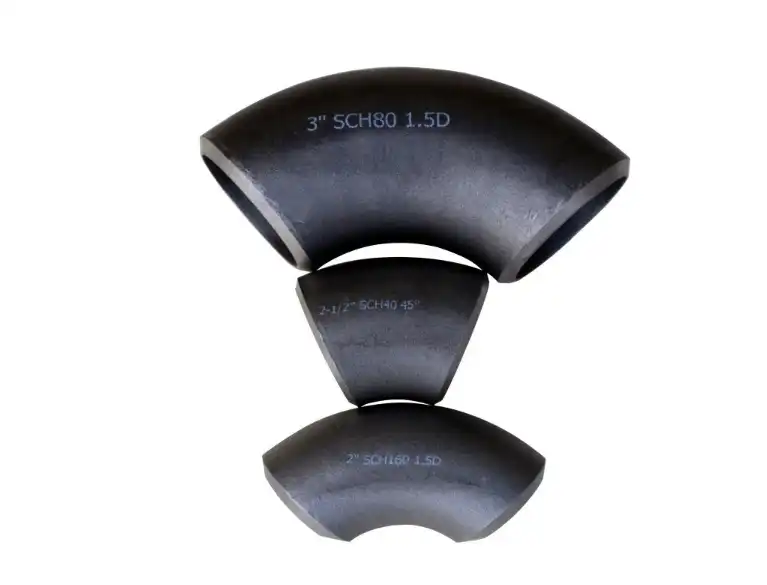
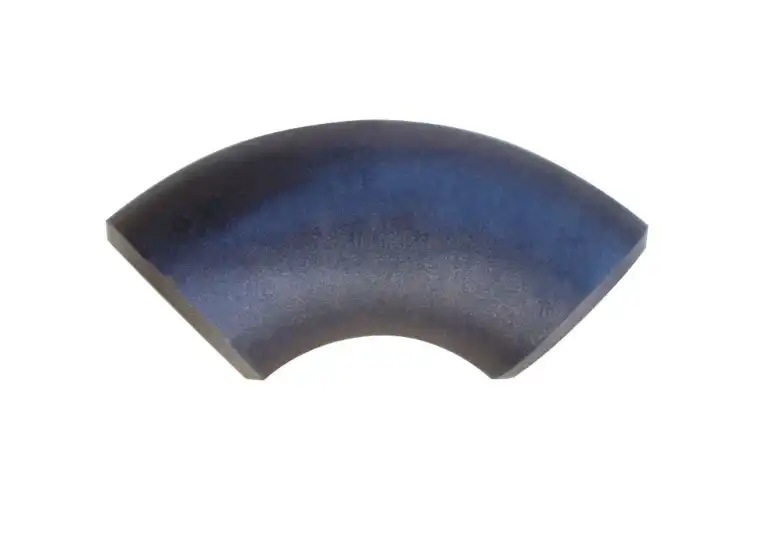
The geometry of the pipeline determines which elbow configuration is best for your system. The 90-degree curve changes the flow direction perpendicularly and is often used when room is limited and small route options are needed. On the other hand, 45-degree elbows allow for more gentle changes in flow direction, which lowers turbulence and pressure drop in systems where fluid dynamics have a big effect on efficiency.
How the building is done has a big effect on both efficiency and cost. Hot pressing makes smooth joints by heating pipe sections and bending them automatically around mandrels. This makes parts without weld gaps that could become weak spots when pressure loads change over time. This method makes long radius (LR) elbows, where the centerline radius is 1.5 times the nominal pipe diameter. This reduces flow resistance and erosion to a minimum.
On the other hand, butt welding methods are used to put pre-formed pieces together in welded buildings for Cost-effective carbon steel elbows. Our factory makes both seamless and soldered versions. Seamless versions are more expensive because they can withstand higher pressures and are less likely to fail. When construction room is limited, short radius (SR) elbows are better than long radius designs because they save more space and let more flow through. The centerline radius of an SR elbow is equal to the pipe width.
International Standards and Pressure Ratings
Following well-known rules will keep your investment safe and make sure that it is accepted by regulators around the world. Factory-made wrought steel butt-welding fittings are governed by ASME B16.9. This standard sets the size tolerances, pressure-temperature ratings, and material requirements that our production strictly follows. Our ISO 9001:2000-certified quality management system checks that the chemical make-up and mechanical properties match the ASTM specifications.
For each material type, wall thickness, and service temperature, there are different pressure values. Schedule 40 carbon steel elbows can usually handle up to 1000 PSI of pressure at room temperature. Schedule 80 and stronger wall choices increase the grade to 2000 PSI or more. Our engineering team can help you choose the right specifications based on the highest pressure that your system can handle (MAWP), taking into account safety factors that protect against pressure spikes and thermal expansion stresses that happen during operation.
Cost-Effective Selection Criteria for High Pressure Carbon Steel Elbows
Achieving cost-effectiveness requires analyzing multiple factors beyond initial purchase price. Total cost of ownership encompasses material expenses, installation labor, maintenance requirements, and expected service life under your specific operating conditions.
Material Cost Analysis and Manufacturing Impact
When compared to other products, carbon steel has strong economic benefits. Stainless steel elbows are about three to four times more expensive than carbon steel elbows. This is only necessary in places where corrosion is a problem and chemical resistance is needed. When used with the right coating systems, our carbon steel fittings work well in applications that aren't very corrosive or are only slightly corrosive.
The methods used in manufacturing have a big impact on how prices are set. Because they are harder to make and lose more material during hot pressing, seamless elbows cost 20 to 30 percent more than soldered ones. But this investment pays off in high-pressure situations where smooth construction gets rid of the weaknesses in welded seams. Our yearly production capacity of 16,000 tonnes lets us offer reasonable prices through economies of scale, especially for large orders that help us make the best use of our production schedule.
As an option, forged steel elbows are a good choice. The grain polishing that happens during the forging process makes them very strong. These parts can be used in situations with very high pressure, but they usually cost twice as much as hot-formed carbon steel elbows. PVC and other polymer materials are very cheap, but they can't handle temperatures or pressures above 150 PSI, so they can only be used in low-pressure water distribution systems that aren't good for industrial process uses.
Matching Specifications to Operational Requirements
Accurate specification alignment stops over-engineering, which raises costs, and under-specification, which increases the chance of failure before its time. First, write down the design pressure, operating temperature range, and fluid properties, such as how corrosive it is and how many particles it contains. These factors help choose the right material grade and wall thickness.
Environmental factors should be carefully thought through. Offshore installations are exposed to salt spray, which means they need extra corrosion protection like epoxy coatings or galvanisation. Our quality control method includes cleaning the surface and applying a coating if needed. This saves you the trouble of hiring two different finishing workers. Soil corrosivity changes can happen in underground sites. To deal with this, cathodic protection systems or fusion-bonded epoxy coats are used, which can make the equipment last longer than 30 years.
Verification of certification is an important part of due diligence that can't be skipped. We have a special equipment production licence from the People's Republic of China and are certified by ISO 9001:2000. This shows that we make sure quality is maintained from the time we receive raw materials until we ship the finished product. Our material test reports (MTRs) show the chemical make-up, mechanical properties, and size accuracy of each production lot. This gives complete traceability that meets API and ASME standards commonly used in oil and gas procurement specifications.
Installation Best Practices for Longevity and Performance
Proper installation practices directly determine whether carbon steel elbows achieve their design service life or fail prematurely, causing costly downtime and safety incidents. Our technical experience supporting over 300 customers across 40 countries has revealed common installation challenges and proven solutions.
Welding Techniques and Connection Methods
Butt welding is the strongest way to connect Cost-effective carbon steel elbows and pipes for high-pressure uses because it makes the structure one continuous piece without any mechanical joints that could leak or come apart. For this method to work, the pipe ends must be bevelled at 37.5-degree angles, the root gap must be kept between 1.5 mm and 3 mm, and multiple passes must be made to ensure full entry. Our seamless elbows are easy to butt-weld because the material composition is designed to work with common SMAW, GTAW, or GMAW processes.
Socket welding is faster for installing pipes with a smaller diameter because the pipe goes into the elbow's recessed socket first, and then fillet welding holds the joint together. This method cuts down on the accuracy needed for fit-up and gets rid of the need for backing rings. Compared to butt welding, this method cuts installation time by about 30%. However, the socket slightly restricts flow and concentrates stress, which means that this method isn't ideal for pressures higher than 1500 PSI or cyclic loading situations where fatigue is a concern.
Threaded connections allow for easy removal at servicing entry points, but they can also create leak paths when the threads join. We make NPT or BSP threads to very tight standards, but for proper fitting, you need to use thread sealer and watch the torque to avoid galling or not engaging all the way. Threaded elbows work well in low- to moderate-pressure situations (below 1000 PSI), where the ability to be taken apart occasionally makes up for slightly lower pressure ratings compared to welded options.
Common Installation Errors and Prevention
Misalignment during fit-up causes stress clusters that speed up the start of wear cracks. Keeping the angle of line within 1 degree and the shift within 1 mm makes sure that the stress is spread evenly around the diameter. Inspections with a coordinate measuring machine show that our dimensions are always the same, which makes it easier for installers to align things correctly when they follow basic fit-up procedures.
Hydrogen cracking happens in the heat-affected zone when thick-wall elbows are welded without being properly heated first. For wall thicknesses greater than 19 mm, carbon steel that has more than 0.25% carbon needs to be heated to at least 150°C before welding and then cooled slowly afterward. Post-weld heat treatment reduces leftover loads in serious situations, like when temperatures will go above 200°C or when repeated loading causes wear issues.
Corrosion prevention starts when the system is installed. When welder dust, grinding debris, or hand oils get on the surface of a part, they start localised rust that moves across the whole part. Our elbows come with temporary coats to protect them, but workers need to clean the areas well before putting on the final coatings. Underground systems need to be protected from different metals that can cause galvanic corrosion cells. This can be done with shielding flanges or covered screws at the points where the cables join.
Procurement Strategies for Cost-Effective Carbon Steel Elbows
Strategic procurement leverages supplier capabilities, market dynamics, and logistics optimization to secure components that meet technical requirements while maximizing budget efficiency.
Identifying Reputable Suppliers and Certifications
Supplier qualification protects against substandard materials and non-conforming dimensions that jeopardize system integrity. We've served the petroleum, chemical, natural gas, and water conservancy industries throughout Europe, North and South America, Africa, Southeast Asia, and the Middle East since establishing our Mengcun facility in 1998. This geographic diversity demonstrates our capability to meet varied regulatory requirements and delivery timelines.
Certification verification should precede any significant procurement commitment. Our ISO 9001:2000 quality management system certification confirms systematic process controls from raw material receiving through final inspection. The special equipment manufacturing license validates our technical capability for pressure-containing components, a credential that many jurisdictions require for pipeline fittings in regulated industries. We provide certified material test reports documenting chemical composition and mechanical properties traceable to heat numbers marked on each component.
Advanced production equipment capabilities indicate a supplier's consistency and quality potential. Our facility employs computer-controlled hot forming equipment, automated welding systems, and comprehensive testing apparatus including ultrasonic flaw detectors, radiographic inspection equipment, and hydrostatic test stations. These technologies enable the tight tolerances and defect-free production necessary for high-pressure applications where component failure carries severe consequences.
Bulk Purchasing and Logistics Considerations
Volume commitments unlock significant cost advantages. Our pricing structure recognizes economies achieved through extended production runs of identical specifications, with bulk orders of 50 tons or more qualifying for preferential pricing tiers. This approach benefits large projects or distributors who can consolidate requirements across multiple installations, reducing per-unit costs by 15-25% compared to small-lot purchasing.
Minimum order quantities balance production efficiency against customer flexibility needs. We've established 1-ton minimums for standard specifications while accommodating smaller quantities for unusual sizes or grades through production planning that groups similar items. This flexibility serves EPC contractors and construction firms whose project specifications may require limited quantities of special fittings alongside bulk purchases of common components.
Lead time management prevents project schedule delays that cascade through construction sequences. Our 16,000-ton annual capacity and raw material inventory position enable 4-6 week delivery for standard products, abbreviated to 2-3 weeks for stock items maintained for high-demand specifications. Custom configurations requiring special tooling or inspection procedures extend lead times to 8-10 weeks, a timeline we communicate clearly during quotation to facilitate accurate project scheduling. Our export experience spanning over 40 countries includes familiarity with international shipping logistics, documentation requirements, and customs procedures that ensure on-time delivery to destinations including Iran, Singapore, and Greece where we maintain established customer relationships.
Real-World Applications and Performance Results
Practical applications demonstrate how specification decisions and supplier selection impact project outcomes across diverse industrial environments.
Oil and Gas Pipeline Projects
A major petroleum transportation project in Southeast Asia required 1,200 Cost-effective carbon steel elbow units for a 300-kilometer pipeline system operating at 1800 PSI. The procurement team specified ASTM A234 WPB seamless long radius 90-degree elbows in sizes ranging from 6 inches to 24 inches, with enhanced corrosion protection through fusion-bonded epoxy coating. Our engineering support helped optimize the specification by recommending Schedule 80 wall thickness for exposed above-ground sections while specifying Schedule 40 for buried segments where soil support reduces stress levels.
Installation occurred across 18 months using semi-automatic GMAW welding equipment and trained welding crews who completed radiographic inspection on 100% of joints. The system achieved successful hydrostatic testing at 2700 PSI without leaks or deformation, validating material quality and installation workmanship. Operational performance over three years has demonstrated zero fitting failures, with routine inspections revealing minimal corrosion beneath intact coating systems. The project achieved 18% cost savings compared to initial budgets that specified stainless steel fittings, savings redirected toward expanded pipeline capacity that increased system throughput.
Chemical Processing Facility Expansion
A chemical processing complex in North America upgraded aging pipelines handling corrosive slurries at 1200 PSI and 180°C. The metallurgical requirements demanded careful balance between corrosion resistance and cost constraints across 450 elbow installations throughout the facility. We supplied ASTM A105 forged elbows for critical high-temperature services while providing welded A234 WPB elbows for moderate-temperature applications, achieving specification optimization that reduced procurement costs by 22% compared to single-material specifications.
Material traceability proved essential during the project. Our heat-numbered components with certified MTRs enabled welding procedure qualification and facilitated inspection records that satisfied process safety management documentation requirements. The facility's maintenance records after two years show 99.7% reliability across all installed fittings, with three early failures attributed to installation errors rather than material defects. This performance demonstrates the value of specification matching and quality supplier selection in demanding chemical service applications.
Conclusion
Selecting carbon steel elbows for high-pressure pipelines demands comprehensive evaluation of material properties, manufacturing quality, and supplier capabilities balanced against budget realities. Carbon steel provides exceptional value where its mechanical properties and corrosion resistance match application requirements, offering substantial cost advantages compared to premium alloys without compromising safety or reliability. Manufacturing methods including hot forming, welding techniques, and quality control procedures directly influence component performance and total ownership costs. Procurement success depends on partnering with certified suppliers who demonstrate technical expertise, production consistency, and logistics reliability necessary for timely project completion.
FAQ
How do I select the correct pressure rating for my application?
Pressure rating selection begins with identifying your system's maximum allowable working pressure and operating temperature. Carbon steel elbows follow ASME B16.9 pressure-temperature ratings, with Schedule 40 fittings typically suitable for pressures to 1000 PSI at ambient temperature. Higher pressures demand Schedule 80 or heavier wall thicknesses, with exact ratings dependent on material grade and temperature. We recommend selecting fittings rated at least 25% above your normal operating pressure to accommodate pressure surges and provide a safety margin.
What advantages does carbon steel offer compared to stainless steel?
Carbon steel delivers superior cost-effectiveness for non-corrosive or mildly corrosive environments, priced 60-75% lower than stainless steel equivalents. Material strength characteristics prove adequate for high-pressure applications when properly specified, with ASTM A105 providing excellent mechanical properties. Stainless steel becomes necessary only where corrosive fluids or extreme temperature cycling exceed carbon steel's capabilities, making material selection dependent on specific service conditions rather than assuming stainless steel's premium cost always proves justified.
Can you manufacture custom specifications?
Our production capabilities accommodate custom dimensions, special material grades, and unique configurations beyond standard catalog offerings. Custom manufacturing requires detailed specification documentation including drawings, material certifications, and inspection requirements. Lead times extend to 8-10 weeks for custom orders requiring special tooling or materials procurement, with minimum order quantities negotiated based on production setup costs. We welcome inquiries for specialized fittings, providing engineering consultation to optimize designs for manufacturability and cost-effectiveness.
Partner with Oudi for Reliable Carbon Steel Elbow Solutions
Oudi brings 26 years of specialized manufacturing experience to your high-pressure pipeline projects, delivering carbon steel elbows that meet demanding specifications while optimizing your procurement budget. Our ISO 9001:2000 certified facility produces 16,000 tons annually of American, Japanese, German, and British standard fittings that serve over 300 customers worldwide in petroleum, chemical, natural gas, and water conservancy applications. We maintain comprehensive quality control from raw material verification through final inspection, backed by special equipment manufacturing licenses that validate our technical capabilities. Our engineering team provides specification consultation, helping you match elbow types, materials, and pressure ratings precisely to your operating conditions.
As a trusted cost-effective carbon steel elbow supplier, we offer competitive pricing through production efficiency and volume capacity, with flexible minimum order quantities accommodating both large infrastructure projects and specialized requirements. Contact our team at oudi-04@oudiguandao.com to discuss your specific pipeline needs, request certified material test reports, or obtain detailed quotations with delivery timelines tailored to your project schedule.
References
1. American Society of Mechanical Engineers. (2018). ASME B16.9: Factory-Made Wrought Buttwelding Fittings. New York: ASME Press.
2. ASTM International. (2020). ASTM A234/A234M: Standard Specification for Piping Fittings of Wrought Carbon Steel and Alloy Steel for Moderate and High Temperature Service. West Conshohocken: ASTM International.
3. Nayyar, M. L. (2019). Piping Handbook (8th Edition). New York: McGraw-Hill Education.
4. Mohitpour, M., Golshan, H., & Murray, A. (2007). Pipeline Design and Construction: A Practical Approach (3rd Edition). New York: ASME Press.
5. American Petroleum Institute. (2015). API Specification 5L: Specification for Line Pipe (45th Edition). Washington: API Publishing Services.
6. Escoe, A. K. (2016). Piping and Pipeline Assessment Guide (Volume 1). Burlington: Gulf Professional Publishing.

Need help finding the right solution with our experts. Please contact us.
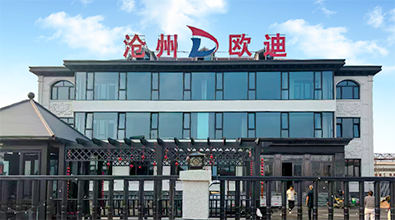
SINCE 1998 Your Reliable Pipeline Manufacturer