Cost-effective carbon steel elbow: OEM quality checklist
Whether you’re buying pipe fittings for an oil refinery expansion, a chemical processing facility, or a water treatment infrastructure project, there is no margin for error. A single bad elbow might lead to leaks in the system, pressure problems, or expensive downtime. The main procurement difficulty is not finding a supplier, but making sure a reasonably priced carbon steel elbow is really up to snuff (OEM-grade) before it even reaches the project site. A cost-effective carbon steel elbow provides dependable flow-direction control – at 45°, 90° or 180° – inside tough industrial pipework systems, all without blowing your budget. Since 1998, Oudi has been manufacturing and exporting certified carbon steel pipe fittings and servicing more than 300 clients in over 40 countries. Drawing on that real-world experience, this checklist is intended to assist B2B procurement professionals in making confident, quality-driven choices.
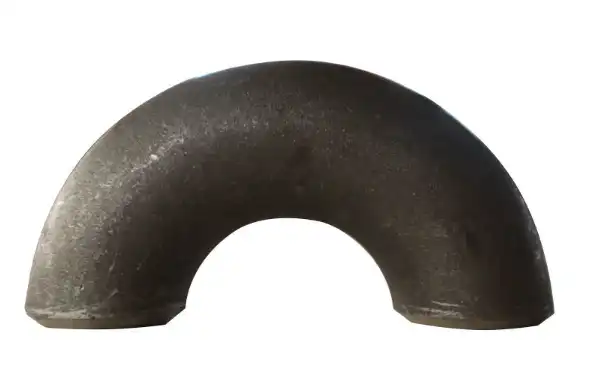
Understanding Cost-effective Carbon Steel Elbows: Key Concepts
It’s not just about the lowest unit pricing to be cost-effective. It indicates the balance between purchase cost, service life, dimensional perfection, and certification compliance. A carbon steel elbow that fails pressure testing or needs repair on-site costs much more than a slightly more expensive certified version.
Carbon Steel Elbows: Carbon steel elbows are used to change the direction of fluid or gas flow in pipework systems. There are three main types: seamless (extruded from solid billets, the choice for high-pressure applications), welded (made from plate, used for lower-pressure systems), and forged (used for socket-welded or threaded connections). Each kind has different cost and performance consequences for OEM projects.
Dimensional conformity with ANSI/ASME B16.9, DIN 2605, or BS standards is not optional; it is the minimum. Any variation in wall thickness or bend radius will jeopardize system integrity and nullify compatibility with contiguous fittings.
OEM Quality Checklist for Cost-effective Carbon Steel Elbows
OEM buyers operate under strict accountability. Here's a practical screening framework to assess supplier quality before committing to a purchase order.
Material Selection: Why Grade Matters
Material quality directly influences the mechanical behavior of the elbow during heat cycling, pressure surges, and corrosive media. ASTM A234 WPB is still the most common grade designated for cost-effective carbon steel elbows with a tensile strength of 415–585 MPa and usable throughout a wide temperature range. If you woris k with sour gas or in sulfide-stress service, you must comply with NACE MR0175.
What to look for: chemical composition certificates (C, Mn, P, S, Si content), heat treatment records, and mill test reports traceable to the heat number. At Oudi, we verify every batch of raw material upon arrival before it is used in manufacturing, a technique that is part of our ISO 9001:2000 certified quality management system.
Dimensional Tolerance and Surface Finishing
Tight tolerances on wall thickness (±12.5% per ASME B36.10M), bore diameter, and end-face squareness are non-negotiable for OEM fit. Surface finish affects weld quality and long-term corrosion resistance. Acceptable finishes include black varnish, hot-dip galvanizing, or epoxy coating, depending on the service environment.
Testing Standards and Traceability
Procurement teams should check while receiving delivery:
- Hydrostatic Test Per ASME B16.9 or Equivalent
- Non-destructive Examination (NDE): Ultrasonic testing (UT) or Magnetic Particle Inspection (MPI) for seamless elbows
- PMI (Positive Material Identification) of alloy or stainless grades
- ISO 9001 certification and, when appropriate, People's Republic of China Special Equipment Manufacturing License recognized by third-party inspection agencies (SGS, Bureau Veritas, Lloyd's)
OEM provider and a trading house that has no responsibility for manufacturing. The difference is that traceability from the raw material heat to the final product is verifiable.
How to Choose the Right Carbon Steel Elbow for OEM Projects
Carbon Steel vs. Stainless Steel: A Practical Comparison
The choice between carbon steel and stainless steel elbows often comes down to the operating environment and budget. The table below provides a structured comparison for procurement decision-making:
| Criteria | Carbon Steel Elbow | Stainless Steel Elbow |
|---|---|---|
| Material Cost | Lower | 3–5× higher |
| Corrosion Resistance | Moderate (requires coating) | High (inherent) |
| Pressure Rating | High (ASTM A234 WPB) | High (ASTM A403) |
| Temperature Range | -29°C to 427°C | -196°C to 816°C |
| Typical Applications | Oil, gas, water, power | Chemical, food, pharma |
| Weldability | Excellent | Good |
Cost-effective carbon steel elbows remain the dominant choice in oil & gas pipelines, boiler systems, and water conservancy projects precisely because they deliver robust mechanical performance at a price point that stainless steel simply cannot match for large-volume OEM procurement.
Seamless vs. Welded: Matching Product to Application
Seamless elbows are the best choice for high-pressure and high-temperature duty because they don't have a longitudinal weld seam. This is common in oil refining and natural gas transmission. A rolling plate can be used to make elbows that can be joined. This costs less for low-pressure uses like HVAC and general construction piping. For custom orders, the minimum order size and wait times are different, so make sure you talk to your maker about them ahead of time to avoid schedule problems.
Procurement Best Practices: Sourcing Carbon Steel Elbows Responsibly
It's not enough to just look through a brochure to find a reliable and affordable carbon steel elbow provider. These are the most important factors for confirmation that buying teams should always use.
Verification of suppliers should include checking their ISO 9001 status, making sure they have the right permits to make certain equipment, and seeing proof of their past exports to regulated areas (EU, North America). Environmental compliance is getting more attention from both end users and EPC companies. For orders going to Europe, RoHS and REACH alignment is especially important.
Knowing how to price things is just as important as being able to follow the rules. When buying a lot of something, the general landing cost may go down by 15 to 25 percent if you use bulk pricing, choose the right Incoterm (FOB, CIF, DDP), and plan for orders to be made together. With a production capacity of 16,000 tons per year, Oudi can ensure steady production for large orders without sacrificing delivery time, which is very important for projects with set dates for starting up.
By giving your maker P&IDs, line class plans, and material requisitions during the design process, you can help them find problems with dimensions or materials early on, which protects both the schedule and the budget.
Manufacturing and Quality Assurance in Carbon Steel Elbow Production
The way Oudi makes things is a model of how honest manufacturing should be. One way to make a seamless elbow is to hot-press or mandrel-bend a piece of seamless pipe so that the wall stays the same all the way around the bend. Elbows that are welded are made from a formed plate that has a lengthwise seam weld and beveled ends. For socket-welded and threaded uses, elbows are made under controlled forging pressure to keep the purity of the grain structure.
Embedded quality checks include checking the hardness of the raw material, inspecting the dimensions after shaping, evaluating the weld visually and using NDE, and finally testing the product under hydrostatic pressure. Each step generates paperwork that can be checked which is kept in Oudi's quality records system.
Depending on the end-use setting, different corrosion control methods are used. Black paint is a simple way to keep things from oxidizing while they are being stored or moved. Hot-dip galvanizing can be used to save water and build things. When used in tough chemical or marine situations, a fusion-bonded epoxy (FBE) finish makes things last a lot longer.
Conclusion
The secret to sourcing a cost-effective carbon steel elbow is detailed validation at each step: material grade, dimensional tolerance, testing paperwork, and the credentials of the supplier. This OEM quality checklist provides procurement professionals with a repeatable methodology to screen vendors and specify items with confidence. These are the principles on which Oudi has been founded since 1998: certified manufacturing, rigorous inspections, and dependable worldwide export in oil, chemical, gas, water conservancy, and electricity. Quality and value are not mutually incompatible – the right supplier confirms that time and time again.
FAQ
1. What material grade should I specify for a carbon steel elbow in an oil & gas pipeline?
ASTM A234 WPB is the standard specification for carbon steel butt-weld elbows in oil and gas service. It covers operating temperatures from -29°C to 427°C with a minimum tensile strength of 415 MPa. For sour service environments, additional NACE MR0175 compliance is required.
2. What is the typical lead time for a bulk order of carbon steel elbows?
Lead times vary by specification, quantity, and surface treatment. Standard schedule orders typically require 15–30 days from order confirmation. Custom dimensions or special surface coatings may extend this to 45 days. Confirm lead times with your supplier at the inquiry stage.
3. How do I verify a supplier's quality management system without visiting the factory?
Request the supplier's ISO 9001 certificate with the issuing body name and validity date, then verify directly with the certification authority. Third-party inspection reports from SGS or Bureau Veritas, along with mill test reports traceable to specific heat numbers, provide additional verification without requiring a physical audit.
4. What is the difference between short-radius and long-radius carbon steel elbows?
A long-radius (LR) elbow has a centerline radius equal to 1.5× the pipe's nominal diameter, reducing flow turbulence and pressure drop. A short radius (SR) elbow has a centerline radius equal to the nominal pipe diameter and is used where space constraints require a tighter turn, and LR elbows are standard for most process piping applications.
Get a Quote from Oudi — Certified Carbon Steel Elbow Manufacturer
Oudi has delivered certified carbon steel pipe fittings to clients across 40+ countries since 1998. Whether you're sourcing a cost-effective carbon steel elbow supplier for an oil refinery, power station, or water treatment project, our team provides full specification support, competitive pricing, and traceable quality documentation. Contact us at oudi-04@oudiguandao.com to request a quote or download our product catalog today.
References
1. ASME B16.9 — Factory-Made Wrought Buttwelding Fittings, American Society of Mechanical Engineers, 2018.
2. ASTM A234/A234M — Standard Specification for Piping Fittings of Wrought Carbon Steel and Alloy Steel for Moderate and High Temperature Service, ASTM International, 2022.
3. ISO 9001:2015 — Quality Management Systems: Requirements, International Organization for Standardization, 2015.
4. NACE MR0175/ISO 15156 — Petroleum and Natural Gas Industries — Materials for Use in H₂S-Containing Environments, NACE International, 2015.
5. Pipe Fittings: Engineering and Industrial Applications, Gulf Professional Publishing, 2019.
6. ASME B36.10M — Welded and Seamless Wrought Steel Pipe, American Society of Mechanical Engineers, 2018.

Need help finding the right solution with our experts. Please contact us.

SINCE 1998 Your Reliable Pipeline Manufacturer



