How Does a Precision-machined Elbow Improve Flow Control?
Precision-machined elbows increase flow management by reducing internal surface defects that cause turbulence, pressure dips, and flow resistance in pipe systems. Unlike traditional cast or forged alternatives, CNC (Computer Numerical Control) milling and turning procedures allow for tight dimensional tolerances (±0.01mm) and high quality (roughness as low as 0.4μm Ra) on the inside surfaces, producing a precision-machined elbow. These properties provide smooth concentric flow channels that direct fluid changes with minimum energy loss. For engineers responsible for oil, chemical, or gas transmission lines, this translates into tangible system efficiencies, shorter maintenance cycles, and longer life.
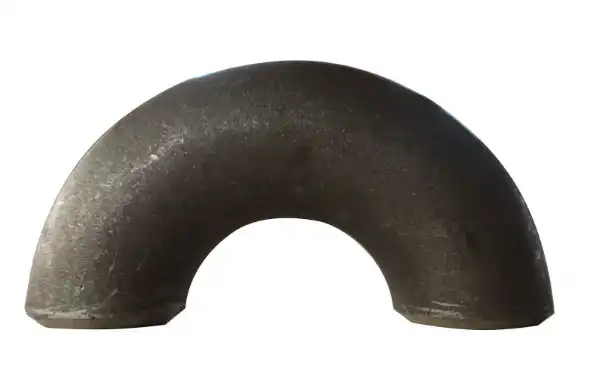
What Exactly Is a Precision-Machined Elbow — and Why Does It Matter?
Suppose an engineer at a Texas refinery sees an unexplainable pressure drop across a crucial chemical transfer line. The issue is chased by maintenance staff for weeks. It is shown that the cause is a conventional forged elbow with internal casting porosity and surface defects that generate turbulent “dead zones” where corrosive fluids gather. This is permanently fixed by swapping it out with a CNC-machined part.
This is a more prevalent situation than most procurement teams understand. Standard manufacturing simply cannot reliably provide the components needed for high-stakes fluid systems.
Defining the Component and Its Core Function
A precision elbow is a fluid handling component that is subtractively built to redirect flow at angles – generally 45°, 90°, or unique geometries – with micron-level accuracy. CNC machining carves material out of solid billet stock, keeping the integrity of the grain structure while delivering uniform wall thickness across the bend radius. It removes the internal gaps and surface roughness that are inherent in cast or forged equivalents, producing a part where laminar flow is intentionally safeguarded instead than accidently interrupted.
Material Selection: Why It Shapes Every Performance Outcome
Material choice governs corrosion resistance, pressure tolerance, and thermal durability simultaneously. Here are the primary materials used in high-performance machined elbows and what each delivers:
- 316L Stainless Steel maintains structural integrity in aggressive chemical environments and resists chloride-induced stress corrosion cracking, making it the standard choice for chemical processing and offshore applications where saline exposure is constant.
- Carbon Steel (ASTM A234 WPB) offers reliable tensile strength and cost-effectiveness for oil and gas transmission lines operating at moderate temperatures, meeting ASME B16.9 dimensional standards that most EPC contractors specify.
- Alloy Steel (Cr-Mo grades) handles sustained high-temperature service above 400°C, which is critical in boiler and power generation piping where thermal cycling accelerates fatigue in weaker materials.
Material selection directly determines whether a component survives its intended service environment or becomes an unplanned maintenance event. Buyers should always verify that material certifications — specifically EN 10204 3.1 or 3.2 Mill Test Reports — accompany every shipment.
Which Manufacturing and Design Factors Actually Control Flow Performance?
Dimensional Tolerances and Surface Finish Standards
Dimensional Standards of Precision Machined Elbows: The dimensional standards that Precision-machined elbows need to conform to are ASME B16.9, DIN 2605, and ISO 5251. The smooth transition of fluid across a change of direction is affected by wall thickness uniformity, centerline radius precision, and end face perpendicularity. When tolerances drift to over ±0.05mm, joints lose alignment, generating micro-gaps that initiate turbulence. Internal surface roughness of less than Ra 0.8μm—and preferably electropolished to Ra 0.4μm—reduces the coefficient of friction enough to provide a measurable reduction in flow resistance in high-velocity service.
Quality Checkpoints That Cannot Be Skipped
Reliable manufacturers apply a staged inspection protocol before any component ships. At Oudi, the quality management system — certified to ISO 9001 and operating under China's Special Equipment Manufacturing License — mandates full inspection from raw material intake through finished goods:
- CMM dimensional analysis maps angular precision and wall thickness across 3D coordinates.
- Positive Material Identification (PMI) via XRF confirms alloy chemistry matches the MTR on every batch.
- Dye Penetrant Inspection (DPI) or Ultrasonic Testing (UT) detects subsurface micro-fissures invisible to visual inspection.
- Hydrostatic or helium mass spectrometry leak testing validates zero-leakage performance at 1.5× the design pressure rating.
These checkpoints are not optional refinements — they are the difference between a component that performs for 25 years and one that fails in the field at 18 months.
How Do Precision-Machined Elbows Compare Against Other Types?
Procurement managers regularly weigh machined elbows against forged and cast options. The comparison below reflects real performance and cost data across the decision criteria that matter most in industrial procurement:
| Criterion | Precision-Machined | Forged | Cast |
|---|---|---|---|
| Dimensional Tolerance | ±0.01mm | ±0.5–1.0mm | ±1.0–2.0mm |
| Internal Surface Ra | 0.4–0.8μm | 3.2–6.3μm | 6.3–12.5μm |
| Material Integrity | Solid billet, uniform grain | Good, minor anisotropy | Porosity risk present |
| Pressure Rating | 10,000 PSI+ | Up to 6,000 PSI typical | Up to 3,000 PSI typical |
| Custom Angles | Any geometry via CNC | Limited to standard dies | Limited by mold design |
| Total Cost of Ownership | Higher upfront, lower lifecycle | Moderate | Lower upfront, higher maintenance |
The evidence is clear: Machined parts repeatedly perform in applications where accuracy of flow control and long-term durability are important. A Southeast Asian petrochemical facility replaced its cast subsea control module fittings with CNC-machined equivalents, and over three years realized a 40% decrease in unscheduled maintenance interventions, a return that offset the increased unit cost during the first cycle of operation.
Where Do Precision-Machined Elbows Perform Best?
High-Pressure and High-Temperature Industrial Environments
Standard fittings are not suitable for the circumstances in oil and gas transmission systems, chemical reactors, and power boiler networks, where the danger is too great. No problem for straight piping. But for Precision-machined elbows rated above ASME B16.9, the improved grain structure orientation enhances fatigue resistance and preserves structural integrity despite temperature cycling and mechanical vibration that would break cast alternatives.
Sectors That Rely on Machined Components Daily
Oudi has been supplying precision pipe fittings since 1998 for the oil, chemical, natural gas, water conservancy, construction, shipbuilding, electric power, and boiler manufacturing industries. With an annual production capacity of 16,000 tons and export experience with more than 300 clients in more than 40 countries, including the United States, Europe, Southeast Asia, and the Middle East, the breadth of application speaks directly to confirmed real-world performance.
CNC processes also allow for custom geometries, including non-standard angles (22.5° or 60°, for example). This flexibility means OEMs and EPC contractors may define precisely what their system needs, rather than having to alter system design to match existing stock.
What Should Procurement Teams Verify Before Placing an Order?
Sourcing a machined elbow from an unverified supplier introduces quality risk that no downstream inspection can fully mitigate. Here is what to verify before committing to a supplier relationship:
- Confirm ISO 9001 certification and any applicable special equipment manufacturing licenses are current and traceable.
- Request EN 10204 3.1 or 3.2 MTRs as a standard delivery requirement, not an optional add-on.
- Clarify lead times upfront — optimized CNC workflows typically deliver custom precision elbows within 2–4 weeks depending on material availability, which is manageable with proper project scheduling.
- Evaluate whether the supplier offers both standard catalog items and custom specifications, since most large industrial projects require a mix of both.
Building a direct relationship with a manufacturer — rather than layering through multiple distributors — reduces miscommunication risk and often unlocks better pricing on bulk or repeat orders.
Conclusion
Precision machined elbows provide demonstrable advantages in flow control due to dimensional precision, improved surface quality, and material integrity not possible with ordinary cast or forged counterparts. For procurement experts and engineers in the oil, gas, chemical and power sectors, the choice of component at the elbow will directly impact system efficiency, maintenance frequency and overall lifetime cost. Since 1998, Oudi has supplied global industrial customers with premium carbon steel, stainless steel, and alloy steel pipe fittings, combining the scale of production and international certification compliance of demanding projects with the rigorous ISO 9001-certified quality control that is required.
FAQ
1. Why choose a machined elbow over a standard forged elbow?
Machined elbows hold significantly tighter tolerances and deliver superior internal surface finishes — both essential for high-vacuum or ultra-high-pressure applications where standard forgings introduce unacceptable leakage risk.
2. Can custom angles like 22.5° or 60° be produced?
Yes. CNC machining accommodates any custom geometry or compound angle that traditional bending or casting cannot reliably produce.
3. How is corrosion at the joint prevented?
Precision-cut chamfers enable full-penetration orbital welding, and specialized face-seal groove profiles — such as VCR or SAE configurations — ensure joint resilience equivalent to the pipe itself.
4. Are Material Test Reports included with shipments?
Every precision-machined elbow ships with EN 10204 3.1 or 3.2 certification, providing complete alloy traceability from raw material to finished component.
5. What is the typical lead time?
Custom precision elbows typically ship within 2–4 weeks, depending on material availability and order complexity.
Get Your Precision-Machined Elbow Quote from Oudi Today
Oudi has been a trusted precision-machined elbow manufacturer since 1998, serving over 300 clients across 40+ countries with ISO 9001-certified pipe fittings in carbon steel, stainless steel, and alloy steel. Whether you need standard catalog items or fully custom specifications, our team delivers verified quality with complete MTR documentation. Send your technical requirements or request a product catalog directly to oudi-04@oudiguandao.com and let us support your next procurement decision with confidence.
References
1. ASME B16.9 — Factory-Made Wrought Buttwelding Fittings, American Society of Mechanical Engineers, 2018.
2. Totten, G. E., & Liang, H. — Surface Modification and Mechanisms: Friction, Stress, and Reaction Engineering, CRC Press, 2004.
3. Pipe Fitters Handbook, Grinnell Corporation, 2009.
4. ISO 9001:2015 — Quality Management Systems: Requirements, International Organization for Standardization, 2015.
5. Menon, E. S. — Piping Calculations Manual, McGraw-Hill, 2005.
6. EN 10204 — Metallic Products: Types of Inspection Documents, European Committee for Standardization, 2004.

Need help finding the right solution with our experts. Please contact us.

SINCE 1998 Your Reliable Pipeline Manufacturer



