Where Can a Precision-machined elbow Deliver Maximum Value?
When exact measurements, leak-free performance, and a long service life are essential, a precision-machined elbow is the best choice. One faulty fitting can cause expensive shutdowns or safety issues in fields like oil and gas, chemical processes, natural gas transfer, and water conservation. A Precision-machined elbow is made through CNC subtractive machining to tolerances as tight as ±0.01mm, which is different from standard cast or forged alternatives. This gets rid of any internal flaws that could lead to turbulence, corrosion buildup, or fatigue cracking. This level of accuracy immediately leads to fewer repair cycles and measurable practical savings for procurement engineers who are in charge of complicated, high-stakes pipe systems.
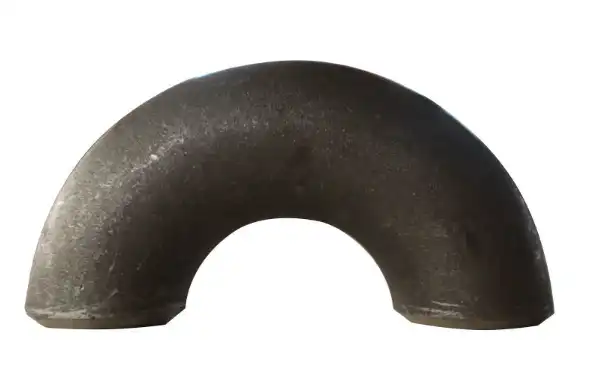
Understanding Precision-Machined Elbows: What Makes Them Different?
While most industrial customers see elbows every day, the difference between a normal forged fitting and a CNC-machined version generally goes unappreciated until a system breaks. Made from solid billet material, precision-machined elbows use controlled subtractive operations (CNC milling and turning) to generate shapes that cast or bent elbows cannot reliably reproduce.
Why Material Integrity Matters
The behavior of the elbow under actual service circumstances depends on the material used. Typical options include: 316L stainless steel for corrosive chemical conditions; titanium Grade 5 for aerospace-grade weight-to-strength ratios; and Inconel for high-temperature applications. In Oudi, fittings in carbon steel, stainless steel, and alloy steel are manufactured under stringent controls on the input of raw materials, which ensure the homogeneity of the structure of each individual component — a characteristic that is sometimes lacking in cast alternatives, owing to porosity and non-uniform distribution of the grain.
Why Manufacturing Process Impacts Your System
CNC machining achieves internal bore roughness (Ra) down to 0.4μm which is immensely important in high-purity fluid systems. Smooth internal transitions avoid dead zones where corrosive media or biological pollutants might build up. Every elbow made at Oudi is passed through a complete inspection system from raw material input to finished-goods release, supported by ISO 9001:2000 quality management certification and a People’s Republic of China Special Equipment Manufacturing License.
Why Tight Tolerances Protect Your Investment
Dimensional limits of ±0.01mm guaranty hermetic sealing in high-vacuum and ultra-high-pressure assemblies. Engineering capacity of 10,000 PSI and beyond. Pressure Ratings typically surpass ASME B16.9 norms. Billet machining also results in a better alignment of grain structure, which makes the material more resistant to heat cycling, which is crucial in boiler, electric power, and natural gas pipeline applications.
Where Do Precision-Machined Elbows Solve the Hardest Problems?
In certain sectors, pipe components are used in situations that show the shortcomings of regular fittings. Here are the operating settings where the ROI for CNC-Precision-machined elbows is most compelling.
Oil & Gas and Subsea Applications: Deep-sea control modules and ROV hydraulic systems need components that can withstand external hydrostatic pressure and internal corrosive saltwater exposure for a 25 year service life. Precision shape eliminates the risk of micro-fatigue fractures at stress concentration locations – a failure scenario to which traditional welded elbows are especially vulnerable under cyclic loads.
Chemical and Natural Gas Processing: In chemical facilities and gas transmission lines, turbulence in flow leads to erosion and promotes localized corrosion. An ultra-smooth interior surface minimizes turbulent energy losses and increases the period between maintenance shutdowns – of major importance to plant operators working to throughput objectives.
Water Conservancy and Power Generation: Water conservancy facilities and boiler systems need fittings that keep their dimensions during large temperature changes. The regulated grain orientation for engineered fatigue resistance in precision-machined components has direct applicability to reducing unexpected downtime in these long-cycle assets.
Shipbuilding & Construction: Marine and structural applications are subject to vibration stresses that may loosen or break typical fittings over time. The elbows are produced on CNC machines with precisely cut chamfers for full penetration orbital welding or unique grooves for face seals. The connection will be as resilient as the pipe itself.
That is why more than 300 clients in more than 40 countries in Europe, North and South America, Africa, Southeast Asia, and the Middle East depend on Oudi pipe fittings as part of their supply chain.
Precision-Machined vs. Alternative Elbow Types: Which One Fits Your Project?
Selecting the right elbow type requires an honest look at the trade-offs between performance, cost, and application suitability. The table below compares the three most common Precision-machined elbow types across decision-critical criteria.
| Criteria | Precision-Machined Elbow | Cast Elbow | Fabricated/Welded Elbow |
|---|---|---|---|
| Dimensional Tolerance | ±0.01mm or tighter | ±0.5mm to ±1.0mm typical | Variable, weld-dependent |
| Internal Surface Finish | Ra ≤ 0.4μm | Ra 3.2–6.3μm typical | Moderate, seam visible |
| Pressure Rating | Exceeds ASME B16.9, up to 10,000+ PSI | Limited by porosity risk | Moderate, joint-limited |
| Corrosion Resistance | High (material + surface finish) | Moderate | Moderate |
| Custom Angles | Any angle, including 22.5°, 60° | Standard angles only | Limited by tooling |
| Lifecycle Cost | Lower (longer service life) | Higher (maintenance) | Moderate |
| Lead Time | 2–4 weeks (custom CNC) | Shorter for stock items | Short for standard angles |
This comparison makes the value proposition clear for mission-critical systems: the upfront cost differential of a precision-machined fitting is typically recovered within one or two avoided maintenance events.
Procurement Best Practices: What Should Buyers Verify Before Ordering?
Sourcing Precision-machined elbows internationally requires more than a competitive price. Procurement managers should treat supplier verification as a risk-management exercise, not just a cost comparison.
Buyers navigating international B2B sourcing benefit from checking these supplier attributes before committing to an order:
- Certification documentation: Verify ISO 9001 certification and any applicable special equipment manufacturing licenses. Oudi holds both, providing documented assurance of process control.
- Material traceability: Require EN 10204 3.1 or 3.2 Mill Test Reports (MTRs) with every shipment. This ensures full alloy traceability from billet to finished component.
- Inspection protocols: Confirm that the supplier conducts CMM dimensional analysis, Positive Material Identification (PMI) via XRF or OES, dye penetrant or ultrasonic NDT testing, and hydrostatic or helium leak detection at 1.5× design pressure.
- Production capacity: A supplier with 16,000 tons of annual output — like Oudi — provides the throughput reliability needed for large-scale EPC projects without lead-time surprises.
- Export experience: Oudi has served customers in over 40 countries since 1998, with established logistics routes to Europe, the Americas, Africa, Southeast Asia, and the Middle East, including the US market.
Aligning these checkpoints with project specifications before issuing a purchase order dramatically reduces supply risk and protects project timelines.
Maximizing Long-Term ROI: Strategic Considerations for Future Projects
The lifespan economics of precision-machined fittings underpin forward-thinking procurement methods. In general, CNC machining creates less waste than casting or heavy forging. Precise parts last longer, requiring less frequent replacement and less waste to be discarded.
In addition, new automation in CNC operations is decreasing lead times on custom geometries and making custom fits more accessible for mid-volume customers. Oudi’s product line covers American, Japanese, German, and British standards in Carbon Steel, Stainless Steel, and Alloy Steel, providing a single-source supplier for most of the important project requirements and minimizing vendor management complexity. For procurement teams working on several projects throughout the world, such consolidation has real strategic importance.
Conclusion
Precision-machined elbows provide optimum value in any system where dimensional correctness, leak integrity, and extended service life directly impact safety and operational continuity. There are situations when CNC-machined geometry is superior to cast or fabricated in quantifiable ways, such as in the oil and gas, chemical processing, natural gas transfer, water conservancy, shipbuilding, and power generating industries. Oudi is a supply partner with more than 25 years of production expertise, ISO 9001 certification, a special equipment license, and an annual capacity of 16,000 tons, which can satisfy the most rigorous technical requirements at a globally competitive price point.
FAQ
1. Why choose a machined elbow over a standard forged elbow?
Machined elbows hold dimensional tolerances far tighter than standard forgings — typically ±0.01mm versus ±0.5mm or wider. This level of precision is mandatory in high-vacuum or ultra-high-pressure sealing applications where a forged fitting's surface variation would compromise the seal.
2. Can non-standard angles like 22.5° or 60° be produced?
CNC machining supports any custom geometry or compound angle. Standard bending and casting processes cannot reliably reproduce non-standard angles, making CNC the only viable route for specialized pipeline layouts.
3. Are Material Test Reports provided with each order?
Every precision-machined elbow ships with EN 10204 3.1 or 3.2 certification, providing full alloy traceability from raw material through the finished component.
4. How is corrosion prevented at the joint?
Precision-cut chamfers engineered for full-penetration orbital welding or face-seal grooves — VCR or SAE configurations — ensure joint resilience that matches the pipe itself rather than creating a weak point.
5. What is the typical lead time for custom orders?
Standard off-the-shelf fittings ship faster, but custom precision elbows typically deliver in 2–4 weeks from order confirmation, depending on material availability and specification complexity.
Partner with Oudi for Reliable Precision-Machined Elbow Supply
Oudi has manufactured certified pipe fittings to ANSI, JIS, DIN, and BS standards since 1998, serving 300+ customers across 40+ countries. As a trusted Precision-machined elbow manufacturer with ISO 9001 certification, 16,000-ton annual capacity, and full inspection documentation, we are ready to support your next project. Contact our team today at oudi-04@oudiguandao.com to request specifications, certifications, or a competitive quote.
References
1. ASME B16.9: Factory-Made Wrought Buttwelding Fittings — American Society of Mechanical Engineers, 2018.
2. Machinery's Handbook — Industrial Press, 31st Edition, 2020.
3. ISO 9001:2015 Quality Management Systems — Requirements — International Organization for Standardization, 2015.
4. EN 10204: Metallic Products — Types of Inspection Documents — European Committee for Standardization, 2004.
5. Pipe Fitters Handbook — Grinnell Mechanical Products, 2019.
6. Corrosion Engineering: Principles and Solved Problems — Elsevier, 2015.

Need help finding the right solution with our experts. Please contact us.

SINCE 1998 Your Reliable Pipeline Manufacturer



