Socket Weld Pipe Tee Applications in Chemical Industries
Socket Weld Pipe Tee fittings have become indispensable components in chemical processing facilities worldwide, offering reliable, leak-proof connections in small-bore piping systems where safety and integrity are non-negotiable. These forged fittings, manufactured according to ASME B16.11 standards, provide a unique combination of mechanical strength and installation efficiency that addresses the demanding requirements of chemical plant operations, from corrosive acid handling to high-pressure process control applications.
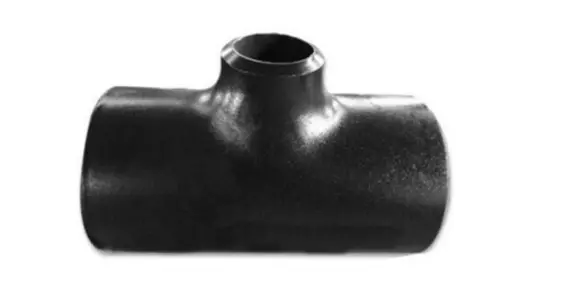
Understanding Socket Weld Pipe Tees in Chemical Industry Applications
What Defines a Socket Weld Pipe Tee?
A socket weld pipe tee is a three-way forged fitting used to make branch connections in piping systems. It has recessed sockets on each opening into which pipes are put and fillet welded at the rim. Rather than the beveled pipe ends and full-penetration welds required for butt weld fittings, socket weld tees accept pipes straight into their socket cavities, holding a necessary 1/16-inch expansion gap prior to welding. This design is especially advantageous in chemical facilities with piping diameters of up to 4" where space and installation efficiency significantly affect project schedules and operations budgets.
The basic method is forging. Heat is applied to the metal, then it is compressed between precise dies to form a grain structure that vastly outperforms cast equivalents. The production approach removes the porosity issues associated with casting, providing fittings that can endure the heat cycling and pressure changes prevalent in chemical processing applications.
Material Specifications and Standards Compliance
In the chemical industry, materials are needed that withstand harsh media and preserve their structural integrity over a wide temperature range. Our socket weld tees are available in three main material classes: carbon steel (A105 for general purpose applications), stainless steel (304L and 316L for corrosive applications), and specialty alloys (Duplex 2205 for chloride applications). Each material decision is tied to specific chemical compatibility needs, with 316L stainless steel excellent in sulfuric acid duty and the ability of Hastelloy C-276 to handle the most harsh chlorinated hydrocarbons.
Our manufacturing is in compliance with ASME B16.11 dimensional requirements, ASTM material specifications, and ISO 9001:2000 quality management systems. This multi-standard compliance assures that fittings meet the many certification criteria for worldwide chemical projects, from European PED guidelines to American API standards. Typically, the pressure class ratings are Class 3000, 6000, and 9000 and are based on strict hydrostatic testing. This gives the procurement teams documented performance criteria which are crucial to system design calculations.
Pressure Ratings and Corrosion Resistance Characteristics
The forged construction of Socket Weld Pipe Tee provides pressure-temperature ratings well above threaded equivalents. A Class 3000 carbon steel tee, a popular item in our chemical industry projects, can work with pressures of more than 5000 PSI at ambient temperature, with derating curves available for service at elevated temperatures. This pressure capability is important in the reactor feed systems and the auxiliaries of distillation columns where process disturbances can lead to transient pressure spikes.
Corrosion resistance is not only a material chemistry issue, but surface finish factors are also important. The way we manufacture our products results in smooth internal surfaces with minimum crevice geometry, minimizing entrapment zones where corrosive media might build up. The inherent gap in the socket design, when welded correctly, protects the outside surface of the pipe from direct media exposure, a counterintuitive advantage that enhances service life for erosive slurry applications typical of chemical catalyst handling systems.
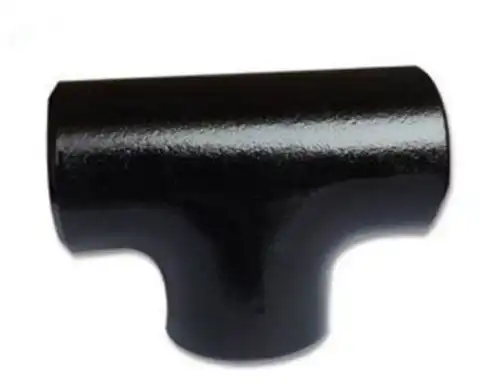
Advantages of Using Socket Weld Pipe Tees in Chemical Processing
Superior Mechanical Strength and Leak-Proof Connections
The fillet weld configuration inherent to socket weld construction creates a mechanical interlock that distributes stress loads across a broader surface area than threaded connections. In chemical plants where piping systems experience constant vibration from nearby pump and compressor installations, this design prevents the loosening failures that plague threaded joints. We've documented instances in ammonia synthesis plants where socket weld tees maintained seal integrity through years of operational cycling that caused threaded fittings to require quarterly re-torquing.
The permanent nature of welded connections eliminates the fugitive emission pathways that regulatory agencies increasingly scrutinize in chemical facilities. A properly executed socket weld produces a hermetic seal meeting EPA Method 21 leak detection standards without requiring supplemental sealants or compounds. This attribute holds particular value in volatile organic compound (VOC) service and applications involving EPA-listed hazardous air pollutants, where even minor leakage triggers regulatory reporting thresholds.
Installation Efficiency and Inspection Accessibility
Socket weld installation requires less specialized labor compared to butt weld alternatives, as the fitting itself provides alignment and gap control that would otherwise demand precision beveling and fit-up procedures. Our customers in plant expansion projects report installation time reductions of approximately 40% when specifying socket weld tees for instrument connections and sample lines. The fittings arrive ready for immediate assembly—no field machining, no beveling equipment, no consumable backing rings.
Quality inspection protocols benefit from the external fillet weld configuration, which remains fully visible and accessible for non-destructive examination. Magnetic particle inspection (MPI) detects surface discontinuities without the radiographic testing expenses required for butt weld verification. This inspection efficiency translates to faster project commissioning, as weld verification proceeds concurrently with installation rather than creating bottlenecks waiting for X-ray technician availability.
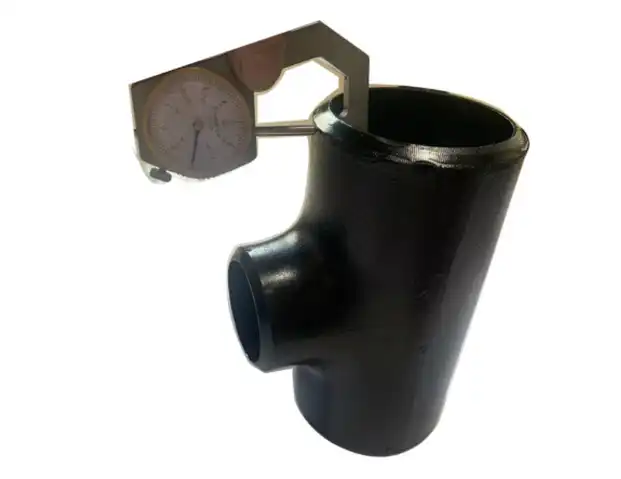
Lifecycle Cost Analysis and Maintenance Benefits
The upfront cost premium of Socket Weld Pipe Tee over threaded alternatives—typically 15-25% at current market rates—amortizes rapidly when evaluated against total ownership costs. Chemical facilities tracking maintenance expenditures consistently report lower intervention rates for socket weld systems, with mean time between failures (MTBF) extending 3-5 years beyond threaded equivalents in corrosive service. The elimination of periodic re-tightening requirements alone justifies the initial investment in high-consequence areas like chlorine handling systems.
Maintenance planning simplifies with socket weld installations, as the permanent joint integrity removes the scheduled inspection requirements mandated for mechanical connections in many process safety management programs. Our customers operating under OSHA PSM jurisdiction appreciate how socket weld specifications reduce their compliance burden, allowing maintenance resources to focus on rotating equipment and instrumentation rather than routine piping integrity checks.
Key Applications of Socket Weld Pipe Tees in Chemical Industries
High-Pressure Process Control and Instrumentation Lines
Chemical manufacturing relies on precise process control, with instrumentation taps and analyzer sample lines requiring absolute leak integrity. Socket weld tees excel in these applications, creating reliable branch connections for pressure transmitters, temperature sensors, and continuous analyzers monitoring process conditions. A typical distillation column may incorporate dozens of instrument connections operating at pressures matching the process stream—often exceeding 1000 PSI—where socket weld fittings provide the necessary pressure rating in compact configurations.
The vibration resistance of welded joints proves particularly valuable near reciprocating compressors and agitator-equipped reactors, where mechanical connections experience loosening forces. We've supplied socket weld tees for ethylene production facilities where analyzer sample systems maintained calibration accuracy for extended periods, eliminating the drift issues caused by micro-leaks in threaded instrument installations.
Corrosive Chemical Distribution Systems
The chemical industry processes materials ranging from concentrated acids to alkaline solutions, each presenting unique corrosion challenges. Socket weld tees manufactured from appropriate alloys handle these environments while maintaining system integrity. A recent project at a phosphoric acid production facility utilized our 316L stainless steel socket weld tees throughout the concentration system, where temperatures approached 200°C and acid concentrations exceeded 85%. The fittings have operated for four years without replacement, contrasting with the previous threaded system that required annual fitting replacement due to crevice corrosion.
Specialty chemical manufacturers producing pharmaceutical intermediates value the smooth internal geometry of socket weld tees, which minimizes product entrapment and facilitates complete system drainage during product changeovers. This design characteristic reduces cross-contamination risks in multi-product facilities where cleaning validation drives operational protocols.
Petrochemical Plant Integration and Performance Data
A major petrochemical complex in the Gulf Coast region integrated our socket weld tee fittings throughout their hydrocarbon processing units during a 2019 expansion project. The facility specified Class 6000 carbon steel tees for high-pressure hydrogen service and Class 3000 stainless steel variants for amine treating systems. After three years of continuous operation, plant engineering documented zero fitting-related failures and measured fugitive emission levels 75% below their previous threaded system baseline.
The procurement team noted additional benefits beyond leak prevention, including reduced installation contractor costs and faster commissioning schedules. The standardization on socket weld construction allowed their maintenance department to stock fewer spare parts while maintaining broader system coverage, as the fittings proved interchangeable across multiple process units with similar pressure ratings.
How to Select and Procure Socket Weld Pipe Tees for Your Chemical Facility
Material Grade and Pressure Class Alignment
Successful fitting selection begins with matching material properties to process chemistry and operating conditions. Carbon steel grades serve general hydrocarbon and water applications where corrosion rates remain manageable through inhibitor programs, while stainless steel variants address oxidizing acids and chloride-containing streams. Our technical team assists customers with material selection, referencing corrosion data from NACE publications and proprietary testing to identify optimal grades for specific chemical exposures.
Pressure class selection requires analyzing not only normal operating conditions but also potential upset scenarios and future operational flexibility. Specifying Class 3000 fittings for a system currently operating at 800 PSI provides safety margin for process optimization projects that may increase operating pressures. The incremental cost difference between pressure classes often represents less than 5% of total installed costs, making conservative specifications a prudent risk management approach.
Comparative Analysis: Socket Weld Versus Alternative Connection Methods
When evaluating connection technologies, procurement professionals must weigh multiple factors beyond initial purchase price. Butt weld fittings offer superior flow characteristics and eliminate the crevice inherent to socket designs, making them preferable for large-diameter mains and slurry services prone to solids accumulation. However, the installation complexity and inspection costs often exceed socket weld alternatives for small-bore applications under 2 inches.
Threaded connections provide disassembly capability valued in systems requiring frequent maintenance access, yet the mechanical seal reliability degrades in vibration-prone locations and high-temperature cycling. Our analysis of chemical plant maintenance records indicates threaded systems in severe service require 3-4 times more leak repairs annually compared to socket weld installations, translating to significant unplanned downtime costs.
Supplier Evaluation Criteria and Quality Assurance
Selecting a reliable fitting supplier demands verification of manufacturing capabilities and quality management systems. We maintain ISO 9001:2000 certification and hold the People's Republic of China Special Equipment Manufacturing License, demonstrating compliance with international quality standards. Our production facility in Cangzhou operates advanced forging and machining equipment capable of maintaining ASME B16.11 dimensional tolerances across production runs, with statistical process control monitoring critical parameters.
Material traceability represents another essential supplier capability, as chemical industry projects increasingly require full documentation linking finished Socket Weld Pipe Tee fittings to certified mill test reports. Our quality system maintains complete traceability from raw material heat numbers through final product marking, providing the documentation chain required by engineering, procurement construction (EPC) contractors managing complex project quality plans. Each fitting ships with material test certificates meeting EN 10204 3.1 requirements, eliminating documentation gaps that delay project acceptance.
At Oudi, we've served the chemical processing industry since 1998, accumulating expertise that informs our product development and customer support. Our 66,600-square-meter manufacturing complex produces 16,000 tons annually of pipe fittings, including comprehensive socket weld tee offerings in all standard and many special configurations. The integration of advanced inspection equipment—including spectroscopic analyzers for positive material identification and ultrasonic testing systems for internal soundness verification—ensures every fitting meets specified requirements before shipment.
Installation and Quality Inspection Best Practices
Joint Preparation and Welding Techniques
Proper socket weld installation begins with pipe preparation, cutting to length with square ends and removing burrs that could interfere with socket insertion. The pipe inserts fully into the socket depth, then withdraws approximately 1/16 inch to create the expansion gap that prevents weld cracking during thermal cycling. This gap accommodates differential expansion between pipe and fitting, a critical consideration in chemical systems experiencing temperature fluctuations during startup and shutdown sequences.
Welding procedures require qualification to ASME Section IX or equivalent codes, with filler metal selection matching base material chemistry. Stainless steel socket welds typically employ ER308L or ER316L electrodes, while carbon steel applications use E7018 or equivalent. The fillet weld builds in a single or multiple passes depending on pipe size, with interpass temperature control preventing excessive heat input that could compromise material properties in the heat-affected zone.
Non-Destructive Testing and Weld Integrity Verification
Quality inspection protocols for socket weld tees emphasize surface examination methods suited to fillet weld geometry. Magnetic particle inspection effectively detects surface-breaking discontinuities in ferromagnetic materials, with sensitivity to cracks as small as 0.005 inches. Liquid penetrant testing serves similar purposes for stainless steel and other non-magnetic materials, revealing defects that could propagate under service conditions.
Dimensional verification confirms proper gap maintenance and weld profile conformance to code requirements. Ultrasonic testing, while less commonly applied to socket welds than butt joints, can detect lack of fusion or incomplete penetration in critical applications. Chemical facilities operating under stringent process safety management protocols often specify enhanced inspection frequencies, with 100% surface examination of all socket welds in high-consequence systems.
Preventive Maintenance Strategies for Extended Service Life
While socket weld joints require minimal routine maintenance, systematic inspection programs identify emerging issues before failures occur. External visual inspection during planned shutdowns detects corrosion patterns that may indicate internal process problems or external insulation degradation. Thickness measurements using ultrasonic methods track corrosion rates, allowing predictive replacement before wall thickness reaches minimum safe levels.
Chemical systems containing corrosive media benefit from corrosion monitoring programs that include socket weld tees as inspection points. Establishing baseline thickness measurements during initial commissioning provides reference data for trend analysis, with measurement locations documented in piping isometric drawings. This proactive approach extends system life while maintaining safety margins, as deterioration proceeds predictably rather than creating unexpected failures.
Conclusion
Socket weld tees deliver proven performance in chemical industry applications where leak integrity, pressure capability, and corrosion resistance determine operational success. The combination of forged construction, standardized dimensions, and welded joint permanence addresses the fundamental challenges chemical facilities face in maintaining safe, reliable piping systems. From high-pressure process control to corrosive chemical distribution, these fittings provide engineering solutions backed by decades of field performance data. Selecting appropriate materials, following installation best practices, and partnering with qualified manufacturers ensures chemical processing facilities achieve the reliability and safety margins their operations demand.
FAQ
1. What material grades are best for sulfuric acid service?
For concentrated sulfuric acid applications above 65% concentration, Type 316L stainless steel socket weld tees provide excellent corrosion resistance at temperatures below 80°C. Higher temperature service or more concentrated solutions may require specialized alloys such as Alloy 20 or Hastelloy C-276, depending on specific process conditions and velocity considerations.
2. How do socket weld tees compare to butt weld fittings under high pressure?
Socket weld tees offer equivalent pressure capability to butt weld alternatives in sizes up to 2 inches, with Class 6000 ratings exceeding 10,000 PSI at ambient temperatures. Butt weld fittings become more economical in larger diameters and provide superior flow characteristics in critical applications, though socket welds maintain advantages in installation efficiency and inspection accessibility.
3. What are typical lead times for customized socket weld tee orders?
Standard material grades and pressure classes typically ship within 3-4 weeks, while exotic alloy specifications or non-standard dimensions may require 6-8 weeks for material procurement and production scheduling. Maintaining strategic inventory of common configurations allows manufacturers to support expedited requirements for plant maintenance and turnaround projects.
Partner with a Trusted Socket Weld Pipe Tee Supplier
Oudi specializes in manufacturing high-integrity socket weld pipe tees designed specifically for chemical industry demands, backed by over 25 years of engineering expertise and ISO 9001:2000 certified quality systems. Our comprehensive product range encompasses carbon steel, stainless steel, and alloy steel configurations meeting ASME B16.11 standards, with material traceability and full documentation supporting your project quality requirements. We understand the procurement challenges facing chemical facilities—balancing technical specifications with delivery schedules and budget constraints—and structure our customer support to address these realities. Contact our technical team at oudi-04@oudiguandao.com for application-specific guidance, detailed specifications, or project quotations. With 16,000-ton annual production capacity and established logistics networks serving over 40 countries, we deliver the reliable supply chain performance your chemical processing operations require, positioning your projects for on-time, on-budget success.
References
1. American Society of Mechanical Engineers. (2021). "ASME B16.11: Forged Fittings, Socket-Welding and Threaded." New York: ASME Press.
2. Davis, J.R. (2018). "Corrosion of Weldments in Chemical Process Industries." Materials Park, OH: ASM International.
3. Nayyar, M.L. (2019). "Piping Handbook, Eighth Edition." New York: McGraw-Hill Education.
4. National Association of Corrosion Engineers. (2020). "Materials Selection for Corrosive Environments in Chemical Processing." Houston: NACE International.
5. Perry, R.H. & Green, D.W. (2019). "Perry's Chemical Engineers' Handbook, Ninth Edition." New York: McGraw-Hill Professional.
6. Towler, G. & Sinnott, R. (2022). "Chemical Engineering Design: Principles, Practice and Economics of Plant and Process Design, Third Edition." Oxford: Butterworth-Heinemann.

Need help finding the right solution with our experts. Please contact us.

SINCE 1998 Your Reliable Pipeline Manufacturer



