Custom Carbon Steel Elbows: OEM Guide to Specs and Sizing
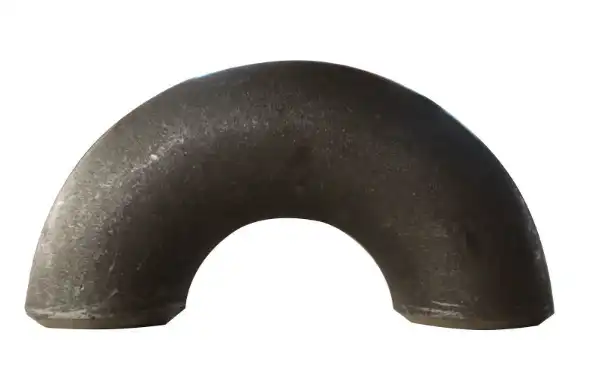
As it pertains to designing pipe components for vital industrial applications, knowing the specifics of bespoke carbon steel elbows becomes essential. These fittings are used for directional changes in complicated pipe networks in oil refineries, chemical plants, power-generating facilities, and shipbuilding activities. The specifications for Custom carbon steel elbows are defined by detailed dimensional parameters, material grades, production procedures, and compliance criteria that are critical to the integrity of the system and the safety of operations. Choosing the correct elbow, with the suitable size, pressure ratings, and connection types, guarantees a smooth fit with existing infrastructure, while preserving flow efficiency and structural integrity over the life of the system.
Understanding Custom Carbon Steel Elbows: Definitions and Specifications
What Makes Carbon Steel Elbows Essential in Industrial Piping
Carbon steel elbows are essential directional parts used to change the fluid flow direction in pipe systems and to preserve structural strength in harsh environments. These fittings are highly resistant to temperature changes, corrosive media, and high-pressure conditions that are typical of petroleum processing, natural gas transportation, and water conservancy projects. The strong material makeup gives exceptional weldability and mechanical qualities at a fraction of the cost of specialty alloys.
Core Specifications That Define Elbow Performance
Dimensional precision is what will decide how well the elbow will fit into your current system. Key parameters include outer diameter sizes from half-inch to 48 inches, radius categories of short radius (SR) and long radius (LR), and wall thickness schedules from SCH10 to SCHXXS. Pressure ratings are based on ANSI B16.9, ASME B16.28, and API standards with temperature limits from cryogenic to 650°F. Material grades complying with ASTM A234 WPB are the standard carbon steel applications.
Angles and Radius Classifications Explained
The shape of the pipe elbow directly impacts the flow characteristics and installation flexibility. Standard designs include 45-degree elbows for gentle directional changes with little pressure loss, and 90-degree elbows for perpendicular rotations in tight locations. Long-radius elbows have a centerline radius of 1.5 times the normal pipe diameter and are used to reduce turbulence and erosion as opposed to short-radius elbows with a 1.0 multiplier. Elbows take care of diameter transitions in one fitting; no need to have separate reducer parts.
Connection Methods and End Configurations
The accuracy of the manufacturing at the places of connection assures decades of leak-free operation. Butt-welding (BW) ends have the strongest joints for high-pressure applications and need bevelled edges cut to exact angles. The SW designs are suitable for smaller-diameter pipes when internal smoothness is less important than installation speed. Threaded connections allow for field-adjustable installation but have limitations in pressure capabilities vs. welded options.
Custom Carbon Steel Elbow Manufacturing and Quality Considerations
Hot Forming Techniques for Superior Strength
In Oudi, we mostly process our Custom carbon steel elbow using hot forming techniques, which improve the characteristics of the material and achieve accurate measurements. Hot pushing is a process that heats sections of pipe to 1900 to 2100 degrees Fahrenheit and then hydraulically forms the pipe around a mandrel. The end result is elbows that are smooth and free of weld seams. Hot induction bending warms localised portions of pipe sequentially, providing controlled radius development for large diameter applications. Thermal methods enhance the grain structure, resulting in improved ductility and impact resistance compared to cold-formed alternatives.
Quality Certifications That Matter to Procurement Teams
Compliance paperwork is used to confirm that components satisfy international safety and performance requirements. Our plant is ISO 9001:2000 certified, which means that the quality is systematically managed from the reception of the raw material to the final inspection. Special equipment manufacturing licence of the People's Republic of China for the manufacture of pressure-bearing components for sensitive applications. Third-party testing verifies the material composition, dimensional tolerances, and mechanical qualities as annotated in the mill test reports provided with each delivery.
Inspection Protocols Ensuring Dimensional Accuracy
Rigorous testing processes ensure possible faults are identified before components reach your building site. We use ultrasonic thickness measurement on 100% of our manufacturing, confirming wall uniformity within tolerance limits of ±12.5%. Radiographic examination is used to show internal discontinuities in welded elbows, and dye penetrant testing is used to find surface flaws not evident to the naked eye. Hydrostatic pressure testing at 1.5 times the rated operating pressure validates the structural integrity of the tank when subjected to simulated operational stress.
Comparing Carbon Steel Elbows: Material and Design Differences
Carbon Steel Versus Alternative Materials
Material selection involves a compromise between performance needs, financial limits, and operating situations. Carbon steel elbows are suitable for non-corrosive or moderately corrosive applications when price is the main consideration for purchase. Tensile strength is 60,000-70,000 psi and will withstand typical pressures in petroleum, natural gas, and water systems. Stainless steel is a better choice for corrosion resistance in acidic or chloride-rich conditions, but at 3-5 times the material cost. Alloy steel types include chromium, molybdenum, or nickel additives to permit operation at extreme temperatures over the 650°F limit for carbon steel.
Seamless Versus Welded Construction
The manufacturing technique affects pressure capacity and delivery time. Solid pipe stock is used to create seamless elbows without longitudinal weld seams and consistent strength distribution, making them suitable for critical high-pressure applications. These products are manufactured using specialised equipment that restricts availability and creates wait times of 8 to 12 weeks for unique requirements. Longitudinal seams are made to unite the pieces by means of welded elbows, which allow for shorter production cycles (4-6 weeks) and greater diameter ranges when seamless manufacture is not possible.
Standard Versus Custom Specifications
Off-the-shelf units are ideal for projects with standard needs and short timeframes. Standard elbows are easily accessible from distributor stock to catalogue dimensions to ANSI, JIS, DIN, and BS requirements. Custom fabrication is essential when the system design requires non-standard angles, specific radius requirements, or dimensional transitions not accessible in normal product lines. Oudi’s 16,000-tonne yearly production capability allows for both regular inventories and custom solutions to technical issues.
Procurement Guide: How to Buy Custom Carbon Steel Elbows for OEM Needs
Evaluating Supplier Capabilities and Reliability
Selecting manufacturing partners requires assessment of technical competencies and operational stability. Verify that candidates maintain current certifications, including ISO quality management systems and regional manufacturing licenses authorizing pressure equipment production. Request documentation of inspection equipment capabilities, ensuring suppliers possess ultrasonic testing apparatus, spectrometers for material verification, and calibrated dimensional measuring tools traceable to national standards.
Since 1998, Oudi has served over 300 customers across 40 countries, building a reputation through consistent quality delivery to Europe, North and South America, Africa, Southeast Asia, and Middle Eastern markets. Our location in Mengcun Hui Autonomous County's industrial zone provides logistical advantages with proximity to Tianjin Port, facilitating container shipments and competitive freight rates.
Understanding Pricing Factors and Order Economics
Component costs reflect material grade selections, complexity of customization, and order volumes for products such as Custom carbon steel elbows. ASTM A234 WPB carbon steel represents baseline pricing, with chrome-molybdenum alloy grades adding 40-60% material premiums. Custom dimensions requiring specialized tooling carry engineering charges amortized across production quantities. Bulk orders exceeding 10-ton minimums qualify for volume discounts ranging from 8-15% compared to small-lot pricing.
Lead times vary based on specification complexity and production schedules. Standard catalog items ship within 2-3 weeks from stock, while custom fabrications require 6-10 weeks, encompassing material procurement, manufacturing, inspection, and quality documentation preparation. Expedited production accommodates urgent project timelines with surcharges covering overtime labor and priority scheduling.
Logistics Considerations for International Procurement
Shipping arrangements significantly impact total landed costs and delivery reliability. FOB (Free On Board) pricing transfers responsibility to buyers once goods are loaded at the origin port, requiring freight forwarder coordination and customs clearance management. CIF (Cost, Insurance, and Freight) terms include ocean transportation and marine insurance to the destination port, simplifying logistics for international buyers. Our team coordinates export documentation, including commercial invoices, packing lists, certificates of origin, and mill test reports required for customs clearance in importing countries.
Installation and Practical Applications of Custom Carbon Steel Elbows
Industry-Specific Applications and Performance Requirements
Piping components need specialised performance characteristics in different areas. In oil and gas activities, elbows are exposed to hydrocarbon media, and in sour service conditions, the use of materials resistant to hydrogen sulphide stress cracking is required. Chemical processing plants must be compatible with corrosive substances. Typically, internally coated or lined carbon steel is specified for a longer service life. Power-generating facilities circulate high-temperature steam and condensate and need thick-wall elbows rated for 600-900 psi operating pressures.
Carbon steel elbows are used in water conservancy projects such as pumping stations, treatment facilities, and distribution networks when economics and corrosion protection from exterior coatings fulfil performance criteria. These fittings are used in construction, shipbuilding, HVAC systems, ballast lines, and utility pipelines where moderate pressure and temperature conditions exist.
Selecting Appropriate Elbow Angles for System Design
The angle is chosen as part of the system configuration according to the flow and geographical restrictions. The 45-degree shape decreases pressure drop by roughly 30% when compared to 90-degree turns. This is advantageous in high-velocity applications where energy economy is important. These slow bends also reduce erosion on the inside radius of the elbow, thereby increasing service life in slurry or particle-loaded fluids.
Perpendicular 90-degree elbows provide tight routing in crowded equipment locations when space limits do not allow progressive changes in direction. Their small size makes it easy to refit and make brownfield adjustments. Reduced end elbows combine the change in direction with the change in diameter, replacing two fittings with one fitting, which reduces labour and possible leak locations.
Maintenance Practices Extending Operational Lifespan
Proactive inspection schedules uncover wear patterns before they cause operational interruptions. Routine walkthroughs identify corrosion, coating deterioration, and structural support concerns through external visual evaluation. Wall loss in erosive service is monitored by ultrasonic thickness measurements, which provide remaining life estimations to guide replacement planning. Scheduled shutdowns include pressure testing to confirm integrity after years of temperature cycling and mechanical strain.
Protective measures boost durability in harsh situations. External coatings like epoxy, polyethylene, or galvanising prevent air corrosion and contact with dirt. In corrosive applications, internal linings of cement mortar or polymer barriers are used to prevent direct media contact. Adequate support spacing minimises drooping and stress concentration at welded connections and keeps them aligned despite temperature variations.
Conclusion
Custom carbon steel elbows: Custom carbon steel elbows need to be specified knowing the dimensional standards, production procedures, material qualities, and application requirements that match the operating conditions of your project. Successful procurement is a balancing act between technical criteria, supplier dependability, certification compliance, and overall cost issues. You will have access to a complete product variety, strict quality control, and fast technical assistance for the whole life of your project by partnering with professional manufacturers. Sharing this information, engineers and procurement experts are able to make educated choices that optimise system performance and manage budgets.
FAQ
1. What wall thickness schedule should I specify for my application?
Wall thickness selection depends on operating pressure, temperature, and corrosive environment factors. Schedule 40 suits low-pressure applications under 300 psi at ambient temperatures, while Schedule 80 handles 600-900 psi ranges common in process piping. Higher schedules like XXS accommodate extreme pressures exceeding 1500 psi or erosive conditions requiring sacrificial material thickness. Consult pressure-temperature rating charts in ASME B31.3 or engage with technical support teams who calculate requirements based on your specific operating parameters and safety margins.
2. How do minimum order quantities affect small-scale projects?
Many manufacturers establish MOQ thresholds that challenge smaller installations requiring limited quantities. Standard catalog items typically carry lower minimums of 100-500 pounds compared to custom specifications requiring dedicated production runs of 2-5 tons. Consider collaborating with local distributors maintaining inventory of common sizes, or coordinate purchasing with other projects to consolidate orders meeting manufacturer minimums. Some suppliers offer flexibility for initial trial orders when establishing new customer relationships, particularly for applications demonstrating recurring volume potential.
3. What documentation should accompany elbow shipments?
Complete material traceability requires comprehensive documentation packages. Mill test reports certify the chemical composition and mechanical properties of heat lots used in production, traceable to original steel mill certifications. Dimensional inspection reports confirm conformance to ordered specifications, including diameters, wall thickness, and angles. Non-destructive testing certificates document radiographic, ultrasonic, or dye penetrant examination results. Material safety data sheets provide handling and storage guidance, while certificates of compliance affirm adherence to applicable standards like ASTM, ASME, or international equivalents.
Partner with Oudi for Reliable Custom Carbon Steel Elbow Supply
Oudi combines 26 years of manufacturing expertise with comprehensive quality systems to deliver custom carbon steel elbow solutions meeting your exact specifications. Our 66,600-square-meter facility houses advanced forming equipment and testing apparatus supporting production from half-inch to 48-inch diameters in materials ranging from standard carbon grades through specialty alloys. Every component undergoes full inspection protocols, including nondestructive testing, before shipment, backed by ISO 9001 certification and special equipment manufacturing licenses. Whether your project demands ANSI, JIS, DIN, or BS standard compliance, our engineering team provides technical consultation, ensuring optimal specification for your application. Contact our team at oudi-04@oudiguandao.com to discuss your requirements with a trusted Custom carbon steel elbow manufacturer serving global markets with proven reliability.
References
1. American Society of Mechanical Engineers. (2020). ASME B16.9: Factory-Made Wrought Buttwelding Fittings. New York: ASME Press.
2. Boyer, Howard E. (1987). Atlas of Stress-Strain Curves. Materials Park, OH: ASM International.
3. Nayyar, Mohinder L. (2000). Piping Handbook, 7th Edition. New York: McGraw-Hill Professional.
4. Perry, Robert H., and Green, Don W. (2008). Perry's Chemical Engineers' Handbook, 8th Edition. New York: McGraw-Hill.
5. Singh, Anoop, and Solanki, Vikas S. (2018). "Material Selection for Piping Components in Petrochemical Industries." International Journal of Engineering Research & Technology, 7(4), 623-629.
6. Zhu, Xian-Kui, and Leis, Brian N. (2012). "Evaluation of Burst Pressure Prediction Models for Line Pipes." International Journal of Pressure Vessels and Piping, 89, 85-97.

Need help finding the right solution with our experts. Please contact us.

SINCE 1998 Your Reliable Pipeline Manufacturer



