Why US Buyers Choose China for CS Concentric Reducers?
The US customers are increasingly opting for China for CS Concentric Reducers because of the combination of low cost, sophisticated production infrastructure, and rigorous adherence to international standards. Chinese manufacturers like Oudi provide carbon steel pipe fittings at affordable prices without compromising on quality and with full product lines that fulfil ANSI, ASME, and ASTM standards. Chinese suppliers have over 20 years of experience, 16,000 tonnes of yearly manufacturing capacity, and ISO9001 certification to offer you trusted solutions with strict quality control from raw material inspection to completed product testing. This strategic sourcing method is helping procurement managers in the oil, chemical, natural gas, and construction industries save costs while ensuring operational integrity and supply chain consistency.
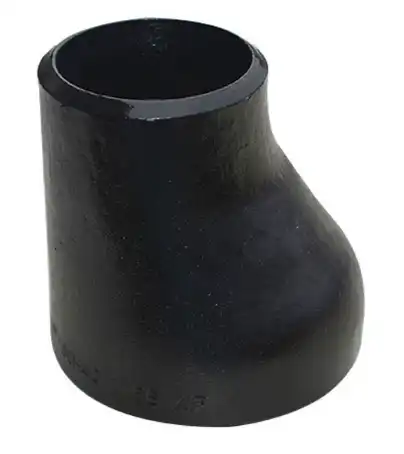
Understanding CS Concentric Reducers: Key Features and Specifications
What Defines a CS Concentric Reducer?
A CS concentric reducer is used to join pipes of different sizes on the same centerline, and it creates a symmetrical cone. This alignment allows for a smooth, fluid transition from the larger to the smaller bore size, reducing turbulence and pressure loss. This fitting is vital in vertical lines of pipe where the dynamics of the flow must be balanced. With carbon steel construction, these reducers provide the mechanical strength required for high-pressure settings, making them suitable for use in oil refineries, chemical plants, power production facilities, and water treatment operations.
Material Composition and Performance Standards
CS concentric reducers are mostly manufactured from carbon steel grades like ASTM A234 WPB for their outstanding weldability, tensile strength, and temperature resistance. These fittings are often rated for service from -29° C to 400° C with pressure ratings equal to those of seamless pipe schedule. Schedules 40, 80, and 160 are typical requirements. It is used in demanding applications such as petroleum handling, steam distribution systems, and industrial process pipelines in which heat stress might threaten structural integrity.
Compliance with International Standards
Manufacturing standards like ASME B16.9 for concentric reducers provide rules for dimensional tolerances, bevel angles (37.5° ±2.5°), and wall thickness homogeneity. ASTM criteria ensure material traceability and mechanical qualities are baseline compliant for industrial applications. American customers look for suppliers that can provide mill test certificates, heat treatment documents, and third-party inspection reports, credentials that demonstrate compliance with American and international norms. This standardisation allows easy integration into existing pipe infrastructure while meeting technical standards and safety norms.
Why China Is the Preferred Source for US Buyers: Market and Quality Insights
Competitive Pricing Without Quality Compromise
Chinese producers benefit from size, efficient manufacturing processes, and integrated supply chains, enabling them to deliver CS Concentric Reducers at a cost 30-40% cheaper than their European or North American equivalents. Bulk purchases save even more money. If you buy more than 10 tonnes, you may typically get a bulk discount. This price differential is not because of inferior material but due to optimised production techniques, cheaper overheads, and government backing for industrial exports. U.S. customers in the construction, shipbuilding, and boiler manufacturing industries get a substantial budget reduction when buying fittings that meet the same technical criteria.
Rigorous Quality Assurance Frameworks
Leading pipe fitting companies in China have established multi-layer quality control systems that comply with ISO 9001 requirements. At Oudi, each manufacturing batch is tested for dimensional inspection, hydrostatic pressure testing, and non-destructive testing such as ultrasonic and radiographic testing. Verification of raw materials means only certified carbon steel is allowed on the manufacturing lines. Finished items are supplied with comprehensive traceability documentation. Heat numbers, test reports, and material certifications accompany each shipment. This methodical approach guarantees the same quality assurance standards that US purchasers demand from Western manufacturers and answers issues about consistency and dependability.
Comprehensive Product Range and Customization
Besides the usual carbon steel, China’s industrial ecosystem has alternatives in materials such as stainless steel (304, 316), alloy steel (P11, P22), and specialised grades for corrosive situations. We can customise for non-standard sizes, special scheduling needs, and custom pressure ratings. Chinese providers can provide the right reducers or fittings from 1 inch to 60 inches in diameter for your particular service circumstances in an effective and economical manner. This flexibility is important for EPC contractors who are handling complicated industrial projects that need a variety of pipe fitting types to be sourced from one supplier.
Comparing CS Concentric Reducers: China vs. Other Global Suppliers
Functional Advantages Over Eccentric Designs
While eccentric reducers suit horizontal pump suction lines to prevent air entrapment, CS Concentric Reducers excel in vertical applications where symmetrical flow patterns maintain system stability. The centered design distributes fluid forces evenly across pipe supports, reducing vibration and mechanical stress. Chinese manufacturers clearly distinguish these applications, guiding buyers toward optimal fitting selection. This technical expertise, combined with rapid prototyping capabilities, ensures procurement teams receive components precisely matched to operational requirements rather than generic solutions.
Material Performance: Carbon Steel vs. Stainless Options
Carbon steel concentric reducers offer superior cost-performance ratios for non-corrosive applications—petroleum pipelines, natural gas distribution, and steam systems. Stainless steel alternatives deliver enhanced corrosion resistance but at 2-3 times higher material costs. Chinese suppliers transparently compare these trade-offs, helping buyers balance budget constraints against service environment demands. When corrosion risk is minimal, CS reducers provide decades of reliable performance at substantially lower investment—a calculation favoring carbon steel in most oil, gas, and power generation scenarios.
Supplier Reliability and Communication Efficiency
Established Chinese manufacturers like Oudi differentiate themselves through consistent lead times (typically 25-35 days for standard orders), responsive technical support, and transparent communication channels. Email correspondence, video factory tours, and third-party inspection arrangements build trust across geographical distances. Compared to suppliers in other regions who may prioritize domestic markets, Chinese exporters demonstrate flexibility in accommodating US regulatory requirements, documentation standards, and shipping preferences. This customer-centric approach translates to smoother transactions and fewer project delays.
A Step-By-Step Guide for US Buyers: Procuring CS Concentric Reducers from China
Identifying Precise Specifications
Good sourcing starts with a good definition of specifications. Required pipe diameters (nominal pipe size for inlet and outlet), schedule numbers (wall thickness), and end connection types should be determined. Bevelled ends for butt welding are still conventional. Pressure ratings should be equal to the system design specifications, Class 150, 300, or above. Application context is critical. Flow dynamics differ in vertical pump discharge lines, steam headers, and process pipes. Capturing these characteristics early minimises expensive specification mismatches and guarantees that the fittings you get will integrate easily into your current infrastructure.
Verifying Manufacturer Credentials
Due diligence safeguards procurement investments. Ask for ISO 9001 certifications, special equipment manufacturing permits (needed in China for pressure vessel components), and material test results from reputable labs. Alibaba, Made-in-China, and others give tools to verify suppliers, but nothing beats a direct connection with a manufacturer to get a better picture. Ask for recommendations from clients in your industrial area. A factory supplying oil refineries has different needs than one that focuses on water utilities. Physical factory audits or third-party inspections by SGS or Bureau Veritas provide another level of verification before placing significant purchases.
Negotiation Tactics and Logistics Optimization
Focus on overall landing costs, not just the unit price. Shipping (FOB vs. CIF terms), insurance, and import charges. Bulk order commitments unlock lower prices, but staggered delivery may help cash flow. Expectations for manufacturing lead time must be reasonable, including buffers for quality control and international transportation. Generally, Chinese manufacturers deliver from large ports such as Tianjin or Qingdao, with a transit period to US West Coast ports of 15-20 days. Set packing requirements to avoid damage in transit – hardwood containers with moisture barriers for long-haul delivery. Set payment conditions (30% deposit, 70% before shipping via T/T) to safeguard both parties and keep production on time.
Case Studies and Testimonials: Successful US-China Procurement Partnerships
Cost Savings in Petroleum Infrastructure Projects
A Texas-based EPC contractor purchasing 200 tonnes of carbon steel concentric reducers for a refinery expansion was able to cut costs by 35% by teaming up with a Chinese manufacturer. 2. The supplier supplied ASME B16.9-compliant fittings with complete material traceability on time within the 40-day project schedule. Third-party inspection for dimensional correctness and pressure test results before shipping. The contractor indicated that the quality was the same as that of domestically obtained components, and the budget savings supported extra safety equipment modifications. This result shows how targeted China sourcing may improve project economics without any operational constraints.
Building Long-Term Distributor Relationships
Oudi also signed a five-year supply deal with a California-based industrial pipe fittings distributor after the distributor’s first trial orders surpassed expectations. With the confidence that comes with consistent product quality, fast technical assistance, and flexible minimum order quantities, the distributor was able to grow their Carbon Steel fitting inventory. When the specifications came into doubt, Oudi’s engineering team responded within 24 hours with comprehensive drawings and material options. This relationship grew into more than a transactional relationship, but a collaborative problem-solving one. The distributor currently sources 60% of its concentric reducer inventory from China, while still maintaining a competitive retail price for the regional contractors.
Overcoming Quality Concerns Through Transparency
A power-generating equipment maker was originally reluctant about Chinese suppliers because of perceived difficulties regarding quality. After an assessment of Oudi’s plant in Cangzhou, they saw automated manufacturing machinery, thorough testing labs, and rigorous quality documentation systems. The manufacturer conducted a phased certification procedure, first with modest prototype orders, then production batches with observed inspections, and finally regular delivery schedules. This systematic methodology demonstrated that Chinese manufacturers with international certifications provided reliable quality, converting doubt into a trusted sourcing relationship that decreased component expenses by 28%.
Conclusion
If you are a US purchasing agent, under cost constraints and quality demands, you may get some real benefits by sourcing your CS Concentric Reducers from China. Chinese manufacturers combine low prices with strong quality systems, great customisation options, and consistent delivery performance. Companies like Oudi are proof of this value offer with ISO 9001 certification, 16,000 tonnes of yearly capacity, and decades of export experience to 40+ countries. Strategic sourcing from China is not a compromise, but an optimisation, leveraging the efficiencies of global manufacturing, while still maintaining the highest ASME, ASTM, and industry norms for the critical piping infrastructure used in the oil, chemical, power generation, and construction industries.
FAQ
1. What are typical lead times when ordering from Chinese suppliers?
Standard CS concentric reducer orders typically require 25-35 days from purchase order confirmation to shipment readiness. This timeline includes material procurement (5-7 days), forming and heat treatment processes (10-15 days), quality inspection (3-5 days), and packaging preparation. Custom specifications or non-standard materials may extend lead times by 1-2 weeks. International shipping adds 15-25 days depending on the destination port and customs clearance efficiency. Reputable manufacturers provide production schedules and milestone updates, allowing buyers to coordinate project timelines accurately.
2. How can I ensure quality standards are met?
Implement a multi-step verification process: review supplier certifications (ISO 9001, manufacturing licenses), request material test reports from third-party labs, and specify inspection requirements in purchase contracts. Many buyers arrange pre-shipment inspections through independent agencies like SGS or Bureau Veritas to confirm dimensional tolerances, pressure testing results, and visual quality before goods leave the factory. Establishing clear acceptance criteria in procurement documents—referencing ASME B16.9 standards and ASTM material specifications—provides objective quality benchmarks that both parties understand.
3. Are customized sizes and pressure ratings available?
Chinese manufacturers routinely accommodate non-standard dimensions and specialized pressure ratings beyond catalog offerings. Custom size ranges from 1/2-inch to 60-inch diameters are feasible, with wall thickness adjusted to match specific schedule requirements or pressure calculations. Providing detailed engineering drawings and service condition parameters (temperature, fluid type, operating pressure) enables manufacturers to recommend appropriate specifications and confirm feasibility before production begins.
Partner with Oudi for Reliable CS Concentric Reducer Supply
US procurement teams seeking a dependable CS Concentric Reducer manufacturer can connect with Oudi to explore how our 26 years of expertise serve your piping project needs. Our Cangzhou facility produces 16,000 tons annually of carbon steel, stainless steel, and alloy fittings meeting ASME and ASTM standards, backed by ISO 9001 certification and comprehensive quality testing. We offer competitive bulk pricing, flexible customization for non-standard specifications, and efficient logistics coordination to major US ports. Reach our team at oudi-04@oudiguandao.com to discuss your reducer specifications, request product samples, or obtain quotations. Whether you require standard dimensions or custom pressure ratings, our technical staff provides responsive support to match fittings precisely to your operational requirements, ensuring your projects proceed on schedule and within budget.
References
1. American Society of Mechanical Engineers (2020). ASME B16.9: Factory-Made Wrought Buttwelding Fittings. New York: ASME Press.
2. Davis, J.R. (2018). Carbon Steel: Properties, Production and Applications. Materials Park, OH: ASM International.
3. Nayyar, M.L. (2019). Piping Handbook, 8th Edition. New York: McGraw-Hill Education.
4. Parisher, R.A. & Rhea, R.A. (2021). Pipe Drafting and Design, 4th Edition. Houston: Gulf Professional Publishing.
5. Singh, R. (2017). Applied Welding Engineering: Processes, Codes, and Standards, 3rd Edition. Oxford: Butterworth-Heinemann.
6. Zappe, R.W. (2020). Valve Selection Handbook: Engineering Fundamentals for Selecting the Right Valve Design, 6th Edition. Houston: Gulf Professional Publishing.

Need help finding the right solution with our experts. Please contact us.

SINCE 1998 Your Reliable Pipeline Manufacturer



