Top BW Carbon Steel Cap Benefits for Piping Systems
BW Carbon Steel Cap fittings are the industry’s favoured choice in terms of securely and effectively terminating pipe systems. These butt-weld end caps offer a tight seal for pipes in the oil, chemical, natural gas, and water conservancy industries. Designed to fulfil severe requirements like ASME B16.9 & ASTM A234 WPB, they provide superior performance in high-pressure applications at an affordable price. Procurement managers and engineers who are working on procuring the right components pertaining to pipe fitting alternatives must know the technical benefits and sourcing considerations of carbon steel end caps if they are to achieve operational excellence and long-term dependability in industrial applications.
Introduction
The industrial pipe systems need components that provide structural integrity and operating safety under harsh conditions. BW Carbon Steel Cap fittings are essential terminal fittings that close off pipe ends with permanent butt-weld connections that can sustain pressures of more than 3000 PSI. They are used in applications ranging from petrochemical refineries to municipal water infrastructure. Unlike threaded alternatives that may leak over time or socket-weld versions restricted to smaller diameters, butt-welded end caps offer seamless, full-penetration connectors that remove weak spots in your system.
Heavy industry procurement is a balancing act between technical conformity, financial limits, and supplier dependability. Choosing the right cap type is critical to avoid catastrophic failures, unscheduled downtime, and expensive regulatory fines. This handbook tackles these issues by reviewing material standards, comparative benefits, and purchasing techniques for B2B customers purchasing from international manufacturers. Whether you are an EPC contractor building a multi-million dollar pipeline or a distributor servicing regional construction markets, the information we provide here will help you make your decisions easier and stay in compliance with international quality standards.
Understanding BW Carbon Steel Caps in Piping Systems
What Defines a BW Carbon Steel Cap
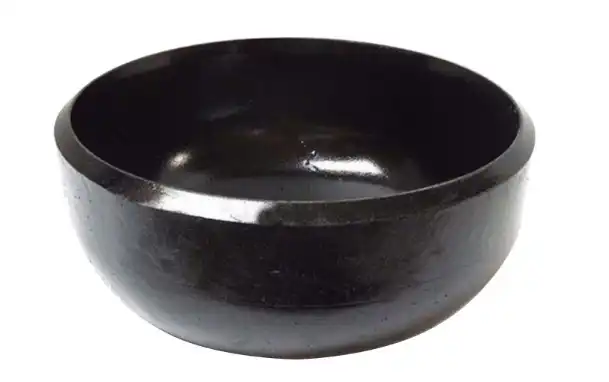
What is a BW Carbon Steel Cap? A BW Carbon Steel Cap is a kind of pipe fitting that is used to shut the end of a pipe by means of butt-welding, providing a permanent seal that forms part of the piping system. BW stands for butt-weld, which is a connection technique where the bevelled edge of the fitting is aligned with the prepared end of the pipe to provide a full-penetration weld. These caps are mostly manufactured from ASTM A234 WPB carbon steel. Carbon steel is an iron-carbon alloy that may include up to 2.1% of carbon. This provides the strength-to-cost ratio needed by heavy industries. Blind flanges are bolted to existing flanges, and threaded caps need NPT connections. The butt-weld cap is essentially part of the pipe, forming a monolithic construction. This means there are no mechanical parts that might loosen over time due to temperature cycling or vibration.
Technical Specifications and Material Grades
At Oudi, we manufacture all types of instrumentation tubes for big-diameter gearbox lines in sizes from 1/2′′ (15 NB) to 48′′ (1200 NB). Options for wall thickness range from Schedule 5S to XXS, including specialised schedules such as S10, S40, S80, and S160, to meet specified pressure class requirements. Standard ASTM A234 WPB grade is suitable for temperatures from -29°C to 400°C, whereas low-temperature versions such as ASTM A420 WPL6 are suitable for cryogenic services down to -46°C. All caps are dimensionally checked to ASME B16.9 standards so you get an exact fit-up to prevent welding flaws and inspection failures.
Comparison with Alternative Cap Types
The selection between butt-weld and other forms of caps is dependent on system factors and installation situation. Threaded caps are useful for low-pressure applications below 300 PSI where disassembly may be necessary; however, the mechanical threads add stress concentration areas that may be susceptible to fatigue cracking. Socket-weld caps are handy for small-bore pipework less than 2 inches; however, in certain media, fissures form that are prone to corrosion. Seamless caps are constructed from solid bar stock rather than plate and have a better grain structure for important high-pressure applications, but come at a premium price. For most industrial pipe systems in the 150# to 2500# pressure class, conventional butt-weld carbon steel caps provide the best performance at the best lifetime cost.
Top 7 Benefits of BW Carbon Steel Caps in Industrial Piping
Understanding the strategic advantages of these fittings helps procurement teams justify specifications to stakeholders while ensuring long-term asset performance. The following benefits reflect real-world operational data from installations across our global customer base of over 300 clients spanning 40 countries.
Superior Durability and Mechanical Strength
ASTM A234 carbon BW Carbon Steel Caps have a tensile strength of about 60,000 PSI, ensuring the structural integrity against internal pressure stress and external mechanical stresses. This results in a homogeneous joint where the heat-affected zone is as strong as the base metal when suitable welding processes are used. Such resilience is critical to applications such as offshore oil platforms, where components are subjected to corrosive saltwater conditions with cyclical pressure variations. Our manufacturing process at Oudi is ISO 9001 certified and uses heat treatment techniques that optimise grain structure and eliminate residual stresses that might trigger fracture propagation.
Reliable Leak Prevention Through Permanent Sealing
The butt weld caps provide a full penetration weld union that overcomes the gasket requirements of flanged connections and the thread engagement constraints of NPT caps. Radiographic testing of production welds routinely shows 100% fusion across the joint interface, forming a barrier that retains integrity even during thermal cycling between ambient and operational temperatures. This leak-proof property is essential in chemical processing facilities where corrosive media such as sulphuric acid or caustic solutions are processed to avoid environmental accidents and worker exposure. The seamless connection means there are no gaps for deposits to collect and cause corrosion. This is a typical failure mode for threaded alternatives.
Versatility Across Multiple Industrial Sectors
Whether it be natural gas distribution systems needing ASME B31.8 compliance or boiler systems requiring ASME Section I standards, carbon steel end caps are designed to fit into a wide range of regulatory environments and operating situations. Our manufacturing plant has material traceability systems that capture heat data and mill test reports that allow customers to meet documentation requirements in any country. Installation contractors do not need specialised equipment or training since the material may be welded using ordinary SMAW, GTAW, or GMAW methods. This adaptability also extends to compliance with different pipe schedules and diameter transitions, making them useful for retrofit projects where existing infrastructure must be updated without total replacement.
Cost-Effectiveness and Long-Term Value
Carbon steel caps are a cost-effective alternative to stainless steel or alloy caps, reducing material costs by 40-60%. They provide acceptable corrosion resistance for most non-marine applications when correct coating techniques are used. In big-scale projects with hundreds of termination points, the economic benefit becomes significant. Our yearly capacity of 16,000 tonnes allows us to provide volume pricing models that improve budget efficiency for bulk buyers. When lifespan expenses are included (e.g., installation labour, maintenance intervals, and estimated service life), carbon steel caps provide a better return on investment for systems with20-0 to 30-year design horizons, which are common for power generating and municipal water infrastructure.
Compliance with International Quality Standards
We test every cap that leaves our Cangzhou factory to several standards, such as the ASME B16.9 dimensional tolerances, ASTM A234 chemical composition criteria, and customer-specified impact testing according to ASTM A370. Our Chinese regulatory authorities' Special Equipment Manufacturing License is evidence of our capabilities for pressure-retaining components in essential services. This certification alignment helps to facilitate sourcing for international projects when components must meet both origin country standards and destination market laws. For customers wanting independent verification prior to shipping, third-party inspection acceptance from organisations like TÜV, Lloyd's, or Bureau Veritas may give further confidence.
Simplified Installation Reducing Project Timelines
The butt-weld caps have bevelled edges for fit-up and do not need the machining procedures necessary in constructing closures from plate material. In the construction business, carbon steel welding methods are well established, and skilled welders are widely accessible in most geographical regions. No bolted connections imply no torque sequencing, no gasket installation, or stud tensioning, which saves considerable labour hours in flanged systems. Cap applications are well suited for modular construction applications where pipe spools are produced off-site, since they may be welded in controlled shop settings before field installation, enhancing quality consistency and reducing field completion times.
Customization Options for Complex Requirements
Along with typical catalogue sizes, our production capabilities include bespoke thickness walls for non-standard pressure ratings, exotic material upgrades for corrosive applications, and dimensional adjustments to fit older equipment interfaces. In the event of operating circumstances beyond the normal service limitations of carbon steel, engineering support teams are available to help with material selection, including recommendations for alternatives such as ASTM A420 low-temperature grades or moving to stainless steel if financial justification can be made. This flexibility is useful for brownfield projects when new components must interface with ageing infrastructure constructed to old standards or imperial measurements not covered by newer ASME requirements.
BW Carbon Steel Cap vs Other Cap Types: Making the Right Choice
Strategic component selection requires evaluating multiple factors beyond the initial purchase price. The comparison below synthesizes technical performance characteristics with practical procurement considerations.
Strength and Pressure Rating Advantages
Butt-weld carbon BW Carbon Steel Cap achieves pressure ratings up to ASME Class 2500 (6170 PSI at ambient temperature), significantly exceeding the 300-600 PSI limits of standard threaded caps. The continuous grain structure through the weld joint distributes stress uniformly, preventing the concentration points that cause threaded connections to fail under pressure surges. Seamless caps manufactured from forged bar stock offer marginally higher strength but at 2-3 times the cost, a premium justified only in the most demanding services like supercritical steam systems above 3500 PSI.
Corrosion Resistance Evaluation
While stainless steel caps provide superior resistance to oxidation and chemical attack, properly coated carbon steel performs adequately in most industrial environments at a fraction of the cost. Our caps accept standard protective systems including fusion-bonded epoxy, three-layer polyethylene, or hot-dip galvanizing depending on service conditions. In mildly corrosive applications like treated water distribution or dry gas transmission, bare carbon steel with minimal surface preparation delivers a 20+ year service life. The decision to upgrade to stainless should be based on specific media compatibility data rather than default specifications, as unnecessary material upgrades inflate project costs without proportional benefit.
Installation Complexity and Labor Costs
Threaded caps offer the quickest installation, requiring only thread sealant and a pipe wrench, but this convenience comes with long-term reliability trade-offs. Socket-weld caps fall between threaded and butt-weld in installation time, though the partial-penetration weld creates corrosion concerns in certain services. Butt-weld installation demands qualified welders and post-weld inspection, adding labor hours but producing a permanent joint that eliminates future maintenance interventions. For systems designed for decades of uninterrupted service, the incremental installation cost is offset by the elimination of periodic re-torquing, gasket replacement, and leak repair typical of mechanical connections.
Procurement and Supply Chain Insights for BW Carbon Steel Caps
Effective sourcing strategies account for quality verification, logistical efficiency, and supplier partnership potential beyond transactional price comparison.
Supplier Evaluation Criteria
Certification verification should top your supplier assessment checklist. Our ISO 9001:2000 quality management system certification and Special Equipment Manufacturing License demonstrate capability for pressure-retaining components in regulated industries. Factory audits revealing advanced production equipment—like our CNC machining centers and automated ultrasonic testing stations—indicate capacity for consistent quality across high-volume orders. Export experience spanning Europe, the Americas, Africa, and Asia proves logistical competence and familiarity with diverse regulatory environments. At Oudi, our self-management import-export authority streamlines customs procedures, reducing lead times compared to suppliers requiring third-party trading companies.
Bulk Purchasing and Customization Benefits
Volume commitments unlock pricing advantages through optimized production scheduling and raw material procurement. Our 16,000-ton annual capacity accommodates large project requirements while maintaining inventory for smaller urgent orders. Customization options extend beyond dimensional variants to include specialized testing like positive material identification (PMI), elevated temperature impact testing per ASTM A370, or supplementary corrosion testing in client-specified media. Establishing framework agreements with preferred suppliers stabilizes pricing across project phases and prioritizes your orders during capacity constraints, a significant advantage when material shortages affect global markets.
International Logistics and Lead Time Management
Standard production lead times range from 3-5 weeks for catalog items, extending to 6-8 weeks for custom specifications requiring material procurement or tooling modifications. Container consolidation services optimize freight costs when multiple fitting types are ordered simultaneously. Our proximity to Tianjin Port—just 120 kilometers from our Cangzhou facility—enables efficient export logistics with weekly vessel departures to North American and European destinations. Understanding Incoterms selection impacts total landed cost significantly; FOB pricing transfers responsibility at the origin port while CIF quotations include freight and insurance to the destination, affecting your inventory carrying costs and customs clearance procedures.
Installation Best Practices for BW Carbon Steel Caps
Proper installation procedures directly impact system integrity and service life, making adherence to industry standards non-negotiable for critical applications.
Pre-Installation Preparation and Inspection
Before welding commences, verify cap dimensions against purchase specifications and inspect for shipping damage like dents or gouges exceeding ASME B16.9 tolerance limits. Confirm material certification documents match heat numbers stamped on fittings, a traceability requirement for code construction. Pipe end preparation requires square cutting with beveling angles between 30 and 37.5 degrees and root face dimensions per welding procedure specifications. Cleanliness is critical—remove mill scale, rust, oil, and moisture within two inches of the joint area using mechanical grinding or chemical cleaning, as contaminants cause weld porosity and hydrogen cracking.
Welding Procedures and Quality Assurance
Qualified welding procedures specific to ASTM A234 material and applicable code requirements (ASME B31.3 for process piping, B31.1 for power piping) must be followed. Preheat requirements typically range from 50-150°F depending on material thickness and ambient temperature, preventing thermal shock that induces cracking. Multi-pass welding technique with interpass temperature control ensures proper fusion and grain structure throughout the joint thickness. Post-weld heat treatment may be mandatory for services above certain temperature or pressure thresholds, requiring controlled furnace heating to 1100-1200°F followed by slow cooling.
Post-Installation Testing and Maintenance
Non-destructive examination requirements vary by code and service classification. Radiographic testing provides the most comprehensive weld integrity assessment, revealing internal defects invisible to surface inspection. Hydrostatic testing at 1.5 times design pressure for a minimum of two hours confirms overall system integrity before commissioning. Maintenance protocols should include periodic visual inspection for external corrosion, coating degradation, or mechanical damage from adjacent equipment or vehicle traffic. In cyclic services experiencing repeated thermal expansion, ultrasonic thickness monitoring every 3-5 years detects erosion or corrosion-induced wall thinning before it reaches critical levels.
Conclusion
Selecting BW Carbon Steel Cap fittings represents a strategic decision that balances immediate project requirements with long-term operational performance. The combination of mechanical strength, leak-proof reliability, cost efficiency, and regulatory compliance makes them the default choice for industrial piping across oil, chemical, natural gas, and infrastructure sectors. Understanding technical specifications, comparative advantages against alternative cap types, and supplier evaluation criteria empowers procurement teams to optimize both component performance and total project economics. When sourced from certified manufacturers maintaining rigorous quality systems and backed by comprehensive material traceability, these seemingly simple components become critical contributors to system safety and operational uptime across decades of service life.
FAQ
1. What pressure ratings are typical for BW carbon steel caps?
Standard ASTM A234 WPB caps accommodate pressure classes from 150# (285 PSI at 100°F) through 2500# (6170 PSI at ambient), with actual ratings dependent on wall thickness schedule and operating temperature. Higher pressure applications may require custom thickness calculations per ASME B31.3 pressure design formulas, accounting for material allowable stress values, corrosion allowance, and weld joint efficiency factors.
2. Can I order custom sizes outside standard ASME dimensions?
Absolutely. Our manufacturing capabilities extend beyond catalog specifications to include custom diameters, wall thicknesses, and material grades for unique application requirements. Engineering support teams assist with feasibility assessment and provide technical drawings for approval before production. Minimum order quantities for custom sizes typically start at 50 pieces, though smaller quantities may be accommodated depending on tooling requirements and production scheduling.
3. How do I verify supplier certification and product quality?
Request copies of ISO 9001 certification, Special Equipment Manufacturing License, and relevant pressure equipment directive compliance documents. Material test reports (MTRs) documenting chemical composition and mechanical properties should accompany every shipment, traceable to specific heat numbers. Third-party inspection services can perform factory audits and pre-shipment product verification, with costs typically 2-3% of the order value, providing significant risk mitigation for large procurements.
Partner with Oudi for Your BW Carbon Steel Cap Requirements
At Oudi, our 25-year heritage since 1998 in manufacturing premium pipe fittings positions us as your trusted BW Carbon Steel Cap supplier for demanding industrial applications. Located strategically in China's fitting manufacturing hub with 66,600 square meters of production facilities, we combine advanced CNC machining with rigorous quality control—every fitting undergoes full inspection and nondestructive testing before shipment. Our ISO 9001-certified processes and Special Equipment Manufacturing License demonstrate commitment to international standards that your projects demand.
Whether you're sourcing standard ASME B16.9 dimensions from 1/2″ to 48″ or require custom specifications in ASTM A234 WPB, A420 low-temperature grades, or specialized alloy materials, our 16,000-ton annual capacity ensures reliable supply for projects of any scale. Having served over 300 clients across 40 countries—from North American refineries to Middle Eastern petrochemical complexes—we understand the documentation, certification, and logistical requirements that make international procurement seamless.
Contact our technical sales team at oudi-04@oudiguandao.com today to discuss your specifications, request material certifications, and receive competitive quotations for your next project. Let us demonstrate how partnering with an established carbon steel pipe cap manufacturer delivers the quality assurance, supply chain reliability, and cost efficiency your procurement strategy requires.
References
1. American Society of Mechanical Engineers. (2020). ASME B16.9: Factory-Made Wrought Buttwelding Fittings. New York: ASME Press.
2. ASTM International. (2021). ASTM A234/A234M: Standard Specification for Piping Fittings of Wrought Carbon Steel and Alloy Steel for Moderate and High Temperature Service. West Conshohocken: ASTM International.
3. Mohitpour, M., Golshan, H., & Murray, A. (2007). Pipeline Design & Construction: A Practical Approach (3rd ed.). New York: ASME Press.
4. Nayyar, M.L. (2019). Piping Handbook (8th ed.). New York: McGraw-Hill Education.
5. American Petroleum Institute. (2018). API 5L: Specification for Line Pipe (46th ed.). Washington, D.C.: API Publishing Services.
6. Singh, R.K. (2017). Pipeline Integrity Handbook: Risk Management and Evaluation. Houston: Gulf Professional Publishing.

Need help finding the right solution with our experts. Please contact us.

SINCE 1998 Your Reliable Pipeline Manufacturer



