High-Quality B16.9 Pipe Caps for Industry
ASME B16.9 pipe caps are the most important part of industrial plumbing systems that need reliable ways to seal them. These wrought steel fittings are made in a workshop and can be used to permanently or temporarily close off pipe ends. They keep contaminants out and keep the system's pressure stable in places like power plants and oil tanks. The standard design makes sure that the dimensions are always the same for butt-welding installation. This ensures leak-proof performance that protects both worker safety and the continuation of operations in major building projects around the world.
Understanding ASME B16.9 Pipe Caps – Standards, Dimensions & Materials
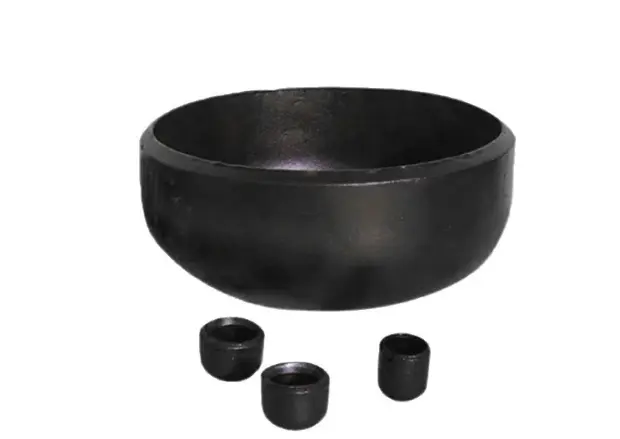
Every part of making pipe caps has to follow strict rules set out in the ASME B16.9 pipe cap standard. This standard talks about the testing methods, pressure-temperature values, material chemistry, and size limits for wrought butt-weld fittings from NPS 1/2 inches to 48 inches. Instead of fixed or socket-weld options, these caps fit perfectly into high-pressure systems thanks to full-penetration butt welds that make lasting joints that can handle tough working conditions.
What Defines an ASME B16.9 Pipe Cap?
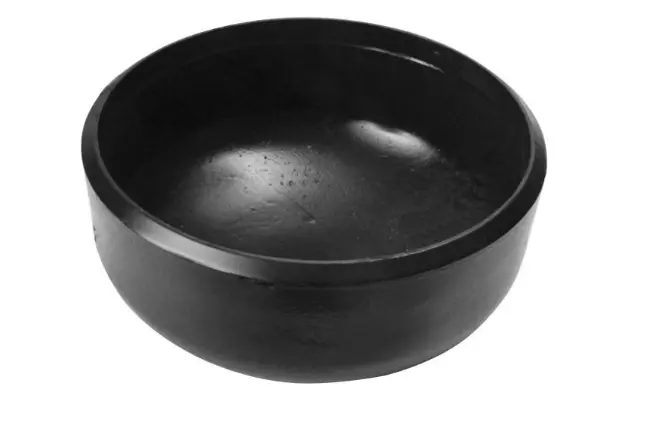
The standard calls for precise control of center-to-end lengths, uniform wall thickness, and bevel preparation angles. Caps made to this standard have a standard 37.5° ± 2.5° bevel end shape, which makes it easier to prepare welds and ensure they fit correctly. When steel is wrought, either by forging, hot-forming, or cold-forming, the steel grains are aligned lengthwise. This process makes the mechanical traits better than when steel is cast. This structural alignment makes it better at resisting wear and impact, which are critical when systems go through temperature cycles or changes in pressure.
Material Grades and Their Applications
For commercial uses, carbon steel types are the most common because they are strong, straightforward to weld, and inexpensive. The most common material standard is ASTM A234 WPB, which has a minimum tensile strength of 60,000 psi and excellent ductility for fitting in the field. With a carbon content of no more than 0.30% and carefully balanced amounts of manganese, phosphorus, and sulfur, the controlled chemical composition makes it possible to weld in most normal situations without the need for preheating. Stainless steels made from ASTM A403 grades are better at resisting rust in chemical processing settings, while alloy steels can handle service conditions at temperatures above 800°F.
Manufacturing Methods and Quality Assurance
At Oudi, we use a variety of manufacturing methods that are specifically designed for different size ranges and performance needs. For smaller widths, seamless caps use hot-pushing technology to keep the grain flow continuous. Larger sizes may require forming and welding in the building. Following strict quality control procedures in line with ISO 9001:2000 approval standards is part of every step in the manufacturing process. As part of our inspection process, we check the dimensions against the ASME B16.9 pipe cap error tables, use XRF spectrometry to confirm the grade, and test the mechanical strength by checking the tensile strength and hardness. Radiographic or ultrasonic examinations are used for non-destructive testing on critical applications to find any underlying cracks that could damage service quality.
Selecting the Right ASME B16.9 Pipe Cap for Your Industrial Application
The choice of material has a big impact on how well something works and how much it costs over its whole life. Carbon steel works exceptionally well in general fuel service, water systems, and uses that don't require high temperatures because the corrosion rate can be controlled with coatings or cathodic protection. Stainless steel types are worth the extra cost when they are used in places that are corrosive and handle acidic or chloride-containing fluids or when the cleanliness of the product requires surfaces that are free of contamination. When chromium, molybdenum, or vanadium is added to alloy steel, it can handle higher temperatures. This is useful for thermal power systems and high-heat process uses.
Pressure Rating Considerations
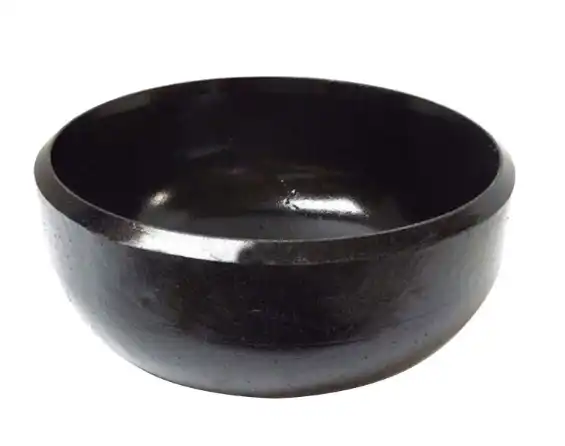
For safe system construction, it's important to understand how pressure and temperature relate to each other. The pressure ratings for ASME B16.9 pipe cap fittings come from the specifications of the pipes that join to them, not from their own values. A Schedule 40 carbon steel cap fits the pressure that a Schedule 40 pipe can handle at a certain temperature. This keeps the system consistent. When temperatures rise, the maximum stress that can be applied drops. For example, a system that can handle 285 psi at room temperature might only be able to handle 200 psi at 650 °F. Engineers must look at ASME B31.3 Process Piping or any other relevant code parts to ensure that the width of the cap wall, the type of material used, and the working conditions are all compatible.
Distinguishing ASME Standards
People sometimes get ASME B16.9 pipe cap butt-weld caps and ASME B16.5 blind flanges mixed up. Both of these types of flanges close off the ends of pipes. The main difference is in how the connections are made and how long they last. Butt-weld caps are firmly joined together with circumferential welds. This makes a smooth shape with little flow disturbance and no parts sticking out. Blind flanges connect to matched flanges with bolts, which lets the parts be taken apart later for inspection or repair. Applications that need to be accessed only occasionally prefer blind flanges, even though they cost more to install. On the other hand, welded caps are easier to use and more reliable for permanent seals.
Installation, Welding, and Maintenance Best Practices
To get installs that don't leak and follow the code, you need to pay attention to the planning, execution, and verification stages. Fit-up is the first step in making a good weld. It needs to be carefully aligned to keep things concentric and avoid high-low situations that cause stress buildup.
Step-by-Step Installation Guidance
The first step in fitting is to prepare the pipe ends for square cutting without burrs or distortion. The bevel angles should match the shape of the cap, which typically has a 37.5° angle and a 1/16-inch root face. Cleanliness is crucial because contaminants add breaks and holes. Three or four tack welds keep the line stable while the root pass is being done. To achieve full penetration without burn-through, welders must keep their travel speed and heat input constant, especially on thin-wall schedules.
Welding Technique Requirements
Shielded metal arc welding, gas tungsten arc welding for root passes, and gas metal arc welding for fill and cap layers can all be used with the angled joint design. ASME Section IX training standards govern the licensing of welders and the development of procedures. For parts that are thicker than an inch or when the temperature drops below 50°F, preheating may be needed to keep the material from hydrogen embrittlement. In critical services, post-weld heat treatment restores the microstructure and reduces leftover stresses. However, in mild conditions, many carbon steel uses work well without this extra step.
Inspection and Maintenance Protocols
The main requirement for acceptance is a visual inspection that finds surface flaws, imperfect fusion, or too much strengthening. Liquid penetrant testing finds cracks in the surface that you can't see with the naked eye. Ultrasonic testing for high-consequence systems is part of our quality control program. It gives us a full look at the whole weld cross-section. Periodic upkeep includes checking the coating on the outside and keeping an eye on rust. Ultrasonic thickness studies show how much wall integrity is still there. Facilities that use risk-based inspection programs focus their resources on the most important areas while still keeping an eye on all of their plumbing systems on a regular basis. In this context, using a certified ASME B16.9 pipe cap ensures that the system closure remains secure throughout the maintenance cycle.
Procuring ASME B16.9 Pipe Caps—What B2B Clients Need to Know?
A good buying process strikes a balance between technical compliance, reliable delivery, and lowering costs. To find out the real total cost of ownership, purchasing managers who work with foreign supply lines have to look at more than just unit prices.
Pricing Factors and Bulk Advantages
Quotes for an ASME B16.9 pipe cap order are affected by the price of raw materials, the difficulty of production, and the size of the order. When you buy in bulk, which is more than the minimum annual production capacity, you can get better prices, which can sometimes cut the cost per unit by 15–25% compared to spot sales. Our yearly production capacity of 16,000 tons lets us meet large volume promises while keeping quality standards high. Lead times range from four to twelve weeks, based on the size range, the type of material, and the testing needs. Standard carbon steel caps in common sizes ship faster than caps made of rare alloys that need to be specially ordered from the mill or go through long rounds of heat treatment.
Certification and Quality Verification
Documentation is concrete proof of following the rules and can be traced back to the source. Type 3.1 material test reports that are approved by independent inspection agencies provide the best level of guarantee. They include chemical analysis, mechanical properties, and measurements confirmation. Our special equipment manufacturing license and ISO 9001:2000 certification show that we handle quality in a planned way at all stages of production. Buyers should clarify their certification needs when asking a question, as new paperwork may not be possible if traceability records are incomplete. Custom manufacturing can handle non-standard sizes, unique material requirements, or faster delivery times, but these changes usually come with higher prices to cover the planning and setup costs.
Why Choose High-Quality ASME B16.9 Pipe Caps—Value for Industry?
Investing in high-quality ASME B16.9 pipe cap products has benefits that last during the entire lifecycle of an asset, not just the cost of the purchase. Better safety margins lower the chances of major failures that cause damage to the environment, injuries to workers, and production stops that are much more expensive than the parts themselves.
Tangible Performance Benefits
Better accuracy in measurements makes installation easier in the field, which cuts down on work hours and weld fixes caused by bad fit-up. Consistent material qualities make sure that it will behave in a regular way under working stresses. This stops early failures that require emergency shutdowns. Comprehensive testing programs find broken parts before they are shipped, instead of after they are installed, when the cost of replacement goes up by a huge amount. These benefits make it a strong value proposition for facilities that value uptime and dependability over the lowest starting cost.
Industry Applications and Case Studies
Butt-weld caps are used in oil and gas transmission systems to keep the pipeline isolated while they are being built and to make lasting dead-end connections. One North American pipeline operator cut installation mistakes by 40% after switching to certified ASME B16.9 pipe cap fittings from a reliable source. They said the changes were due to better consistency in the sizes of the fittings. Using stainless steel caps with known material origin has been shown to extend the service life of toxic process streams in petrochemical plants, compared to generic fittings whose origin is unknown.
Thermal power plants that use supercritical steam cycles need alloy steel parts that can work at high temperatures for a long time. Our heat treatment testing methods make sure that the microstructure develops correctly, which keeps the resistance to creep high throughout the design life. Reliability in the toughest situations has been shown by successful operations in boiler feedwater systems and steam distribution networks. These real-world results show that strict manufacturing practices do affect how well an operation runs. This shows how smart it is to work with well-known suppliers who have strong quality control systems.
Emerging Trends and Innovations
Advances in materials science keep pushing the limits of what is possible. Duplex stainless steel types have both austenitic corrosion protection and ferritic strength, which allows designs to be lighter or pressure ratings to be raised. Better forming technologies make it possible to make bigger, smoother caps, which means that welded building, which has a lot of quality variations, isn't as important. Digital documentation systems that use QR codes or RFID tags put traceability information right on parts, which makes it easier to handle assets and plan inspections throughout the span of a building.
Conclusion
Choosing and buying high-quality ASME B16.9 pipe cap solutions is a big choice that will affect the safety of the system, its dependability, and the cost of upkeep over time. Procurement experts can make choices that are in line with project goals when they know about material qualities, manufacturing standards, and application-specific needs. Premium fittings have accurate measurements, materials that can be tracked, and strict testing procedures that make them valuable because they reduce installation time, make things last longer, and lower the chance that something will go wrong. As performance standards rise and manufacturing systems get more complicated, it becomes important to work with certified manufacturers dedicated to quality excellence in order to stay ahead of the competition.
FAQ
What distinguishes ASME B16.9 caps from standard pipe end caps?
The standard says that ASME B16.9 pipe cap products must meet certain dimensional limits, material chemistry requirements, and testing methods. Generic pipe end caps might not have the right bevel preparation, material approval, or exact measurements needed for setups that meet building codes. Standardization makes sure that products from different makers work together and that performance will be consistent under rated settings.
How do I verify quality when sourcing from international suppliers?
Request Type 3.1 Material Test Reports that are approved by well-known inspection bodies and confirm the material's chemical makeup and mechanical qualities. Check that the company has ISO 9001 approval and any necessary licensing to make things. Inspection services run by a third party can watch the production and testing process and provide independent confirmation before the shipment. Suppliers with a good reputation keep clear records of quality and welcome customer checks of their factories.
Can ASME B16.9 caps be customized for unique specifications?
Manufacturers with a wide range of skills can work with unique sizes, materials that aren't standard, or testing needs that aren't standard. Due to engineering validation and setting changes, customization usually adds to wait times and costs more. During the quotation phase, discuss your specific needs to determine their feasibility and obtain accurate delivery schedules for your ASME B16.9 pipe cap requirements.
Partner with Oudi for Reliable ASME B16.9 Pipe Cap Solutions
Since 1998, Oudi has sent approved pipe parts made of carbon steel, stainless steel, and alloy steel to more than 300 businesses in 40 countries. Our complete quality management system, high-tech inspection tools, and ability to produce 16,000 tons of parts every year ensure a steady supply of parts that meet the toughest worldwide standards. No matter if your project needs standard butt-weld caps for oil and gas infrastructure, corrosion-resistant stainless grades for chemical processing, or high-temperature alloy materials for power generation, our engineering team is there to help you with the planning and buying stages.
As a reliable ASME B16.9 pipe cap maker, we maintain full material tracking from the receipt of raw materials to the final inspection. We do this by using detailed test records to show that our products are compliant. Email our team at oudi-04@oudiguandao.com to talk about your unique needs, get technical data sheets, or get quotes from other companies for your future projects. Partnering with a certified provider who is dedicated to quality, safety, and providing excellent customer service will give you peace of mind.
References
1. American Society of Mechanical Engineers. "ASME B16.9: Factory-Made Wrought Buttwelding Fittings." ASME International, 2018.
2. American Society of Mechanical Engineers. "ASME B31.3: Process Piping Design and Construction." ASME Standards Committee, 2020.
3. ASTM International. "ASTM A234 Standard Specification for Piping Fittings of Wrought Carbon Steel and Alloy Steel for Moderate and High Temperature Service." ASTM Book of Standards, 2019.
4. Nayyar, Mohinder L. "Piping Handbook." McGraw-Hill Professional, Seventh Edition, 2000.
5. American Welding Society. "AWS D1.1 Structural Welding Code - Steel." AWS Standards Committee, 2020.
6. Becht Engineering. "Piping Stress Analysis and Mechanical Design." Technical Publication Series, 2017.

Need help finding the right solution with our experts. Please contact us.

SINCE 1998 Your Reliable Pipeline Manufacturer



