High-temperature carbon steel elbow: ASME Certification Guide
A high-temperature carbon steel elbow is a directional pipe part that is used to change the direction of the fluid or gas flow — often at 45°, 90°, or 180° — in systems that are under high heat and pressure conditions. In the oil refining, natural gas transportation, and chemical processing sectors, these fittings must satisfy stringent dimensions and material specifications to avoid failure. This handbook takes procurement managers, engineers, and distributors through the ASME certification landscape, material standards, manufacturing quality controls, and sourcing techniques that are most important when choosing a certified supplier.
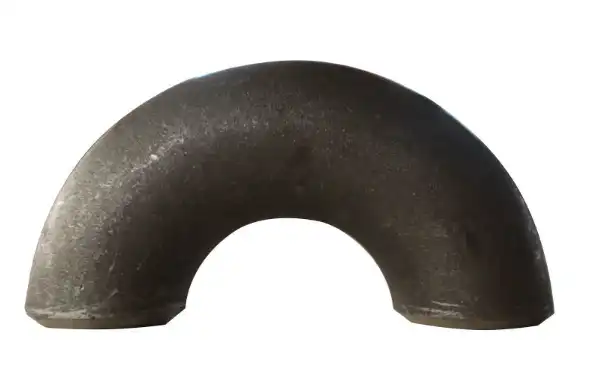
Understanding High-Temperature Carbon Steel Elbows and Their ASME Certification
What Makes Carbon Steel Suitable for High-Temperature Service?
Carbon steel, especially grades like ASTM A234 WPB, provides a sensible compromise between tensile strength, heat conductivity, and cost-effectiveness. Service temperature standard ASME ratings: -29°C to 427°C (-20°F to 800°F). Carbon steel is less resistant to oxidizing conditions than stainless steel, but is reliable in oil, gas, and steam lines when protected properly.
Key ASME Standards Governing These Components
Two standards define compliance for butt-welding fittings in high-temperature service:
- ASME B16.9 specifies factory-made wrought butt-welding fittings, covering dimensions, tolerances, and pressure-temperature ratings for sizes from ½" to 48".
- ASME SA234 defines material requirements for carbon and alloy steel pipe fittings intended for moderate and high-temperature service.
Together, these standards ensure that every certified elbow meets consistent mechanical and dimensional benchmarks recognized across North America and many international markets.
Why ASME Certification Matters for B2B Buyers
ASME-certified fittings lessen the possibility of regulatory rejection at project locations for cross-border procurement teams. Certified items are traceable from raw material heat numbers through to final inspection records to the satisfaction of EPC contractors, plant operators, and insurance underwriters.
Critical Specifications and Performance Factors
Temperature and Pressure Ratings
High-temperature carbon steel elbows have pressure ratings per ASME B16.9 that are based on schedule (wall thickness) and temperature. A normal WPB elbow in Schedule 40 will hold around 720 PSI at 100 degrees F. Allowable working pressure reduces as the operating temperature approaches 800°F in accordance with ASME B31.3 process piping code advice. You cannot negotiate the right timeline for the design state of your system.
Corrosion Resistance and Thermal Expansion Behavior
Carbon steel expands around 6.5×10⁻⁶ in. per in. per ° F. With long lengths of pipe, this thermal movement can result in significant stresses at the elbow joints. Engineers often compensate for this by inserting expansion loops or flexible joints around high-temperature elbows. In moist or chemically active service, corrosion is often controlled by internal epoxy lining or cathodic protection systems.
Comparing Carbon Steel, Stainless Steel, and Alloy Steel Elbows
Different classes of materials find different uses. A realistic material selection comparison:
- Carbon steel elbows (e.g., A234 WPB) offer the optimum cost-to-performance ratio for general high-temperature steam, water, and hydrocarbon operation under oxidizing circumstances.
- Stainless steel elbows (e.g., A403 WP316) can withstand hostile corrosion conditions and offer better temperature oxidation resistance, but at a much higher material cost — sometimes 3× to 5× that of carbon steel.
- Alloy steel elbows (eg., A234 WP11, WP22) fill the need. They provide better creep resistance over 800°F for power generation and high-pressure boiler circuits when carbon steel is pushed to the limit.
Carbon steel continues to be the material of choice for most oil, gas, and water conservancy applications when working conditions are within its rated range.
Manufacturing Process and Quality Assurance
Forged vs. Welded Fabrication Methods
There are two main processes to make high-temperature carbon steel elbows. Hot pushing, or hot-push forming. In this technique, a segment of pipe is forced over a die by a mandrel to make a seamless elbow. The wall thickness is uniform, and the internal geometry is smooth, which reduces turbulence and pressure drop. Welded elbows, made by cutting and connecting sections of plate or pipe, are cheaper for large diameters, but need careful examination of the welds.
Cangzhou Oudi Pipe Manufacture Co., Ltd. produces seamless and straight-seam industrial elbows which are widely used for a variety of applications and available in a comprehensive range of sizes and specifications to fulfill American standard (ANSI), Japanese standard (JIS), German standard (DIN), and British standard (BS) standards.
ASME Compliance Throughout Production
ASME-certified production is not only a checkpoint; it goes through the full manufacturing cycle. At Oudi, the following quality control processes are applied:
- Raw material verification: Every heat of carbon steel is verified for chemical composition and mechanical property requirements prior to its entrance into manufacturing.
- Dimensional Inspection: Finished high-temperature carbon steel elbows are inspected for center-to-end dimensions, wall thickness, and ovality in accordance with ASME B16.9 standards.
- Non-destructive testing (NDT): Ultrasonic testing and magnetic particle inspection are used to identify subsurface and surface imperfections that may affect pressure integrity.
- Heat treatment: Normalizing or stress-relieving heat treatments are used when required to restore mechanical qualities that may have been compromised during formation.
These controls combine to form the comprehensive inspection and nondestructive fault detection system that Oudi maintains from raw material input to final shipping — guaranteed by ISO 9001:2000 quality management certification and the People’s Republic of China Special Equipment Manufacturing License.
Real-World Impact of Certified Quality
A petrochemical plant operating high-temperature steam headers at 400°C reported a 30% reduction in unplanned maintenance shutdowns after transitioning to ASME B16.9-certified elbows with documented NDT records, compared to non-certified alternatives sourced previously. Certified documentation also cut project commissioning delays by simplifying the third-party inspection approval process.
Procurement Guide: Sourcing ASME-Certified High-Temperature Carbon Steel Elbows
Aligning Specifications with Project Requirements
Before contacting any supplier, define your service conditions clearly: operating temperature, design pressure, pipe schedule, end connection type (butt weld or socket weld), and elbow angle (45°, 90°, or 180° long-radius vs. short-radius). These parameters determine which ASME material grade and wall schedule apply to your order.
Evaluating Supplier Credentials
When assessing a high-temperature carbon steel elbow manufacturer, these factors carry the most weight:
- Valid ISO 9001 certification and special equipment manufacturing license confirming systematic quality management.
- Export track record with documented supply to global markets — ideally including regions with stringent inspection regimes such as Europe and North America.
- Production capacity sufficient to meet your project schedule without quality shortcuts. Oudi's annual output reaches 16,000 tons, covering carbon steel, stainless steel, and alloy steel pipe fittings across a complete product range including elbows, flanges, tees, reducers, and caps.
Pricing, Lead Times, and Export Compliance
Competitive pricing must be weighed against total landed cost. Factors including sea freight, import duties, and third-party inspection fees affect final project cost. Oudi holds self-managed import and export authority, which streamlines documentation and reduces customs processing time for international buyers. Located in Mengcun, Cangzhou — with Tianjin Port 120 km away — logistics efficiency is built into our supply chain by geography.
How to Verify ASME Certification and Ensure Product Authenticity
Checking Certification Documents and Product Markings
The real ASME B16.9 elbows are stamped or stenciled with many indications on the fitting: manufacturer’s name or brand, material grade, schedule or nominal wall thickness, heat number, and size. Check the heat number against the material test report (MTR) supplied by the manufacturer. Any difference between the physical marking and the MTR should be corrected immediately.
Common Verification Mistakes to Avoid
Many purchasers just glance at a copy of a supplier’s certificate and do not verify if the certificate is for the precise product batch they have bought. Always ask for batch-specific MTRs, not general certifications at the business level. Make sure that the certificate references the appropriate edition of the ASME standard for the design code of your project.
Third-Party Audits and Ongoing Quality Monitoring
For high-value projects, using a third-party inspection agency such as Bureau Veritas, SGS, or TUV to undertake pre-shipment inspection at the production plant provides an additional layer of independent verification. This is normal industry practice for offshore oil and gas projects and large power plant building contracts, and respected manufacturers embrace it.
Conclusion
There is much more to choosing the correct high-temperature carbon steel elbow than just scanning a product catalog. The material grade, ASME certification scope, manufacturing procedure, and supplier quality infrastructure all impact whether a fitting can function safely during its designated service life. Procurement teams that implement the verification methods and supplier assessment criteria in this book will greatly reduce their project risk. Since 1998, Oudi has serviced over 300 clients in more than 40 countries. Our certified production process is targeted at the standards global purchasers need.
FAQ
1. What is the maximum service temperature for carbon steel elbows under ASME standards?
ASTM A234 WPB carbon steel elbows are rated for service up to approximately 427°C (800°F) under ASME B31.3. Above this threshold, alloy steel grades such as WP11 or WP22 are recommended for sustained high-temperature service.
2. What is the difference between long-radius and short-radius elbows?
A long-radius (LR) elbow has a centerline radius equal to 1.5 times the nominal pipe diameter, which produces lower pressure drop and reduced turbulence. A short-radius (SR) elbow has a radius equal to one pipe diameter, used where space constraints limit routing options but at the cost of higher flow resistance.
3. Are ASME-certified elbows compatible with international piping codes?
Yes. ASME B16.9 fittings are widely accepted under other codes including EN 10253 (European), JIS B2311 (Japanese), and BS 1640 (British), making them suitable for multinational projects without requiring separate product lines.
4. How do I confirm a supplier holds a valid special equipment manufacturing license?
Request the original license document and verify the license number against the issuing authority's records. In China, this license is issued by the State Administration for Market Regulation (SAMR) and is publicly verifiable.
Get ASME-Certified Carbon Steel Elbows from Oudi — Request a Quote Today
Oudi has manufactured and exported certified pipe fittings since 1998, with an annual production capacity of 16,000 tons and a product range covering carbon steel, stainless steel, and alloy steel components. As a trusted high-temperature carbon steel elbow supplier, we hold ISO 9001 certification and the Special Equipment Manufacturing License, and we serve clients across North America, Europe, the Middle East, and Southeast Asia. Contact our team directly at oudi-04@oudiguandao.com to request specifications, pricing, or a tailored quotation for your project.
References
1. American Society of Mechanical Engineers (ASME). ASME B16.9: Factory-Made Wrought Buttwelding Fittings. ASME, 2018.
2. ASTM International. ASTM A234/A234M: Standard Specification for Piping Fittings of Wrought Carbon Steel and Alloy Steel for Moderate and High-Temperature Service. ASTM International, 2022.
3. American Society of Mechanical Engineers (ASME). ASME B31.3: Process Piping Code. ASME, 2022.
4. Nayyar, Mohinder L. Piping Handbook. 7th ed., McGraw-Hill, 2000.
5. Bausbacher, Eric, and Roger Hunt. Process Plant Layout and Piping Design. Prentice Hall, 1993.
6. International Organization for Standardization. ISO 9001:2015 Quality Management Systems — Requirements. ISO, 2015.

Need help finding the right solution with our experts. Please contact us.

SINCE 1998 Your Reliable Pipeline Manufacturer



