OEM Chemical Industry Carbon Steel Elbows: Key Specifications
If you're in charge of pipe procurement for a chemical plant, refinery, or industrial facility, you know that one fitting failure may bring operations to a standstill and result in expensive downtime. Chemical industry carbon steel elbows are among the most often required components in process pipes; nevertheless, selecting the incorrect grade, radius type, or connection technique may jeopardize system integrity when exposed to high temperatures and corrosive fluids. This handbook covers the major specs, material comparisons, procurement criteria, and maintenance methods that matter most to OEM purchasers sourcing dependable pipeline fittings at scale.
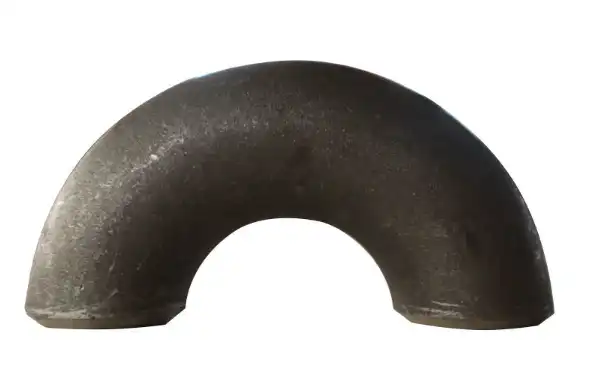
What Role Do Carbon Steel Elbows Play in Chemical Plant Piping?
Carbon steel elbows are used in process pipe design to change the direction of fluid flow at regulated angles, typically 45° and 90°. In chemical plants, these direction changes have to compensate for heat expansion, pressure spikes and the exposure to hostile media at the same time. A chemical industry carbon steel elbow in a high pressure acid line, badly rated, is not mhigh-pressureenance concern. It is a safety liability.
The mechanical parameters of interest here include tensile strength, yield strength, and uniformity of wall thickness. The most common material for butt-weld pipe fittings is ASTM A234 WPB grade carbon steel, which has a minimum tensile strength of 60,000 psi and is sufficiently strong for most mid-range chemical process lines. It’s still the major reason engineering teams continue to select it over premium alloy alternatives when situations allow, because of the cost-to-performance ratio.
What Specifications and Standards Apply to OEM Chemical Industry Carbon Steel Elbows?
Material Grades and Compliance Standards
If you are buying a carbon steel elbow for the chemical sector and you don't check the compliance papers, you are taking a procurement risk. The following standards are most used in OEM applications in the chemical sector:
- ASTM A234 WPB wrought carbon steel fittings are suitable for moderate to high temperature usage and are the standard grade for butt-weld elbows in chemical and petrochemical pipelines.
- ASME B16.9 Factory-Made Butt-Welding Fittings Dimensional Tolerances, Wall Thickness, and End Preparation for Butt-Welding Fittings of Seamless and Welded Construction
- Standards DIN 2605 / EN 10253 apply to OEM projects for the European market with the need of metric dimensioned fittings with EN materiaforcertifications.
- North American, Japanese and British specification criteria are included in ANSI/JIS/BS standards and are important to global EPC contractors.
Temperature, Pressure, and Corrosion Considerations
ASTM A234 WPB elbows are usually rated for temperatures in service from -29°C to 425°C (-20°F to 800°F) with pressure ratings depending upon schedule — Schedule 40, 80 or 160 — and nominal pipe size. Aggressive chemical conditions may significantly increase the service life of exterior epoxy coatings, hot dip galvanizing or interior FBE (fusion-bonded epoxy) treatments. Saving expensive rework later starts with specifying the coating type at the beginning of an OEM purchase.
How Do Carbon Steel Elbows Compare to Stainless Steel and Alloy Steel Options?
Material selection has a direct impact on life cycle cost and system dependability. The following table shows the major trade-offs for three typical elbow materials:
| Criteria | Carbon Steel (A234 WPB) | Stainless Steel (A403 WP316) | Alloy Steel (A234 WP9) |
|---|---|---|---|
| Cost | Lower | Higher | Highest |
| Corrosion Resistance | Moderate | Excellent | Good |
| High-Temp Performance | Good (up to 425°C) | Good (up to 870°C) | Excellent (up to 650°C) |
| Mechanical Strength | High | Moderate-High | Very High |
| Maintenance Demand | Medium | Low | Low-Medium |
| Best Application | General chemical service | Aggressive acids, sanitary | High-pressure, high-heat |
For general-duty chemical pipelines, carbon steel remains the material of choice when the medium is not particularly corrosive and temperatures are moderate. Stainless steel is required if there is constant exposure to acid or chloride. Alloy steel grades are used when strong heat and pressure are present, such as in reformer lines or in high-pressure steam.
They are produced without a longitudinal weld seam. Seamless carbon steel elbows provide a more consistent wall thickness and stronger burst strength. Welded (straight-seam) elbows cost cheaper but need close checking of weld quality. Generally, a seamless design is more preferable for OEM Chemical Industry Carbeel Elbow applications with cyclic pressure or vibration. To fulfill various project requirements, Oudi manufactures both seamless and straight seam industrial elbows using hot presstraight-seamheating bending.
How Should You Source OEM Carbon Steel Elbows for Chemical Applications?
Chemical-grade fittings are selected on more than just unit pricing. Here are the main things experienced OEM buyers will look at:
- Certifications verification: The ISO 9001 quality management system certification and the Special Equipment Manufacturing License of the People's Republic of China are irreplaceable credentials, which prove that the manufacturing and inspection process meets the recognized worldwide standards.
- Material traceability: Mill test records (MTRs) should be available for each certified elbow to track the final fitting back to the raw material heat number, which is a requirement for most ASME and EN procurement standards.
- Dimensional compliance & inspection capability: Suppliers should possess sophisticated detection equipment — ultrasonic testing, hydrostatic testing, and dimensional gaging — to conduct comprehensive inspection from raw material input to finished-product release.
- Range customization and depth: OEM projects often need non-standard dimensions, specific angles, or custom coatings. The capacity of a supplier to handle these without long lead times significantly impacts project timelines.
Since 1998, Cangzhou Oudi Pipe Manufacture Co., Ltd. has served more than 300 clients in more than 40 countries with an annual production capacity of 16,000 tons. Oudi produces fittings in carbon steel, stainless steel, and alloy steel to American, Japanese, German, and British standards, delivering a single-source solution to EPC contractors and distributors that want consistent quality across a range of fitting categories.
What Installation and Maintenance Practices Extend Elbow Service Life?
Proper installation of a premium chemical industry carbon steel elbow will keep the value of performance built into it. Weld-end preparation should be per pipe schedule and ASME B16.25 bevel requirements. Internal alignment tools are used to avoid fluctuations in root gap during fit-up that weaken the welded connection. Post-weld heat treatment (PWHT) may be needed by relevant code when wall thickness orrequiredial the hardness exceeds set limits. Routine maintenance in chemical settings should focus on three common failure modes:
- Coating inspections and touch-up cycles address galvanic and uniform corrosion on the outside surface, especially in humid or saline atmospheres.
- Flow-accelerated corrosion (FAC) at the intrados of the elbow, where the high-velocity fluid erodes the interior wall – monitored by ultrasonic thickness measurement at predetermined intervals.
- Fatigue cracking around weld toes in lines subject to vibration — found by periodic magnetic particle or dye penetrant inspection.
Chemical plant operators may prioritize inspection intervals according to service severity and residual wall thickness measurements using maintenance schedules linked with API 570 (Piping Inspection Code) as a known framework.
Conclusion
The specification of chemical industry carbon steel elbows should be as rigorous as that of vessels or rotating equipment. The probability that a fitting will function reliably during the planned service life depends on the material grade, compliance standard, construction process, and supplier certification. Since 1998, Oudi has earned a reputation for supplying verified, traceable and reasonably priced pipe fittings to demanding worldwide markets — and we apply that same devotion to every OEM carbon steel elbow order.
FAQ
What is the most common grade used for chemical industry carbon steel elbows?
ASTM A234 WPB is the standard grade for most butt-weld carbon steel elbows in chemical service. It covers moderate to high-temperature applications and moderate-y accepted under ASME B16.9 dimensional standards.
Are seamless elbows always required for chemical plant service?
Not always. Seamless construction is preferred for high-pressure or cyclic-service lines. Welded elbows are acceptable in lower-pressure applications when weld quality is verified through non-destructive examination.
Can OEM orders include non-standard angles or special coatings?
Yes. Oudi accommodates customized specifications including non-standard bend angles, special wall schedules, and protective coating requirements. Buyers should confirm customization details during the quotation stage.
What certifications should a carbon steel elbow supplier hold?
At minimum, ISO 9001 quality management certification and a Special Equipment Manufacturing License. These credentials confirm that the supplier's processes meet recognized quality benchmarks for industrial fittings.
How do I verify material traceability on an OEM elbow order?
Request mill test reports (MTRs) for each heat of material. MTRs link mechanical and chemical properties to specific production batches and are essential for compliance with ASME and EN procurement codes.
Request a Quote from Oudi — Your Trusted Chemical Industry Carbon Steel Elbow Supplier
Oudi has delivered ISO-certified pipe fittings to over 300 customers across 40+ countries since 1998. Whether you need standard ASTM A234 WPB elbows or customized OEM specifications, our 16,000-ton annual capacity and full-inspection system ensure consistent quality at competitive pricing. Reach out to our team today at oudi-04@oudiguandao.com to request a technical consultation or bulk quote for your next chemical industry carbon steel elbow procurement project.
References
1. ASME International. ASME B16.9: Factory-Made Wrought Buttwelding Fittings. 2018.
2. ASTM International. ASTM A234/A234M: Standard Specification for Piping Fittings of Wrought Carbon Steel and Alloy Steel for Moderate and High Temperature Service. 2021.
3. American Petroleum Institute. API 570: Piping Inspection Code — In-Service Inspection, Rating, Repair, and Alteration of Piping Systems. 2016.
4. European Committee for Standardization. EN 10253-2: Butt-Welding Pipe Fittings — Part 2: Non-Alloy and Ferritic Alloy Steels with Specific Inspection Requirements. 2007.
5. NACE International. SP0169: Control of External Corrosion on Underground or Submerged Metallic Piping Systems. 2013.
6. Nayyar, Mohinder L. Piping Handbook, 7th Edition. McGraw-Hill. 2000.

Need help finding the right solution with our experts. Please contact us.

SINCE 1998 Your Reliable Pipeline Manufacturer



