How Are Precision-machined elbow Parts Manufactured?
Precision-machined elbows are a particular kind of pipe fitting. They are made using precision subtractive methods like CNC milling and turning to guide fluid flow with micron accuracy. These parts are machined to strict dimensional tolerances (usually ±0.01mm) and excellent interior surface polishes (Ra as low as 0.4μm), unlike standard cast or forged elbows. This manufacturing process removes the typical, potential problems of internal flow turbulence, dimensional stacking mistakes in modular assemblies, and early seal failures that traditional fittings experience in high-consequence industrial applications where reliability and performance cannot be sacrificed.
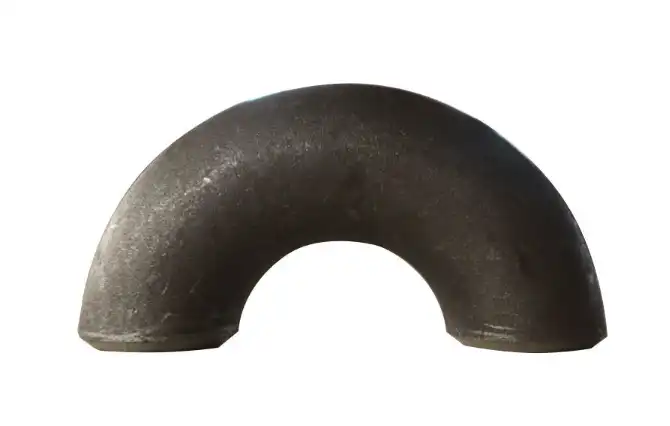
Understanding Precision-Machined Elbows
Precision-machined elbows are fundamentally different from their mass-produced counterparts. These components undergo specialized manufacturing processes that transform raw material billets into finished fittings with exceptional dimensional accuracy and surface quality. The distinction lies in the methodology: while standard elbows typically result from casting, forging, or bending operations, precision variants emerge from controlled material removal using computer-guided cutting tools.
What Sets Precision-Machined Elbows Apart
Manufacturing fittings with constant wall thickness across the bend radius eliminates weak areas in formed elbows. Smooth internal bore surfaces facilitate laminar flow, avoiding turbulence-induced erosion and lowering pressure drops. Material grain structure stays intact and appropriately orientated, improving fatigue resistance under cyclic loading situations that would damage welded or cast alternatives.
These elbows are used in zero-tolerance applications. They provide ultra-high purity gas delivery systems to semiconductor production plants where minute surface imperfections might cause particle contamination. They're used in subsea oil production control modules to endure hydrostatic pressures of 3,000 PSI and retain internal integrity for 25 years. They are used in aircraft hydraulic systems where lightweight construction must withstand strong G-forces and vibration without fatigue cracking.
Material and Property Advantages
316L stainless steel, Inconel, and titanium Grade 5 are available for corrosion resistance, high-temperature stability, and strength-to-weight optimisation. Each material selection is traceable via Mill Test Reports (MTRs), confirming chemical composition and mechanical qualities meet application requirements. Machining protects material integrity that casting porosity or inclusions impair.
The physical specs reflect this excellent concern for precision-machined elbows. Tolerances of ±0.01mm provide hermetic sealing at key junctions. Components are tested to 10,000 PSI and surpass ASME B16.9. Surface finish measurements show internal roughness (Ra), demonstrating applicability for high-purity or high-velocity applications where surface quality affects system performance.
Step-by-Step Manufacturing Process of Precision-Machined Elbows
The manufacturing journey begins long before cutting tools touch material. Understanding this process helps procurement professionals evaluate supplier capabilities and identify manufacturers with the technical infrastructure necessary to deliver consistent quality.
Material Selection and Preparation
Quality manufacturing starts with certified raw materials. Reputable manufacturers source material from approved mills providing EN 10204 3.1 or 3.2 certification documentation. Each billet or bar arrives with chemical composition analysis and mechanical property data, establishing traceability from steel mill through finished component. Material undergoes Positive Material Identification (PMI) testing using X-ray fluorescence (XRF) or optical emission spectroscopy (OES) to verify alloy chemistry matches specification requirements before entering production.
At Oudi, our material inspection protocols verify every incoming shipment against customer specifications and international standards including ANSI, JIS, DIN, and BS requirements. Our ISO 9001:2000 certified quality management system ensures raw material meets or exceeds baseline requirements before production authorization. This front-end verification prevents costly downstream failures and provides customers confidence that finished components contain the specified materials their applications demand.
CNC Machining Operations
Manufacturing is performed on state-of-the-art multi-axis CNC machining centers. Engineers' plans are transformed into micrometer-sized machine code by programmers, which tells the cutting tools where to go. The final form is produced by a number of consecutive actions moving across machine types.
Turning procedures provide cylindrical forms and threaded or flanged end fittings to fulfil customer needs. Specialised toolpaths maintain wall thickness across the bend radius to cut the curved elbow geometry. Multi-axis capabilities enable manufacture of compound angles and non-standard geometries such as 22.5-degree or 60-degree bends that no other bending or casting can do.
Cutting parameters are adjusted to balance material removal, surface finish, and tool life. Work-hardening and dimensional changes due to thermal effects are taken care of by coolant systems. Tool wear monitoring preserves the dimensions during production runs by replacing the tools automatically before the wear exceeds the constraints.
Heat Treatment and Enhancement
Post-machining heat treatment cycles are optimised for mechanical characteristics depending on material type and application requirements. Stress-relief annealing is used to relieve residual stresses induced during machining that might otherwise lead to dimensional instability or early failure. Solution annealing and precipitation hardening may improve corrosion resistance and strength of stainless steels and speciality alloys.
The treatment parameters are based on well-known metallurgical processes, and the temperature and time cycles are monitored and recorded properly. Furnace instrumentation gives a verifiable record of material specification compliance. Heat treatment improves the fatigue resistance, which is essential for parts subject to thermal cycling or mechanical vibration. This extends the service life under harsh operating conditions.
Surface Finishing and Protection
Final surface treatments prepare components for their intended working conditions. Electropolishing eliminates tiny surface imperfections. This produces Ra values of less than 0.4μm in ultra-high purity applications where smoothness precludes particle adherence. Passivation treatments improve corrosion resistance by forming protective oxide layers on the stainless steel surfaces. Special coatings give further protection against harsh chemical conditions or severe temperatures.
Special attention is paid to the internal surface quality of Precision-machined elbow as the bore smoothness directly affects the flow characteristics and corrosion resistance. The joint interfaces are precision cut for full-penetration orbital welding. The specialised face-seal grooves are designed to accept VCR or SAE fittings for leak-tight connections. The finishing procedures complete the machined parts to fittings suitable for application, able to fulfil the demanding performance criteria.
Comprehensive Quality Control
All key dimensions and properties are examined extensively. Angular accuracy, concentricity, and uniformity of wall thickness are measured using Three-Dimensional Coordinate Measuring Machines (CMM). All manufacturing activities have tolerances to these criteria.
NDT can locate problems below the surface that cannot be seen. DPI detects surface-breaking discontinuities. UT detects interior faults, voids, or inclusions that may damage structural integrity. Surface profilometry detects interior bore smoothness to verify finish quality.
Structural integrity is tested via pressure testing. Hydrostatic testing indicates components can resist operating pressures with safety margins of 1.5 times the design pressure. Helium mass spectrometry leak detection reduces molecule leakage for high purity and vacuum applications. Oudi’s advanced detection technology makes sure our precision machined elbows meet client needs and international standards before we ship.
Design and Specification Considerations in Manufacturing
Successful precision elbow manufacturing balances engineering requirements against production capabilities. Design parameters directly influence manufacturing complexity, cost, and lead times, making early collaboration between customers and manufacturers valuable for optimizing outcomes.
Critical Design Parameters
Bend radius—usually multiples of nominal pipe diameter—is the main geometric characteristic. Tighter curve radii save installation space but complicate manufacturing and increase internal flow resistance. Thickness must balance pressure and machinability. Insufficient thickness lowers pressure ratings, whereas excessive thickness raises material costs and machining time.
Angular specifies elbow direction change. Standard pipe arrangement angles are 45, 90, and 180 degrees, although CNC may make any angle. Complex compound angles with several direction changes need difficult machining and extended production periods.
In tolerance, dimensional variance is acceptable. Tighter tolerances for seal integrity or joint assembly dimensions affect manufacturing accuracy and inspection complexity. Over-specifying precision increases costs without performance advantages; thus, procurement specialists should determine application-appropriate tolerances.
Customization and Lead Time Impact
Custom specifications naturally extend production timelines compared to standard catalog items. Material availability affects scheduling, particularly for exotic alloys or large-diameter components requiring specialized billet stock. Our optimized CNC workflows typically deliver custom precision-machined elbows within 2-4 weeks depending on material availability and specification complexity, balancing customization flexibility against reasonable delivery schedules.
Design consultation during specification development helps identify opportunities to optimize manufacturability without compromising performance. Minor geometry adjustments or tolerance rationalization can significantly reduce production complexity, shortening lead times and improving cost-effectiveness. At Oudi, our engineering team collaborates with customers during the specification phase, offering design recommendations that enhance both manufacturability and performance based on decades of experience across diverse applications.
Comparing Precision-Machined Elbows with Other Types
Understanding the trade-offs between different elbow manufacturing methods helps procurement professionals select the most appropriate solution for specific applications. Each manufacturing approach offers distinct advantages and limitations that should align with operational requirements and constraints.
Forged Elbows: Cost-Effective Volume Solutions
Forged elbows result from hot or cold forming operations that shape heated material billets into elbow geometry using dies and mechanical pressure. This approach efficiently produces large quantities of standard configurations at relatively low per-unit costs. Forging creates favorable grain flow patterns following the bend contour, enhancing strength compared to machined-from-bar alternatives in some applications.
Limitations include dimensional variations inherent in forming processes, typically resulting in looser tolerances than precision-machined alternatives. Internal surface finish reflects die conditions and material flow characteristics, generally producing rougher bore surfaces than machining achieves. Geometry restrictions limit forging to standard angles and bend radii that die sets accommodate, reducing customization flexibility. Applications prioritizing cost-efficiency over tight tolerances and needing standard configurations benefit from forged elbows.
Welded Elbows: Flexibility for Large Diameters
Welded elbows are fabricated from pipe segments or formed plates joined through welding processes. This approach offers geometric flexibility, particularly for large diameters where solid billets become prohibitively expensive. Custom angles and configurations emerge from relatively simple cutting and welding operations.
Weld joints introduce discontinuities in material structure and potential weak points requiring careful quality control. Heat-affected zones adjacent to welds exhibit altered mechanical properties potentially reducing fatigue resistance. Internal weld beads create flow disturbances unless ground flush, adding finishing costs. Welded construction suits large-diameter, lower-pressure applications where fabrication flexibility outweighs the structural uniformity advantages of machined alternatives.
Precision-Machined Elbows: Uncompromised Performance
Alternative production processes cannot equal precision-machined elbows' dimensional accuracy, surface polish, and structural consistency. Joints fit tightly, reducing leak hazards in high-pressure or high-purity systems. Superior interior surface polish improves flow, lowers erosion, and avoids contamination in essential applications.
Material integrity is unaffected by heat or porosity. Customisation allows non-standard angles and complicated geometries that forming cannot. Precision-machined elbows are best for essential applications where performance, durability, and endurance justify the greater cost and longer lead time than mass-production alternatives. Aerospace, semiconductor, deep-sea oil, and pharmaceutical industries use precision-machined elbows when operating needs surpass normal fitting capabilities.
Procurement Considerations for B2B Buyers
Don’t judge precision-machined elbow vendors by price alone. These components are of technological complexity and crucial utilisation, requiring rigorous supplier evaluation to assure quality, compliance, and dependability throughout procurement.
Certification and Compliance Verification
Quality management systems certifications promote manufacturing competence. ISO 9001 certification outlines the procedures from receipt of material to final inspection of quality. API and AS9100 certifications analyse aerospace and petroleum industry quality systems.
Fabrication permits and regulatory compliance papers enable the fabrication of pressure-containing components. Many nations need specific equipment production permits that establish the capabilities of the facility and execution of safety systems. Go with independent registrar audits rather than self-declarations for vendor certifications.
Oudi’s ISO 9001:2000 and PRC special equipment production license are proof of quality and compliance. Component Provenance & Manufacturing Integrity: Our documentation system tracks certification of raw materials through to final inspection reports. All shipments are accompanied by EN 10204 3.1 or 3.2 Material Test Reports (MTRs) from independent labs guaranteeing material composition and property.
Production Capability Assessment
Delivery reliability is governed by manufacturing capacity. Investigate the intricacy of the CNC, inspection, and heat treatment equipment. Multi-axis machining centers allow for complicated geometries and tight tolerances. Full inspection equipment supports quality.
Annual capacity enables volume without sacrificing quality or lead time. Our 16,000 tonnes per year capacity allows us to produce steadily for conventional and special demands. There is also the possibility of project-specific orders and continuous supply agreements. We have a manufacturing facility with multi-axis CNC machining and testing equipment that fulfil all the detection criteria.
Technical skills determine the issue-solving capacity of engineering and industrial workers. Manufacturers also give design guidance, material selection help, and application-specific ideas, adding value beyond component supply. Our technical specialists are available to assist clients in aligning needs with application demands and production capabilities throughout procurement.
Pricing Structure and Lead Time Understanding
Procurement professionals can predict and optimise spend using transparent pricing models. Frequent releases of blanket purchase orders stabilise prices for recurring needs, while volume reductions spread setup costs across more units. Material, production, testing, and certification cost quotes assist in assessing value offers and negotiating.
Lead time calculations should be based on actual production. Custom precision-machined elbows take longer to produce owing to the need for programming, setup, and skilled machining. Realistic timeframes avoid project delays and enable manufacturers to maintain quality. 2-4 week custom delivery with response, material sourcing, machining, and quality check.
Conclusion
Precision-machined elbows represent a significant advancement over conventional pipe fittings, delivering dimensional accuracy, surface quality, and structural integrity essential for critical industrial applications. The manufacturing process—from certified material selection through advanced CNC machining, heat treatment, and rigorous quality control—creates components capable of performing reliably in demanding environments where standard fittings fail. Understanding these manufacturing fundamentals empowers B2B procurement professionals to evaluate suppliers effectively, specify components appropriately, and establish partnerships with manufacturers capable of supporting long-term operational success. The investment in precision-machined elbows pays dividends through extended service life, reduced maintenance requirements, and enhanced system reliability across industries where component failure carries unacceptable consequences.
FAQ
1. Why choose a machined elbow over a standard forged elbow?
Precision-machined elbows deliver significantly tighter dimensional tolerances and superior surface finishes compared to forged alternatives. These characteristics prove essential in high-vacuum systems or ultra-high-pressure applications where seal integrity depends on dimensional precision. Standard forgings exhibit dimensional variations inherent in forming processes that can compromise joint quality, while machined elbows maintain consistent geometry, enabling reliable hermetic sealing. The superior internal surface finish also reduces flow resistance and prevents particle accumulation in high-purity applications where forged fittings cannot meet cleanliness requirements.
2. Can these elbows accommodate non-standard angles like 22.5 or 60 degrees?
CNC machining capabilities enable production of any custom geometry or compound angle specifications. Unlike traditional bending equipment or casting dies limited to standard configurations, computer-controlled machining executes complex toolpaths, creating precise angular specifications regardless of standardization. This flexibility proves valuable when piping layouts require unusual direction changes or when compound angles incorporating multiple planes offer installation advantages. Custom angles do extend production lead times compared to standard configurations, but the geometric flexibility often provides system-level benefits justifying the additional manufacturing time.
3. How do you prevent corrosion at joints?
Precision-cut chamfers enable full-penetration orbital welding, creating joints as structurally sound as the parent pipe material. Specialized face-seal grooves accommodate VCR (Variable Contact Radius) or SAE (Society of Automotive Engineers) fittings designed for leak-tight connections in corrosive environments. The dimensional precision achievable through machining ensures proper seal compression and contact area, preventing crevice corrosion that loose-fitting joints enable. Material selection and surface treatments such as passivation or specialized coatings provide additional corrosion resistance tailored to specific chemical exposures.
Partner with Oudi for Your Precision-Machined Elbow Requirements
Oudi delivers certified precision-machined elbow solutions backed by over two decades of manufacturing expertise serving critical applications worldwide. Our ISO 9001:2000 certified facility produces components meeting ANSI, JIS, DIN, and BS international standards across carbon steel, stainless steel, and alloy steel materials. As a trusted precision-machined elbow supplier with 16,000-ton annual capacity, we support customers from initial specification consultation through ongoing supply agreements, providing EN 10204 3.1/3.2 material certifications and comprehensive inspection documentation with every shipment. Contact our technical specialists at oudi-04@oudiguandao.com to discuss your specific requirements, request detailed quotations, or explore how our customizable manufacturing capabilities can optimize your procurement outcomes.
References
1. American Society of Mechanical Engineers. (2020). ASME B16.9: Factory-Made Wrought Buttwelding Fittings. New York: ASME Press.
2. Boyer, H.E., & Gall, T.L. (2018). Metals Handbook: Machining and Surface Treatment Technologies. Materials Park, OH: ASM International.
3. Kalpakjian, S., & Schmid, S.R. (2019). Manufacturing Engineering and Technology (8th ed.). Singapore: Pearson Education.
4. International Organization for Standardization. (2021). ISO 9001:2015 Quality Management Systems – Requirements. Geneva: ISO Central Secretariat.
5. Lampman, S.R. (Ed.). (2017). Wrought Stainless Steels: Properties and Selection. Materials Park, OH: ASM International Handbook Committee.
6. Smith, W.F., & Hashemi, J. (2019). Foundations of Materials Science and Engineering (6th ed.). New York: McGraw-Hill Education.

Need help finding the right solution with our experts. Please contact us.

SINCE 1998 Your Reliable Pipeline Manufacturer



