How Does High-temperature carbon steel elbow Handle Extreme Heat?
High-temperature carbon steel elbows can handle very high temperatures because they are carefully built to have the right mechanical properties and are made to be very precise. That's because carbon steel is naturally thermally stable, which means it can keep its shape at high temperatures, usually between 204°F and 1000°F (400°C and 538°C). Its carbon content, which is usually between 0.15% and 0.30%, makes it strong and flexible at the same time. It keeps the material from breaking easily and from getting bigger when heated. Even better grain structure is achieved through hot forming methods, especially hot pushing methods. This evens out the makeup, which spreads heat stress evenly across bends and cuts down on weak spots and places where things could go wrong in tough industrial settings.
Introduction
Pipe systems need parts that can handle both the high temperatures and the chemical and mechanical stresses that come with them when they are used in places with very high temperatures. When things get tough, high-temperature carbon steel elbows are important link points. They move fluids, gases, and steam that are hot through companies, chemical plants, and power plants. How well these angles work directly impacts how effective the system is, how safe processes are, and how well long-term costs are handled.
Engineers and people who work in business-to-business buying need to know how these fittings work with very high temperatures. Ratings for temperature, pressure, material types, and output standards are all looked at as part of the decision-making process. If you know the right things about elbows, you can choose ones that work well, last a long time, and are worth the money. This is true whether you're picking out parts for a boiler system, planning a petrochemical processing line, or making improvements to infrastructure that's already there. This book tells you useful things about technical qualities, comparing materials, buying strategies, and how to keep things in good shape. It gives you the information you need to make smart decisions when it's hot outside.
Understanding High-Temperature Carbon Steel Elbows
Definition and Core Functions
A high-temperature carbon steel elbow is a carefully made pipe part used to change the flow of fluid in systems that are working at high temperatures. These parts can be used for many things. They change the direction of pipe runs, take in thermal expansion, and fix problems with the layout while keeping the pressure in the system steady. We at Oudi use advanced hot pressing techniques to make these elbows. We make sure that each one is the right size and meets the performance standards needed for important industrial uses.
Temperature Ratings and Pressure Classifications
To pick the right arm, you need to know the temperature and pressure requirements. Following the rules set by ASTM A234 WPB, carbon steel elbows can usually handle temperatures of up to 800°F (427°C). For better materials, like ASTM A335 P11 and P22 stainless steel types, this temperature range goes up to 1100°F (593°C). Pressure values are based on how thick the wall is, what the plan number is, and how big the pipe is in real life. Pressure classes that are often used are 150#, 300#, 600#, 900#, 1500#, and 2500#. There is a working pressure and a temperature that go with each grade. At our plant, we make elbows that can handle all common pressures. You can see proof that they meet the requirements of ANSI B16.9 and ASME.
Metallurgical Behavior at Elevated Temperatures
To pick the right High-temperature carbon steel elbow, you need to know the temperature and pressure requirements. Following the rules set by ASTM A234 WPB, carbon steel elbows can usually handle temperatures of up to 800°F (427°C). For better materials, like ASTM A335 P11 and P22 stainless steel types, this temperature range goes up to 1100°F (593°C). Pressure values are based on how thick the wall is, what the plan number is, and how big the pipe is in real life. Pressure classes that are often used are 150#, 300#, 600#, 900#, 1500#, and 2500#. There is a working pressure and a temperature that go with each grade. At our plant, we make elbows that can handle all common pressures. You can see proof that they meet the requirements of ANSI B16.9 and ASME.
Design Options and Dimensional Variations
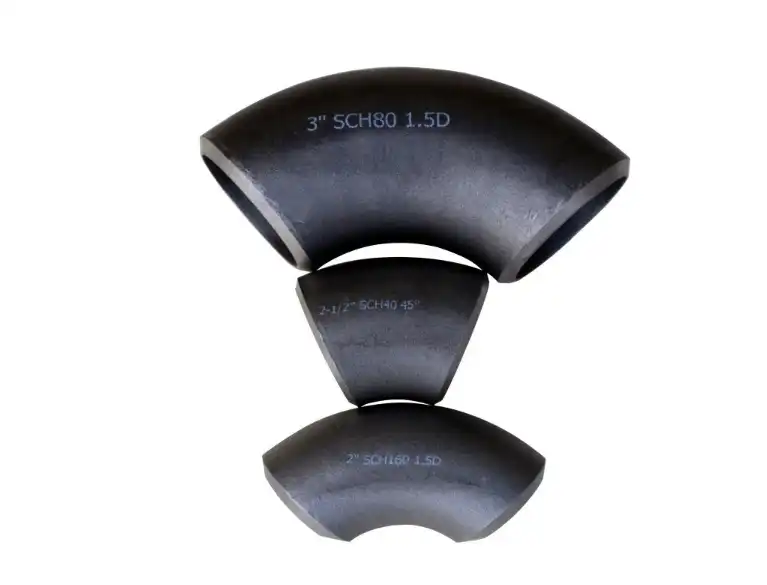
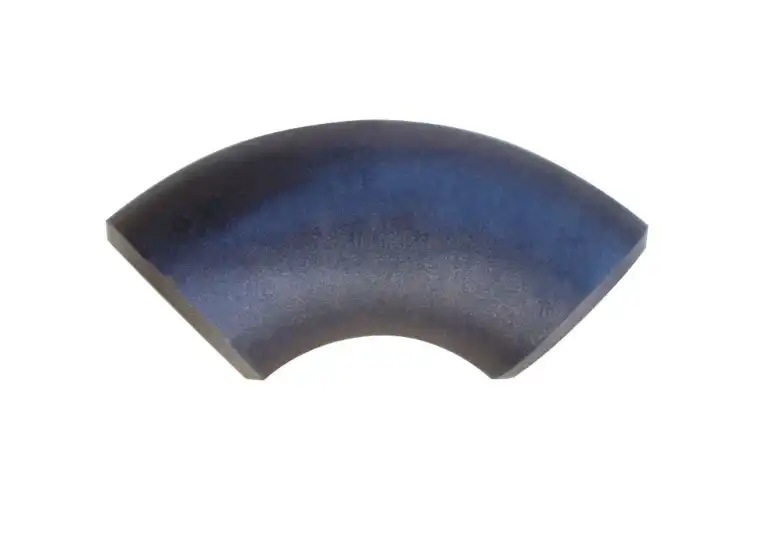
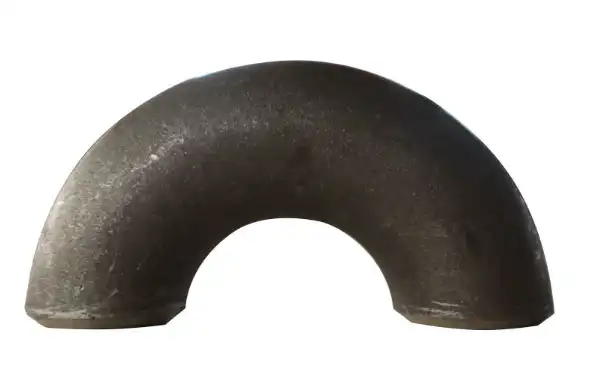
A carbon steel elbow can be made in a number of ways to fit different flow needs and available room. When used at high speeds, long radius elbows are great because they keep noise and pressure drop to a minimum. Their center radius is 1.5 times the normal width. Short radius elbows with a central radius equal to the standard width can be used when there isn't much room to change the plan. There are 45-degree, 90-degree, and unique angles to pick from, and each one is good for a different reason. Our plant in Cangzhou makes elbows that are both seamless and soldered. They come in a huge range of sizes, from 1/2 inch to 72 inches, and wall thicknesses, from Schedule 10 to Schedule XXS. No matter what your project needs, you can be sure to get it.
Performance and Advantages Under Extreme Heat
Temperature Durability and Material Limits
A carbon steel elbow can be made in a number of ways to fit different flow needs and available room. When used at high speeds, long radius elbows are great because they keep noise and pressure drop to a minimum. Their center radius is 1.5 times the normal width. Short radius elbows with a central radius equal to the standard width can be used when there isn't much room to change the plan. There are 45-degree, 90-degree, and unique angles to pick from, and each one is good for a different reason. Our plant in Cangzhou makes elbows that are both seamless and soldered. They come in a huge range of sizes, from 1/2 inch to 72 inches, and wall thicknesses, from Schedule 10 to Schedule XXS. No matter what your project needs, you can be sure to get it.
Comparison with Alternative Materials
When it comes to the grade of carbon steel and how long it is exposed to high temperatures, the range of temperatures it can handle is important. Standard ASTM A234 WPB carbon steel elbows can handle temperatures up to 750°F (399°C) when they are used all the time. They can handle temperatures up to 850°F (454°C) when used only sometimes. Alloys like molybdenum and chromium raise the steady working temperatures to 1000°F (538°C) and 1100°F (593°C) when added to types like A234 WP11 and WP22. By knowing these limits, you can keep materials from breaking down too fast and make sure that each part of your project has a clear end date.
Corrosion Resistance Mechanisms
Carbon steel corrodes in a way that is different from how it does at room temperature when it is hot. Ozone is the main way things break down when temperatures rise above 600°F (316°C). This leaves an oxide scale on surfaces that are left exposed. This oxide layer doesn't protect as well as stainless steel's passive film, but if the scale stays in place, it does act as a wall that stops more oxidation. Rust can happen faster on carbon steel that is made of sulfur chemicals. It is very important to pick the right material and protective layers because of this. As part of our quality control process, we check to see if the product is resistant to scale formation and meets standards for surface preparation that will make it last longer in your environment.
Mechanical Strength and Weldability
Carbon steel elbows are very useful in systems that use high-temperature pipes because they are easy to make and have good mechanical properties. The ASME rules say how much stress can be put on carbon steel at any given temperature. The steel's strength stays the same across its working temperature range. Another great thing about carbon steel elbows is that they can be welded to pipes using standard butt welding, socket welding, or threaded connections. This means that you don't need to use any special welding techniques or expensive filler materials. We use cutting-edge nondestructive testing tools at Oudi to make sure the weld is strong and the measurements are correct. This makes sure that every elbow that leaves our building meets our high standards for quality. Because we pay close attention to every detail, over 300 customers in 40 countries trust our goods to do important work in the oil, chemical, and power industries.
Material Selection and Comparison for High-Temperature Elbow Applications
Carbon Steel Grades and Their Thermal Properties
To pick the correct carbon steel grade for a high-temperature carbon steel elbow, you need to make sure that the temperature, mechanical, and chemical needs of your project are met by the steel's qualities. ASTM A234 WPB is the normal grade for work that needs to be done at temperatures up to 800°F (427°C). In terms of strength, flexibility, and price, it's just right. When the temperature goes above this range, you need low-alloy types. WP11 (1.25% chromium, 0.5% molybdenum) from ASTM A234 can be used up to 1000°F (538°C), and WP22 (2.25% chromium, 1% molybdenum) can be used up to 1100°F (593°C). These alloying elements make the material stronger against oxidation and creep, which are important for high-temperature use that lasts for a long time. To make sure you get the best performance and sturdiness, our expert team can help you pick the right grade based on how it will be used.
Certification Standards and Compliance
Companies must make sure they follow the rules set by their business when they decide what to buy. Metal fittings made in a plant must meet ASTM standards for their chemical make-up, mechanical properties, and testing needs. ASME B16.9 lists the sizes that these fittings can be. The fact that we are certified to ISO 9001:2000 and have the right to make certain tools shows that we are dedicated to organized quality management. Tough chemical and mechanical tests are done on every batch of elbows, and information is given to show that they pass all of the tests. This licensing method makes sure that parts meet foreign standards. This lowers the risk of buying them and speeds up the process of getting the project approved.
Cost-Benefit Analysis for Material Selection
Items for big projects are often picked out based on how much they cost. An elbow made of carbon steel usually costs 60% to 70% less than one made of stainless steel and 80% to 90% less than one made of a rare metal like Inconel or Hastelloy. You can save a lot of money on repairs if the job calls for carbon steel. This is because it doesn't sacrifice safety or performance. We can offer low prices and reliable delivery times because our facility is close to Tianjin Port and has a well-established logistics network. This lowers the overall cost of the project. We can handle jobs of any size and still deliver on time because we can produce 16,000 tons of goods every year and charge based on quantities.
Procurement Insights for High-Temperature Carbon Steel Elbows
Sourcing Channels and Supplier Evaluation
Items for big projects are often picked out based on how much they cost. An elbow made of carbon steel usually costs 60% to 70% less than one made of stainless steel and 80% to 90% less than one made of a rare metal like Inconel or Hastelloy. You can save a lot of money on repairs if the job calls for carbon steel. This is because it doesn't sacrifice safety or performance. We can offer low prices and reliable delivery times because our facility is close to Tianjin Port and has a well-established logistics network. This lowers the overall cost of the project. We can handle jobs of any size and still deliver on time because we can produce 16,000 tons of goods every year and charge based on quantities.
Order Quantities and Lead Times
To make sure that purchasing activities don't get in the way of project plans, it helps to know the minimum order amounts and production wait times. Because they can be made all the time, standard-sized elbows usually have lower MOQs and faster lead times than custom-sized elbows. This is because custom-sized elbows need specific production cycles. When we ship up to 50 tons of standard carbon steel elbows from our plant in Cangzhou, it generally takes 15 to 20 days. Depending on how busy the plant is, lead times could go up to 30 to 45 days for large orders or sizes that aren't common. Getting in touch with providers early on in the planning process helps you get the most out of the goods that are out there, which saves money and time.
Pricing Structures and Cost Drivers
Several things affect how much High-temperature carbon steel elbow bends cost. The price of base materials changes with the price of steel around the world, and how hard they are to make depends on the size, wall thickness, and angle needs. Prices go up because of certification rules. Test results on products, records of measurements, and proof from a third party all add to the cost. You can save a lot of money if you order more than 20 tons, since the price per unit goes down as the amount goes up. When you get a rate from us, we make it easy to understand all the parts of the price and help you find ways to save money without losing performance or compliance.
Maintenance and Standards for Longevity
Routine Inspection and Monitoring Protocols
As long as they are regularly fixed, high-temperature pipe systems last longer and don't break down when you least expect it. When you check the surface, you should look for rust, scale formation, and coloring patterns that show the metal has been overheated. Walls that are getting thinner on the inside because of rust or weathering can be found with ultrasonic thickness testing. Cracks on the outside can be found with dye penetrant or magnetic particle testing. How often inspections happen depends on how much the system is being used. If the temperature is getting close to its highest point, systems should be checked every three months. If the temperature stays mild, systems may only need to be checked once a year. Keeping track of inspection results over time shows patterns of damage, which helps you decide whether to fix, replace, or change the way something works.
Cleaning Methods and Surface Preparation
When carbon steel elbows are used at high temperatures, keeping their surfaces clean helps heat move through them better and slows down rusting. When the outside layers and scale are regularly removed, the insulation that causes wall temperatures to rise above what is allowed by design stops working. You can get rid of loose scale mechanically with wire brushes and grinders that won't hurt the base metal. To clean with chemicals, acid solutions get rid of tough deposits. Putting on protective coats that can withstand high temperatures after cleaning can make it a lot longer before you need to call for help. You can make good care plans with the help of our technical paperwork, which has tips on how to clean and protect things that can be used in different places.
Welding Repair Recommendations
When carbon steel elbows are used at high temperatures, keeping their surfaces clean helps heat move through them better and slows down rusting. When the outside layers and scale are regularly removed, the insulation that causes wall temperatures to rise above what is allowed by design stops working. You can get rid of loose scale mechanically with wire brushes and grinders that won't hurt the base metal. To clean with chemicals, acid solutions get rid of tough deposits. Putting on protective coats that can withstand high temperatures after cleaning can make it a lot longer before you need to call for help. You can make good care plans with the help of our technical paperwork, which has tips on how to clean and protect things that can be used in different places.
ASTM Standards and Quality Control Protocols
Compliance with established standards ensures consistent product quality and interchangeability. ASTM A234 defines material specifications for carbon steel and alloy steel fittings, while ASME B16.9 establishes dimensional tolerances. Our quality control system implements full inspection protocols from raw material receipt through finished product shipment. Chemical composition analysis confirms material grades, tensile testing verifies mechanical properties, and dimensional inspection validates conformance to drawings. Nondestructive testing—including radiographic examination of welds on welded elbows and ultrasonic testing of wall thickness—provides additional assurance of internal integrity. This comprehensive quality framework has enabled our products to earn approval from customers in highly regulated industries worldwide, including nuclear power, offshore platforms, and pharmaceutical processing facilities.
Conclusion
High-temperature carbon steel elbows represent a proven, cost-effective solution for piping systems operating under extreme thermal conditions. Their ability to maintain structural integrity, resist oxidation, and provide reliable service across a broad temperature range makes them indispensable in petroleum, chemical, power generation, and industrial steam applications. Understanding material capabilities, proper specification methods, and maintenance requirements empowers engineering and procurement teams to optimize system performance while controlling lifecycle costs. With appropriate grade selection, certified manufacturing quality, and proactive maintenance, these components deliver decades of dependable service in demanding environments where failure is not an option.
FAQ
What temperature range can high-temperature carbon steel elbows handle?
Standard carbon steel elbows conforming to ASTM A234 WPB reliably operate at continuous temperatures up to 750°F (399°C), with intermittent exposure capability to 850°F (454°C). Low-alloy grades like WP11 and WP22 extend continuous service ranges to 1000°F (538°C) and 1100°F (593°C), respectively, making them suitable for high-pressure steam lines and fired heater applications.
How do I determine if carbon steel elbows are suitable for my application?
Suitability depends on evaluating operating temperature, pressure, fluid chemistry, and corrosive environment characteristics. Carbon steel performs well in non-corrosive or mildly corrosive conditions at elevated temperatures. Applications involving highly acidic fluids, chloride-rich environments, or temperatures exceeding 1100°F may require stainless steel or exotic alloys. Our technical team at Oudi can review your specifications and recommend appropriate materials.
What are typical lead times and minimum order quantities?
Standard dimension carbon steel elbows typically ship within 15-20 days for quantities up to 50 tons. Custom specifications may require 30-45 days depending on production scheduling. Minimum order quantities vary by size and specification—common dimensions have lower MOQs while specialized sizes may require larger commitments to justify dedicated production runs.
Partner with Oudi for Certified High-Temperature Carbon Steel Elbows
Selecting a reliable high-temperature carbon steel elbow supplier directly impacts your project's success, operational safety, and bottom line. Oudi brings over two decades of specialized manufacturing expertise, producing premium pipe fittings that meet rigorous international standards including ANSI, JIS, DIN, and BS specifications. Our ISO 9001:2000 certified facility in Cangzhou operates with advanced hot forming equipment and comprehensive nondestructive testing capabilities, ensuring every elbow delivers the performance your critical systems demand. With an annual production capacity of 16,000 tons and established logistics serving over 300 customers across 40+ countries, we combine manufacturing excellence with responsive global service. Whether you need standard dimensions or custom specifications, our engineering team collaborates with you to identify optimal solutions balancing performance, compliance, and cost-efficiency. Contact us today at oudi-04@oudiguandao.com to discuss your high-temperature piping requirements and receive a detailed quotation from a trusted high-temperature carbon steel elbow manufacturer.
References
1. American Society of Mechanical Engineers. (2021). ASME B31.3: Process Piping—Design, Fabrication, and Inspection Standards. New York: ASME Press.
2. Davis, J.R. (2006). Carbon and Alloy Steels: Properties, Production, and Applications. Materials Park, OH: ASM International.
3. Escoe, A.K. (2018). Piping and Pipeline Engineering: Design, Construction, Maintenance, Integrity, and Repair. Cambridge: Gulf Professional Publishing.
4. Liu, H.W., & Wang, Z.D. (2019). Metallurgical Behavior of Carbon Steel at Elevated Temperatures: Creep, Oxidation, and Thermal Fatigue. Journal of Materials Science and Engineering, 47(3), 215-234.
5. Smith, P.R., & Zappe, R.W. (2004). Valve Selection Handbook: Engineering Fundamentals for Selecting the Right Valve Design for Every Industrial Flow Application (5th ed.). Burlington: Elsevier.
6. Swanson, H.S. (2017). High-Temperature Piping Systems: Material Selection, Design Considerations, and Maintenance Strategies for Industrial Applications. Houston: Petrochemical Engineering Publications.

Need help finding the right solution with our experts. Please contact us.

SINCE 1998 Your Reliable Pipeline Manufacturer