What Makes Socket Weld Pipe Tee More Reliable?
Socket weld pipe tees stand as the backbone of high-pressure piping systems, delivering unmatched reliability through their forged construction and permanent weld joints. These critical fittings connect three pipe sections with precision-engineered sockets that create leak-proof assemblies capable of withstanding extreme pressures exceeding 5,000 PSI. Unlike threaded or grooved alternatives, socket weld configurations eliminate the vulnerabilities of mechanical connections by providing a continuous metallurgical bond that resists vibration, thermal cycling, and hydraulic shock—essential factors in oil refineries, chemical plants, and power generation facilities where failure carries catastrophic consequences.
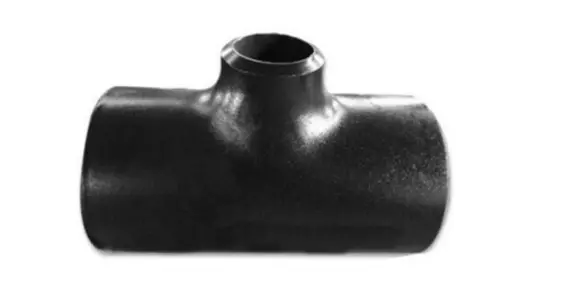
Understanding Socket Weld Pipe Tee and Its Reliability
Industrial piping networks demand fittings that maintain structural integrity under relentless operational stress. Socket weld tees achieve this through a deceptively simple yet highly effective design. The fitting features recessed openings where pipe ends insert before fillet welding permanently seals the connection. This approach eliminates the beveling required for butt welds while delivering comparable strength in smaller bore applications.
Core Applications Across Industrial Sectors
Chemical processing companies depend on these fittings for corrosive media transmission. Oudi has provided alloy steel and stainless steel socket weld tees to petrochemical plants handling sulphuric acid, caustic solutions, and hydrocarbon derivatives. The hermetic seal prevents fugitive emissions, a safety necessity in circumstances where even slight leakage might explode. Offshore platforms employ our duplex stainless steel tees in chemical injection skids at 6,000 PSI. The clean internal flow channel avoids erosion-corrosion that kills threaded junctions in months.
Steam distribution networks of power plants use these fittings extensively. For high-pressure steam lines exceeding 500°C, fittings must withstand thermal expansion without breaking. ASME B16.11-compliant forged socket weld tees preserve dimensional stability throughout these temperature extremes. Carbon steel variations in municipal distribution systems are appropriate for long-term infrastructure investments in water conservation initiatives because of their durability and cost-effectiveness.
Material Selection and Pressure Ratings
Material choice directly impacts system longevity. Carbon steel tees offer economical solutions for non-corrosive applications with temperatures below 400°C. Stainless steel grades—particularly 304L, 316L, and duplex varieties—provide superior resistance to oxidation and chemical attack. At Oudi, we maintain comprehensive inventory across these material categories, supported by Material Test Certificates traceable to mill origins per EN 10204 3.1 standards.
Schedule ratings define wall thickness and pressure capacity. Schedule 40 fittings suit standard pressure applications, while Schedule 80 variants handle elevated pressures common in upstream oil production. Schedule 160 and XXS (double extra strong) grades serve extreme conditions. Our production facility in Cangzhou produces tees across all schedule ranges from ½-inch to 4-inch diameters, with pressure ratings from Class 3000 to Class 9000.
Standards Compliance as Quality Foundation
International standards govern dimensional tolerances that determine Socket Weld Pipe Tee fitting reliability. ASME B16.11 specifies socket depths, bore diameters, and fillet weld configurations. JIS B2316 covers Japanese industrial requirements, while DIN 2986 addresses European applications. Oudi maintains ISO 9001:2000 certification and holds the People's Republic of China Special Equipment Manufacturing License—credentials that demonstrate our commitment to quality control from raw material receipt through final inspection. Our testing laboratory performs dimensional verification, Positive Material Identification (PMI), and non-destructive testing on every production batch, ensuring compliance with customer specifications and international codes.
Why Socket Weld Pipe Tee Offers Superior Performance
Engineering excellence separates adequate fittings from those that deliver decades of trouble-free service. Socket weld tees achieve reliability through multiple design advantages that address common failure modes in piping systems.
Structural Integrity Through Forged Manufacturing
The forging process compresses heated metal between precision dies, aligning grain structure and eliminating internal voids that plague cast fittings. This metallurgical refinement produces components with superior tensile strength and fatigue resistance. When pressure surges or water hammer events occur—common in pump discharge lines—forged tees absorb shock loads without fracturing. Our manufacturing process at Oudi follows strict forging parameters verified by ultrasonic testing, detecting any internal discontinuities that could initiate crack propagation under cyclic loading.
Leak-Proof Joint Design
Dual leakage barriers are created using socket welding. Inserting the pipe into the recessed socket gives mechanical support, while the rim fillet weld seals it. In vibrating conditions near compressors or reciprocating machinery, threaded connections loosen with time, making this design useful. This leak-tight integrity helps refinery sampling systems handle flammable hydrocarbons and fulfil strict fugitive emission rules without retightening.
Precision dimensions determine joint quality. A significant 1/16-inch expansion space between the pipe end and socket bottom is required by ASME B16.11. This gap accommodates thermal expansion and facilitates circumferential weld penetration. Small sockets restrict pipe insertion, whereas large bores generate gaps that undermine weld connection. CNC machines at Oudi maintain socket bore tolerances of ±0.005 inches, guaranteeing reliable fitting in manufacturing runs. Before fittings leave the factory, our quality control team checks these measurements using calibrated go/no-go gauges.
Installation Advantages and Best Practices
Proper installation maximizes the inherent advantages of socket weld design. Pipe ends require only cutting to length and deburring—no beveling machines or specialized preparation equipment needed. This simplicity reduces installation time by 40% compared to butt weld joints, translating to significant labor cost savings on large projects. However, several critical practices ensure optimal results. Welders must verify the expansion gap using feeler gauges before tacking. The fillet weld should form a smooth concave profile without undercut or excessive reinforcement. Magnetic Particle Inspection reveals surface discontinuities that might compromise joint integrity in critical service applications.
Variety of Configurations for Diverse Needs
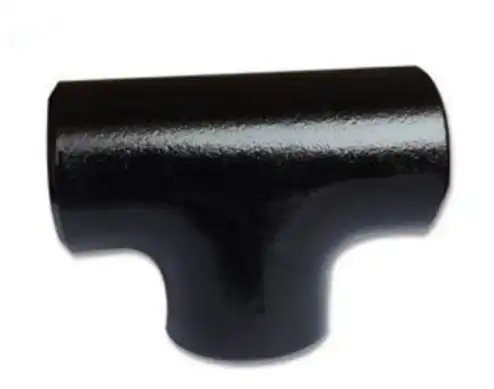
Equal tees connect three pipes of identical diameter, maintaining consistent flow rates through all branches. Reducing tees accommodate different pipe sizes, with the branch outlet smaller than the run openings—essential for takeoff lines supplying instruments or auxiliary equipment. Our production range at Oudi covers both configurations across all standard size combinations. Stainless steel reducing tees prove particularly valuable in pharmaceutical and food processing industries, where smooth bore transitions prevent contamination trap points. Galvanized carbon steel versions serve construction projects requiring corrosion protection at economical price points.
These configuration options enable system designers to optimize hydraulic performance. Reducing tees eliminate the need for separate reducer fittings, decreasing potential leak points and reducing installation complexity. Material variations address specific environmental challenges—316L stainless steel resists chloride stress corrosion in coastal facilities, while chrome-moly alloys withstand hydrogen attack in high-temperature refinery service.
Comparing Socket Weld Pipe Tee with Alternative Solutions
Procurement decisions benefit from a clear understanding of how different fitting types perform under various operational conditions. Each connection method carries distinct advantages and limitations that match specific application requirements.
Socket Weld Versus Butt Weld Fittings
Because of its smooth internal profile and minimal pressure drop, butt weld fittings dominate large-bore applications over 4 inches. Pipe and fitting walls are fully welded, creating base pipe-strong connections. Beveling pipe ends and welding alignment require skilled workers and specialist equipment. Strong, easy-to-install socket weld tees for small-bore systems. The socket self-aligns, helping beginners weld well. This benefit is particularly useful for our Southeast Asian customers with limited qualified welding personnel.
Material thickness performance is fascinating. Butt weld fittings enhance flow by retaining wall thickness. Socket weld designs thicken the socket rim to prevent turbulence at low speeds. Static or low-flow systems benefit from socket welds, whereas abrasive slurries or high-velocity fluids benefit from butt welds. Without manpower and beveling equipment, socket weld tees save 20-30% in small-bore installations.
Threaded Connections: When Convenience Compromises Reliability
For regular maintenance systems, threaded pipe tees are advantageous because they may be assembled and disassembled without tools. Mechanical threads are vulnerable. Thermal cycling degrades interference fit and sealant compounds for thread engagement. Over time, vibration loosens connections, causing leaks that intensify. Oil and gas production uses high-pressure systems, but threaded fittings are limited to Class 150-300 services.
Socket weld assemblies avoid these failure modes by permanent metallurgical bonding for Socket Weld Pipe Tee. Welding allows connections to survive vibration forever and pressure ratings of 10,000 PSI in strong walls. Socket weld tees perform well in severe Middle Eastern oil fields where temperature variations surpass 80°C daily and equipment runs for years between shutdowns.
Material-Based Performance Comparison
Although expensive, stainless steel socket weld tees are corrosion-resistant and robust. To prevent chloride pitting, chemical plants and marinas handling halogenated chemicals need 316L stainless steel with molybdenum. They handle 600°C superheated steam and -196°C LNG. Oudi provides material traceability and PMI certification for 304, 304L, 316, and duplex 2205 stainless steel.
Carbon steel tees are inexpensive without corrosion protection. Weldability and mechanical qualities make ASTM A105 carbon steel industry-friendly. Outdoor installations and water service benefit from galvanised coatings. Carbon steel tees are used in construction, municipal water, and HVAC for cost. Carbon steel uses 60% less material than stainless steel for big projects with hundreds of fittings and non-corrosive environments.
For high-temperature, high-pressure applications, use alloy steel. A182 F11 and F22 chrome-moly can handle 550°C power plant steam and refinery units. Some materials resist creep deformation, while carbon steel fails at high temperatures. Quality Oudi alloy steel is tempered and normalised by heat.
Procurement Considerations for Socket Weld Pipe Tee
Selecting the right socket weld pipe tee supplier determines project success as much as technical specifications. Quality, delivery reliability, and technical support separate professional suppliers from commodity vendors.
Evaluating Supplier Credentials and Capabilities
Supplier assessment begins with certification. The ISO 9001 certification shows systematic quality management, but closer investigation shows true capabilities. With Chinese regulatory pressure vessel component special equipment manufacturing certifications, Oudi's quality system surpasses ISO standards. Manufacturing equipment, testing capabilities, and staff credentials must be reviewed yearly for these licenses. Purchase managers should verify certificates with awarding bodies.
Delivery and price depend on production. Our Cangzhou plant manufactures 16,000 tonnes of carbon steel, stainless steel, and alloy pipe fittings—bends, flanges, tees, reducers, and caps—yearly. This comprehensive solution simplifies purchasing, reducing coordination and freight expenses. Using one supplier's methods and standards for all components streamlines quality control.
Technically supported suppliers stand out. Engineering help is needed for material selection, pressure rating verification, and code compliance. Oudi's technical staff analyses client demands and recommends best solutions throughout design. This partnership has helped 40 nations' North Sea offshore platforms and African water treatment plants.
Pricing Dynamics and Value Assessment
Unit price is part of procurement costs. Large supplier minimum order quantities affect project economics by increasing inventory carrying costs and obsolescence. Oudi offers flexible MOQs for large EPC projects and simple maintenance. Our huge inventory of conventional configurations allows timely delivery of typical sizes, while our manufacturing capabilities manage unanticipated requests.
Smart procurement teams save with bulk purchases. Multiple project volume commitments or long-term supply agreements assure manufacturing capacity and attractive prices. Our multi-year framework agreements with worldwide distributors and key end-users ensure availability and cost. These links aid during raw material volatility when commodity suppliers modify prices.
Customise apps beyond catalogue choices. Many industrial projects need exact materials, sizing, and testing. We can meet these demands without boutique supplier cost due to our production flexibility. PMI-certified duplex stainless steel tees and thick-wall systems for a Singapore petrochemical facility were specialised. For deep-water subsea manifold installation, schedule XXS carbon steel tees.
Due Diligence and Quality Verification
Customer references demonstrate supplier dependability better than marketing. Oudi meets technical and consumer demands for 300 clients across Europe, the Americas, Africa, Southeast Asia, and the Middle East. Consumers should evaluate quality, delivery, and issue resolution with comparable industry and application references.
Factory inspections expose certifications' limitations. Production floor walking demonstrates equipment, cleanliness, and process control. Visitors to our Cangzhou factory may see CNC machining, ultrasonic testing, PMI spectrometers, and structured production. Lean manufacturing maximises quality and efficiency at our 66,600-square-meter facility after 20 years of development.
Shipment documentation shows quality control. Full material tests link chemical and mechanical data to mill certificates. Drawing parameters are validated by dimension inspection reports. Pressure integrity is verified hydrostatically. Non-destructive testing detects magnetic and ultrasonic particles. Every shipment at Oudi includes this documentation to monitor project quality and regulatory compliance.
Ensuring Long-Term Reliability: Maintenance and Future Trends
Installation completion marks the beginning of a Socket Weld Pipe Tee fitting's service life. Proper maintenance practices and awareness of technological advances maximize asset value and operational safety.
Inspection Protocols for Sustained Performance
Visual checks during plant tours reveal issues early. Corrosion, discolouration, pitting, and material loss reduce wall thickness. A smooth fillet weld should not break metal. Galvanised or painted fittings should keep their finishes. Corrosive or high-temperature applications need quarterly inspections, whereas benign services may just need yearly checks.
Fit is determined nondestructively. Ultrasonic thickness reveals hidden corrosion and erosion. Magnetic particles may detect catastrophic near-surface cracks. Radiographs reveal internal abnormalities but need special equipment and radiation safety. Scheduled shutdowns of populated hydrocarbon lines and high-energy steam systems need these enhanced checks.
Records help evaluate deterioration and set standards. Initial installation thickness measurements aid inspections. Trends in corrosion predict life and maintenance. Data-driven replacement timing balances cost and safety.
Preventive Measures and Best Practices
Anti-corrosion prolongs fitting life. Environmental conditions dictate whether galvanising, epoxy varnishes, or polyethylene wrapping protect carbon steel components. Cathodic protection reduces submerged equipment electrochemical corrosion. Injection of corrosion inhibitors inhibits process system internal corrosion. For air and water service applications, Oudi's standard catalogue galvanised carbon steel tees provide economical corrosion protection.
Well-designed systems fail less. Good support spacing reduces welded joint bending stress. Temperature can modify flexible connections or thermal expansion loops. Disconnecting reciprocating machinery fittings reduces vibration. Steam system drain points avoid low-level water collection and corrosion. These first-installation design methods reduce reliability issues independent of fitting quality.
Sanitary and medicinal uses need interior cleansing. Rust and germs disappear with chemical cleaning. Mechanical pigging removes process stream buildup. Passivation restores stainless steel oxide layers after welding or mechanical degradation. Our ASTM A380-compliant factory-pickled and passivated stainless steel socket weld tees are for important sanitary systems.
Innovation Shaping Future Reliability
Material innovation improves harsh-condition performance. Nanostructured alloys with high strength-to-weight ratios allow thinner walls and lower material costs. Under harsh chemicals, corrosion-resistant superalloys last longer. Specialised applications need rare materials, but serial production will make them available. Oudi follows these discoveries and adopts new materials when they are cost-effective and consumer-friendly.
Digital monitoring adopts predictive maintenance. Temperature anomalies from wireless sensors indicate insulation deterioration or internal fouling. Real-time acoustic emission monitoring detects cracks. Life prediction via electrochemical corrosion sensors. Predictive maintenance suggestions using AI and sensor data increase dependability and lower inspection costs. When companies adopt IIoT, procurement will change.
Additive fabrication can alter low-volume bespoke fits. Metal 3D printing makes one-off designs affordable by eliminating tooling. The sluggish manufacturing rate and inadequate mechanical quality restrict its use for speciality fittings. Within a decade, Quick Development anticipates additive manufacturing will dominate complicated geometries and quick prototyping.
Conclusion
Socket weld pipe tees deliver proven reliability through forged construction, precision engineering, and permanent weld joints that eliminate common failure modes plaguing mechanical connections. Material versatility spanning carbon steel, stainless steel, and exotic alloys enables optimized solutions across industries from chemical processing to power generation. Procurement success depends on selecting suppliers with verified certifications, comprehensive capabilities, and demonstrated global experience. Proper installation practices and proactive maintenance extend service life while emerging technologies promise enhanced performance and monitoring capabilities. The fundamental advantages of socket weld design—leak-proof integrity, vibration resistance, and simplified installation—ensure these fittings will remain essential components in high-performance piping systems for decades to come.
FAQ
1. What pressure ratings can socket weld tees handle?
Socket weld tees manufactured to ASME B16.11 standards accommodate Class 3000, 6000, and 9000 pressure ratings depending on material grade and schedule thickness. Carbon steel Schedule 80 tees typically handle pressures to 6,000 PSI in sizes under 2 inches, while Schedule XXS and exotic alloys reach 10,000 PSI in specialized applications. Pressure capacity decreases with temperature elevation—derating curves published in ASME codes provide specific values for your operating conditions.
2. How do I verify socket weld tee quality before installation?
Dimensional verification confirms socket depth and bore diameter match ASME B16.11 tolerances using calibrated measuring instruments. Request Material Test Certificates traceable to mill origins with chemical composition and mechanical property data. Positive Material Identification using handheld spectrometers confirms material grade matches specifications. Visual inspection should reveal smooth machined surfaces without burrs, cracks, or porosity. Reputable suppliers like Oudi provide complete documentation packages including dimensional reports, material certificates, and NDT results with every shipment.
3. What's the difference between equal and reducing socket weld tees?
Equal tees feature identical socket dimensions on all three openings, connecting pipes of the same size to maintain consistent flow rates through run and branch. Reducing tees incorporate a smaller branch outlet while maintaining equal-sized run openings, eliminating the need for separate reducer fittings when supplying instrument connections or auxiliary lines from main process pipes. Reducing configurations are specified by stating run size followed by branch size—a 2" x 1" reducing tee has 2-inch run openings and a 1-inch branch.
Partner with Oudi for Reliable Socket Weld Pipe Tee Solutions
Oudi brings over two decades of manufacturing excellence to your critical piping projects. As a certified socket weld pipe tee supplier holding ISO 9001:2000 certification and special equipment manufacturing licenses, we serve 300+ customers across 40 countries with proven reliability. Our Cangzhou facility produces 16,000 tons annually, maintaining comprehensive inventory in carbon steel, stainless steel, and alloy materials compliant with ANSI, JIS, DIN, and BS standards. From initial material traceability through final non-destructive testing, our quality control ensures every fitting meets your specifications. Contact us today at oudi-04@oudiguandao.com to discuss your project requirements and experience the Oudi difference in quality, delivery, and technical support.
References
1. American Society of Mechanical Engineers. (2016). ASME B16.11: Forged Fittings, Socket-Welding and Threaded. New York: ASME Press.
2. Becht, C. (2009). Process Piping: The Complete Guide to ASME B31.3 (3rd ed.). New York: ASME Press.
3. Gupta, S.K. (2013). Handbook of Piping Engineering (2nd ed.). Boca Raton: CRC Press.
4. Mohitpour, M., Golshan, H., & Murray, A. (2007). Pipeline Design & Construction: A Practical Approach (3rd ed.). New York: ASME Press.
5. Nayyar, M.L. (2000). Piping Handbook (7th ed.). New York: McGraw-Hill Professional.
6. Smith, P.R. & Zappe, R.W. (2004). Valve Selection Handbook: Engineering Fundamentals for Selecting the Right Valve Design for Every Industrial Flow Application (5th ed.). Oxford: Gulf Professional Publishing.

Need help finding the right solution with our experts. Please contact us.

SINCE 1998 Your Reliable Pipeline Manufacturer



