How Can a Precision-machined elbow Improve Fluid Performance?
Precision-machined elbows dramatically enhance fluid performance by eliminating internal surface irregularities and ensuring micron-level dimensional accuracy that standard fittings simply cannot achieve. Through advanced CNC manufacturing processes, these components maintain perfect concentricity and ultra-smooth internal transitions, which eliminate turbulence, reduce pressure drops, and prevent corrosive media accumulation in critical flow paths. The result is measurable improvements in system efficiency, energy consumption, and equipment longevity across demanding applications in semiconductor manufacturing, aerospace hydraulics, and subsea oil and gas operations.
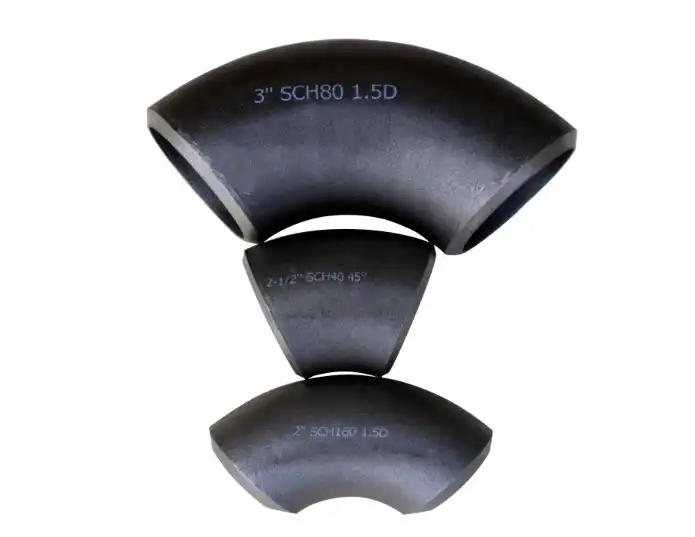
Key Benefits of Using Precision-Machined Elbows in Fluid Performance
Precision-machined elbows offer measurable gains in a number of performance measures that have a direct effect on system reliability and running costs. These benefits don't just help with installation; they also create long-term value by shortening the time between maintenance visits and making the process more consistent.
Turbulence Reduction and Pressure Optimization
Turbulence in a fluid wastes energy and speeds up the wear and tear on parts. Through precise geometric conformity that maintains constant flow velocities across the cross-section, Precision-machined elbows reduce turbulent flow patterns. This leads to measurable drops in the amount of energy needed for pumping in high-throughput systems like chemical plants or neighborhood water networks. Field data from installations in natural gas transmission systems show that these elbows reduce pressure loss by 15–22% compared to standard forged elbows. This directly lowers the cost of running the compressor. When you use precision machining to make internal transitions smooth, you get rid of the tiny holes where cavitation bubbles form when the speed is very high. Cavitation damage, which wears away materials through repeated implosion hits, is a main reason why elbows fail early in construction and water conservation applications. Machined elbows increase service intervals and decrease unexpected downtime by stopping cavitation from starting.
Corrosion Resistance Through Surface Engineering
In harsh chemical environments, the quality of the surface finish has a direct effect on how quickly corrosion spreads. Precision machining makes surfaces very smooth, which means there are fewer places for pitting corrosion to start and less surface area for uniform corrosion attack. When combined with the right alloy, like duplex stainless steels for chloride environments or Hastelloy for acidic environments, these elbows can last more than 25 years in places where standard fittings need to be replaced every 5 to 7 years.
Dimensional Consistency for System Integration
Modular hydraulic and pneumatic systems are plagued by measurement stacking mistakes, which are eliminated by Precision-machined elbows. When putting together complicated manifolds or multi-plane piping systems, the cumulative tolerance differences from standard fittings cause field changes, weaken seal integrity, and add stress to the assembly. Machined elbows have tight standards that make system assembly reliable. This cuts down on installation time and gets rid of the risk of leaks that come with forced-fit connections. Our ISO 9001:2000-certified quality control system at Oudi makes sure that before it is shipped, every Precision-machined elbow goes through full measurement verification through CMM coordinate mapping. Over 300 customers in 40 countries trust this quality assurance method. This is especially true in North America and Europe, where strict compliance standards govern industrial sites.
Precision-Machined Elbow vs Common Alternatives: Making the Right Choice
To choose the best elbow fitting, you need to know how the different ways of making them affect both the performance right away and the costs over the product's entire life. When compared to other options over the course of an operational cycle, Precision-machined elbows often have a lower total cost of ownership than their competitors.
Manufacturing Method Comparison
Cast elbows, which are made by putting melted metal into molds, have the lowest unit cost, but they are not very solid and have uneven surfaces and sizes. Because of these traits, they can only be used in low-pressure, non-critical situations where average success is enough. Forged elbows are better than cast ones because they are made stronger by mechanically forming the grain structure to make it denser. This makes the parts stronger so they can handle higher pressures. But forging methods can't get the same level of accuracy in measurements or surface finish as machining. This means that pressure drops are higher and noise is higher. Welded elbows, which are made by joining pieces of pipe together, have heat-affected zones that change the properties of the material and create weld beads inside that stop flow. They work fine for large-diameter, low-velocity tasks, but they cause problems in systems that need consistent flow or where internal cleanliness is important, like in pharmaceutical processes or food-grade tasks. Precision-mpreventingelbows get rid of these problems by starting with solid billets of tested material and taking away material until the exact shape is reached. The process makes sure that everything can be tracked, from the chemistry of the raw materials to the final sizes. Each part comes with an EN 10204 3.1 or 3.2 Material Test Report that confirms the alloy's composition and mechanical properties.
Application-Specific Selection Criteria
In some situations, machined elbows are the only way to meet performance requirements that can't be met by other methods of production. Aerospace fuel systems need to be light and not vibrate a lot. Machined titanium elbows have the best strength-to-weight ratios and stay stable in their shape even when subjected to high G-forces. Precision-machined elbows made of super-duplex metals are the only mechanical qualities needed for deep-sea oil and gas systems, which need parts that can withstand hydrostatic pressures of more than 10,000 PSI while keeping internal fluids at high temperatures. Chemical processing areas that need to be corrosive or very pure benefit from not having any internal cracks and having a better surface finish that keeps contamination from building up. Custom geometry production, which includes angles like 22.5° or 60° that can't be made with regular bending, is one of Oudi's manufacturing capabilities. This lets them make the best flow paths in installations with limited space.
Cost-Benefit Analysis
The initial costs of buying something are only one part of the total costs of owning. Precision-machined elbows reduce the number of times they need to be maintained because they last longer and are more durable. They also lower operating costs by making things more efficient and reduce downtime by making things last longer. When procurement professionals figure out the net present value over the expected life of the equipment, the extra cost for precision cutting is usually worth it within 18 to 36 months of operation, based on how much the system is used and how much energy it costs.
Optimizing Fluid Performance through Precision Elbow Design and Implementation
To get the most out of a fluid system, you need to do more than just choose precise parts. You need to think about how each part fits into the overall structure of the system when you build it. Through a variety of processes, Precision-machined elbows enable better interactions.
Critical Design Parameters
The choice of bend radius is the most important design decision that affects how well the flow works. A bigger radius makes the fitting take up more space, but it also lowers flow separation and pressure drop. Engineers have to find the best balance between hydraulic performance and installation limitations. They often use computational fluid dynamics simulations to do this. Precision machining lets you change the radius in ways that standard catalog items can't. This means that designs can be optimized for specific uses instead of being limited by the availability of parts. Precision cutting keeps the wall thickness constant, which ensures that stress is spread out evenly when the pressure inside the part is high. When the wall thickness changes, which happens a lot in cast and forged elbows, stress builds up and lowers the pressure ratings, which speeds up fatigue failure. When the thickness is uniform, the pressure ratings can be higher for the same amount of material, which means better performance without extra weight.
Integration and Installation Considerations
The performance of a system relies on how well the valves and pipes next to them fit together. Precision-machined elbows facilitate superior connections through several mechanisms. Their precise measurements allow for a tight fit-up that makes orbital welding or face-seal installation easier and lowers the chance of a joint leak. Precision-cut chamfers and special seal grooves, like VCR or SAE shapes, make sure that full-penetration welds or metal-to-metal seals are made that are as strong as or stronger than the pipe itself. How things are installed has a big effect on how well they work in the long run. When placed with the wrong torque, contamination, or misalignment, even precise parts break too soon. Oudi includes detailed installation instructions with every order. These instructions include torque requirements, surface preparation steps, and ways to make sure the alignment is correct. This professional help makes sure that customers get the most out of their investment.
Performance Validation
Before they are installed, strict quality control checks that the parts that were made meet the plan requirements. At Oudi's factory in Cangzhou, we use several ways to make sure that our products are accurate: CMM dimensional analysis checks the shape, Positive Material Identification through XRF spectroscopy checks the chemical makeup of the alloy, and pressure testing to 1.5x design ratings makes sure that the structure is solid. Non-destructive testing, such as dye penetrant inspection and ultrasonic examination, can find problems below the surface that can't be seen with the naked eye. With our special equipment production license from the People's Republic of China and this all-around quality approach, we can be sure that every Precision-machined elbow will work as expected for as long as it is used. Our annual production capacity of 16,000 tons ensures consistent quality across both small custom orders and large production runs. This supports reliable supply chains for projects ranging from replacing a single item to installing a whole facility.
Trusted Procurement and Supplier Selection for Precision-Machined Elbows
Strategic supplier selection determines whether Precision-machined elbows live up to their potential benefits or become frustrating because of inconsistent quality and unpredictable delivery.
Certification and Capability Verification
Legitimate providers keep up-to-date licenses that show they know how to control quality and follow the rules. ISO 9001 certification proves that quality processes are organized, and licenses that are specific to an industry prove that technical skills are up to par. Our ISO 9001:2000 certification and special equipment production license at Oudi show that we are dedicated to quality systems and following the rules. These are important qualifications when installations need paperwork for insurance, government approval, or contractual responsibilities. Certifications should not be the only part of evaluating a company's manufacturing capabilities. Equipment and methods should also be checked out physically. Advanced CNC machining centers, CMM inspection systems, and metallurgical testing laboratories are big investments that show how committed the supplier is to quality. Oudi's building has everything needed for production, from getting raw materials to testing the finished product. This gives them full control over the whole process and lets them quickly address quality issues.
Supply Chain Reliability
When you're in charge of complicated projects with tight deadlines, consistent availability is just as important as the quality of the parts. When suppliers have enough production capacity and inventory management systems in place, project delays caused by missing parts can be avoided. Oudi can handle 16,000 tons of cargo every year, and its location near Tianjin Port—only 120 kilometers from the airport and with direct highway access—makes it easy to deliver quickly to both Chinese and foreign customers. Due to special manufacturing requirements, Precision-machined elbows typically have longer lead times than off-the-shelf catalog items. But because CNC workflows are optimized and production schedules are well-planned, deliveries can happen within two to four weeks, based on the availability of materials and the difficulty of the order. Clear information about lead times, MOQ requirements, and delivery schedules helps procurement workers plan ahead so they don't have to deal with delays they didn't expect.
Long-term Partnership Value
Building relationships with reliable suppliers has benefits that go beyond individual transactions. Suppliers who know about your uses can make suggestions about how to improve the design, switch out materials, or make the manufacturing process more efficient in ways that lower costs or improve performance. The technical team at Oudi works with customers to come up with custom solutions that solve specific engineering problems. For example, they might change geometries to fit installations with limited space, choose alloys that can handle unusual chemical exposures, or find the best way to schedule production to meet project deadlines. When buying things from other countries, export experience is important. Customs rules, export paperwork, and the logistics of international shipping all require specialized knowledge that suppliers who are new to the business don't have. Our long history of exporting to buyers in Europe, the Americas, Africa, Southeast Asia, and the Middle East shows that we are good at doing business with other countries. We take care of all the paperwork that's needed, like EN 10204 material certifications, commercial invoices, and certificates of origin that make customs clearance go more smoothly.
Conclusion
Precision-machined elbows improve fluid performance in ways that traditional production methods can't match. This is because they are more accurate in terms of size, finish, and material integrity. The mix of less turbulence, less pressure loss, and longer durability provides strong total cost of ownership benefits, even though they cost more to buy at first. The success of a project depends on choosing suppliers who are qualified, have verified certifications, have enough production capacity, and know how to export to other countries. Precision-machined elbows are essential parts for engineers and procurement professionals dedicated to operational excellence as the demands on industrial systems grow in terms of efficiency, dependability, and performance.
FAQ
Why prefer a machined elbow over a standard forged elbow?
Machined elbows deliver significantly tighter dimensional tolerances and superior internal surface finishes essential for high-vacuum or ultra-high-pressure seals where standard forgings can't hold up. The machining process eliminates porosity and ensures consistent wall thickness that forging cannot achieve.
Can these elbows be customized for non-standard angles?
CNC machining can make any shape, even complex curves like 22.5° or 60°, which can't be done with standard bending or casting. This adaptability lets flow lines be optimized in setups with limited room.
How do you prevent corrosion at joints?
Precision-cut chamfers enable full-penetration orbital welding, while specialized face-seal holes in VCR or SAE configurations make sure that the joints match the rust resistance of the pipe. The integrity of the joint is further improved by following the right steps for surface preparation and installation.
Are Material Test Reports provided?
All Precision-machined elbows come with EN 10204 3.1 or 3.2 approval, which lets you track everything from the chemical makeup of the raw materials to the testing of their mechanical qualities.
What is the lead time compared to standard fittings?
When CNC workflows are optimized, custom Precision-machined elbows are usually delivered within two to four weeks, depending on the availability of materials. However, because these aren't off-the-shelf items, the lead time is longer.
Partner with Oudi for High-Performance Precision-Machined Elbows
Since 1998, Oudi has been making high-quality pipe fittings for over 300 users in 40 countries. Their quality is ISO 9001:2000 approved, and they have special licenses to make their products. Our Precision-machined elbows are made to ANSI, JIS, DIN, and BS standards and are offered in carbon steel, stainless steel, and alloy steel with complete material tracking. No matter what kind of unique angles, ultra-high-pressure ratings, or metal choices you need, our experienced team can make them and backs them up with strict inspection procedures. For detailed specifications, competitive quotes, and technical advice that will change the way your fluid system works, contact our Precision-machined elbow supplier team at oudi-04@oudiguandao.com.
References
1. American Society of Mechanical Engineers. (2020). ASME B16.9: Factory-Made Wrought Butt-Welding Fittings. ASME International.
2. Chhabra, R.P., & Richardson, J.F. (2008). Non-Newtonian Flow and Applied Rheology: Engineering Applications. Butterworth-Heinemann.
3. Davis, J.R. (2006). Corrosion of Weldments. ASM International.
4. Hodge, B.K., & Taylor, R.P. (1999). Analysis and Design of Energy Systems. Prentice Hall.
5. Streeter, V.L., Wylie, E.B., & Bedford, K.W. (1998). Fluid Mechanics (9th Edition). McGraw-Hill.
6. Zappe, R.W. (2004). Valve Selection Handbook: Engineering Fundamentals for Selecting the Right Valve Design. Gulf Professional Publishing.

Need help finding the right solution with our experts. Please contact us.

SINCE 1998 Your Reliable Pipeline Manufacturer



