How Does a Custom carbon steel elbow Improve Flow Efficiency?
A bespoke Custom carbon steel elbow does more than just reroute fluid through a pipe; it may make a huge difference in the performance of your complete piping system. A bespoke carbon steel elbow is designed to your unique operating circumstances, with the bend radius, wall thickness, and angle to eliminate turbulence during direction changes, reduce pressure drop across the fitting, and maintain stable flow velocity. In industries where precision rules (oil & gas, chemical processing, water treatment, etc.), such accuracy means real energy savings and fewer unscheduled outages.
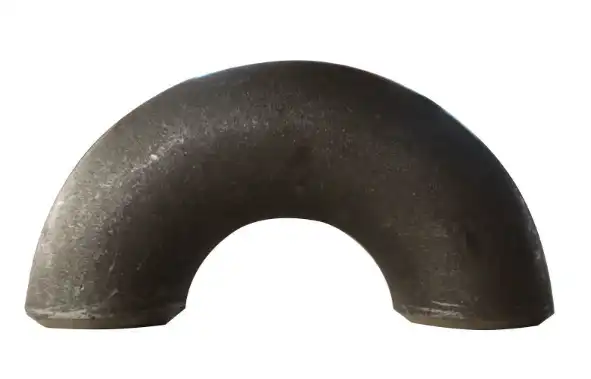
Understanding Custom Carbon Steel Elbows and Their Role in Flow Efficiency
What Is a Carbon Steel Elbow?
A carbon steel elbow is a pipe fitting used to change the direction of the flow of fluid through it at a certain angle, most often 45°, 90°, or 180°. It links two pieces of pipe and causes the medium (liquid, gas, or steam) to go a different way. These fittings are manufactured as either seamless or welded and in the short-radius (SR) or long-radius (LR) form. Each decision has an effect on the fluid flow through the curve.
Why "Custom" Makes a Difference
Standard off-the-shelf elbows are appropriate for common applications, but can cause needless resistance at non-standard pressures, temperatures, or pipe sizes. A bespoke elbow is fabricated to your pipeline plan dimensions. This guarantees that the inside bore is precisely the same as the pipe bore, the bend radius is suitable for your flow velocity, and the wall schedule is suitable for your pressure class – all without over-engineering or wasting material.
How Design Geometry Affects Flow
It is shown that for typical industrial flow situations, long radius elbows (with a centerline radius of 1.5 times the pipe diameter) always have less pressure loss than short radius elbows. The loss coefficients for fittings are directly related to the radius-to-diameter ratios, as stated in ASME B16.9. The fit is no longer a bottleneck but a natural element of the flow route when the shape is engineered to your application.
Key Factors Influencing Flow Efficiency in Custom Carbon Steel Elbows
Wall Thickness and Pressure Rating
Wall Thickness – Based on Schedule Number – Affects the Pressure Capacity and Inside Diameter of the Fitting. A thicker wall can bear more pressure, but lowers bore size significantly. Choosing the optimum schedule for your operating pressure preserves the largest bore feasible, which minimizes flow restriction without sacrificing safety.
Material Grade Selection
The most common grade for butt-weld Custom carbon steel elbows is ASTM A234 WPB, which is for carbon steel fittings for moderate-temperature usage. For higher temperatures or mildly corrosive settings, alloy grades WP11 or WP22 are suitable. Choosing the proper grade avoids internal corrosion that leads to surface roughness over time—and rough inner surfaces add measurable friction losses. Oudi makes elbows in all conventional grades of materials, ranging from normal carbon steel to stainless and alloy steel.
Seamless vs. Welded Manufacturing
Seamless Elbows are manufactured by hot forming a single billet of steel, ensuring a homogeneous grain structure and smooth internal surface. Welded elbows are made of plate and have a longitudinal seam. Seamless construction is often preferable for high-pressure or high-temperature use, such as in oil refining or natural gas transit, as it removes possible weak spots at the weld line. Oudi’s manufacturing plant uses both hot-push and hot-heating bending methods to satisfy any demand.
Comparing Custom Carbon Steel Elbows with Alternatives to Optimize Flow
Carbon Steel vs. Stainless Steel Elbows
ASTM A234 WPB carbon steel elbows provide strong mechanical strength and good flow properties at a far cheaper cost than stainless steel. But stainless steel elbows are two to four times as expensive as carbon steel elbows, and provide far better corrosion resistance in harsh chemical and marine conditions. Carbon steel remains the material of choice for oil & gas pipelines, water conservancy systems, and general industrial applications where the fluid is not excessively corrosive.
Short-Radius vs. Long-Radius: Flow Impact
Here is a direct comparison of the two most common elbow types and how they affect flow:
- Long-radius (LR) elbow — Bend radius equals 1.5D. Lower pressure drop, smoother velocity transition, preferred for liquid and gas transport lines where energy efficiency matters.
- Short-radius (SR) elbow — Bend radius equals 1.0D. More compact, used in tight spaces such as shipbuilding or boiler piping, but produces higher turbulence and slightly greater head loss.
The right choice depends on available installation space versus the energy cost of the pressure drop over the system's lifetime. For most process piping, long-radius geometry is the better option from a flow standpoint.
Grade Selection by Service Condition
Matching material grade to service conditions prevents premature degradation that would otherwise roughen the interior surface and increase friction losses over time. ASTM A234 WPB handles temperatures up to 800°F; alloy grades extend that range further. Oudi manufactures to American (ANSI), Japanese (JIS), German (DIN), and British (BS) standards, making it straightforward for international procurement teams to specify the right grade for their regional code requirements.
Practical Applications and Benefits of Using Custom Carbon Steel Elbows
Industry-Specific Use Cases
Custom carbon steel elbows are used in some of the most demanding pipework environments in the world. In oil & gas gathering lines, they handle abrasive slurries and high-pressure gas streams. In chemical plants, they route corrosive process fluids through reactor systems. In water treatment infrastructure, they direct large-volume flows through treatment stages. Each of these environments has distinct pressure, temperature, and flow velocity profiles that a generic fitting cannot fully address.
Real Flow Efficiency Gains
When an engineering team at a refinery switches from standard off-the-shelf SR elbows to custom LR elbows with matched bore dimensions, pressure drop at each fitting can decrease by 20–40%, depending on flow velocity and fluid viscosity (as referenced in the Crane Technical Paper No. 410 on flow of fluids). Across a system with dozens of direction changes, that reduction compounds into meaningful energy savings and reduced pump load.
Customization Options That Matter
Oudi offers a range of customization parameters that affect both performance and installation reliability. The following options are available for specification:
- Non-standard bend angles — Any angle between 1° and 180° to match unconventional pipeline layouts.
- Specialized end connections — Butt-weld (BW), socket weld (SW), and threaded ends for different joint requirements.
- Protective coatings — Internal and external coatings for corrosion-prone environments, extending service life without compromising bore smoothness.
These options allow procurement teams to source a single part that handles flow, installation, and environmental protection requirements together, rather than relying on multiple components or field modifications.
Procurement Insights: How to Choose and Buy Custom Carbon Steel Elbows
Certifications to Verify Before Ordering
All suppliers you engage with must have ISO 9001 certification for quality management systems, and for pressure-bearing fittings, a special equipment manufacturing license granted by the competent government. Oudi is ISO 9001:2000 certified and possesses a special equipment manufacturing license issued by the People’s Republic of China. These credentials ensure that every fitting sent from the factory has been subjected to recorded inspections at raw material intake, throughout in-process checks, and at final nondestructive testing (NDT).
Evaluating Supplier Capability
Don’t stop with certificates. Look for yearly production capacity and inspection equipment. Oudi’s plant has a size of 66,600 square meters and manufactures 16,000 tons of pipe fittings per year, encompassing carbon steel, stainless steel, and alloy steel goods. To date, the firm has sold to more than 300 clients in more than 40 countries, including purchasers in the United States, Europe, South America, and the Middle East. That export track record demonstrates continuous quality control and dependable delivery logistics.
Bulk Purchasing and Lead Time Strategy
Larger order sizes mean lower unit costs and easier logistics for foreign B2B customers. It’s a good idea to have early discussions with your supplier about minimum order numbers, packaging requirements, and port-of-loading alternatives. Oudi is situated in Cangzhou, Hebei, about 120 km from Tianjin Port, giving it direct access to one of China’s major export ports and reducing shipping lead times to North American and European destinations.
Conclusion
Getting flow efficiency correct in an industrial plumbing system begins with the fittings, not simply the pumps or pipes. Specify a Custom carbon steel elbow with the correct bend radius, wall schedule, material grade, and end connection, and you minimize needless resistance in your system and keep fluid flowing in the way your process demands. Oudi has accredited production, a broad product portfolio, and real export expertise, giving procurement teams a supplier they can rely on for consistent quality and on-time delivery.
FAQ
1. Are custom elbows better than standard elbows for flow efficiency?
In most industrial applications, yes. Standard elbows are manufactured to nominal dimensions that may not match your pipe's exact bore or your system's pressure-flow profile. A custom elbow eliminates those mismatches, which reduces turbulence at the fitting and lowers overall pressure drop.
2. How does wall thickness affect flow inside an elbow?
Thicker walls reduce the interior bore diameter slightly. In a system where high flow velocity is needed, an oversized schedule can act as a minor restriction. Specifying wall thickness to exactly match your pressure class — not defaulting to the thickest option — keeps the bore as wide as possible and maintains flow rate.
3. Can Oudi manufacture elbows to OEM specifications?
Yes. Oudi produces pipe fittings to American (ANSI), Japanese (JIS), German (DIN), and British (BS) standards and can work from customer drawings or project specifications. Both seamless and welded constructions are available, along with a range of protective coatings and end connection types.
4. What materials does Oudi supply for elbows?
Oudi manufactures in carbon steel (including ASTM A234 WPB), stainless steel, and alloy steel grades. Material selection can be aligned to specific temperature, pressure, and corrosion requirements.
Get a Quote from Oudi — Your Trusted Custom Carbon Steel Elbow Supplier
Oudi has been producing certified pipe fittings since 1998, with 16,000 tons of annual output and active customers in over 40 countries. If your project needs a Custom carbon steel elbow manufacturer with documented quality controls and true export experience, contact our team directly. Send your specifications to oudi-04@oudiguandao.com to browse our product range and request a competitive quote.
References
1. Crane Co. — Flow of Fluids Through Valves, Fittings, and Pipe (Technical Paper No. 410), 2013.
2. ASME International — ASME B16.9: Factory-Made Wrought Buttwelding Fittings, 2018.
3. ASTM International — ASTM A234/A234M: Standard Specification for Piping Fittings of Wrought Carbon Steel and Alloy Steel for Moderate and High Temperature Service, 2021.
4. Mohinder L. Nayyar — Piping Handbook, 7th Edition, McGraw-Hill, 2000.
5. American Petroleum Institute — API 570: Piping Inspection Code, 3rd Edition, 2016.
6. British Standards Institution — BS EN 10253-2: Butt-welding Pipe Fittings — Part 2: Non-alloy and Ferritic Alloy Steels, 2007.

Need help finding the right solution with our experts. Please contact us.

SINCE 1998 Your Reliable Pipeline Manufacturer



