How to Select a High Temperature Pipe Tee for Steam Lines
You don’t want to mess up while selecting the correct high temperature pipe tee for a steam line. The T-shaped fittings are used at spots where the flow branches off, when superheated steam is present at pressures exceeding 250 bar and temperatures above 600°C. Wrong material selection or an uncertified fitting might entail catastrophic failure, unscheduled downtime, and considerable safety risk. This handbook takes procurement engineers, distributors, and EPC contractors through the essential selection criteria – material grades, pressure ratings, connection types, quality verification, and sourcing – so you can purchase with confidence.
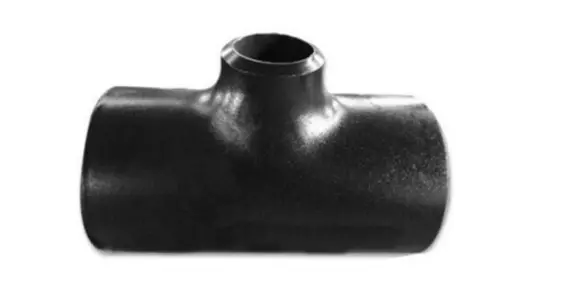
Understanding High-Temperature Pipe Tees and Their Role in Steam Lines
What Makes These Fittings Different
A common carbon steel tee quickly loses mechanical strength at 400°C. However, a high-alloy steam tee is forged or seamless wrought from chrome-molybdenum or austenitic stainless steel to withstand creep, oxidation, and thermal fatigue over thousands of heat cycles. The outcome is a fitting that maintains dimensional integrity under conditions that would distort or break regular pipe fittings.
Where They Are Used
Steam tees are used in supercritical power plant headers, ethylene cracker furnace lines, boiler feed systems, and high-pressure steam distribution networks in chemical plants. In electrical power generation alone, turbine intake headers may be exposed to 600°C superheated steam at 280 bar – circumstances that necessitate fittings with demonstrated creep-rupture strength, not merely a pressure class designation.
Performance Advantages Over Standard Fittings
High-chromium alloys provide a protective oxide coating that helps prevent scaling. Scaling is a high-temperature oxidation process that eats away at the pipe walls and weakens joints over time. This implies less replacement, cheaper cost of maintenance throughout lifetime, and improved uptime of the system in harsh industrial situations.
Key Factors to Consider When Selecting High-Temperature Pipe Tees
Material Grade Selection
Material is the single most important variable. Here are the three primary options for steam service:
- Chrome-Molybdenum alloy (ASTM A234 WP91 / WP22): WP91 is rated for continuous service up to 600°C (1112°F) and is the industry standard for supercritical steam headers. WP22 suits moderate high-temperature applications up to around 540°C.
- Austenitic stainless steel (310S, 347H): These grades handle temperatures up to 900°C and offer strong resistance to oxidation and carburization, making them suitable for chemical plant steam lines and furnace applications.
- Nickel-based alloys (Inconel 625): Used in the most extreme environments — above 900°C or where aggressive corrosive media accompany steam.
Choosing the wrong grade is not a minor error. Using standard carbon steel in a steam line rated at 550°C will result in accelerated creep deformation within months.
Pressure and Temperature Ratings
All high temperature pipe tees should be ASME B16.9 dimensional specifications and be supplied with verifiable ASTM material certificates. Check the reported P-T rating of the manufacturer against your system operating parameters. Don't forget upset circumstances, not simply normal operating ranges. Design standards for these fittings are given in both ASME B31.1 (Power Piping) and B31.3 (Process Piping).
Connection Type
Three connection types are common in high-temperature service:
- Butt weld: The preferred choice for high-pressure steam headers. It produces a continuous, flush joint with no crevice for stress concentration.
- Socket weld: Suitable for smaller bore lines (typically below 2 inches) at moderate pressures. The socket gap can trap condensate, so it is less favored for steam lines above Class 600.
- Threaded: Generally avoided in high-temperature steam service due to thread root stress and potential for leakage at elevated temperatures.
Installation and Maintenance Best Practices for High-Temperature Pipe Tees
Pre-Installation Checks
Check the heat number on the fitting against the material test report (MTR) prior to welding. • Perform Positive Material Identification (PMI) by XRF or Optical Emission Spectrometry to validate alloy chemistry. Documented field failures in alloy steel steam systems have been attributed to misidentified materials.
Welding and Post-Weld Heat Treatment
For grades like P91, which are Chrome-Molybdenum, Post-Weld Heat Treatment (PWHT) is not optional but a requirement of ASME code. PWHT lowers residual stress from welding and provides the right tempered martensitic microstructure. The hardness tests after PWHT confirmed the success of the heat treatment. If this phase is skipped, stress corrosion cracking and brittle fracture during heat cycling are invited.
Inspection and Maintenance Schedule
Once in service, your regular inspection plan should include radiographic testing (RT) or ultrasonic testing (UT) in the tee crotch region, where the wall thickness is particularly crucial. In power and chemical plants, most operators test high-temperature fittings every two to four years, depending on cycle frequency and operating temperature.
Comparing High-Temperature Pipe Tees: Making an Informed Procurement Decision
High-Temperature vs. Standard Fittings
Standard carbon steel tees cost less upfront, but they are not a cost-saving choice in steam service above 400°C. Accelerated oxidation and creep failure lead to replacement cycles measured in months rather than years. A properly specified alloy high temperature pipe tee may cost three to five times more initially, but its service life in the same conditions extends proportionally — often exceeding ten years with proper maintenance.
Total Cost of Ownership
When comparing suppliers, factor in: initial material cost, NDT and inspection documentation, PWHT compliance records, lead time reliability, and post-delivery technical support. A supplier who provides full traceability documentation and certified inspection reports reduces your compliance burden significantly — especially relevant for projects under ASME jurisdiction or EPC contracts with third-party inspection requirements.
What to Look for in a Supplier
A credible high-temperature pipe tee supplier should hold ISO 9001 quality management certification, carry special equipment manufacturing licenses, and demonstrate familiarity with ANSI, DIN, JIS, and BS standards. Annual production capacity matters too — a supplier with 16,000-ton output can fulfill large project orders without quality shortcuts or delivery delays.
Where and How to Buy High Temperature Pipe Tees for Steam Lines
Procurement Channels
The simplest traceability chain, and the most direct responsibility for quality, is to purchase via a registered manufacturer with direct export capacity. Smaller purchases are convenient with wholesale wholesalers, but paperwork gaps might result. The safest route for big steam system projects is to go straight to the manufacturer.
Verifying Supplier Credentials
Ask for the ISO 9001 certificate number and check it. Get the special equipment production license. Request to see sample MTRs and NDT reports from past shipments. If a producer can't get things out rapidly, he is not set up for high-spec steam line work.
Oudi's Position in This Market
Cangzhou Oudi Pipe Manufacture Co., Ltd. has been supplying certified alloy and stainless steel pipe fittings to more than 300 clients in more than 40 countries since 1998. Oudi has a product variety of carbon steel, stainless steel, and alloy steel tees. The company offers American, Japanese, German, and British standard tee products with a 16,000-ton manufacturing capacity per year. Products are 100% inspected from raw material input to final products, supported by ISO 9001:2000 certification and a special equipment production license from the People’s Republic of China. Oudi services customers in oil, chemical, natural gas, power generation, boiler manufacturing, and construction industries across Europe, North and South America, Africa, Southeast Asia, and the Middle East.
Conclusion
When picking out a steam line high temperature pipe tee, it boils down to four things: the proper material grade for your working temperature, the right connection type for your pressure class, verifiable certificates from your supplier, and a documented quality control method. Skimp on any one of them and the failures will cost you a lot more than the fitting itself. With over 25 years of export expertise and a thorough inspection system from raw material input to finished items, Oudi is a trusted provider for this crucial application. Contact us before your next buying cycle.
FAQ
1. What is the maximum service temperature for WP91 alloy tees?
ASTM A234 WP91 is rated for continuous service up to 600°C (1112°F). Beyond this threshold, creep strength drops significantly, and the fitting's service life shortens rapidly.
2. Why is PWHT mandatory for Chrome-Moly steam tees?
Post-Weld Heat Treatment relieves residual stresses introduced during welding and restores the correct martensitic microstructure in grades like P91. Without it, the fitting is susceptible to stress corrosion cracking and brittle fracture under thermal cycling.
3. How do I verify that a tee meets ASME B16.9?
Request the dimensional inspection report and material test report from the manufacturer. Confirm the heat number on the fitting matches the MTR. PMI testing on-site provides additional chemical verification.
4. Can I use a high-alloy steam tee for cryogenic service?
No. High-temperature alloys are optimized for heat resistance and may become brittle at sub-zero temperatures. Cryogenic service requires dedicated low-temperature grades such as ASTM A420 WPL6 or austenitic grades like 304L.
5. What NDT methods are used for quality control on these fittings?
Radiographic testing (RT) and ultrasonic testing (UT) are standard for detecting internal defects at the crotch area of the tee. Hardness testing verifies correct heat treatment. PMI confirms alloy chemistry before shipment.
Get Your Steam Line Pipe Tee Quote from Oudi Today
Oudi has been supplying certified high-temperature pipe tees and alloy steel pipe fittings to global industrial clients since 1998. With ISO 9001 certification, a special equipment manufacturing license, and a full product range covering ANSI, DIN, JIS, and BS standards, Oudi is a trusted high temperature pipe tee manufacturer for power, chemical, and oil and gas projects worldwide. Contact our technical team at oudi-04@oudiguandao.com to request specifications, certifications, or a custom quote for your steam line project.
References
1. ASME B16.9 — Factory-Made Wrought Buttwelding Fittings, American Society of Mechanical Engineers, 2018.
2. SME B31.1 — Power Piping, American Society of Mechanical Engineers, 2022.
3. Viswanathan, R. & Bakker, W. — Materials for Ultrasupercritical Coal Power Plants, Journal of Materials Engineering and Performance, 2001.
4. API 570 — Piping Inspection Code: In-Service Inspection, Rating, Repair, and Alteration of Piping Systems, American Petroleum Institute, 2016.
5. ASTM A234/A234M — Standard Specification for Piping Fittings of Wrought Carbon Steel and Alloy Steel for Moderate and High Temperature Service, ASTM International, 2022.
6. Sims, C.T., Stoloff, N.S., & Hagel, W.C. — Superalloys II: High-Temperature Materials for Aerospace and Industrial Power, John Wiley & Sons, 1987.

Need help finding the right solution with our experts. Please contact us.

SINCE 1998 Your Reliable Pipeline Manufacturer



