What Are the Applications of Lap Joint Flange CS?
Lap Joint Flange CS is an important part of many industrial piping systems that need to be flexible, cost-effective, and easy to maintain. A carbon steel backing flange and a stub end make up this two-part assembly. It allows rotational alignment without damaging the pipe itself. This design is very important for industries that work with corrosive chemicals, disassemble systems often, or have difficult installation environments. The carbon steel type has a great strength-to-cost ratio, which makes it perfect for use in places like oil refineries, water treatment plants, chemical processing units, and shipbuilding where performance needs are met by budget constraints.
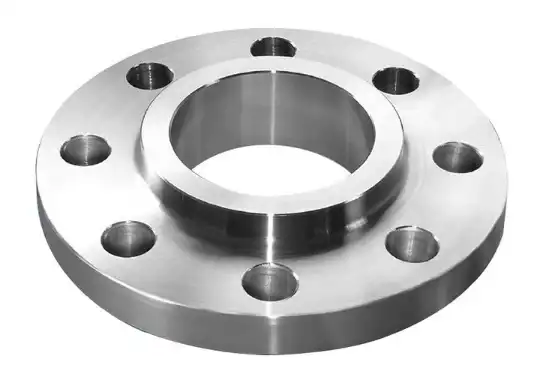
Understanding Lap Joint Flange CS – Key Characteristics and Dimensions
What Makes Lap Joint Flange CS Unique in Pipeline Systems
The Lap Joint Flange CS stands out because it uses smart engineering to separate the roles of structural load-bearing and fluid contact. With this flange, the pipe can slide over it easily, and it rests against the shoulder of the stub end. This is different from welded neck or slip-on versions. This design lets the ring spin on its own, which gets rid of the alignment problems that come with rigid installs. The short end is butt-welded to the pipe, and the carbon steel flange handles bolt loading without coming into contact with the fluid that flows through the system. When working with corrosive substances, this separation is very helpful because only the stub end needs expensive exotic materials, while the backing flange can be made of cheap carbon steel.
Dimensional Standards and Material Specifications
Every part of making Lap Joint Flange CS is governed by manufacturing standards to make sure that they work everywhere. The ASME B16.5 standard covers ranges from a half-inch to 24 inches, and the ASME B16.47 standard covers widths up to 60 inches. From low-pressure water lines to high-pressure gas transmission systems, the pressure ratings cover a wide range from 150# to 2500#. For machined parts, ASTM A105 is a common carbon steel grade that has yield values above 36,000 psi. The hole has a chamfer, or bent radius, that is designed to clear the weld tip on the short end that fits together. This precise machining makes sure that everything fits right and keeps stress from building up during operation.
Material composition is a key factor in how long something works and how well it works. Carbon steel flanges have the right amount of carbon, manganese, phosphorus, and sulfur to make them strong and easy to weld. Before they leave our plant in Cangzhou, these flanges go through a lot of tests, such as chemical analysis, tensile testing, and hardness proof. Lap joint setups don't have problems with raised faces because the faces are flat. However, the short end makes a sealed surface higher than the connecting plane. This set-up lets different types of gaskets work based on the service conditions and pressure needs.
Mechanical Advantages in Pipeline Assemblies
The main functional benefit of Lap Joint Flange CS is that they allow for free rotation. When working with small areas or existing pipeline networks, being able to spin the joint without torquing the pipe saves a lot of time and keeps the links next to it from getting damaged. This feature is very important in refinery pipe racks where normal flange rotation is not possible because of access issues. Technicians can remove nuts, turn the joint to the right place, and then tighten them back up without putting any twisting stress on the pipes.
But an honest evaluation needs to be aware of limits. About one-tenth as much fatigue resistance is found in weld neck options compared to lap joint options. This means that lap joint options aren't as good for applications that are subject to heavy cyclic loading or vibration. The system works best when the pressure stays the same or changes slowly, not when the pressure changes quickly. Before specifying this type of flange, our engineering team at Oudi always suggests a full service condition analysis. This way, clients can be sure they choose parts that meet their specific operational needs instead of just following generic specifications.
Core Applications of Lap Joint Flange CS Across Industries
Oil and Gas Sector Utilization
The most difficult conditions for pipe parts are found in activities that collect and refine petroleum. Lap Joint Flange CS is widely used in systems that collect crude oil. In these systems, wells are linked to central processing sites by miles of tubing. The flanges make it easy to disconnect the pipes for seasonal maintenance or well servicing, so connections don't have to be cut and re-welded. These parts are used by downstream processing units in process lines that deal with fuels at normal temperatures and pressures, especially when they need to be inspected regularly.
Metering stations and compressor facilities that are part of natural gas transmission networks use carbon steel lap joint designs. In these places, equipment needs to be calibrated, and systems need to be checked on a regular basis. Being able to quickly separate is helpful for reducing downtime. The low cost of carbon steel backing flanges makes them especially appealing for big projects with a lot of connection points. Our clients in Southeast Asia and the Middle East often ask for these parts for gas gathering networks that serve multiple production wells. The costs of the materials have a big effect on the overall project costs.
Chemical Processing and Water Treatment
Chemical plants need pipe systems that are both resistant to rust and cost-effective. The design of the lap joint lets you choose a smart material strategy: you can choose corrosion-resistant alloy stub ends and cheap carbon steel backing flanges. This "duplicate metal" approach cuts the cost of materials by 40–60% compared to all-exotic building while keeping the purity of the fluid contact. This layout works well for process lines that carry sulfuric acid, caustic solutions, or chlorine compounds, as long as the right stub end material is chosen to meet the chemical compatibility needs.
Large markets for Lap Joint Flange CS applications are water conservation projects and municipal treatment plants. Slurry handling systems, sewer transport lines, and flows with a lot of sediment need to be cleaned often. The loose flange design lets the parts be taken apart quickly so that built-up deposits can be removed without the need for special tools or long shutdowns. These flanges are used in potable water distribution systems at key cutoff places where repair work needs to temporarily remove a piece. It saves money on labor and speeds up system restoration when connections can be unbolted and separated without damaging welded joints.
Shipbuilding and Power Generation
Marine vessel construction involves complex piping networks threading through confined spaces with challenging access angles. Lap joint flanges solve alignment problems inherent in ship hull assembly, where prefabricated pipe sections must connect despite minor dimensional variances. The rotational capability compensates for angular misalignment without forcing connections or creating residual stress. Ballast systems, bilge discharge lines, and cooling water circuits throughout the vessel incorporate these flanges for both installation convenience and future maintenance accessibility.
Electric power stations, whether fossil-fueled or nuclear, operate massive auxiliary systems supporting primary generation equipment. Boiler feedwater systems, condenser cooling loops, and chemical treatment circuits all utilize piping requiring periodic inspection and component replacement. Carbon steel lap joint assemblies serve admirably in these moderate-temperature, relatively clean service conditions. Our manufacturing capacity of 16,000 tons annually enables us to supply large-scale power plant construction projects with consistent quality across thousands of flange units. The full inspection system we maintain, from raw material receipt through finished goods shipment, ensures every component meets specified requirements regardless of order volume.
Custom Fabrication and OEM Applications
Engineering procurement contractors face unique challenges sourcing components for one-off industrial projects with specific dimensional requirements. Our fabrication capabilities accommodate custom sizing beyond standard catalog offerings, supporting specialized equipment installations and retrofit applications. This flexibility proves essential when integrating new piping into existing facilities where legacy dimensions or proprietary equipment dictate non-standard specifications. The lap joint design itself facilitates customization since the backing flange and stub end can be independently sized and matched to project needs.
Original equipment manufacturers building packaged systems appreciate the design latitude lap joint configurations provide. Skid-mounted process units, modular treatment plants, and containerized equipment packages all benefit from the assembly and alignment advantages these flanges offer. The ability to finalize bolt pattern orientation during installation rather than during fabrication reduces pre-assembly complexity and shipping risks. Our technical team collaborates directly with OEM engineering departments to specify appropriate pressure classes, materials, and dimensional tolerances matching their equipment design parameters and target market requirements.
Comparing Lap Joint Flange CS with Other Flange Types for Procurement Decisions
Design Differences and Performance Trade-offs
Weld neck flanges represent the gold standard for demanding applications, featuring a tapered hub that gradually transitions pipe wall thickness to flange thickness. This design distributes stress optimally, delivering superior fatigue resistance and pressure capacity. However, installation requires skilled welders and precise fit-up, increasing labor costs and project duration. Lap joint alternatives sacrifice some structural performance but gain installation flexibility and material cost advantages. The decision hinges on service severity: high-pressure steam lines demand weld neck integrity, while moderate-pressure process water accepts lap joint economics.
Slip-on flanges offer a middle ground, sliding over the pipe exterior and requiring fillet welds both inside and outside. Installation proves simpler than weld neck configurations but lacks the rotational freedom defining lap joint designs. Blind flanges serve an entirely different purpose, sealing pipe ends or vessel openings without flow-through capability. Procurement teams evaluating these options must weigh upfront cost against lifecycle considerations including installation labor, maintenance frequency, and eventual replacement expenses.
Material Grade Selection Criteria
Carbon steel's primary advantages for Lap Joint Flange CS include high strength, ready weldability, and economical pricing. ASTM A105 flanges handle temperatures from -20°F to 650°F depending on pressure class, covering most industrial applications. However, carbon steel corrodes in acidic or highly oxygenated environments, requiring proper coating, cathodic protection, or internal lining. When fluid chemistry exceeds carbon steel's capability, the lap joint design permits specifying stainless steel or exotic alloy stub ends while retaining carbon steel backing flanges, optimizing the cost-performance balance.
Stainless steel variants like ASTM A182 F316 offer superior corrosion resistance but cost three to five times more than carbon steel equivalents. Alloy steel grades provide enhanced high-temperature strength for elevated pressure services. The procurement decision should incorporate total cost of ownership, factoring in expected service life, maintenance intervals, and potential failure consequences. A carbon steel component requiring replacement every eight years might cost less over a 30-year facility life than a stainless alternative lasting indefinitely. Our sales team assists buyers in performing these lifecycle calculations, ensuring economically rational specifications rather than over-engineered solutions.
Supplier Evaluation and Global Sourcing
Identifying reliable manufacturers requires examining quality certifications, production capabilities, and market reputation. ISO 9001:2000 certification demonstrates systematic quality management, while special equipment manufacturing licenses verify regulatory compliance. Production capacity matters for large projects: our 16,000-ton annual output ensures consistent supply without allocation concerns during industry demand peaks. Advanced inspection equipment including ultrasonic testing, magnetic particle inspection, and pressure test facilities validate every component's integrity before shipment.
Geographic considerations influence sourcing decisions beyond pure pricing. Suppliers serving 40-plus countries with established logistics networks minimize delivery uncertainties and customs complications. Our export experience spanning Europe, the Americas, Africa, and Asia provides the documentation expertise and shipping relationships that prevent costly delays. Procurement managers increasingly recognize that the lowest unit price rarely equals the lowest project cost when delivery reliability, technical support, and quality consistency factor into the equation. Building partnerships with manufacturers demonstrating long-term stability and responsive service delivers greater value than constantly seeking marginally lower quotes from unfamiliar sources.
Installation, Maintenance, and Technical Guidelines
Proper Assembly Procedures
Successful Lap Joint Flange CS installation begins with thorough component inspection. Verify flange face flatness, stub end dimensions, and gasket compatibility before beginning assembly. Clean all sealing surfaces meticulously, removing any scale, dirt, or previous gasket material that could compromise sealing integrity. Slide the backing flange over the pipe, ensuring proper orientation and sufficient clearance for the stub end. Butt weld the stub end to the pipe following qualified welding procedures, maintaining proper heat input to prevent distortion or metallurgical damage.
After welding and cooling, rotate the backing flange to align bolt holes with the mating flange. This rotational capability eliminates the need for pipe rotation, preserving adjacent connections and reducing installation stress. Insert bolts and hand-tighten nuts before applying torque. Use a cross-pattern tightening sequence, gradually increasing torque to the specified value in multiple passes. This approach ensures even gasket compression and prevents flange distortion. Over-torquing damages gaskets and can crack flanges, while under-torquing permits leakage. Torque wrenches calibrated to current standards are essential tools for achieving proper assembly.
Pressure Testing and Quality Verification
Industry standards mandate pressure testing newly installed piping systems before placing them in service. Hydrostatic testing typically applies 1.5 times the design pressure for a specified duration, verifying system integrity under controlled conditions. The test medium, usually water with corrosion inhibitors, fills the system after removing air pockets that could cushion pressure and mask leaks. Pressure gauges at multiple locations confirm uniform pressure distribution throughout the test section.
During testing, carefully inspect all lap joint flange connections for weeping or seepage indicating improper assembly. Minor leaks often self-seal as gaskets compress under sustained pressure, but any persistent leakage demands immediate investigation. After successful testing, depressurize gradually to prevent water hammer or thermal shock. Document test results including maximum achieved pressure, hold duration, and any anomalies observed. This documentation satisfies regulatory requirements and provides baseline data for future maintenance planning.
Long-Term Maintenance Protocols
Routine inspection schedules should examine flange assemblies for corrosion, mechanical damage, and leakage evidence. External coatings protecting carbon steel from atmospheric corrosion require periodic touch-up where damage occurs. Bolting hardware deserves particular attention: corrosion, thread damage, or yielding from over-torquing necessitates replacement before re-assembly. Maintaining calibrated torque tools and training personnel in proper tightening techniques prevents recurring problems.
When disassembling lap joint connections for maintenance, carefully remove old gaskets and inspect sealing surfaces for damage. Minor scratches or imperfections can be dressed with emery cloth, but deep gouges or corrosion pitting require flange replacement. The rotational feature that simplifies installation also facilitates maintenance, allowing technicians to access tight spaces more easily than with fixed-orientation flanges. This accessibility advantage reduces maintenance duration and associated production losses, contributing to the configuration's total cost effectiveness beyond simple component pricing.
Procurement Considerations for Buying Lap Joint Flange CS
Identifying Qualified Manufacturers
Selecting suppliers for Lap Joint Flange CS demands thorough due diligence examining manufacturing capabilities, quality systems, and delivery reliability. Manufacturers operating advanced forging and machining equipment produce more consistent dimensional accuracy than those using basic fabrication methods. Heat treatment facilities ensuring proper metallurgical properties, testing laboratories verifying material chemistry and mechanical properties, and comprehensive inspection procedures detecting surface and internal defects all indicate serious quality commitment.
Optimizing Order Quantities and Pricing
Volume considerations significantly impact unit pricing in industrial component procurement. Manufacturers achieve economies of scale through material bulk purchasing, production run efficiencies, and fixed cost distribution. Orders approaching or exceeding our production batch sizes receive preferential pricing reflecting these savings. However, carrying excessive inventory generates costs including storage, handling, obsolescence risk, and tied capital. The optimal order quantity balances volume discounts against inventory carrying costs based on usage rates and storage capabilities.
International Logistics and Documentation
Cross-border transactions involve documentation complexity beyond domestic purchasing. Commercial invoices, packing lists, certificates of origin, and quality certificates all require accurate preparation to clear customs without delays. Material test reports, dimensional inspection records, and compliance certifications verify products meet specified standards and purchaser requirements. Experienced exporters maintain template systems and trained documentation staff, ensuring accurate, complete paperwork accompanies every shipment.
Conclusion
Lap Joint Flange CS delivers unique advantages in specific industrial applications where installation flexibility, cost optimization, and maintenance accessibility outweigh absolute structural performance requirements. Understanding the design characteristics, appropriate applications, and proper installation techniques enables procurement professionals and engineers to specify these components effectively. Comparing alternatives, evaluating material grades, and selecting reliable suppliers constitute critical decisions impacting project success and long-term operational costs. The comprehensive capabilities, quality systems, and global service orientation we've developed at Oudi support customers worldwide in achieving their piping system objectives efficiently and reliably.
FAQ
What pressure ratings are available for carbon steel lap joint flanges?
Carbon steel lap joint flanges manufactured to ASME B16.5 standards are available in pressure classes ranging from 150# to 2500#. The appropriate rating depends on operating pressure, temperature, and safety factor requirements. Lower pressure classes like 150# and 300# suit most water, low-pressure gas, and general industrial applications. Higher ratings address more demanding services, though the lap joint configuration's inherent fatigue limitations make weld neck alternatives preferable for the most severe conditions.
Can Lap Joint Flange CS handle corrosive chemicals?
Carbon steel backing flanges paired with corrosion-resistant stub ends effectively handle many corrosive applications. The stub end contacts the process medium, so specifying appropriate materials like stainless steel, Hastelloy, or other exotic alloys provides necessary chemical resistance. The carbon steel backing flange remains isolated from the corrosive fluid while providing structural support. This material separation strategy delivers chemical compatibility at lower cost compared to all-exotic construction.
How do lap joint flanges compare cost-wise to weld neck designs?
Lap joint assemblies typically cost 15-30% less than equivalent weld neck flanges when considering both the backing flange and stub end together. Installation labor costs run lower due to simpler alignment and reduced welding complexity. However, the total cost comparison should include service life expectations and maintenance frequency. Applications requiring frequent disassembly favor lap joint economics, while permanent installations in demanding services may justify weld neck premiums for superior reliability.
What gasket types work with carbon steel lap joint flanges?
Most standard gasket materials, including compressed fiber, spiral wound, and elastomeric types, work effectively with lap joint configurations. The flat-faced backing flange combined with the stub end's raised sealing face accommodates conventional gasket designs. Gasket selection depends primarily on service conditions, including pressure, temperature, and chemical compatibility. Ring-type joint gaskets can be used with specially profiled stub ends when extreme pressure or temperature conditions demand metal-to-metal sealing.
Partner with Oudi for Premium Lap Joint Flange CS Solutions
Oudi stands ready to support your next project with high-quality carbon steel lap joint flanges manufactured to exacting international standards. Our 66,600 square meter facility combines advanced forging equipment with rigorous quality control, backed by ISO 9001:2000 certification and special equipment manufacturing licenses. Whether you need standard catalog sizes or custom configurations, our 16,000-ton annual capacity ensures consistent availability without allocation concerns. Reach out to our experienced technical team at oudi-04@oudiguandao.com to discuss your specific requirements with a trusted Lap Joint Flange CS manufacturer. We provide comprehensive material certifications, competitive pricing for volume orders, and reliable delivery to over 40 countries worldwide.
References
1. American Society of Mechanical Engineers. (2020). ASME B16.5: Pipe Flanges and Flanged Fittings - NPS 1/2 through NPS 24 Metric/Inch Standard. ASME Press.
2. Harvey, J.F. (1991). Theory and Design of Pressure Vessels. Van Nostrand Reinhold, Chapter 12: Flange Design and Analysis.
3. Becht, C. & Warren, K. (2018). "Fatigue Performance Comparison of Flanged Connections in Piping Systems." Journal of Pressure Vessel Technology, Vol. 140(3), pp. 031401-1-8.
4. Metals Handbook Desk Edition. (1998). "Carbon and Alloy Steels." ASM International, Second Edition, pp. 153-173.
5. Singh, R. (2017). Applied Welding Engineering: Processes, Codes, and Standards. Butterworth-Heinemann, Chapter 17: Welding of Piping Systems.
6. Nayyar, M.L. (2000). Piping Handbook, Seventh Edition. McGraw-Hill Professional, Section B3: Flanges and Flange Connections.

Need help finding the right solution with our experts. Please contact us.

SINCE 1998 Your Reliable Pipeline Manufacturer



