How Much Does High Temperature Pipe Tee Cost Today?
When project funds are on the line, the price landscape for high temperature pipe fittings may be bewildering. A typical high-temperature pipe tee may vary anywhere from $15 to over $800 per unit based on the material grade, size, and pressure rating. You should expect to pay anything from $50 to $350 for a Chrome-Moly alloy tee (ASTM A234 WP91, for example) in superheated steam operation at 600°C, while Nickel-based tees such as Inconel 625 used in petrochemical cracking furnaces can run well over $600 each. Buying in bulk may lower the unit cost by a bit. But you have to be certified and have strict quality controls in place to keep things safe to operate.
Understanding High Temperature Pipe Tees: Specifications and Uses
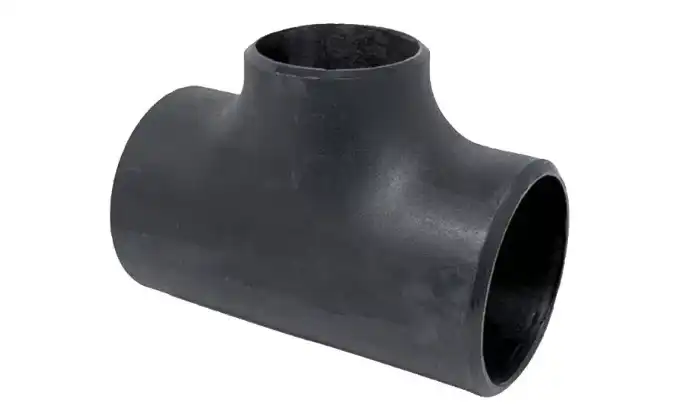
High temperature pipe tees are different from normal carbon steel tees in that they are capable of withstanding high temperatures and pressures without creep deformation and premature oxidation. These unusual T-shaped connectors allow a fluid to be connected in a branch off the main line. These systems are often running at temperatures between 400°C and 1100°C where normal materials would immediately degrade their mechanical properties.
What Defines a High Temperature Pipe Tee
A high-temperature pipe tee is designed to address several essential problems in the industry, such as creep (permanent deformation under constant high-temperature stress), thermal fatigue due to expansion-contraction cycles, and quick scaling. The piece's metallurgical makeup is comprised of sophisticated alloys that retain structural integrity in areas where conventional fittings would fail catastrophically. Commonly specified materials include Chrome-Molybdenum alloys (ASTM A234 WP91, WP22), high-grade stainless steels (310S, 347H), and Nickel-based superalloys (Inconel 625). They have good oxidation resistance and maintain strong yield strength at working temperatures that are red hot.
Industry Standards and Material Specifications
Manufacturing accuracy is critical for high-stakes applications. These fittings are manufactured to tight dimensional tolerances as per ASME B16.9, which ensures good fit-up during installation and also removes stress concentration spots that may lead to fractures. The tube construction, welded or seamless, impacts both performance attributes and price points. The seamless variations have a premium price owing to the better grain structure and the lack of weld seams that might potentially serve as failure start sites.
Core Applications Across Industrial Sectors
The applications include mission-critical systems for which failure just is not an option. In power production, these tees transport superheated steam from the boilers to the turbines at pressures in excess of 250 bar and temperatures of 600 deg C. They are used in petrochemical refineries in ethylene cracking furnaces and hydrocracking units where volatile hydrocarbons at 850°C need exceptional resistance to carburisation. These fittings are used in heavy industrial furnaces and aircraft exhaust systems to accommodate fast gas flow and high-velocity thermal shock while retaining leak-proof sealing throughout the operating lifespan.
Factors Influencing the Cost of High Temperature Pipe Tees
The price of these niche components depends on a number of technical and commercial factors that procurement experts must consider carefully.
Material Selection Impact on Pricing
Material selection is the single major cost factor. Chrome-Molybdenum grades like WP91 function well up to 600°C and are quite inexpensive, averaging $50-$200 depending on the size. Stainless steel alternatives such as 310S or 347H, which have enhanced corrosion resistance in oxidising environments, are priced between $80 and $350 per unit. Nickel-based superalloys like Inconel 625, which are critical for the most demanding petrochemical applications requiring high temperature and corrosive media, may have prices of more than $600 per tee owing to raw material pricing and specialised melting methods needed.
The ability of a fitting to withstand scaling and high-temperature oxidation that gradually thins pipe walls depends on its chemical makeup. Our production method uses Chromium-rich alloys that generate protective oxide layers, preventing this degrading mechanism and providing a long service life that justifies the original investment.
Manufacturing Technique Considerations
To a great extent, the cost and performance characteristics of High Temperature Pipe Tee depend on the techniques of production. Seamless tees are manufactured by hot piercing and extrusion methods and have a better grain structure and strength for high-pressure headers, but generally cost 20 to 30% more than welded tees. Forged tees have remarkable strength due to controlled grain flow and are suitable for important connections in supercritical power plants. Welded tees are acceptable for mild high-temperature branch connections at lower cost points but need thorough quality checking to assure weld integrity.
Size, Pressure Ratings, and Temperature Thresholds
Prices are closely related to dimensional parameters. A 2-inch WP91 tee may cost $75, whereas an 8-inch tee in the same material might cost $280 owing to the larger amount of raw material required and the more difficult machining. Pressure ratings enhance the impact – a Schedule 80 tee rated for 400 bar service has thicker walls and more severe hydrostatic testing than Schedule 40 counterparts, which increases unit prices by 15-25%. The testing techniques are higher, and required heat treatment adds to the cost via temperature thresholds.
Customization and Volume Considerations
Bespoke sizes or non-standard configurations raise prices due to tooling needs and engineering time, sometimes adding 30-50% surcharges. On the other hand, buying in bulk may save you a lot of money – ordering over 100 pieces can frequently give you a discount of 15-20% on the price of a single item. Lead times also affect overall costs. Expedited manufacturing to meet tight project timetables usually comes with rush fees of 20-35%.
Comparing High Temperature Pipe Tees: Making the Right Choice
The right match will be a balance of upfront investment vs. lifespan benefit and operational risk minimisation.
Cost-Benefit Analysis: Standard vs. High Temperature Variants
Standard carbon steel tees may be $10-$20, but the high temperature ones are $50-$600, thus appear pricey. But this comparison ignores the crucial point: conventional tees break catastrophically within hours at increased temperatures, risking injuries, environmental damage, and productivity losses costing millions. The specialised fittings provide protection against these results via metallurgical qualities that hold up over decades of severe usage.
Material Trade-offs: Balancing Initial Cost and Lifecycle Value
When choosing between stainless steel and Chrome-Moly alloys, immediate financial limitations and long-term operating costs must be considered. Chrome-Moly solutions such as WP22 may be cheaper initially, but may need more regular examination in corrosive situations. Stainless steel grades such as 347H provide better corrosion resistance, possibly leading to fewer maintenance shutdowns and prolonging the period between replacements from 15 to 25 years. This may balance the higher initial purchase cost with lower life cycle expenses.
Construction Method Comparisons
Seamless, welded, and flanged tees have certain benefits based on the needs of the application. Seamless tees are the choice for high-pressure, high-temperature headers where dependability is critical, and the 25% cost premium is justified by better performance. Welded tees are appropriate for moderate-duty applications where effective Post-Weld Heat Treatment (PWHT) provides sufficient service life at a reduced cost. Flanged arrangements provide the benefits of operating flexibility and ease of installation and future maintenance access at a cost of greater initial outlay.
Where and How to Buy High Temperature Pipe Tees: Supplier Insights
Sourcing these critical components demands careful supplier evaluation to ensure both product quality and supply chain reliability.
Certification and Quality Assurance Priorities
Reputable suppliers maintain ISO 9001:2000 quality management system certification alongside special equipment manufacturing licenses that demonstrate regulatory compliance. At Oudi, our facility in Cangzhou's Mengcun industrial zone has served over 300 customers across more than 40 countries since 1998, building reputation through consistent quality adherence. We implement comprehensive Positive Material Identification (PMI) using XRF analysis to verify alloy chemistry matches specifications exactly—critical for preventing material mix-ups that could prove catastrophic in service.
Our quality control extends through multiple verification stages for High Temperature Pipe Tee. Non-Destructive Testing (NDT), including Radiographic Testing (RT) and Ultrasonic Testing (UT), detects internal defects in the tee crotch area where stress concentrations peak. Hardness testing validates that heat treatment achieved correct martensitic structures in P91/P92 grades, while dimensional verification ensures precise wall thickness at branch intersections to prevent localized stress concentration.
Evaluating Supplier Capabilities and Track Record
Technical capability assessment should examine production equipment sophistication and inspection instrumentation. Advanced facilities possess spectrum analyzers, ultrasonic flaw detectors, and hydrostatic testing equipment capable of validating performance at design conditions. Our 16,000-ton annual capacity supports both large-scale projects and responsive delivery for urgent requirements, backed by self-managed import-export operations that streamline international logistics.
Export experience matters significantly when sourcing globally. Suppliers serving diverse markets across Europe, the Americas, Africa, Southeast Asia, and the Middle East demonstrate adaptability to varying standards (ANSI, JIS, DIN, BS) and can provide documentation meeting regional regulatory requirements. This global perspective ensures smoother customs clearance and compliance verification.
Pricing Models and Procurement Strategies
Understanding available pricing structures helps optimize procurement costs. Wholesale purchasing for large projects typically secures 15-20% discounts compared to retail pricing, while establishing ongoing supply relationships with manufacturers can unlock preferred customer pricing and priority production scheduling. Direct manufacturer engagement eliminates distributor markups, potentially reducing costs by 10-15% while providing access to technical support and custom engineering assistance.
Lead time planning is essential—standard sizes in common materials may ship within 2-3 weeks, while custom configurations or less common alloys might require 6-8 weeks. Building these timelines into project schedules prevents costly expedite fees and ensures fittings arrive synchronized with construction milestones.
Installation, Maintenance, and Cost Efficiency Tips
The proper management during the entire life cycle of the fitting maximises return on investment and eliminates premature failures.
Installation Best Practices
Proper installation ensures that expensive failures and unforeseen downtime are avoided. Welding Chrome-Moly tees demands trained methods and certified welders who are conversant with preheat requirements and interpass temperature management. For these materials, PWHT (Post Weld Heat Treatment) is required - it reduces residual stresses that might trigger SCC (Stress Corrosion Cracking) and prevents brittle fracture in service. Skipping PWHT to save time or expense is a near certainty of premature failure.
Proper fit-up is just as important. ASME B16.9 defines gap tolerances and alignment criteria. Misalignment causes stress risers that lead to faster fracture initiation during thermal cycling. The use of professional pipefitters with knowledge of high-temperature piping needs pays benefits in dependable long-term performance.
Maintenance and Inspection Protocols
Regular inspection increases service life by identifying deterioration before failure occurs. Scheduled ultrasonic thickness measurements monitor oxidation-related wall thinning so that replacement may be made before a critical minimum thickness is achieved. Visual examination reveals surface cracking, especially in the heat-affected zones near welds. Hardness studies show microstructural changes that indicate nearing end-of-life.
By understanding typical failure modes, we may intervene before failure occurs. Creep damage is slow in its development, and periodic replica metallography may reveal creep voids before they merge to become fractures. Thermal fatigue fractures generally originate at geometric discontinuities. Targeted inspections at branch junctions may identify these cracks at an early stage. This proactive method minimises emergency shutdowns and increases fitting service life by 20-30% vs baseline assumptions.
Optimizing Total Cost of Ownership
When analysing the lifecycle cost, the cost of installation, the maintenance needs, and the estimated service life should be included. A $600 Inconel tee may appear pricey against a $150 stainless steel alternative, but if it lasts 30 years without maintenance in a corrosive petrochemical environment while the stainless choice has to be replaced every 10 years, then the Inconel choice becomes the better value. Including downtime costs, replacement labour, and production losses in this equation frequently moves optimum choices toward better quality materials.
Conclusion
The purchase of high-temperature pipe tees is a balancing act between the immediate demands of cost and the long-term imperatives of operational dependability and safety. Today’s prices reflect the advanced metallurgy and exacting quality control needed for these important components. Prices range from $50 for ordinary Chrome-Moly grades to over $600 for exotic Nickel alloys. The combination of material selection, production process, dimensional criteria, and supplier capabilities determines both the upfront investment and the lifespan value.
Having this knowledge of cost factors enables procurement managers and engineers to make intelligent choices that safeguard project budgets and maintain system integrity. This guidance—from the basics of specification to best practices of installation—equips you to navigate supplier assessments, perform meaningful cost-benefit calculations, and make maintenance decisions that maximise return on investment throughout decades of operation.
FAQ
1. What is the maximum temperature limit for WP91 material?
ASTM A234 WP91 Chrome-Molybdenum alloy maintains adequate creep-rupture strength for continuous service up to approximately 600°C (1112°F). Beyond this threshold, creep strength deteriorates significantly, and higher-grade materials like P92 or Nickel-based alloys become necessary. Material selection must align precisely with actual operating temperatures to ensure safe, reliable long-term performance.
2. Why is Post-Weld Heat Treatment mandatory?
PWHT relieves residual stresses introduced during welding that could otherwise initiate Stress Corrosion Cracking or cause brittle fracture. Chrome-Moly materials are particularly susceptible to these failure modes without proper heat treatment. Regulatory codes mandate PWHT for these alloys specifically because field experience has demonstrated catastrophic consequences when this step is omitted.
3. Can these tees be used in cryogenic applications?
High-temperature alloys are metallurgically optimized for elevated temperature service and often become brittle at sub-zero temperatures. Cryogenic piping systems require materials specifically designed for low-temperature toughness, such as austenitic stainless steels (304L, 316L) or specialized low-temperature carbon steels. Using high-temperature materials in cryogenic service invites brittle fracture risks.
4. How does scaling affect tee performance?
Scaling represents high-temperature oxidation that progressively reduces wall thickness from the inside surface, eventually compromising pressure containment capability. Chrome-rich alloys form protective oxide layers that dramatically slow this process, which is why material selection critically impacts service life in oxidizing, high-temperature environments.
Get Reliable High Temperature Pipe Tee Solutions from Oudi
Oudi has manufactured precision-engineered pipe fittings since 1998, serving industries where quality and reliability determine operational success. Our ISO 9001:2000 certified facility produces high temperature pipe tees meeting ASTM, ASME, and international standards through advanced PMI testing, comprehensive NDT inspection, and rigorous dimensional verification. With 16,000-ton annual capacity and export experience across 40+ countries, we deliver certified Chrome-Moly, stainless steel, and alloy steel fittings that provide the performance your critical systems demand. Our technical team understands the complex requirements of petrochemical, power generation, and heavy industrial applications. Contact our specialists at oudi-04@oudiguandao.com for detailed technical consultations and competitive quotes tailored to your specific project parameters. As a trusted high-temperature pipe tee manufacturer, we combine decades of metallurgical expertise with responsive customer service to ensure your procurement experience is seamless from initial inquiry through final delivery.
References
1. American Society of Mechanical Engineers. (2020). ASME B16.9: Factory-Made Wrought Buttwelding Fittings. New York: ASME Press.
2. Davis, J.R. (Ed.). (1997). ASM Specialty Handbook: Heat-Resistant Materials. Materials Park, OH: ASM International.
3. Singh, R. (2015). Applied Welding Engineering: Processes, Codes, and Standards (2nd ed.). Burlington, MA: Butterworth-Heinemann.
4. Viswanathan, R. (1989). Damage Mechanisms and Life Assessment of High-Temperature Components. Materials Park, OH: ASM International.
5. Boyer, H.E. (1987). Atlas of Creep and Stress-Rupture Curves. Materials Park, OH: ASM International.
6. Bhadeshia, H.K.D.H. (2001). Design of Ferritic Creep-Resistant Steels. ISIJ International, 41(6), 626-640.

Need help finding the right solution with our experts. Please contact us.

SINCE 1998 Your Reliable Pipeline Manufacturer



