Precision-machined elbow for Aerospace and Industrial Systems
Precision-machined elbows are essential for aeroplane fuel systems and industrial hydraulic networks. Precision-machined elbows provide micron-level dimensional accuracy and better interior surface finishes than cast or forged fittings, affecting system safety and efficiency. CNC milling and turning processes produce advanced fluid direction components with tolerances within ±0.01mm, eliminating internal irregularities that can cause turbulence, contamination, and premature component failure in critical applications.
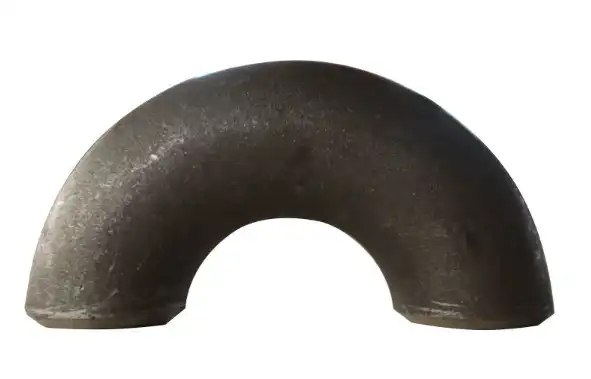
Understanding Precision-Machined Elbows
What Defines Precision-Machined Elbows
CNC milling and turning are used to make precision-machined elbows, which divert flow with micron-level accuracy. These elbows handle major industrial issues such as internal flow turbulence induced by surface defects, catastrophic leakage in high-vibration situations, and dimensional stacking mistakes in modular hydraulic or pneumatic manifolds, unlike cast or forged fittings. The elbows' precise concentricity and ultra-smooth internal transitions minimise "dead zones" where corrosive media or germs might gather, making them vital for high-purity and high-pressure systems.
Advanced Manufacturing Methods
Quality manufacturing starts with material selection and continues through machining. CNC turning makes the basic elbow shape from solid bar stock or forged blanks, whereas multi-axis milling generates specific angles that hot-forming cannot accomplish. With regulated material removal, grain structure integrity is preserved, resulting in fatigue-resistant components under cyclic loads.
At Oudi's 66,600-square-meter production plant, quality is monitored from raw material receipt to final inspection. Advanced production machinery can reproduce precise tolerances throughout production runs, whether making regular 90-degree elbows or unique compound-angle fittings for specialised purposes. This functionality is especially useful for EPC contractors handling big industrial projects where component interchangeability influences installation times.
Material Selection for Demanding Environments
Material choice critically affects elbow performance in various operating circumstances. Stainless steel grades like 316L resist corrosion in chemical processing and marine applications while keeping strength at high temperatures. In harsh settings, Inconel and Titanium Grade 5 alloy steels function well.
Carbon steel is cheap for many industrial uses when suitably treated and coated for corrosion prevention. Oudi offers procurement teams carbon steel, stainless steel, and alloy steel pipe fittings made to American, Japanese, German, and British standards to balance performance and project budgets. Even for big orders, the 16,000-ton yearly manufacturing capability maintains material availability.
Performance and Benefits of Precision-Machined Elbows in Aerospace and Industrial Systems
Technical Parameters That Matter
Precision-machined elbows have remarkable physical and technological features that affect system dependability. Typically, ±0.01mm tolerance guarantees hermetic sealing for high-vacuum or ultra-high-pressure applications. Electropolishing may improve internal surface smoothness to attain roughness (Ra) values of 0.4μm or below, optimising laminar flow and reducing pressure drop between fittings.
Density and grain structure make material integrity better than cast alternatives. These high-strength alloy components with structural homogeneity surpass ASME B16.9 pressure standards, with several designs certified for 10,000 PSI and more. Precision billet machining preserves ideal grain structure orientation, improving fatigue resistance via heat cycling and mechanical stress in aerospace and defence applications.
Real-World Application Advantages
Precision-machined elbows are used in zero-tolerance industries. Semiconductor manufacturing uses these components for Ultra-High Purity (UHP) gas supply systems that need zero-particulate contamination and excellent interior wall finishes. Particles from surface irregularities may infect wafer manufacture, costing millions.
Precision-machined elbows in aviation fuel and hydraulic lines must be lightweight and tolerate severe G-forces and vibration without fatigue cracking. Subsea control modules and ROV hydraulic systems in deep-sea oil and gas operations use these fittings to withstand hydrostatic pressure and corrosive salty conditions for 25 years. These challenging applications demonstrate precision machining's dependability advantage over traditional production.
Operational Efficiency Gains
Precision-machined elbows increase operations beyond dependability. Superior interior surface finishes decrease turbulence and friction losses, reducing lengthy pipeline pumping energy. Avoiding internal casting flaws reduces maintenance and unexpected downtime by preventing particle production that damages downstream valves, seals, and instruments.
Material selection and surface treatment improve corrosion resistance, extending component life and lowering replacement costs and system downtime. These longer service intervals help chemical processing, water conservation, and power production projects, where unanticipated shutdowns are costly. Precision-machined elbows' higher initial cost usually pays off in the first few years via lower total cost of ownership.
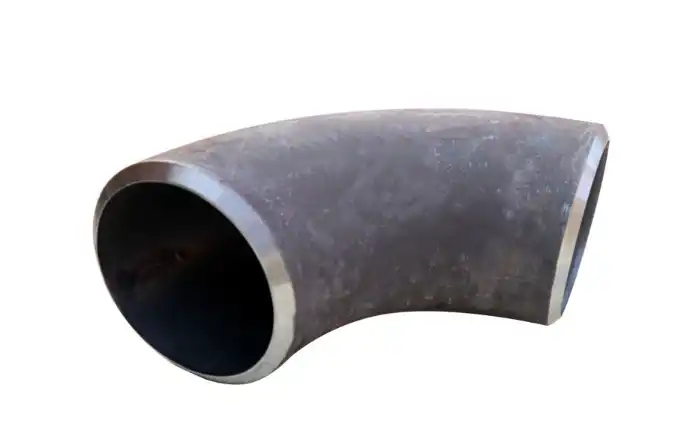
How to Choose the Right Precision-Machined Elbow for Your System
Critical Selection Parameters
Elbow selection involves careful consideration of various linked criteria. Pressure rating must exceed maximum system operating pressure by 1.5x or more, depending on regulations. Durability and corrosion prevention are ensured by material compatibility with conveyed media. Temperature range consideration includes typical operating circumstances and startup, shutdown, and upset excursions.
To avoid stress concentrations at connections, Precision-machined elbow nominal pipe size, wall thickness, and center-to-radius ratio must match nearby piping components. Orbital welding requires stricter tolerances than threaded connections, and VCR or SAE fittings need precision-cut chamfers for good sealing.
Material Comparison for Specific Applications
Stainless steel's corrosion resistance, strength, and weldability make it versatile in industrial applications. 316L is ideal for chemical processing, pharmaceutical production, and food-grade systems that need purity. Aluminium alloys save weight for aeronautical applications while retaining moderate pressure strength.
Where operational circumstances allow, carbon steel is still used in many industrial facilities. Oudi, an ISO 9001:2000-certified and Special Equipment Manufacturing License-holder, makes dependable carbon steel elbows at affordable prices. The company's stringent quality assurance system—from raw material inspection to nondestructive testing before shipment—ensures carbon steel components fulfil petroleum, chemical, natural gas, and water conservancy regulations in over 40 countries.
Custom Machining Versus Standard Components
In nominal pipe diameters, 45, 90, and 180-degree elbows work for most applications. Systems with non-standard geometry benefit from custom machining. CNC machining can generate any unique shape or compound angle that bending or casting cannot, optimising routing in space-constrained installations.
Oudi's excellent manufacturing equipment and technological skills serve standard and unique needs. Self-managed import-export operations and a distribution network in Europe, Americas, Africa, Southeast Asia, and the Middle East provide quick delivery of standard inventory items and custom-machined components for special projects.
Procurement Guide for Precision-Machined Elbows
Evaluating Supplier Credentials
Successful procurement starts with supplier qualification. ISO 9001 accreditation verifies quality practices. Special equipment manufacturing licenses verify pressure-retaining component production. Material test reports (MTR) that meet EN 10204 3.1 or 3.2 requirements provide mill certification and completed component traceability.
Oudi's ISO 9001:2000 accreditation and Chinese Special Equipment Manufacturing Licenses demonstrate worldwide quality standards. With 26 years of production expertise since 1998 and innovative detection equipment that meets different customer needs, procurement teams can trust product quality. The complete inspection system and nondestructive fault detection throughout manufacturing cycles guarantee each component fulfils specifications before shipping.
Understanding Pricing and Lead Times
Precision-machined elbow prices reflect material costs, production complexity, and order volume. Custom geometries or exotic alloys cost more due to specialised capabilities, while standard designs in common materials are the most affordable. Larger purchases qualify for volume savings, making multi-project procurement cost-effective.
Component complexity and manufacturing schedules affect lead times. Regular inventory goods may ship within days, while bespoke precision-machined elbows take two to four weeks depending on material availability and machining queue. Oudi's 16,000-ton yearly manufacturing capability and proven supply chain ties assist project managers in fulfilling construction timeframes with predictable delivery dates for large order volumes.
Strategic Procurement Practices
Before placing big orders, request samples to check dimensional correctness, surface polish, and material qualities. Sample examination should comprise physical measurement, visual inspection, and possibly destructive testing to verify requirements. Frame agreements with certified suppliers simplify repeat procurement, provide favourable pricing, and assure capacity allocation during peak demand.
Shipping logistics strategy avoids project delays. Understanding Incoterms, choosing the right transportation, and arranging international customs clearance prevent expensive schedule interruptions. Oudi's worldwide export expertise with over 300 clients helps procurement teams navigate foreign logistical problems, whether exporting to North American construction sites, European process plants, or Southeast Asian industrial facilities.
Maintenance, Measurement, and Quality Assurance
Inspection and Verification Techniques
Thorough inspections ensure component dependability. Full 3D coordinate mapping using CMM (Coordinate Measuring Machine) dimensions analysis verifies angular accuracy and wall thickness uniformity to ensure components match tolerances. Positive Material Identification (PMI) using XRF or OES verifies alloy chemistry as per the Mill Test Report, avoiding material mix-ups and premature failure.
NDT finds subsurface faults that are unseen to the naked eye. DPI finds surface-breaking discontinuities, whereas UT finds inclusions or laminations. Hydrostatic testing or helium mass spectrometry leak detection ensures 0% leakage at 1.5x design pressure, validating structural integrity. Surface profilometry quantifies internal bore smoothness, verifying flow resistance-reducing parameters.
Common Challenges and Prevention Strategies
Manufacturing variances might cause problems despite quality measures. Dimensional drift during machining needs regular monitoring and tool modification to maintain tolerances throughout production cycles. Poor heat treatment may weaken or deform material. Misalignment, over-torquing, and welding contaminants degrade joint integrity.
Prevention starts with supplier selection and continues through installation. Selecting manufacturers with proven quality processes and innovative equipment decreases defects. Oudi's ISO 9001:2000 quality assurance systems and complete inspection methods from raw material to final items reduce quality variance. Field workers avoid site-induced component quality issues by receiving clear installation specifications and certified welding processes.
Ongoing Quality Assurance
Quality assurance continues after purchase. Quality compliance and process improvements are checked via supplier audits. In-house receiving inspection verifies component requirements before installation. MTRs, inspection reports, and pressure test certificates help track faults and analyse fundamental causes.
Continuous improvement procedures using field feedback increase specifications and supplier performance. Oudi's "quality strives for survival" and pursuit of the greatest quality show a customer-focused mentality. With over 300 clients worldwide, the firm provides exceptional service and long-term collaborations.
Conclusion
Excellence in precision-machined elbows affects system performance, safety, and operating costs. Technical characteristics, performance benefits, and selection criteria help procurement experts make educated sourcing selections. Precision-machined components improve dependability, maintenance, and service life in demanding aerospace and industrial applications. Successful procurement balances technical requirements, supplier capabilities, quality assurance, and total cost of ownership to fulfil project goals and long-term performance expectations.
FAQ
1. Why prefer a machined elbow over a standard forged elbow?
Machined elbows offer significantly tighter tolerances and superior surface finishes, essential for high-vacuum or ultra-high-pressure seals where standard forgings fail. The precision manufacturing process maintains dimensional consistency critical for leak-tight connections and optimal flow characteristics.
2. Can these elbows be customized for non-standard angles?
Yes, CNC machining allows production of any custom geometry or compound angle that cannot be produced via traditional bending or casting. This flexibility enables optimized piping layouts in space-constrained installations or specialized fluid handling requirements.
3. How do manufacturers prevent corrosion at joints?
Precision-cut chamfers enable full-penetration orbital welding, while specialized face-seal grooves (like VCR or SAE designs) ensure joints achieve the same corrosion resistance as the base pipe material. Proper material selection and surface treatment further enhance joint longevity.
4. Are Material Test Reports provided with shipments?
All precision-machined elbows should ship with EN 10204 3.1 or 3.2 certification providing full traceability from mill certification through finished component, documenting material chemistry and mechanical properties.
5. What lead times should buyers expect compared to standard fittings?
While longer than off-the-shelf items, optimized CNC workflows typically deliver custom precision-machined elbows within two to four weeks depending on material availability and production scheduling.
Partner with Oudi for Reliable Precision-Machined Elbow Solutions
Oudi has manufactured high-quality carbon steel, stainless steel, and alloy steel pipe fittings since 1998, serving over 300 customers across more than 40 countries with precision-machined elbows meeting international standards. Our ISO 9001:2000 certified quality management system, Special Equipment Manufacturing Licenses, and 16,000-ton annual production capacity ensure consistent delivery of components for petroleum, chemical, natural gas, aerospace, and industrial applications. Whether you require standard elbows conforming to ANSI, JIS, DIN, or BS specifications, or custom-machined geometries for specialized systems, our advanced CNC equipment and experienced technical team deliver solutions meeting your exact requirements. Contact our team at oudi-04@oudiguandao.com to discuss your precision-machined elbow needs, request product catalogs, or obtain custom quotes from a trusted global supplier committed to quality excellence and reliable delivery.
References
1. American Society of Mechanical Engineers. (2020). "ASME B16.9: Factory-Made Wrought Buttwelding Fittings." New York: ASME Press.
2. Boyer, H.E. & Gall, T.L. (2018). "Metals Handbook: Properties and Selection of Metals." Materials Park, OH: ASM International.
3. Chen, W. & Liu, S. (2019). "Precision Machining Technology for Aerospace Components." Journal of Manufacturing Science and Engineering, 141(8), 081005.
4. International Organization for Standardization. (2021). "ISO 9001:2015 Quality Management Systems - Requirements." Geneva: ISO Publications.
5. Miller, R.K. (2017). "Nondestructive Testing Handbook: Ultrasonic Testing." Columbus, OH: American Society for Nondestructive Testing.
6. Zhang, Y., Wang, H., & Li, J. (2022). "Advanced Manufacturing Processes for High-Performance Pipe Fittings in Industrial Applications." International Journal of Advanced Manufacturing Technology, 118(3), 891-906.

Need help finding the right solution with our experts. Please contact us.

SINCE 1998 Your Reliable Pipeline Manufacturer



