Which Custom carbon steel elbow Fits High Pressure Systems?
The right custom carbon steel elbow for high-pressure systems requires seamless fabrication for applications over 3,000 PSI, ASTM A234 WPB or A105 material grades for mechanical strength, proper schedule ratings (Sch 80, Sch 160, or XXS), and ASME B16.9 dimensional standards. Long radius elbows reduce turbulence and erosion in high-pressure situations, while hot-formed production preserves grain structure. ISO 9001 and API verification provide quality assurance for oil, gas, and chemical applications.
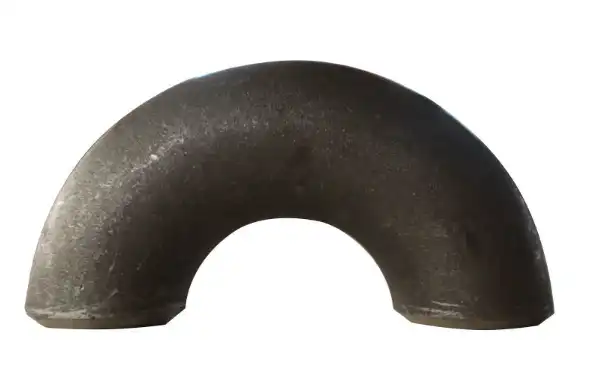
Understanding Custom Carbon Steel Elbows for High-Pressure Systems
What Defines a Custom Carbon Steel Elbow
Unlike the off-the-shelf alternatives, custom carbon steel elbows are manufactured to meet the specifications of each project. Custom elbows may be made to meet a wide variety of pressure ratings, connection types, wall thicknesses, and radius combinations. Flexibility is required in cases when pipeline systems are subject to unusual geographical constraints, extreme operating conditions, or peculiar fluid properties. These specialist parts are employed in businesses that deal with caustic chemicals, high-temperature steam or volatile petroleum products where generic parts risk safety or efficiency.
The manufacturing method differentiates between seamless and welded construction. Seamless elbows are manufactured from solid billet material by hot forming procedures such as hot pressing or heated bending, therefore avoiding weld seams. They have a seamless construction that eliminates weak spots and are suited for pressures of 2,500 PSI. Properly made and verified butt-welded (BW) versions give cost reductions for moderate pressure applications without loss of performance.
Core Applications Across Industrial Sectors
Petroleum refineries use carbon steel elbows to guide crude oil and refined products through sophisticated processing equipment. These fittings transport hostile compounds safely in chemical facilities despite heat cycling and mechanical stress. At compressor stations and distribution nodes, pressure differentials need heavy-wall elbows for natural gas transmission. These components handle hydraulic pressures and flow redirection in water conservation projects, including hydroelectric generating and large-scale irrigation.
Both fossil fuel and nuclear power plants need elbows that fulfil strict safety regulations in boiler systems, feedwater circuits, and cooling loops. Compact, high-integrity fittings for shipbuilding must withstand vibration, salinity, and tight installation areas. High-rise plumbing, fire suppression, and HVAC projects increasingly use carbon steel elbows for their durability and pressure capabilities in harsh commercial settings.
Material Grades and Manufacturing Standards
The most common standard for wrought carbon steel fittings, ASTM A234 WPB, offers balanced strength, weldability, and affordability at temperatures up to 800°F and moderate-to-high pressures for Custom carbon steel elbows. Hot-forming aligns grain structure with bend geometry, improving fatigue resistance under cyclic stress in this grade. When impact resistance and dimensional stability are important, ASTM A105 forgings are best for flanged elbows and threaded connectors.
Manufacturing procedures greatly affect performance. Hot pushing creates smooth interior surfaces with constant wall thickness distribution by heating pipe sections to forging temperature and pressing them through curved dies. By applying controlled thermal energy to the workpiece, heat bending may modify the radius for bigger diameters and unique angles beyond 45 degrees and 90 degrees. To optimise microstructure and release residual stresses that might affect long-term durability, both methods need heat treatment—normalising or stress relieving.
Key Performance Criteria When Choosing Carbon Steel Elbows for High-Pressure Systems
Pressure Ratings and Schedule Classifications
Understanding schedule designations helps match elbows to system needs. Schedule numbers indicate wall thickness relative to pipe diameter. Higher schedules, such as Sch 160 or Double Extra Strong (XXS), permit higher internal pressures. As working pressures rise, a 4-inch Sch 40 elbow rated for 1,500 PSI at ambient temperature must be upgraded to Sch 80 (3,000 PSI) or Sch 160 (4,500 PSI). These ratings match ASME B31.3 process pipe codes, which determine allowed stress using temperature derating factors and safety margins.
Pressure capacity relies on radius type—long radius (LR) elbows with centerline radius 1.5 times pipe diameter transfer stress better than SR elbows at 1.0 times diameter. The softer curve decreases turbulence and pressure loss, which is useful in high-velocity fluid hammer or erosion applications. Thread connections, socket welds, and butt welds have varied pressure limits; butt welds usually sustain the greatest ratings when properly completed.
Dimensional Standards and Geometric Considerations
ASME B16.9 Standardised centre to end lengths, outside diameter and wall thickness of factory-made iron fittings. Mating components are compatible, and field installation is without modification. Wall thickness uniformity is critical for pressure containment – the quality method is rejected if deviations are more than 12.5% of the nominal thickness since localised thinning leads to stress concentration zones that are prone to rupture.
Multi-plane plumbing. Accumulated deviations amplify alignment defects; therefore, angle precision is critical. Smooth bore transition between the nominal diameters to avoid turbulence-related deterioration for lowering elbows. Accurate estimations of distance between back-to-back elbow installations are needed to accommodate thermal expansion and to avoid excessive bending stresses on adjacent equipment nozzles. Designers and fabricators need to confirm compatibility before purchasing for these geometric factors.
Material Selection and Protective Treatments
Carbon steel has higher tensile (60,000-70,000 PSI for A234 WPB) and yield (35,000 PSI minimum) strength than stainless or alloy steels at a lower cost. Its weldability allows field alterations without additional processes, but corrosion requires preventive precautions in corrosive conditions. In damp or chemically harsh environments, epoxy linings, fusion-bonded epoxy, or galvanisation enhance service life. Pharma and food-grade products have inside linings to avoid contamination.
Heat treatments improve microstructure characteristics for Custom carbon steel elbows. Normalising reduces grain size and forging stresses, while quenching and tempering increase hardness for abrasion-resistant applications. For H2S-containing sour gas service, regulated cooling and tempering cycles increase hydrogen stress cracking resistance. Traceability of chemical composition, mechanical characteristics, and heat treatment history is vital for regulatory compliance and failure analysis in material test reports (MTRs).
Comparative Analysis: Custom Carbon Steel Elbow vs Alternatives for High-Pressure Use
Carbon Steel Versus Stainless Steel Trade-Offs
Carbon steel elbows outperform 304 or 316 stainless steel elbows in high-pressure applications with controllable corrosion, saving 40-60%. Thinner walls with equal pressure ratings save material costs and installation labour due to their strength-to-weight ratio. Corrosion resistance makes stainless versions worth the price in maritime, acidic, or hygiene-critical applications where contamination concerns exceed initial cost.
Thermal expansion coefficients are similar; however, stainless steel's weaker thermal conductivity causes higher thermal gradients during temperature cycling, which may cause fatigue fractures at weld heat-affected zones. Magnetic particle examination is non-destructive for carbon steel; however, liquid penetrant or radiographic procedures are more costly for stainless steel. Global supply chains have large stockpiles of carbon steel, unlike stainless speciality goods, which have lengthier lead times and restricted size choices.
Seamless Versus Welded Construction Considerations
Seamless elbows remove the weakest link in welded designs, the longitudinal weld seam, ensuring 100% metallurgical continuity throughout the fitting body. Their 25-40% price premium for vital high-pressure services is justified by their seamless integrity, which increases working pressures by 15-20% and fatigue life under cyclic loads. Non-destructive testing simplifies quality assurance procedures by detecting manufacturing faults without weld-related symptoms.
Welded elbows are practical for pressures below 2,000 PSI and non-critical services, especially in larger diameters (over NPS 24) when seamless fabrication is too expensive. With post-weld heat treatment and radiographic inspection, modern automated welding produces uniform, high-integrity seams. Welded choices are faster to construct than seamless ones, which need specialised tools and lengthier manufacturing cycles. Instead of only comparing unit pricing, procurement methods should include total cost of ownership, including inspection costs, insurance costs, and failure risks.
Procurement Considerations for Custom Carbon Steel Elbows in High-Pressure Systems
Essential Certifications and Quality Standards
ISO 9001:2015 certification shows a supplier's systematic quality control from raw material verification to product testing. This standard demands established methods, calibrated inspection equipment, and traceability systems connecting final components to material heat numbers and production records. Many nations require pressure vessel component Special Equipment Manufacturing Licenses for government audits to prove regulatory compliance and technical understanding.
International oil and gas pipeline elbows must meet API 5L material quality and testing standards. Pressure Equipment Directive (PED) indications allow worldwide businesses to enter the European market, while ASME B16.9 conformity offers dimensional precision. Independent quality testing before export by Lloyd's Register, Bureau Veritas, and SGS decreases procurement risk.
With 26 years of production experience since 1998, Oudi's ISO 9001:2000 and Special Equipment production License certify its quality procedures. Every fitting is tested for compliance utilising calibrated hydrostatic pressure, ultrasonic thickness verification, and dimensional inspection in our lab. Project audits and regulatory filings on chemical composition and mechanical qualities use materials traceability to connect products to mill test findings.
Evaluating Supplier Capabilities and Service Models
Based on manufacturing competence, our 16,000-ton yearly production guarantees project fulfilment. CNC press and heat treatment furnaces provide dimensional accuracy and metallurgical uniformity. Without laboratories, in-house testing speeds turnaround and ensures quality.
Some supplier MOQs need container-load commitments that strain budgets or warehousing for Custom carbon steel elbow. Flexible producers handle smaller batches for prototyping or emergency replacements despite poor batch economics. Reliable suppliers give realistic schedules that account for raw material procurement, production delays, and inspection pauses, not optimistic ones that delay project milestones.
Technical support differentiates commodity sellers from partners. Specification generation, finite element analysis for stress verification, and failure investigation are significant engineering services beyond transactional product delivery. With decades of application experience in petroleum, chemical, and power-producing industries in 40+ countries, Oudi's technical staff helps customers choose fittings, recommend protective coatings, and handle field installation issues.
Logistics and Supply Chain Optimization
World sourcing involves customs, shipping paperwork, and import taxes that affect landing costs. Established exporters like Oudi's covering Europe, the Americas, Africa, Southeast Asia, and the Middle East address these challenges with experienced product forwarders and compliance documents. Hardwood boxes, end covers, and corrosion inhibitors protect fittings during shipping to save expensive reorders.
Stockout risks and carrying costs are balanced via inventory management. Experienced producers must stabilise supply chains for just-in-time delivery to save storage expenses. Regional distributors offer popular sizes for quick delivery during maintenance downtime or project acceleration. Letters of credit, trade credit, and prepayment influence cash flow planning, and creditworthy purchasers negotiate favourable terms via connections.
Best Practices and Case Studies: Successfully Deploying Custom Carbon Steel Elbows in High-Pressure Systems
Avoiding Common Specification and Installation Pitfalls
Due to uneven schedule ratings, elbows and adjoining pipes frequently break prematurely. Pressure spikes might break the fragile Sch 80 pipe-Sch 40 elbow connection. Correct system design places decreasing parts in straight routes with consistent load distribution to maintain schedules during directional changes.
Corrosive conditions diminish service life with low corrosion allowance. Although new fittings meet initial pressure requirements, material loss reduces wall thickness below permissible limits. Specifying one schedule heavier than expected minimums or employing internal linings enhances buffer capacity, replacement intervals, and lifetime economics. The velocity restrictions of 15 feet per second for water and lower for abrasive slurries minimise erosion damage at elbow intrados, where flow directly contacts material surfaces.
Installation affects reliability. Joint preparation removes mill scale and contaminants that might compromise weld quality, and preheating heavy-wall fittings prevents hydrogen cracking. Welding residual tensions produce stress corrosion cracking and dimensional deformation. Heat treatment decreases them. Hydrostatic testing at 150% design pressure finds issues before process fluids reach the system before commissioning.
Real-World Performance in Demanding Applications
For its high-pressure steam distribution system, a Middle Eastern petrochemical complex replaced failed welded Sch 80 components with seamless ASTM A234 WPB long radius elbows in Sch 160. Seamless design eliminated weld seam risks, and thicker walls permitted 2,800 PSI safely. After three years at 750°F, ultrasonic thickness tests demonstrated constant corrosion rates without localised thinning, enabling specification improvement and reducing maintenance interruptions.
A North American natural gas pipeline project needed 24-inch seamless elbows with factory-applied fusion-bonded epoxy coating for underground service in corrosive soil. Oudi produced these components to API 5L X65 material specifications with improved impact toughness for cold-environment installation and supplied full material traceability and third-party inspection certification. After hydrostatic testing and dimensional verification, the protective coating provided 40 years of corrosion protection, matching the pipeline's design life and decreasing lifetime costs by avoiding coating failures.
Collaborative Approach to Specification Development
Project success involves early procurement, engineering, and manufacturing stakeholder involvement. After specifying performance requirements—pressure, temperature, corrosive conditions, and vibration exposure—manufacturers may recommend material classes, methods, and protective treatments. Oudi engineers examine client needs and propose longer radius designs where space permits or timetable increases when operational margins are short.
Value engineering saves money without compromising safety. Larger butt-welded connections save material costs and enhance flow. Tangent pipe sections combine many angles into 45-degree and 90-degree configurations to simplify manufacture and reduce lead times. Project costs and technical integrity are optimised via collaboration and formal specification modifications and acceptance.
Conclusion
Choosing a custom carbon steel elbow for high-pressure systems requires technical performance, regulatory compliance, and cost. Seamless constructions using ASTM A234 WPB or A105 materials and adequate schedule ratings provide reliable petroleum, chemical, and power generation. Successful procurement requires certified manufacturers, quality methods, technical expertise, and global supply networks. With 26 years of manufacturing experience, ISO-certified processes, and 16,000 tonnes of capacity, Oudi is a trusted partner for complex industrial projects that need high quality and delivery reliability.
FAQ
1. What pressure rating should I specify for carbon steel elbows in steam service?
Steam applications require careful consideration of both pressure and temperature effects on material strength. Schedule 80 elbows typically handle saturated steam up to 600 PSI at 500°F, while Schedule 160 accommodates 1,500 PSI at similar temperatures. Superheated steam above 750°F necessitates derating calculations per ASME B31.1 Power Piping Code, potentially requiring heavier schedules or upgrading to alloy steel materials like A335 P11 for enhanced creep resistance. Always verify that elbow pressure ratings match or exceed connected piping specifications.
2. How do I verify material certification documentation from suppliers?
Legitimate material test reports (MTRs) include heat numbers traceable to steel mill records, chemical composition analysis showing compliance with ASTM specifications, and mechanical property test results (tensile, yield, elongation). Third-party inspection certificates from recognized agencies provide independent verification. Request mill certificates rather than manufacturer certificates of conformance, and cross-reference heat numbers stamped on fittings against documentation. Reputable suppliers like Oudi maintain comprehensive quality records linking every product to source materials.
3. Can carbon steel elbows be used in hydrogen service?
Hydrogen service presents unique challenges due to hydrogen-induced cracking and hydrogen embrittlement risks. Carbon steel remains acceptable for low-pressure ambient-temperature hydrogen below 200 PSI, but higher pressures or elevated temperatures require careful material selection. API 941 provides guidance on susceptible materials, generally recommending hardness limits below HRC 22 and post-weld heat treatment to minimize residual stresses. Alternative materials like austenitic stainless steel or specialized low-alloy steels offer better resistance in demanding hydrogen applications.
Partner with Oudi for Reliable Custom Carbon Steel Elbow Solutions
Oudi has manufactured premium carbon steel pipe fittings since 1998, serving over 300 customers across 40 countries with products meeting ASMI, JIS, DIN, and BS standards. Our ISO 9001-certified facility in Cangzhou produces 16,000 tons annually, combining advanced manufacturing equipment with rigorous quality control from raw material inspection through final testing. Whether you need seamless high-pressure elbows for offshore platforms, coated fittings for corrosive environments, or custom specifications for unique applications, our engineering team delivers tailored solutions backed by comprehensive material traceability and certification documentation. Contact our export team at oudi-04@oudiguandao.com to discuss your project requirements with a trusted custom carbon steel elbow manufacturer.
References
1. American Society of Mechanical Engineers. (2020). ASME B16.9: Factory-Made Wrought Buttwelding Fittings. ASME International, New York.
2. American Petroleum Institute. (2018). API 5L: Specification for Line Pipe, 46th Edition. API Publishing Services, Washington, DC.
3. ASTM International. (2021). ASTM A234/A234M: Standard Specification for Piping Fittings of Wrought Carbon Steel and Alloy Steel for Moderate and High Temperature Service. ASTM International, West Conshohocken, PA.
4. Becht, C., & Roberts, K. (2019). Pressure Vessel and Piping Design and Analysis: A Practical Approach. Professional Engineering Publishers, London.
5. Escoe, A. K. (2017). Piping and Pipeline Assessment Guide: Fitness-for-Service Considerations, Volume 3. Gulf Professional Publishing, Houston.
6. Nayyar, M. L. (2019). Piping Handbook, 8th Edition. McGraw-Hill Education, New York.

Need help finding the right solution with our experts. Please contact us.

SINCE 1998 Your Reliable Pipeline Manufacturer



