How to Choose a CS Concentric Reducer Supplier?
Choosing the proper CS concentric reducer supplier is about four things: confirmed certificates, product selection, manufacturing capability, and honest communication. Concentric reducers are made of carbon steel and are used to link pipes of various sizes on a common centerline and are a common component of oil, gas, chemical, and power-generating systems. Choosing the incorrect source might mean delayed shipments, non-compliant materials, or fittings that break under strain. This manual will show you precisely what to examine before completing any purchase order so your pipe system is secure from day one.
Understanding CS Concentric Reducers: Key Specifications and Applications
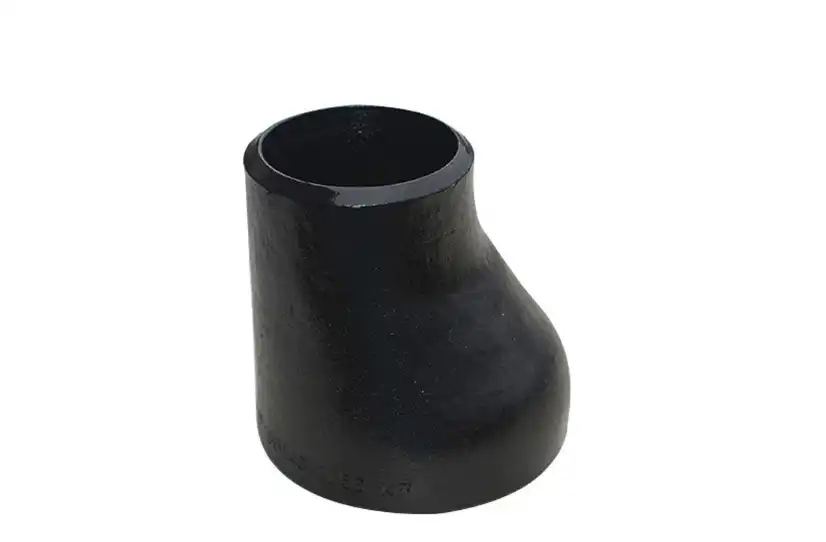
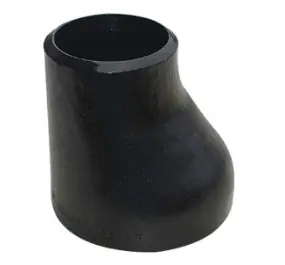
A CS concentric reducer is a cone-shaped pipe fitting used to connect two pipes of differing sizes, maintaining both ends on the same centerline. The shape may be such that fluid can flow from a bigger bore to a smaller bore without generating turbulence or unbalanced stress on the pipe wall.
Key Technical Specifications
Standard carbon steel concentric reducers conform to the dimensional specifications of ASME B16.9. Wall thickness is the same as the bigger end pipe schedule. Face-to-face length is based on the main outer diameter. Pressure ratings are not independent; they are the same as the corresponding seamless pipe of the same material and schedule. Common material grades include ASTM A234 WPB for carbon steel and A403 for stainless steel grades.
Where They Are Used
These fittings are used in vertical pump discharge lines in oil and gas, in supercritical steam lines in power plants over 250 bar, and in reactor feed lines in chemical processing columns. In all cases, the concentric’s design provides a balanced force profile, protecting the pipe supports and decreasing the likelihood of vibration fatigue over time.
Concentric vs. Eccentric: Choosing Correctly
Use a CS concentric reducer when flow symmetry and uniform load distribution are important on vertical pipelines. Use an eccentric reducer on the horizontal pump suction lines. A concentric reducer on a horizontal suction line traps air at the top of the pipe and generates cavitation, which destroys the pump. A good supplier would recognize this mistake before manufacturing starts and note it as a frequent field error.
Criteria to Evaluate When Choosing a CS Concentric Reducer Supplier
Not all suppliers advertising pipe fittings online can provide proof of their claims. These are the exact locations to consider before you place an order.
Certifications and Standards Compliance
Apply for ISO 9001 certification and, for pressure-bearing components, a special equipment manufacturing license. Products must fulfill the standards of ANSI, DIN, JIS, or BS depending on your project requirements. A trusted manufacturer will have 100% material traceability from receipt of raw steel to final product inspection – and that inspection includes nondestructive fault identification as a baseline process, not an extra-cost option.
Product Range and Material Options
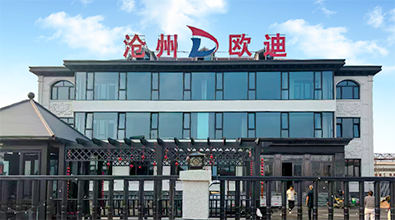
A provider with a wide catalog will save time on several steps of the process. Find CS concentric reducers, elbows, tees, flanges, and caps in carbon steel, stainless steel, and alloy steel at the same facility. Since 1998, Oudi has been the manufacturer of all main categories of fittings. It produces 16,000 tons per year according to American, Japanese, German, and British standards. One approved vendor for a whole pipe bill of materials simplifies quality control and dramatically decreases procurement expense.
Track Record and Global Experience
It is important to have a documented export history. Oudi has more than 300 clients in over 40 countries, including purchasers in Europe, North and South America, Africa, Southeast Asia and the Middle East. Such geographic dispersion suggests that the supplier is aware of import restrictions, export documents, and the quality demands of multiple regional markets—things that impact your receiving inspection and project timetable.
Comparing Suppliers: How to Make an Informed Decision
You’ve got a shortlist; don’t compare vendors on price alone. And the whole cost of ownership also includes shipping conditions, lead time dependability, and what happens if a batch fails inspection.
Pricing Transparency and Cost Drivers
A good supplier will break down quotations by material grade, wall schedule, outer diameter, and order quantities. This visibility enables you to precisely predict landing cost. Oudi pricing is based on acceptable margins for approved, inspected goods, not the lowest figure on a spreadsheet attached to unknown raw material sources.
Logistics and Delivery Capability
International orders need particular inquiries about lead times, port of shipment, and packaging criteria. With a yearly production of 16,000 tons, Oudi can manage huge orders while still meeting project schedule lead times. The site is near Tianjin Port, one of China’s key export ports, so shipping logistics are predictable.
After-Sales Support and Communication
During the installation, technical questions might emerge. A supplier offering dimension verification, schedule mismatch guidance, and bore-matching recommendations, such as counter-boring the smaller end to remove the step between mismatched schedules, saves a lot of rework expense. The ASME B16.25 standard bevel angle for wall thicknesses less than 22mm is 37.5° ± 2.5°. A provider that understands this without being asked is a supplier worth retaining.
Practical Considerations for Procurement Managers and Engineers
Field experience consistently shows that the most preventable problems come from poor material selection and dimension mismatch, not from manufacturing defects.
Matching Material to Service Conditions
Carbon steel is suitable for a wide variety of pressures and temperatures, but in a high-chloride or acidic environment, stainless or alloy grades are required. When fittings are hot formed or cold formed, it is typically necessary to normalize the fittings to refine the grain structure and keep the hardness levels below 197 HB as specified by ASTM A234. Clearly state the service criteria in your RFQ so that the supplier may write back to you about material appropriateness.
Schedule Compatibility and Bore Matching
You can't connect a Schedule 40 reducer straight to a Schedule 80 pipe without drilling out the inside of the smaller end to match the downstream pipe's inner diameter. Not doing so leads to a step change in bore, which causes turbulence and promotes corrosion at the weld joint. A technically competent supplier will inquire about both connecting pipe schedules before finalizing the order.
Leveraging Supplier Expertise Early
“Instead of just sending the finished specification for quotation, involve the supplier in the conversation at the design stage. Oudi’s engineering staff can verify dimension compliance, recommend material substitutes when lead times are short, and provide mill certifications ahead of shipping. Early coordination minimizes change orders and helps keep schedules on track.
Conclusion
When choosing a supplier for a CS concentric reducer, it’s not just about per-unit pricing. The suitable supplier will have up-to-date certifications, quality documentation that can be traced, an understanding of schedule compatibility, and straightforward communication on lead time and technical needs. Oudi has all those credentials with close to three decades of manufacturing expertise and a proven client base worldwide. Whether it’s for an oil refinery, a power production project, or an international distribution network, the stages in this book will provide you with a clear foundation for making a confident supplier selection.
FAQ
1. What is the standard for CS concentric reducer dimensions?
ASME B16.9 governs the face-to-face dimensions of butt-weld concentric reducers. The length is fixed based on the larger pipe diameter, which ensures interchangeability between manufacturers.
2. How do I verify a supplier's certifications?
Request the original ISO 9001 certificate and cross-check the certificate number with the issuing body's registry. For special equipment licenses, ask for the license number and the issuing authority, then verify independently.
3. What is a typical lead time for a standard order?
For standard sizes in ASTM A234 WPB carbon steel, lead times typically run 2–4 weeks from order confirmation for stocked dimensions. Custom sizes or large-diameter fittings may require 4–8 weeks depending on production scheduling.
4. Are bulk order discounts available?
Most manufacturers, including Oudi, offer tiered pricing for volume orders. Contact oudi-04@oudiguandao.com with your quantity and specification list to receive an accurate quotation.
5. Can one supplier cover all my pipe fitting needs?
Yes, if the supplier maintains a full product line. Oudi produces elbows, tees, flanges, caps, and reducers in carbon steel, stainless steel, and alloy steel under one quality system—which simplifies supplier qualification significantly.
Partner with Oudi for Your Next CS Concentric Reducer Order
Oudi has supplied certified carbon steel pipe fittings to industrial buyers worldwide since 1998. With ISO 9001 certification, a special equipment manufacturing license, and 16,000 tons of annual output, we cover every specification from standard ASTM A234 WPB CS concentric reducers to custom alloy fittings across ANSI, DIN, JIS, and BS standards. Send your specifications directly to oudi-04@oudiguandao.com and receive a detailed quotation from our technical team within one business day.
References
1. ASME B16.9 – Factory-Made Wrought Buttwelding Fittings, American Society of Mechanical Engineers, 2018.
2. ASTM A234 – Standard Specification for Piping Fittings of Wrought Carbon Steel and Alloy Steel for Moderate and High Temperature Service, ASTM International, 2021.
3. ASME B16.25 – Buttwelding Ends, American Society of Mechanical Engineers, 2017.
4. ISO 9001 – Quality Management Systems: Requirements, International Organization for Standardization, 2015.
5. Nayyar, M. L. – Piping Handbook, McGraw-Hill, 2000.
6. Becht, C. – Process Piping: The Complete Guide to ASME B31.3, ASME Press, 2009.

Need help finding the right solution with our experts. Please contact us.
SINCE 1998 Your Reliable Pipeline Manufacturer