How to Choose the Best BW Carbon Steel Cap for OEM Projects
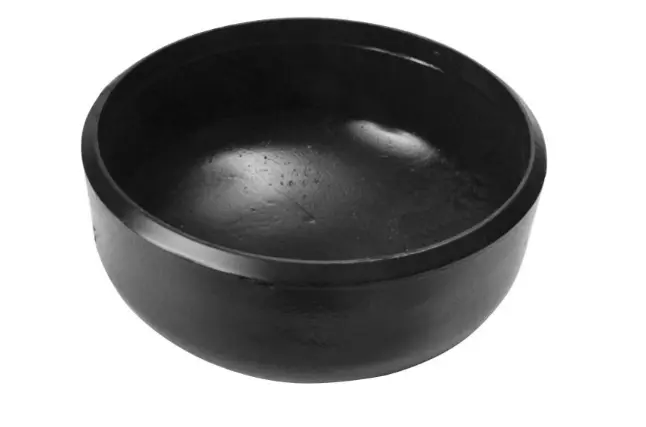
The first step in selecting the proper BW carbon steel cap for an OEM project is to understand what you need from the fitting. A butt-weld carbon steel cap is a closure for the end of a pipe that is welded directly to the pipe to form a permanent, pressure-tight joint. Sizes range from 1/2" (DN 15) to 48" (DN 1200), and it meets standards like ASME B16.9. For OEM purchasers in oil, gas, chemical, and power, the right choice of grade, schedule, and dimensional tolerance may make the difference between a safe, long-running system and an early, expensive breakdown.
Understanding BW Carbon Steel Caps: Specifications and Key Features
Before comparing options or sourcing suppliers, it pays to know exactly what a butt-weld end cap is and what makes one better than another.
What Is a BW Carbon Steel Cap?
Sometimes termed a head cap, a carbon steel pipe cap permanently blocks flow by welding onto the pipe end. It works the same as a blind flange or plug according to ASME B16.9, but offers a cleaner, lower profile closing. Same for dimensions, tolerances, ratings, and mandatory marks for wrought butt-weld fittings such as caps, elbows, tees, and reducers.
Key Material Grades and Standards
ASTM A234 WPB is the most often used grade for butt-weld end caps in industrial OEM applications. It covers carbon steel for moderate to high pressure duty. ASTM A420 WPL6 is used in low-temperature service. Wall thickness schedules from STD and XS to SCH 80, SCH 160, and XXS provide engineers the option to meet pressure class without over-specification. Most procurement teams will need ASME B16.9 and ASME B16.28 compliance.
Performance Benefits for OEM Projects
Carbon steel caps have a far better strength-to-cost ratio than stainless or alloy caps, at scale. They can withstand large internal pressures, resist large temperature variations, and may be welded according to conventional processes without additional preparation. This material uniformity greatly saves engineering review time and inspection costs for OEM contractors making large orders across several stages of a project.
Comparing BW Carbon Steel Caps with Alternative End Caps
Not every closure fitting suits every application. Here is how butt-weld BW carbon steel caps stack up against the common alternatives procurement teams encounter.
BW Caps vs. Threaded Caps
Threaded caps screw into male pipe ends and are good for low-pressure, small-diameter systems. But they are not suited for high-pressure and high-temperature duty because the thread engagement produces stress concentration areas. Conversely, a butt-weld cap gives a full penetration weld union with no mechanical threads to strain and is ideal for oil, gas, and chemical pipelines over 300 psi.
BW Caps vs. Forged and Seamless Caps
Forged caps provide a somewhat better density and grain structure, but the price premium is substantial at big diameters. Seamless butt-weld caps are a realistic compromise. The absence of a weld seam ensures that there is no heat-affected zone weakening throughout the body, and ASTM A234 WPB seamless material nevertheless fulfills the mechanical property requirements for most Class 150 to Class 900 services. For OEM applications with restricted budgets and large numbers, seamless carbon steel caps provide reliable performance without the premium of forged.
BW Caps vs. Stainless Steel End Caps
Stainless steel caps (e.g., ASTM A403 WP316L) are more resistant to harsh acids and chloride conditions. That advantage comes at a material cost of around two to four times that of carbon steel. Carbon steel end caps remain the economical default for clean water, natural gas, and hydrocarbon service when corrosion is controlled by coating or cathodic protection. Save stainless for process lines where a chemical exposure really needs it.
How to Select the Right BW Carbon Steel Cap for Your OEM Project
Getting the specification right before placing an order saves time, money, and rework on-site. The following considerations should guide every selection decision.
Define Pressure Class and Operating Environment
Begin with the design pressure and temperature range of the pipe. ASME B16.9 caps are rated to the same schedule as the corresponding pipe. So a SCH 40 cap on a SCH 40 line at 150°F and 285 psi is easily accomplished. Push that line to 900 psi or a sour-gas environment, and you’ll have to define wall schedule, heat-treatment status, and supplemental testing needs up front. This is the most typical reason purchase orders are refused.
Match Material Grade to Service Conditions
ASTM A234 WPB is used for most OEM standard carbon steel service applications. Projects that will see temperatures as low as -50°F should select ASTM A420 WPL6. Additional hardness controls are necessary for NACE MR0175-covered hydrogen sulfide (H2S) service. Telling your supplier these restrictions at the inquiry stage eliminates grade replacements that might invalidate your technical documentation.
Verify Dimensional Accuracy and Schedule
Dimensional non-conformance is one of the primary reasons for field rework. Verify that the BW carbon steel cap’s nominal pipe size, outer diameter, and end-to-end length conform to ASME B16.9 tables. Always ask for a material test report (MTR) and dimensional inspection as a normal delivery, not an optional extra. These papers help safeguard your project during third-party audits and owner inspections.
Sourcing and Procurement: Finding Trusted BW Carbon Steel Cap Suppliers
The supplier you choose directly affects delivery reliability, documentation quality, and final project cost. Here are the factors that matter most.
Certification and Quality System Verification
Look for ISO 9001-certified manufacturers who also hold special equipment manufacturing licenses — these licenses require government-level audits and are not self-declared. At Oudi (Cangzhou Oudi Pipe Manufacture Co., Ltd., established in 1998), we hold ISO 9001:2000 certification and the People's Republic of China Special Equipment Manufacturing License. Every fitting we ship goes through full inspection from raw material receipt through finished product dispatch, including nondestructive flaw detection.
Production Capacity and Supply Chain Stability
Annual output capacity tells you whether a supplier can absorb your volume without compromising lead times. Oudi's facility covers 66,600 square meters and produces 16,000 tons of pipe fittings per year across carbon steel, stainless steel, and alloy steel categories. That capacity supports OEM buyers who need consistent supply across multiple project phases without splitting orders between multiple vendors.
Export Experience and Global Logistics
Suppliers with proven export track records reduce documentation errors and customs delays. Oudi has served over 300 customers across more than 40 countries, including buyers in Europe, North and South America, Africa, Southeast Asia, and the Middle East. Our geographic position — 120 km from Tianjin Port with direct highway access — keeps freight logistics straightforward for US-based importers.
Best Practices for Using BW Carbon Steel Caps in OEM Projects
Even a correctly specified cap will underperform if installation is handled carelessly. These practices keep your system tight and your inspection records clean.
Proper Welding Procedures
Butt-weld end caps are constructed with full-penetration groove welds as per ASME B31.3 or B31.1 depending on the piping class. Preheat carbon steel over 3/4″ thick to a minimum of 250 degrees F. before welding to avoid hydrogen cracking. Use a qualified welding procedure specification (WPS) and qualified welders. This is a contractual obligation on most EPC projects and is not optional.
Post-Weld Heat Treatment and Inspection
Thick wall carbon steel caps (wall typically over 1") need post-weld heat treatment (PWHT) to remove residual stress and restore toughness. After PWHT, perform radiographic (RT) or ultrasonic (UT) inspection of the weld joint. Having a record of these actions in your quality records protects you from warranty claims and meets third-party inspection requirements for oil, gas, and chemical plant projects.
Corrosion Prevention and Maintenance
Use proper exterior coating or paint methods for the installation environment. Where used for underground or submerged service, the coating should be used in conjunction with a cathodic protection system. For service involving high vibration or cyclic loads, frequently inspect cap welds by magnetic particle testing (MT). Early identification of surface indications avoids through-wall failures which shut down manufacturing lines.
Conclusion
The selection of the correct butt-weld BW carbon steel cap for an OEM project can be boiled down to four simple steps: define the service conditions, match the material grade and schedule to those conditions, verify dimensional conformance to ASME B16.9, and select a supplier whose certification history and production capacity you can independently verify. ASTM A234 WPB carbon steel end caps are the most economical pipe closure for oil, gas, chemical, and power-generating applications. Combine that standard with a proven licensed manufacturer, and your procurement risk is much lower.
FAQ
1. What standards should a BW carbon steel cap comply with for OEM projects?
The primary dimensional standard is ASME B16.9, which governs wrought factory-made butt-welding fittings from ½" to 48". Material must conform to ASTM A234 WPB for standard carbon steel service, or ASTM A420 WPL6 for low-temperature applications. Buyers should also verify that the supplier's quality system meets ISO 9001 requirements and that any special pressure-retaining fittings carry the appropriate manufacturing license.
2. Are BW carbon steel caps more durable than forged counterparts?
Both types meet ASTM mechanical requirements when produced correctly. Forged caps carry a slightly denser grain structure, but for most OEM pressure classes, a seamless ASME B16.9 butt-weld cap manufactured from certified ASTM A234 WPB material delivers equivalent service life at lower cost. The key factor is material certification and dimensional conformance, not the manufacturing route alone.
3. Can I order custom dimensions or special material grades?
Yes. Reputable manufacturers like Oudi supply caps in non-standard wall schedules (from SCH 5S through XXS) and specialty grades such as alloy steel ASTM A234 WP9 or WP91 for high-temperature service. Confirm your pressure class, temperature range, and any supplementary testing requirements when submitting your inquiry so the supplier can confirm availability and lead time.
Partner with Oudi for Your Next BW Carbon Steel Cap Order
Oudi has manufactured certified pipe fittings since 1998, supplying carbon steel end caps and a full range of butt-weld fittings to buyers in over 40 countries. As a trusted BW carbon steel cap manufacturer, we back every order with ISO 9001 certification, complete material documentation, and a 16,000-ton annual production capability. Contact our team today to request a quote or discuss specifications: oudi-04@oudiguandao.com
References
1. ASME B16.9 — Factory-Made Wrought Buttwelding Fittings, American Society of Mechanical Engineers, 2018.
2. ASTM A234/A234M — Standard Specification for Piping Fittings of Wrought Carbon Steel and Alloy Steel for Moderate and High Temperature Service, ASTM International, 2022.
3. ASME B31.3 — Process Piping, American Society of Mechanical Engineers, 2022.
4. NACE MR0175/ISO 15156 — Petroleum and Natural Gas Industries — Materials for Use in H₂S-Containing Environments, NACE International, 2015.
5. Nayyar, M. L. — Piping Handbook, McGraw-Hill, 7th Edition, 2000.
6. ASTM A420/A420M — Standard Specification for Piping Fittings of Wrought Carbon Steel and Alloy Steel for Low-Temperature Service, ASTM International, 2021.

Need help finding the right solution with our experts. Please contact us.

SINCE 1998 Your Reliable Pipeline Manufacturer



