How to Choose a Steel Concentric Pipe Reducer OEM Supplier for EPC?
You may make or break your EPC project schedule and budget by choosing the appropriate Steel Concentric Pipe Reducer OEM supplier. Procurement managers in the oil, chemical, natural gas, and water conservancy industries need to find not only a manufacturer but one that can consistently deliver quality, meet tough international standards, and provide reliable technical support throughout the execution of a project. At Oudi, we recognise that EPC contractors need more than simply pipe fittings; they need a manufacturing partner that understands the complexities of large-scale industrial systems and can react with precise engineering, clear quality control, and flexible capacity. With more than 20 years of experience and 300+ clients in 40 countries, we know what makes the difference between a trustworthy OEM supplier and those that don’t quite make the grade when projects need the best performance.
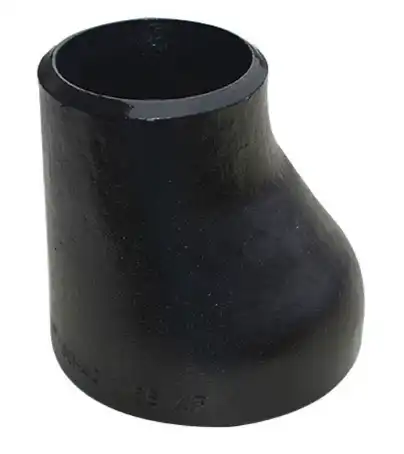
Understanding Steel Concentric Pipe Reducers: Key Specifications and Benefits
A concentric reducer is a pipe fitting used to join two pipes of various sizes, with the central axis of both pipes being the same. This symmetrical cone-shaped form enables fluid to flow smoothly from a larger to a smaller diameter, minimising turbulence and pressure loss. This is a significant issue for vertical pipe systems in refineries, power plants, and wastewater treatment facilities.
Material Standards and Options
These fittings are subject to strict metallurgical criteria for their quality. Common materials include Carbon Steel made to ASTM A234 WPB requirements, Stainless Steel options such as ASTM A403 WP304 and WP316L for applications requiring resistance to corrosion, and Alloy Steel grades like ASTM A234 WP11 and WP22 for high-temperature service settings. Every material choice has an immediate influence on durability under certain operating circumstances. Whether under harsh chemical exposure or excessive temperature cycling.
Dimensional Compliance and Design Features
The dimensions are generally in accordance with ASME B16.9 for NPS sizes from 1/2 to 48, with wall thickness according to Schedule numbers such as SCH 40, SCH 80, XS, and XXS to match the connecting pipe. The face-to-face length is standardised on the bigger pipe diameter, which allows interchangeability between pipe manufacturers and simplifies field installation. Most fittings have bevelled edges for welding at a standard 37.5° ±2.5° angle, to provide leak-proof structural bonding required in high-pressure applications.
The concentric shape is superior in the distribution of hoop strength, providing better resistance to erosion-corrosion at the reduction taper while still being able to tolerate high pressure-temperature cycling. Concentric reducers are used for vertical pump discharge lines, steam generating systems, and sludge transport lines where structural balance and linear flow are important due to their high tensile and yield strength matched to the parent pipe.
Industrial Applications Across EPC Sectors
These fittings are often used in oil and gas refineries for vertical pump discharge pipes on EPC projects where pressures might reach 1500 PSI. These are used by power production facilities in high-pressure steam lines between superheater stages to ensure alignment of the pipes on center to avoid problems related to thermal expansion. The self-cleaning flow dynamics of vertical sludge transport systems are beneficial in water treatment infrastructure by preventing sediments from accumulating in corners or on ledges.
Carbon steel reducers are cost-efficient for typical pressure and temperature ranges, while stainless steel reducers are corrosion-resistant for chemical processing applications. Suitable pressure ratings and international standards like ANSI, JIS, DIN, and BS guarantee safety and performance for a wide range of industrial applications.
Defining Your Procurement Needs and Decision Criteria for EPC Projects
EPC contractors should ensure that pipe fitting selections are consistent with project specifications before contacting suppliers. This planned foundation eliminates expensive specification incompatibilities and guarantees operational safety for the entire installation lifetime.
Analyzing Piping Design Parameters
The first step in your procurement process should be a comprehensive evaluation of pressure ratings, temperature ranges, and fluid compatibility criteria. A Steel Concentric Pipe Reducer for cryogenic liquefied natural gas requires different metallurgical qualities than one for high-temperature steam or corrosive chemical slurries. The thickness of the wall also determines the weld process. The end connection determines the installation and maintenance process, whether it is a bevel for a butt weld or a flange for bolting.
If your application demands seamless or welded construction will determine cost and performance attributes. Seamless fittings do not have weld seam failures, but are more expensive, whereas new welded units from approved manufacturers are dependable and competitive when properly tested.
Establishing Decision Metrics
Procurement managers should examine a number of elements in the bid evaluation process. Second only to product quality assurance with established testing processes, are delivery lead time capabilities in line with project milestones. Price competition is important, but the lowest offer is typically a hint that quality control has been compromised or delivery dates are unpredictable enough to throw key route operations off track.
Supplier dependability includes constancy of production capacity, certificates of quality management systems, and a demonstrated record of comparable EPC projects. A 16,000 ton/year OEM company with established quality processes is a lower supply chain risk than a smaller firm with limited capacity and untested systems.
Concentric Versus Eccentric Reducer Selection
Knowing whether to specify concentric vs eccentric reducers may help avoid installation problems that might impact system performance. Concentric reducers are perfect for vertical lines where you don’t need to worry about the air building up, and it is important to keep the system balanced, since they have the same center-to-center line. Eccentric reducers are offset such that one side is flat. This prevents air pockets in horizontal pump suction lines where trapped gas causes cavitation and damage to equipment.
Installation consequences are dramatic. Concentric fittings make supporting hanging and thermal expansion easier in vertical courses, whereas eccentric styles need careful alignment to have the flat side in the right place. Maintenance aspects are also different, with concentric kinds allowing for self-cleaning flow in vertical applications and eccentric types avoiding sediment build-up in horizontal arrangements when fitted correctly.
How to Screen and Select a Steel Concentric Pipe Reducer OEM Supplier
Identifying qualified OEM suppliers requires systematic evaluation across multiple dimensions. This structured approach reduces procurement risk while ensuring your selected partner can meet demanding EPC specifications.
Research Methods and Verification Strategies
Start by researching manufacturers with proven export experience to your target markets. Suppliers serving clients across Europe, North America, Africa, Southeast Asia, and the Middle East demonstrate adaptability to varying regulatory environments and quality expectations. Verification of ISO 9001 quality management system certification and special equipment manufacturing licenses provides baseline assurance of systematic quality control.
Factory audits reveal production capabilities that supplier literature may overstate. Observing advanced production equipment and inspection capabilities firsthand—including dimensional verification tools, Positive Material Identification (PMI) analyzers, and Non-Destructive Testing (NDT) equipment—confirms technical capacity. Client references from completed EPC projects offer insights into real-world performance, delivery reliability, and responsiveness to technical challenges.
Assessing Technical Support Capabilities
Complex EPC specifications often require engineering consultation beyond standard product offerings. Evaluate whether potential suppliers provide material selection guidance based on your specific operating conditions, including pressure-temperature cycling, corrosion exposure, and maintenance accessibility constraints for a Steel Concentric Pipe Reducer. Customization capabilities for non-standard dimensions, specialized materials, or unique end connections expand your design flexibility.
Technical support should extend beyond initial specification to include welding procedure recommendations, inspection protocol development, and troubleshooting assistance during installation. Suppliers offering this comprehensive engineering partnership add substantial value for complex industrial projects where field conditions may present unforeseen challenges.
Logistics and Pricing Considerations
Lead times for custom manufacturing orders significantly impact project scheduling. Clarify production cycles for standard versus custom specifications, and assess the supplier's ability to handle volume fluctuations as your project progresses. Manufacturers maintaining adequate raw material inventory and flexible production scheduling adapt more readily to EPC project demands.
Pricing structures should reflect not just unit costs but total procurement value, including shipping reliability, payment terms, and warranty coverage. International shipping experience reduces customs clearance complications and freight cost surprises. Suppliers with established logistics partnerships and documentation expertise streamline cross-border transactions, particularly valuable when coordinating multi-country EPC projects.
Comparing Market Solutions and Making the Final Choice
With qualified suppliers identified, conducting a comparative analysis ensures your final selection optimally balances cost, quality, and service requirements.
Material and Design Comparisons
Carbon steel reducers provide cost-effective solutions for standard industrial applications with moderate corrosion exposure and temperature ranges. Their excellent weldability and availability make them preferred choices when operational conditions permit. Stainless steel alternatives justify premium pricing through superior corrosion resistance, extending service life in aggressive chemical environments or marine applications where maintenance access proves difficult.
Concentric designs outperform eccentric types in vertical applications requiring flow uniformity and structural symmetry, while eccentric configurations prevent operational failures in horizontal pump suction scenarios. Understanding these application-specific advantages prevents specification errors that compromise system performance or create premature maintenance requirements.
OEM Supplier Value Proposition
OEM manufacturers differentiate themselves through customization capabilities, superior quality control, and comprehensive after-sales service. Unlike distributors reselling generic inventory, OEMs control production processes from raw material selection through final inspection, enabling specification modifications, tighter dimensional tolerances, and enhanced traceability through material test certificates.
Quality control at OEM facilities typically includes dimensional accuracy verification against ASME B16.9 tolerances, PMI testing confirming chemical composition, and NDT methods detecting subsurface defects. Hydrostatic testing certifies pressure rating compliance, while impact testing at specified temperatures ensures brittleness resistance for cryogenic applications.
Practical Selection Checklist
As you finalize your supplier decision, confirm the following criteria. Verify that material certificates trace to recognized standards and that heat numbers enable batch tracking. Review dimensional inspection reports demonstrating compliance with specified tolerances, particularly at transition zones where stress concentrates. Examine NDT documentation covering critical areas prone to manufacturing defects.
Assess production capacity against your project volume requirements, including surge capacity for schedule compression scenarios. Evaluate technical support responsiveness through pre-award engineering inquiries, noting the thoroughness of responses and willingness to collaborate on specification optimization. Consider warranty terms and post-delivery support availability, particularly for international shipments where replacement logistics prove challenging.
At Oudi, we've structured our operations around these decision factors since 1998. Our facility spans 66,600 square meters in Cangzhou's pipe fitting manufacturing hub, housing advanced production equipment capable of delivering 16,000 tons annually across carbon steel, stainless steel, and alloy steel product lines. Our ISO 9001:2000 certification and special equipment manufacturing license demonstrate commitment to systematic quality management, while our self-management import and export authority streamlines international transactions for EPC contractors worldwide.
Installation, Maintenance, and Post-Purchase Considerations
The correct installation procedures and maintenance protocols provide the maximum service life of the pipe fittings and avoid any operational disturbances that might delay the commissioning of the project or halt production.
Installation Best Practices
Successful installation starts with checking for fitting orientation and alignment prior to welding. - Concentric reducers in vertical lines, if used, should be true vertical to provide adequate flow distribution and thermal expansion behaviour. Inspect bevelled ends for shipping damage. Remove any burrs or debris that might affect weld quality.
Welding processes should be based on recognised Welding Procedure Specifications (WPS) suited for the base material and wall thickness. Interpass temperature control will avoid excessive hardness in the heat-affected zone, and preheat needs are functions of material carbon equivalent and ambient temperature. Post-weld heat treatment may be necessary for certain grades of alloy steels or for thick-wall applications to alleviate residual stresses and restore material characteristics.
Field alignment tolerances impact both immediate weld quality and long-term stress distribution. Misalignment causes concentration of stress at the weld toes and accelerates the fatigue fracture formation under cyclic pressure loading. Proper alignment tools and verification of dimensional conformance before welding avoid premature failure mechanisms.
Maintenance Protocols and Inspection Intervals
Inspection intervals should be determined by system pressures and fluid properties. Higher pressure steam systems will have to be monitored with more regular ultrasonic thickness measurements to monitor erosion rates, and corrosive chemical services will have to be periodically visually inspected to evaluate exterior coating deterioration and interior corrosion during scheduled shutdowns.
Post-maintenance pressure testing ensures ongoing integrity after repair or modification. Documentation of inspection results, thickness measurements, and any corrective activities provides historical information to support reliability-centred maintenance programs and remaining life estimations.
Ongoing OEM Support Services
OEM suppliers get technical training on correct handling, installation practices, and inspection methods particular to their goods. On-site support during important installations or commissioning operations decreases the risk of misunderstanding of specifications or poor installation methods. The warranty coverage should include manufacturing flaws and should explicitly state the restrictions of coverage for incorrect installation or operation outside the specified specifications.
Oudi provides complete support services throughout the whole lifespan of our customers’ projects. Our technical staff can provide installation instructions, welding technique suggestions, and troubleshooting support when field circumstances throw a curveball. This collaborative approach has gained the confidence of EPC contractors across petroleum, chemical, natural gas, and water conservancy projects, who appreciate quick engineering assistance combined with excellent manufacturing.
Conclusion
For EPC projects, the selection of a Steel Concentric Pipe Reducer OEM supplier requires a comprehensive examination of material requirements, production capabilities, quality control systems, and technical support resources. The perfect supplier alliance is more than just competitive price; it includes engineering cooperation, delivery dependability, and responsive support throughout your project lifetime. Procurement managers may choose manufacturing partners that minimise risk while optimising performance in demanding industrial applications by carefully evaluating dimensional compliance, certification credentials, production capacity, and post-delivery support.
FAQ
1. What lead times should I expect for custom Steel Concentric Pipe Reducer orders?
Standard specifications from established OEM manufacturers typically ship within three to four weeks, while custom materials, non-standard dimensions, or specialized testing requirements may extend lead times to six or eight weeks. Production capacity and current order backlog significantly influence scheduling, making early supplier engagement critical for EPC project planning. At Oudi, our 16,000-ton annual capacity and raw material inventory enable responsive scheduling aligned with contractor milestones.
2. How can I verify supplier quality certifications and manufacturing capabilities?
Request copies of ISO 9001 certificates, special equipment manufacturing licenses, and recent material test certificates demonstrating testing protocol rigor. Factory audits provide direct observation of production equipment, inspection tools, and quality management implementation. Third-party inspection services can verify dimensional compliance, material composition, and NDT results before shipment, adding an independent verification layer.
3. Are concentric and eccentric reducers interchangeable in piping systems?
These fitting types serve distinct functions and should not be substituted without engineering review. Concentric reducers suit vertical applications where centerline alignment and flow symmetry matter, while eccentric designs prevent air entrapment in horizontal pump suction lines. Incorrect selection causes operational problems ranging from pump cavitation to premature erosion, potentially requiring costly rework during commissioning.
Partner with Oudi for Your Steel Concentric Pipe Reducer Requirements
Oudi brings over 25 years of manufacturing excellence to EPC contractors seeking a dependable Steel Concentric Pipe Reducer supplier. Our Cangzhou facility produces comprehensive fitting ranges across carbon steel, stainless steel, and alloy steel materials, all manufactured under ISO 9001 quality systems with full traceability through material test certificates. We serve clients in the petroleum, chemical, natural gas, and water conservancy sectors across more than 40 countries, combining competitive pricing with the technical support and delivery reliability your projects demand. Our engineering team collaborates on specification optimization, welding procedure development, and installation guidance, ensuring successful outcomes from procurement through commissioning. Contact us at oudi-04@oudiguandao.com to discuss your project requirements, request detailed quotations, or arrange a factory audit. Discover why procurement managers trust Oudi as their preferred pipe fitting manufacturer for critical EPC applications.
References
1. American Society of Mechanical Engineers. (2020). ASME B16.9: Factory-Made Wrought Buttwelding Fittings. New York: ASME Press.
2. ASTM International. (2019). ASTM A234 Standard Specification for Piping Fittings of Wrought Carbon Steel and Alloy Steel for Moderate and High Temperature Service. West Conshohocken: ASTM International.
3. Nayyar, M. L. (2018). Piping Handbook, 8th Edition. New York: McGraw-Hill Education.
4. Bausbacher, E., & Hunt, R. (2017). Process Plant Layout and Piping Design. Upper Saddle River: Prentice Hall.
5. International Organization for Standardization. (2015). ISO 9001:2015 Quality Management Systems—Requirements. Geneva: ISO.
6. Mohitpour, M., Golshan, H., & Murray, A. (2007). Pipeline Design and Construction: A Practical Approach, 3rd Edition. New York: ASME Press.

Need help finding the right solution with our experts. Please contact us.

SINCE 1998 Your Reliable Pipeline Manufacturer



