How to Import Steel Concentric Pipe Reducers: A Practical Guide
Getting a steel concentric pipe reducer into the U.S. market isn’t just a matter of ordering it online. Material grades have to be checked, certificates confirmed, shipping arrangements negotiated, and customs cleared properly. Regardless of your industry, whether oil and gas, chemical processing, or water treatment, doing the sourcing process correctly can save you time and money. This tutorial takes you through the process, step-by-step, from reviewing product specifications to placing your final bulk purchase, so that your next procurement choice is based on actual information, not guesswork.
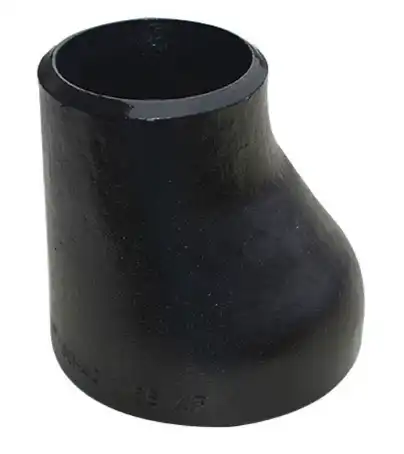
Understanding Steel Concentric Pipe Reducers and Their Specifications
What Makes a Concentric Reducer Different
A concentric pipe reducer connects two different diameter pipes but keeps the centerline in the same line. This makes a symmetrical cone-shaped transition, which is ideal in vertical pipelines where balanced flow is important. It’s not like some odd reducer that flattens out one side to eliminate air pockets on horizontal suction lines. Confusing the two may lead to pump cavitation — a costly error in active systems.
Key Material Grades and Standards
The most popular materials are Carbon Steel (ASTM A234 WPB), Stainless Steel (ASTM A403 WP304/316L) for corrosion-resistant conditions, and Alloy Steel (ASTM A234 WP11/WP22) for high-temperature usage. Dimensions are as per ASME B16.9 for diameters NPS 1/2 to NPS 48. Wall thicknesses are determined by schedule numbers such as SCH 40, SCH 80, XS, and XXS. ANSI, DIN, or API standards are met to ensure the interchangeability of pipe components worldwide.
Where These Fittings Are Used
Concentric reducers are used in oil and gas pipelines, chemical plant heads, water treatment stations, power production systems, and boiler networks. Their symmetrical shape distributes the hoop stress equally and prevents vibration fatigue in high-pressure lines. This is especially relied on by 24/7 operating industries. The steady flow transition avoids deterioration of the reduction taper.
Step-by-Step Guide on How to Import Steel Concentric Pipe Reducers
Finding and Vetting Suppliers
Begin by focusing on ISO 9001-certified manufacturers in China, Europe, or North America. China continues to be the number one sourcing area, thanks to its manufacturing size. For example, Cangzhou Oudi Pipe Manufacture Co., Ltd. has comprehensive certifications including the Special Equipment Manufacturing License of China and an annual capacity of 16,000 tons. Confirm certificates with the certifying agency. Request mill test reports (MTRs). Determine whether the supplier has self-managed import/export permission.
Understanding Pricing, MOQ, and Lead Times
Standard orders generally arrive in 15-30 days; bespoke specifications in 45-60 days. MOQ varies with size and material, but is generally one metric ton per standard. Here are the main costs you should discuss before signing any contract:
- Material grade: Alloy steel is 30-50% more costly than Steel Concentric Pipe Reducer counterparts.
- Schedule/Wall thickness: Heavier schedules are more expensive for material and machining.
- Surface treatment: Price of varnish, anti-rust oil, or hot-dip galvanizing unit.
- Certification requirements: 3rd-party inspection (SGS, BV, TüV) increases lead time and expense.
These elements mix differently for each job; therefore, always ask for an itemized estimate and not a lump-sum price.
Shipping Terms and Customs Clearance
The most popular term for U.S. importers purchasing from China is FOB (Free On Board) – you control freight from the port of origin. CIF (Cost, Insurance and Freight) is useful if you want your supplier to organize ocean freight. DDP (Delivered Duty Paid) is complete door-to-door delivery but usually more expensive. Pipe fittings are classified under U.S. customs HTS codes in Chapter 73. You will require a Commercial Invoice, Packing List, Certificate of Origin, and Mill Test Reports for seamless clearance.
Comparing Steel Concentric Pipe Reducers: Making the Right Procurement Decision
Concentric vs. Eccentric: Choosing the Right Type
If you have a vertical run of pipe, or if you have a balanced flow system, then you want concentric reducers. Eccentric reducers must be used on horizontal pump suction lines to avoid air traps. If you put in a concentric type when you require an eccentric, you might have cavitation and loss of pump performance. Check with your system engineer before purchase if your project drawings do not mention it.
Seamless vs. Welded Construction
Seamless concentric reducers provide greater pressure ratings, better structural regularity, and are the ideal choice for high-pressure steam lines and critical oil and gas applications. Welded (fabricated) reducers are less expensive and are OK for lower-pressure water and utility lines. For most U.S. industrial projects falling under ASME B31.3, seamless construction with recorded MTRs is the safest procurement approach.
Evaluating Global Sourcing Hubs
Production capacity, product variety, and price per ton are where Chinese producers have a distinct edge. Established exporters with 25+ years of experience, good documentation procedures, and established delivery records to North America, Europe, and the Middle East lower the sourcing risk dramatically. When evaluating suppliers, don't only look at unit pricing; look at level of certification, after-sales response, and track record with comparable sorts of projects.
Installation and After-Sales Tips for Imported Steel Concentric Pipe Reducers
Proper Welding and Alignment Practices
Butt-weld ends on concentric reducers have a standard bevel of 37.5° ±2.5° for walls less than 22mm. Verify that the bore is aligned with the connecting pipe to retain the centerline before welding. This mismatch results in stress concentrations and thereby reduces the service life. For code-compliant welds, use a competent welder certified to ASME Section IX or equivalent.
Routine Inspection and Maintenance
Perform a visual assessment of systems containing corrosive media on a semi-annual basis. Look for wall thinning, pitting, or weld fractures in the taper zone. Steel Concentric Pipe Reducers should be periodically recoated in wet service. Keep records of inspection dates and results, as such data assists with warranty claims and helps detect trends before problems occur.
When to Contact Your Supplier
If you receive goods with dimensional variations, surface blemishes, or hardness inconsistencies, please contact your supplier immediately with photographic proof and the MTR batch number. Reputable manufacturers tackle situations like this via replacing shipments or credit notes. Having a dedicated after-sales contact at your supplier may cut down resolution time considerably.
Practical Procurement Tips for Bulk and Custom Orders
Bulk Order Planning and Cost Control
Volume ordering lowers per-unit cost and simplifies your supply chain. Forecast your quarterly demand by project phase and place consolidated orders when possible. Here is what to negotiate upfront with your supplier:
- Tiered pricing: Most suppliers offer 5–15% discounts at quantities above five metric tons.
- Packaging standards: Export wooden crates with moisture-resistant lining protect against transit damage.
- Staggered delivery: Partial shipments reduce your warehousing burden on large projects.
Consolidating orders also lets you standardize certifications across one batch, which simplifies your QC documentation.
Custom Manufacturing Requirements
Custom orders require detailed technical drawings, including exact OD/ID dimensions, schedule, bevel angle, and material heat treatment requirements. Submit drawings in PDF or DWG format with revision numbers clearly marked. Miscommunication at this stage is the most common source of rejected shipments. Always request dimensional inspection reports before goods leave the factory.
Import Documentation Checklist
Correct documentation prevents customs delays. You need a Commercial Invoice, Packing List, Bill of Lading, Certificate of Origin (CO), Mill Test Report (MTR), and any third-party inspection certificates. For special alloy grades entering the U.S., a CBP Form 7501 and anti-dumping disclosure may apply depending on country of origin and product classification.
Conclusion
You don’t have to get difficult with sourcing steel concentric pipe reducers for U.S. industrial applications. The key is understanding your requirements, picking a recognized supplier with established quality standards, choosing the proper delivery conditions, and keeping your documentation complete. Oudi has been managing this process for customers in the oil and gas, chemical, power, and construction industries for over two decades. Need to take your research to procurement? Reach out straight to us – the Oudi team is ready to support your standard and bespoke orders with the paperwork and manufacturing capability your project needs.
FAQ
1. What certifications should I verify before ordering?
Confirm ISO 9001 quality management certification and, for Chinese suppliers, the Special Equipment Manufacturing License. These two documents confirm that the manufacturer operates under audited quality controls. Third-party inspection reports from SGS, BV, or TÜV add an extra layer of assurance for critical applications.
2. How do I know if a concentric reducer suits high-pressure service?
Check the material grade and schedule number against your system's design pressure and temperature. ASME B16.9 and ASME B31.3 provide the pressure-temperature rating tables. For high-pressure steam or hydrocarbon service, seamless Carbon Steel ASTM A234 WPB or Alloy Steel WP11/WP22 is the standard specification.
3. What are typical lead times for custom orders?
Standard stocked items ship within 15–30 days. Custom sizes, special alloys, or unique surface treatments typically require 45–60 days from drawing approval. Always add a 10–15-day buffer for sea freight transit to U.S. ports when calculating project timelines.
4. Can one supplier cover multiple pipe fitting categories?
Yes, and sourcing from a single supplier who manufactures bends, flanges, tees, and reducers under one quality system reduces documentation complexity and simplifies logistics. Oudi's complete product range covers all major fitting categories in carbon, stainless, and alloy steel.
Get a Quote from Oudi — Your Trusted Steel Concentric Pipe Reducer Manufacturer
Since 1998, Oudi has supplied industrial clients across 40+ countries with certified pipe fittings that meet ANSI, DIN, JIS, and BS standards. As a proven steel concentric pipe reducer supplier, we back every order with ISO 9001 certification, full MTRs, and 16,000 tons of annual production capacity. Contact us today at oudi-04@oudiguandao.com to request a quote or discuss your project specs directly.
References
1. ASME. ASME B16.9: Factory-Made Wrought Buttwelding Fittings. American Society of Mechanical Engineers, 2018.
2. ASTM International. ASTM A234/A234M: Standard Specification for Piping Fittings of Wrought Carbon Steel and Alloy Steel for Moderate and High Temperature Service. ASTM International, 2022.
3. ASTM International. ASTM A403/A403M: Standard Specification for Wrought Austenitic Stainless Steel Piping Fittings. ASTM International, 2021.
4. ASME. ASME B31.3: Process Piping Code. American Society of Mechanical Engineers, 2022.
5. U.S. Customs and Border Protection. Harmonized Tariff Schedule of the United States (HTS), Chapter 73: Articles of Iron or Steel. CBP, 2023.
6. ISO. ISO 9001:2015 Quality Management Systems — Requirements. International Organization for Standardization, 2015.

Need help finding the right solution with our experts. Please contact us.

SINCE 1998 Your Reliable Pipeline Manufacturer



