How to Select the Right Custom Carbon Steel Elbow Supplier?
Industrial procurement is a vital part of the business, and the selection of the best carbon steel elbow supplier is one of the most important choices you will make. If you are in the oil and gas, petrochemical processing, power generation, or water conservancy industry, the quality of your pipe fittings is a direct determinant of system integrity and project safety. A trusted carbon steel pipe elbow manufacturer provides certified goods, reliable manufacturing, and prompt technical assistance. This article covers the criteria, comparisons, and best practices you need to make a sourcing selection confidently.
Understanding the Importance of Choosing the Right Carbon Steel Elbow Supplier
Why the Right Supplier Matters
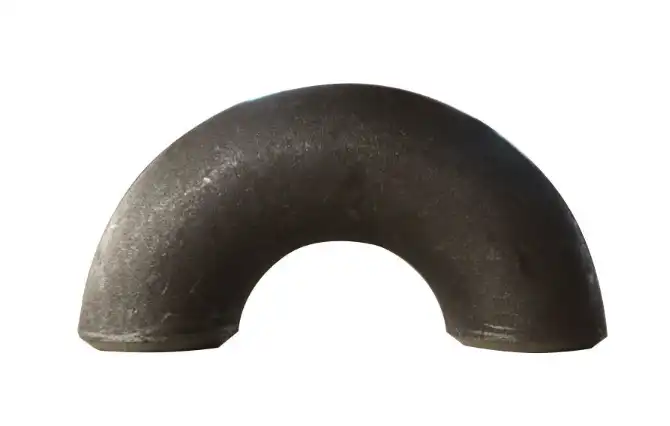
Carbon steel elbows are used to change the direction of fluid flow in a pipeline, often at 45°, 90°, or 180° angles. They seem simple enough, but it is their performance under high pressure, harsh temperatures, and corrosive substances that decides whether a pipe system will hold or fail. A bad elbow may lead to leaks, shutdowns, and expensive repairs. Picking the incorrect source adds to that risk on every unit you purchase.
Industry Demands Are Non-Negotiable
In industries like oil refining, natural gas transportation, and chemical processing, fittings are produced to precise mechanical tolerances. Buyers in these businesses cannot compromise on the wall thickness, material quality, or weld integrity. Your chosen provider should be technically capable – not simply someone who gives you a good price.
Long-Term Cost vs. Upfront Savings
Purchasing based only on pricing might lead to greater life-cycle expenses. The savings from a single bad batch of 90° short radius elbows in a pressure line might be substantially more in remedial costs. Working with a certified and experienced supplier decreases overall project lifecycle risk.
Key Criteria for Evaluating Custom Carbon Steel Elbow Suppliers
Certifications and Standards Compliance
Begin with certificates. A good manufacturer would have certification from an ISO 9001 quality management system and meet international standards such as ANSI, ASME, JIS, DIN, and BS. And in China, providers of pressure-bearing components must also have the Special Equipment Manufacturing License granted by the government – a must-have credential, not a nice-to-have.
Oudi has the People’s Republic of China Special Equipment Manufacturing License and is ISO 9001:2000 Certified. Our QA spans from the receipt of raw material, through complete inspection, and nondestructive fault identification before export.
Product Range and Customization
A full-line provider with a full product catalog — elbows, flanges, tees, reducers, caps, and steel pipes in carbon steel, stainless steel, and alloy steel — signifies production depth. You want a partner that can meet different standards without third-party sources, which just adds time and risk to quality.
Production Capacity and Delivery Reliability
Annual production capacity is an indicator of a carbon steel elbow supplier’s ability to grow with your project. Oudi manufactures 16,000 tons of pipe fittings a year. The scale enables us to provide consistent lead times for bulk orders for our customer base of over 300 customers in over 40 countries.
Comparing Carbon Steel Elbows: Seamless vs. Welded and Material Considerations
Seamless vs. Welded Elbows
Seamless carbon steel elbows are formed through hot pushing or hot bending without a weld seam. This gives them superior pressure resistance and structural uniformity, making them the preferred choice for high-pressure pipelines in oil refining and gas transmission. Welded elbows, by contrast, offer greater flexibility in large diameters and are often more cost-effective when pressure demands are moderate.
Here is a quick comparison to guide your selection:
- Seamless elbows — best for high-pressure, high-temperature environments; higher unit cost; available in short radius (SR) and long radius (LR) versions; common in oil, gas, and petrochemical systems.
- Welded elbows — suitable for lower-pressure applications; more accessible at larger diameters; used widely in construction, shipbuilding, and water treatment systems.
Understanding these differences helps align your specification with operational requirements rather than defaulting to the cheapest available option.
Carbon Steel vs. Stainless Steel
Carbon steel pipe elbows are strong and cost-effective for most industrial applications. Stainless steel elbows provide superior corrosion resistance and are chosen in food-grade, pharmaceutical, or extremely corrosive chemical applications. For most oil, gas, water conservancy, and boiler applications, carbon steel grades such as ASTM A234 WPB are still the usual option.
Common Carbon Steel Grades
The choice of the grade directly influences the mechanical performance. The most common grade for general pressure service is ASTM A234 WPB. Higher grade alloy steel choices such as A234 WP9 or WP11 are used for high-temperature and high-pressure circumstances. Be sure to confirm the quality of the product with your supplier before placing an order to avoid expensive substitutions.”
Best Practices for Finding and Partnering with a Trusted Carbon Steel Elbow Supplier
Where to Research Suppliers
Check out industry directories, trade shows like the Canton Fair or ADIPEC, and B2B platforms. Cross-check any carbon steel elbow supplier shortlist against their certificates, customer references, and export history. Suppliers having a track record in North America, Europe, and the Middle East have generally been able to handle the paperwork and compliance standards demanded by these markets.
Evaluate Technical and After-Sales Support
Transparency is shown by a supplier’s readiness to disclose material test reports (MTRs), dimensional inspection reports, and third-party test findings. Ask about their response time to technical questions and how they handle accusations of nonconforming products. These elements are just as important as lead time.
Build a Relationship, Not Just a Transaction
Long-term supplier relationships ease procurement friction. If a supplier understands your regular specs, order quantities, and delivery windows, they may book capacity in advance. Oudi has established long-term ties throughout Europe, South America, Southeast Asia, and the Middle East by seeing every order as the beginning of a lasting collaboration.
Case Studies: Successful Procurement of Custom Carbon Steel Elbows
Case Study 1: OEM Manufacturer in the Power Sector
A high-volume supply of 90° long radius elbows in ASTM A234 WPB was required for a boiler piping project by one producer of electric power equipment. Previous vendors had issues with dimensional uniformity, so they approached Oudi. 100% process inspection from raw material to completed items, with no non-conformance complaints on three consecutive orders, maintained delivery times.
Case Study 2: International Distributor Optimizing Bulk Orders
A distributor servicing the Middle East market was looking for a single-source supply of carbon steel and alloy steel fittings in a range of pipe diameters. The distributor was able to minimize the number of suppliers, lower the administrative cost, and increase the predictability of deliveries by combining orders with Oudi, whose comprehensive product line covered the full specification list and had a 16,000 ton annual capacity.
Conclusion
Choosing a carbon steel elbow supplier is not a buying choice; it is a risk management decision. Look at the suppliers’ certificates, what kind of products they produce, the diversity of the products, and how transparent and clear their quality paperwork is. Price isn’t the only thing you should consider. Oudi has been providing certified quality since 1998 for demanding industries and markets all around the globe. If you have an upcoming project that needs a lot of carbon steel pipe fittings, we would love to talk.
FAQ
1. What certifications should a carbon steel elbow supplier hold?
Look for ISO 9001 certification, compliance with ASTM/ASME/DIN/JIS/BS standards, and — for suppliers in China — the Special Equipment Manufacturing License. These certifications confirm that the manufacturer operates a documented quality management system and is authorized to produce pressure-bearing components.
2. How can I verify product quality before placing a bulk order?
Request material test reports (MTRs), dimensional inspection records, and nondestructive testing results for sample batches. If feasible, arrange a factory audit or third-party inspection. Reputable suppliers will provide full documentation without hesitation.
3. What are typical lead times for custom carbon steel elbows?
Lead times vary by specification and order volume. Standard sizes in stock grades typically ship within 2 to 4 weeks. Custom specifications — unusual angles, non-standard wall thicknesses, or specialized alloy grades — may require 4 to 8 weeks. Confirm lead times in writing before contract finalization.
4. Does elbow type (SR vs. LR) affect pressure ratings?
Yes. Short radius (SR) elbows have a tighter bend and create slightly higher pressure drop and turbulence. Long radius (LR) elbows are preferred in high-flow systems where pressure loss matters. Always match elbow type to system design specifications.
Get a Quote from Oudi — Trusted Carbon Steel Elbow Supplier Since 1998
Oudi has supplied carbon steel pipe fittings to over 300 customers across 40+ countries since 1998. As a verified carbon steel elbow supplier and manufacturer, we offer complete product lines in carbon, stainless, and alloy steel, backed by ISO 9001 certification and an annual output of 16,000 tons. Contact us at oudi-04@oudiguandao.com for product catalogs, bulk pricing, and project-specific quotes.
References
1. ASME B16.9 — Factory-Made Wrought Buttwelding Fittings, American Society of Mechanical Engineers, 2018.
2. ASTM A234/A234M — Standard Specification for Piping Fittings of Wrought Carbon Steel and Alloy Steel for Moderate and High Temperature Service, ASTM International, 2021.
3. Pipe Fitters Handbook, Grinnell Corporation, 2020.
4. ISO 9001:2015 — Quality Management Systems: Requirements, International Organization for Standardization, 2015.
5. Industrial Piping and Equipment Estimating Manual, Gulf Professional Publishing, 2017.
6. Piping and Pipeline Engineering: Design, Construction, Maintenance, Integrity, and Repair, Marcel Dekker, George A. Antaki, 2003.

Need help finding the right solution with our experts. Please contact us.

SINCE 1998 Your Reliable Pipeline Manufacturer



