How to Select Custom carbon steel elbow for OEM Projects?
To pick the correct custom carbon steel elbow for OEM projects, you need to pay close attention to the technical details, the qualities of the material, and the supplier's reputation. Whether they are used in oil refineries or shipbuilding, these important pipe parts must always work well in tough situations. Whether you're in charge of expanding a chemical plant or updating a power station, knowing how to evaluate and find these fittings can have a big effect on the success, timeline, and budget of your project. This detailed guide explains the important things that purchasing managers and engineers think about when they need to choose carbon steel elbows for specific industrial uses.
Understanding Custom Carbon Steel Elbows: Key Concepts and Specifications
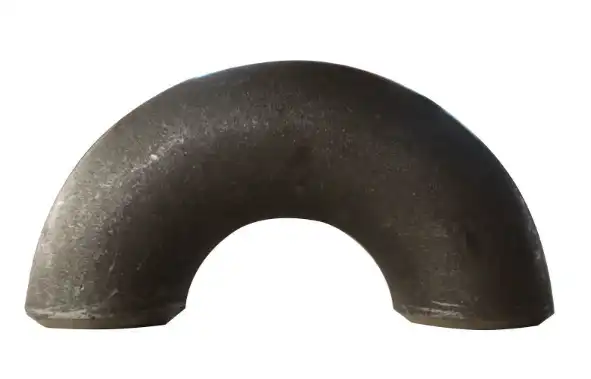
Custom carbon steel elbows serve as directional change points in piping systems, redirecting fluid flow while maintaining pressure integrity and system efficiency. These fittings are manufactured through specialized processes that determine their structural characteristics and suitability for various applications.
Manufacturing Processes That Define Performance
Hot forming is the main way that quality pipe elbows are made, and the end product can be shaped in two different ways. When you hot press carbon steel pipes, you heat them to the right temperature and then bend them mechanically into the right shape. This keeps the material's grain structure and mechanical properties. Instead, heat bending uses localised heating to make smooth changes in direction without adding weak spots. Both ways make smooth elbows that work great in high-pressure situations where dependability can't be compromised.
Carbon steel elbows can be put into three groups based on how they are processed. You can connect butt-welded elbows by welding them together. They come in both welded and smooth designs, so they can be used in a lot of different situations. Socket welding elbows have recessed ends that hold the edges of the pipe together while they are being joined. This makes the connection points stronger. Threaded pipe elbows have precisely cut threads that allow them to be mechanically joined without the use of welding equipment. This is helpful in places where maintenance is needed often.
Critical Specifications and Industry Standards
System compatibility and long-term performance depend on how accurate the dimensions are. There are elbows with angles ranging from 45 degrees for gradual changes in direction to 90 degrees for straight lines. There are also differences between these parts based on their radius. Short radius elbows have small sizes for situations where room is limited, while long radius versions reduce pressure drop and flow turbulence in high-volume settings. Quality raw materials are used to make the 45-degree short radius elbow, which is widely used in the chemical, construction, paper, cement, and shipbuilding industries because it saves space and works well.
Tolerances in production and material requirements are set by industry norms. ASME B16.9 sets the sizes for worked steel butt-welding fittings that are made in a plant, and ASTM A234 sets the standards for carbon steel and alloy steel pipe fittings that are used at both low and high temperatures. The ASTM A105 carbon steel elbow is a great example of these standards because it is very resistant to corrosion and normal wear and tear. For high-pressure uses with steam, gas, and oil, threaded models rated to 2000LB can handle it. They have threaded ends on both sides, which makes installation easy through threaded connections.
Critical Factors to Evaluate When Selecting Custom Carbon Steel Elbows
Material properties form the foundation of elbow performance in demanding industrial environments. Evaluating these characteristics against your specific application requirements prevents costly failures and ensures operational continuity.
Material Composition and Performance Trade-offs
Carbon steel is the best material for many Custom carbon steel elbow industrial piping systems because it is strong and doesn't cost a lot. The tensile strength of the material is usually between 400 and 500 MPa, which is strong enough to handle both internal and external loads. But carbon steel is still not as resistant to corrosion as stainless steel, so it needs protective coatings or cathodic protection when it's in an environment that is likely to rust.
There are a few things that you give up when you choose between carbon steel and stainless steel. While stainless steel elbows work well in corrosive environments and keep their shape without any coatings, they come at high prices that may not work with large-scale project budgets. Carbon steel elbows are the most cost-effective choice for uses where rust protection is good enough thanks to good system design and upkeep. Many installations in the oil, power, papermaking, chemical, airline, and boiler heat exchanger industries depend on carbon steel parts, which last for decades if they are properly chosen and kept.
Quality Certifications and Inspection Requirements
Verification of documents tells you which providers are reputable and which aren't. Getting ISO 9001 approval shows that a company is dedicated to managing quality in a planned way, from getting the raw materials to checking the finished product. The special equipment manufacturing licence from the People's Republic of China is more proof that the company can make pressure-bearing parts that are used in serious situations.
Full checking programs make sure that measurements are correct and materials are intact. Modern detection tools let you carefully check the evenness of wall thickness, surface finish, and internal structure. Ultrasonic examination and radiographic inspection are two examples of nondestructive testing methods that find flaws below the surface that could affect long-term performance. Procurement teams can be sure of the quality of a product before it goes into service if the manufacturer follows full inspection protocols at every stage of production and gives detailed material test reports.
Dimensional Precision and System Compatibility
Tight standards keep assembly problems from happening and make sure that links don't leak. The center-to-face measurements must match the formulas for the pipe plan, and the end preparation requirements must match the welding or mechanical joining methods. When checking the sizes of reducing elbows, which have different widths at each end, extra care must be taken because the wrong sizes can cause stress to build up in certain areas.
When figuring out wall thickness, you have to take into account things like internal pressure, external loads, the chance of corrosion, and manufacturing tolerances. Not specifying enough wall thickness can be dangerous, and having too much thickness can add extra costs and make welding more difficult. Engineering standards give us ways to figure things out, but experienced suppliers can help us make sure that the specifications we use are the best ones for the conditions we'll be using them in.
Comparing Custom Carbon Steel Elbows: Making the Right Choice
Decision frameworks help procurement professionals navigate the array of options available in today's market. Systematic comparison of materials, manufacturing methods, and supplier capabilities leads to selections that balance performance requirements against project constraints.
Carbon Steel Versus Stainless Steel Considerations
The environment plays a big role in choosing which of these materials to use. Facilities that work with slightly acidic fluids or under controlled air conditions can get great results from carbon steel elbows while spending a lot less on them. Stainless steel is more expensive at first, but it is worth it for jobs that involve highly toxic chemicals, marine settings, or strict cleanliness standards.
The total lifetime costs should be included in the economic study, not just the buying price. Carbon steel is cheaper to buy and make, which helps your budget right away, especially on projects that need a lot of fittings. Maintenance costs, such as replacing protective coatings that wear off or need to be renewed, add up over time and may cancel out any savings made in harsh working circumstances. The corrosion resistance of stainless steel reduces the need for maintenance and increases the service life, which could mean that it is more valuable over many decades of use, even though it costs more up front.
Forged Versus Welded Elbow Characteristics
The way something is made has a big effect on its strength and ability to withstand pressure. Forged elbows go through mechanical working that smooths out the grain structure and gets rid of any holes. This makes them stronger and more resistant to wear. These parts work great in high-pressure situations where safety must be a top priority, but they cost more because they are harder to make.
Welded elbows are made of joined pipe pieces or formed parts that are joined together using welding. Modern welding techniques make connections that are reliable and can be used in many situations. They also cost less to make than forged connections. Seamless welded elbows get rid of longitudinal seams that could be weak spots. This makes manufacturing more efficient while also making the structure more reliable. Weld testing and heat treatment done correctly make sure that these parts meet tough service standards while still being cost-effective.
Balancing Cost and Quality Considerations
Instead of just looking for the lowest starting cost, procurement plans should look at the total value. Suppliers with a good reputation spend money on high-quality raw materials, precise manufacturing tools, and thorough inspection protocols that make sure the products always work well. Manufacturers with recognised certifications that serve global markets have shown they can meet international standards. This lowers the risk of buying from unknown sources that offer what seems like good deals.
When you buy Custom carbon steel elbows in bulk, you can get better prices and keep the supply chain running smoothly. Big suppliers, like those with factories that can make 16,000 tonnes of goods a year, can handle big orders without affecting delivery times or quality standards. Building relationships with capable manufacturers gives you access to technical support, the ability to customise, and quick service that goes beyond the cost of each component.
How to Procure Efficiently: Sourcing Custom Carbon Steel Elbows for OEM Projects
Streamlined procurement processes minimize project delays while securing components that meet technical requirements and budget parameters. Strategic supplier identification and relationship management form the foundation of efficient sourcing.
Identifying Qualified Manufacturers and Suppliers
Verification of certification should be the first step in evaluating a seller. The ISO 9001 quality management system approval shows that production control and ongoing growth are done in a planned way. Special equipment manufacturing licenses show that pressure-bearing parts are made in accordance with the rules. Manufacturers who have more than one appropriate license show that they are fully committed to quality across all legal systems.
A technical capability assessment tells you if suppliers can reliably meet your needs. Modern production tools, like precise bending machines, heat treatment ovens, and automatic welding systems, make it possible to consistently make shapes with many parts. Comprehensive inspection facilities with spectral analysers, ultrasonic testing equipment, and pressure testing equipment make sure that the quality is checked thoroughly. Since 1998, companies like Oudi have been making fittings in Mengcun, China. Their 66,600 square meters of production space are filled with high-tech machines that make fittings to American, Japanese, German, and British standards out of carbon steel, stainless steel, and alloy steel.
Understanding Order Quantities and Lead Times
Minimum order amounts vary from supplier to supplier based on how well they can make things and how they run their businesses. Some makers can do small runs of prototypes or orders for maintenance inventory, but others need large orders to make it worth their time to set up production. Making MOQ requirements clear early on in the conversation stops confusion and lets you make realistic plans about buying goods and storage space.
Production lead times depend on how complicated the order is, how much the factory can make, and how busy they are right now. Usually, standard configurations made of common materials ship within four to eight weeks. However, custom specs that need special materials or different production steps can take twelve weeks or longer. Setting realistic deadlines keeps projects from running late and lets them work with other manufacturing or construction tasks.
Requesting Quotations and Negotiating Terms
Full requests for quotes allow for accurate pricing and keep specifications from falling short. Technical models with full size details, material specs (including grade and heat treatment needs), number needs, and expected delivery dates give providers the information they need to set correct prices. Quotes include all the necessary compliance elements by including applicable standards and required certifications.
Instead of just lowering prices, negotiation strategies should try to find solutions that are good for both sides. If you commit to a certain amount of goods, you might be able to get better prices, which is good for both parties because it makes production more efficient and keeps business relationships stable. When compared to rush orders that cause production to stop, flexible shipping dates that work with the supplier's plans can save money. Multi-year contracts with graduated prices help you plan your budget and make sure you have a steady supply of goods.
Case Studies and Practical Tips for OEM Procurement Success
Real-world applications demonstrate how thoughtful selection and supplier partnership deliver project success. Learning from both achievements and common mistakes helps procurement teams make informed decisions.
Successful OEM Project Examples
To get corrosive fluids through a new production unit, a large chemical processing plant expansion needed 850 custom carbon steel elbows in different sizes and angles. The team in charge of buying things asked for ASTM A234 WPB material with coats that would protect it in a chemical setting. Choosing a company that could do thorough inspections and had a history of exporting to clients in the chemistry industry assured the quality of the product and that it met all government regulations. The seller could meet all the requirements without having to coordinate with multiple vendors because they could make everything from stock and planned production. Their annual capacity of 16,000 tonnes also allowed for the large number of orders without any delays. The project was finished on time, and all of the fittings passed inspection by a third party and worked reliably during commissioning and the first few hours of operation.
For a project to replace old steam pipes in a power plant, high-pressure carbon steel elbows rated for 540°C service were needed. For machined parts that would be able to handle the high temperatures and pressures, A105 carbon steel was chosen as the best material. The purchasing team gave more weight to sellers who had the right to make special tools and had experience with uses in the power business. Full material test results and pressure testing certificates gave builders faith in the stability of the parts before they were installed. The technical team from the chosen manufacturer worked together to make sure that the specifications were perfect for the job, avoiding over-specification while still leaving enough room for error. The fix that was made has worked without any problems with the fittings for over five years.
Common Pitfalls to Avoid
Specification mismatches represent a frequent source of procurement failures. Inadequate attention to dimensional details, particularly center-to-face measurements and end preparation requirements, creates assembly difficulties that delay projects and increase field labor costs. Thorough specification review and supplier confirmation prevent these issues. Requesting dimension verification reports before shipping provides additional assurance that components will fit as intended.
Supplier selection based solely on lowest price often proves costly over project lifecycles. Manufacturers cutting corners on raw material quality, inspection protocols, or manufacturing precision may deliver components that pass superficial examination but fail prematurely in service. The expense and operational disruption of premature failure far exceeds initial savings from questionable suppliers. Prioritizing certified manufacturers with proven track records ensures reliability that justifies modest price premiums.
Procurement Best Practices Checklist
Effective procurement follows systematic approaches that address technical, commercial, and logistical considerations. Beginning with thorough specification development ensures clear communication with potential suppliers. Specifications should include material grade, dimensional requirements with tolerances, pressure and temperature ratings, applicable standards, required certifications, inspection requirements, quantity, and delivery timeline.
Supplier evaluation criteria should encompass certification verification, technical capability assessment, production capacity confirmation, quality management system review, and reference checks with previous customers. This comprehensive evaluation identifies suppliers capable of meeting your requirements reliably.
Conclusion
Selecting custom carbon steel elbows for OEM projects requires balancing technical specifications against budget constraints while ensuring supplier reliability. Understanding manufacturing processes, material properties, and industry standards enables informed decisions that prevent costly mistakes. Systematic supplier evaluation focusing on certifications, technical capabilities, and proven export experience identifies partners capable of delivering quality components consistently. Comprehensive specifications, thorough documentation review, and clear contractual terms establish foundations for successful procurement. Learning from industry case studies and avoiding common pitfalls further improves outcomes. By applying these principles, procurement professionals secure fittings that meet project requirements, arrive on schedule, and perform reliably throughout their service lives, contributing to overall project success and operational efficiency.
FAQ
What are typical lead times for custom carbon steel elbows?
Standard configurations in common materials generally ship within four to eight weeks from order confirmation. Custom specifications requiring special material procurement, unique heat treatment, or non-standard dimensions may extend lead times to ten to twelve weeks. Suppliers with substantial inventory and flexible production scheduling can sometimes accommodate expedited orders, though rush fees may apply. Communicating timeline requirements early in discussions allows suppliers to confirm feasibility and prevents project schedule conflicts.
How do I choose between welded and forged elbow designs?
Pressure requirements largely determine this choice. Forged elbows offer superior strength and pressure capacity, making them appropriate for high-pressure applications where safety margins cannot be compromised. Welded elbows provide reliable performance in moderate and many high-pressure services at lower cost. Application criticality also influences the decision—critical services with severe consequences of failure justify forged elbows' additional cost and structural advantages, while less critical applications achieve satisfactory results with welded alternatives.
Are carbon steel elbows suitable for high-temperature environments?
Carbon steel maintains mechanical properties at temperatures up to approximately 425°C, making it suitable for many elevated-temperature applications including steam systems, heat exchangers, and various industrial processes. Specific grade selection and heat treatment influence exact temperature limits. Applications exceeding carbon steel's temperature capacity require alloy steel or stainless steel alternatives with appropriate high-temperature properties.
Partner with Oudi for Your Custom Carbon Steel Elbow Requirements
Selecting a reliable custom carbon steel elbow supplier determines your project's success from specification through decades of operation. Oudi brings over 25 years of specialized manufacturing experience to OEM projects across petroleum, chemical, natural gas, water conservancy, construction, shipbuilding, and power generation industries. Our ISO 9001-certified quality management system and special equipment manufacturing license demonstrate our commitment to producing fittings that meet the most demanding international standards, including ASME, ASTM, JIS, DIN, and BS specifications.
Our 66,600 square meter facility in China's fitting manufacturing hub operates advanced production and inspection equipment that ensures dimensional precision and material integrity across every component. With 16,000 tons of annual capacity and a comprehensive product range covering carbon steel, stainless steel, and alloy steel specifications, we accommodate projects of any scale without compromising delivery schedules. Having served over 300 customers across more than 40 countries throughout Europe, the Americas, Africa, Southeast Asia, and the Middle East, we understand the documentation requirements, quality expectations, and communication needs of global OEM projects.
Contact our technical team at oudi-04@oudiguandao.com to discuss your specific requirements. We provide detailed quotations, material recommendations, and technical support that streamlines your procurement process while ensuring you receive precisely specified components that arrive on schedule and perform reliably throughout their service lives.
References
1. American Society of Mechanical Engineers. (2018). ASME B16.9: Factory-Made Wrought Buttwelding Fittings. New York: ASME Press.
2. ASTM International. (2019). ASTM A234/A234M: Standard Specification for Piping Fittings of Wrought Carbon Steel and Alloy Steel for Moderate and High Temperature Service. West Conshohocken: ASTM International.
3. Becht, C. (2017). Process Piping: The Complete Guide to ASME B31.3 (4th ed.). New York: ASME Press.
4. Nayyar, M. L. (2020). Piping Handbook (8th ed.). New York: McGraw-Hill Education.
5. Singh, R. K. & Kumar, S. (2016). Material Selection and Performance Analysis of Carbon Steel Pipe Fittings in Industrial Applications. Journal of Materials Engineering and Performance, 25(8), 3421-3435.
6. Zahedi, A. R. & Moradi, M. (2019). Comparative Study of Manufacturing Processes for Carbon Steel Elbows: Hot Forming Versus Cold Forming. International Journal of Advanced Manufacturing Technology, 103(5-8), 2847-2863.

Need help finding the right solution with our experts. Please contact us.

SINCE 1998 Your Reliable Pipeline Manufacturer



