What Are Custom Carbon Steel Elbows Used for in Piping?
Custom carbon steel elbows are precisely manufactured pipe components that are used to change the direction of fluid flow in industrial piping systems. These fittings are fabricated to your project specifications, not the conventional off-the-shelf items, and may include different angles, wall thickness, material grades, and dimensional tolerances. Custom carbon steel elbows are engineered to fulfill the operational needs of systems that manage petroleum, chemicals, natural gas, steam, and water under variable pressure and temperature situations. These are designed in a way to provide the best results and are according to ASME, ASTM, API, and DIN standards. These are crucial for industries where dependable and long-lasting pipe infrastructure is needed.
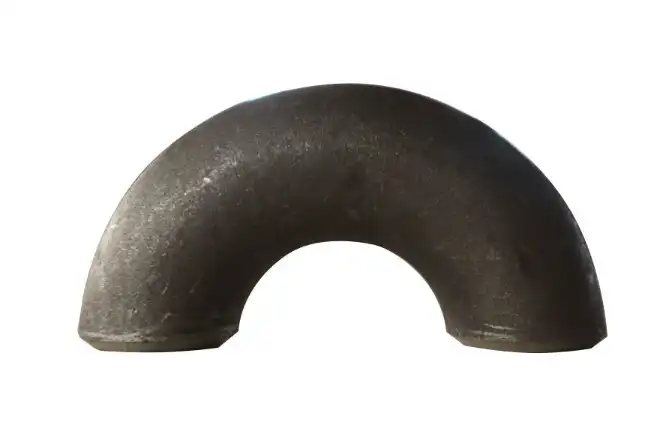
Types and Specifications of Custom Carbon Steel Elbows
Understanding the classification system for carbon steel elbows helps procurement teams specify the correct components for their systems. These fittings are categorized by several critical parameters that directly affect system performance.
Angle Classifications
Common combinations include 45°, 90°, and 180° bends. 45-degree carbon steel elbow A 45-degree elbow is used for a gradual change of direction to help reduce turbulence and erosion in high-velocity systems. These fittings are used in nearly 80% of all pipeline fitting applications owing to their flexibility. The 90-degree Custom carbon steel elbow provides a perpendicular change of flow and is often utilised when space restrictions or system design dictate the use of abrupt curves. The 180-degree return curve provides a complete reversal of flow direction and is often seen in heat exchanger tube bundles and serpentine-type pipes.
Radius Specifications
Long radius (LR) elbows will have a centerline radius of 1.5 X the nominal pipe diameter. A short radius (SR) will have a radius equal to the diameter. The long radius designs are suitable for high-flow applications because of the minimum pressure drop and erosive wear. Short-radius elbows save installation area, but cause larger pressure losses and greater stress concentrations at the bend.
Material Grades and Standards
The most popular specified material grade for carbon steel elbows is ASTM A234 WPB with outstanding weldability and mechanical qualities for moderate temperature service up to 400°C. Alloy grades of A234 WP11 and WP22 are more creep-resistant, making them suitable for higher-temperature applications. ASTM A105 Carbon Steel Threaded and Socket Welded Elbows: They come in pressure ratings up to 2000 LB and are used in high-pressure steam, gas, and oil operations.
The dimensional limits and testing criteria are governed by international standards. ASME B16.9 covers factory-manufactured wrought butt-welding fittings in wall thickness schedules from SCH10 to SCHXXS, with European counterparts being DIN 2605 and DIN 2617 and Japanese standards JIS B2311 and JIS B2312. API 5L is the standard for line pipe elbows for hydrocarbon gearbox systems.
Pressure Ratings and Connection Types
The pressure ratings vary from Class 150 (about 20 bar at ambient temperature) to Class 600 (around 100 bar) and upwards for particular applications. Connection techniques include butt-welding (BW), socket-welding (SW), and threaded setups. Because of their full-penetration weld joints, butt-welded elbows are the most popular in large-diameter, high-pressure installations. Socket-welded types are used on smaller bore pipelines when disassembly may be necessary. Threaded elbows provide maintenance access in low-pressure auxiliary systems.
Lowering elbows combine a change in direction with a change in diameter, avoiding the need for separate reducer fittings and lowering possible leak locations. Dimensional management is critical for these specialised components to preserve flow characteristics and to minimise erosion at the transition zone.
Comparing Custom Carbon Steel Elbows with Alternative Materials
Material selection significantly impacts system performance, lifecycle costs, and operational reliability. Each material category offers distinct advantages depending on service conditions.
Carbon Steel Performance Characteristics
Carbon steel elbows deliver exceptional strength-to-cost ratios, making them economically advantageous for large-scale installations. The material exhibits tensile strengths ranging from 415 to 550 MPa, adequate for most industrial pressure ratings. Carbon content between 0.25% and 0.30% provides suitable hardness while maintaining weldability. The material performs reliably in neutral and mildly corrosive environments, though it requires protective coatings or cathodic protection in aggressive conditions.
Temperature limitations typically restrict carbon steel service to below 400°C without creep concerns. Beyond this threshold, material grain structure changes reduce long-term strength. However, for the majority of water, gas, and petroleum applications at moderate temperatures, carbon steel elbows represent the optimal choice.
Stainless Steel Alternatives
Stainless steel elbows, particularly 304L and 316L grades, excel in corrosive environments where carbon steel would deteriorate rapidly. The chromium content (minimum 18%) forms a passive oxide layer that resists oxidation, pitting, and stress corrosion cracking. These materials handle acidic, alkaline, and chloride-containing fluids effectively, making them indispensable in pharmaceutical, food processing, and marine applications.
The premium cost—typically three to five times higher than carbon steel—limits stainless steel to applications where corrosion resistance justifies the investment. Temperature capability extends to 600°C for austenitic grades, supporting high-temperature process streams. The material's lower thermal conductivity reduces heat loss in steam systems but complicates welding procedures, requiring specialized techniques.
Alloy Steel Considerations
Alloy steel elbows incorporate chromium, molybdenum, and vanadium to enhance specific properties. A335 P11 and P22 grades withstand temperatures approaching 600°C while maintaining creep resistance over decades of service. These materials suit superheated steam lines, reformer effluent piping, and high-temperature hydrocarbon processing.
Alloy steel combines moderate corrosion resistance with superior mechanical properties, positioning it between carbon and stainless steel in both performance and cost. The material requires post-weld heat treatment to relieve residual stresses and restore toughness, adding complexity to field installations.
Custom Versus Standard Configurations
Standard elbows meet general industry dimensions but may not optimize performance for specific applications. Custom carbon steel elbows allow engineers to specify non-standard angles (such as 60 or 120 degrees), unique wall thicknesses for localized stress management, or special end preparations for proprietary connection systems. This flexibility eliminates the need for field modifications that could compromise weld integrity or introduce stress risers.
Customization also accommodates material traceability requirements where clients demand mill test reports linking chemical composition and mechanical properties to specific heat numbers. Such documentation proves essential for nuclear, aerospace, and critical petrochemical applications where material pedigree must be verified throughout the component lifecycle.
Procurement Considerations for Custom Carbon Steel Elbows
Custom fittings need careful planning to reconcile technical criteria, delivery dates, and financial restrictions. Procurement specialists have to consider a number of aspects to get components that will satisfy the project's needs without sacrificing quality or schedule.
Lead Times and Minimum Orders
Typically, custom carbon steel elbows take four to eight weeks from the time of order confirmation to delivery, depending on complexity and quantity. Less specialised designs have reduced delivery times since manufacturers retain stocks of typical sizes in standard materials. Exotic material grades, non-standard dimensions, or special testing may lengthen lead times since tooling may have to be changed or raw materials procured from mills.
The minimum order numbers vary from manufacturer to manufacturer and depend on the intricacy of the product. High-volume companies may purchase conventional configurations in lots as low as 50 pieces. Minimum quantities of 200 to 500 units may be required for fully customised elbows because of setup expenses. This knowledge of the criteria allows procurement teams to aggregate needs from numerous projects to realise economies of scale.
Cost Drivers and Pricing Structures
Material selection is the main cost component, taking around 40% to 60% of the completed elbow pricing. Carbon steel A234 WPB is still the most cost-effective; alloy grades are more expensive, and the cost increases with alloy content. The wall thickness is a direct factor in the amount of material used. Schedule 160 elbows have much more steel than their Schedule 40 counterparts of the same diameter.
Price is affected by manufacturing complexity due to labour and tooling. Standard long-radius 90-degree elbows made by the normal hot forming technique are less expensive than decreasing elbows or non-standard angles needing special dies. There are additional expenditures for surface treatments, such as shot blasting, coating application, or heat treatment; however, this extends service life in corrosive situations.
Certification and testing requirements have a big impact on price. Basic dimensional inspection and hydrostatic testing are common production processes. Radiographic inspection, ultrasonic testing, positive material identification (PMI), and impact testing need specific equipment and qualified staff. These tests add 15% to 30% to the cost, depending on the breadth of the test.
Supplier Evaluation Criteria
Consider credentials beyond price when picking reliable manufacturers. ISO 9001 certification indicates that quality management systems include design control, process validation, and corrective action. Piping Components: PRC Special Equipment Manufacturing License, Pressure Vessel Regulations confirmed.
Production capacity involves handling large orders and consistency. With an annual output of 16,000 tonnes, facilities can manage large projects without affecting delivery dates owing to capacity and labour. CNC-controlled hydraulic presses, induction heating systems, and automated welding stations provide dimensional consistency across manufacturing runs.
In-house testing speeds up quality assurance without laboratories. In-house radiographic inspection, material verification spectroscopy, and mechanical testing equipment enable real-time quality control. Complete inspection and nondestructive testing on every component give manufacturers greater confidence than sampling-based quality solutions.
Exporting to demanding markets requires knowledge of international norms and procedures. The manufacturers, who service clients in Europe, North America, Africa, Southeast Asia, and the Middle East, understand ASME and EN code requirements and can provide certificates, mill test results, and material documentation traceability.
Sourcing Strategies
Direct manufacturer ties give benefits in terms of customisation flexibility, technical support, and price transparency. Established manufacturers have engineering teams capable of examining pipe isometrics, advising on the best-fitting layout, and checking requirements against the appropriate regulations. Their participation in design stages eliminates specification problems that might delay procurement or necessitate expensive rework.
Distributor networks provide ease of modest quantities and quick delivery of typical configurations from regional warehouses. Customisation choices may be restricted, and cost includes distributor profits. Digital procurement platforms are increasingly enabling global sourcing, where buyers may evaluate proposals from different manufacturers, but due diligence about quality processes and certifications is still important.
Qualifying substitute suppliers that fulfil standards reduces supply chain risk with multi-sourcing solutions. This way, project delays are avoided in the case a main supplier is facing capacity problems, quality concerns, or force majeure situations. There are two to three qualified manufacturers in the pipeline, which provides continuity and competitive pricing via vendor competition.
Installation and Maintenance Best Practices
Proper handling and installation procedures directly impact the service life and reliability of carbon steel elbows. Field practices must complement manufacturing quality to realize expected performance.
Handling and Storage
During storage, it is necessary to shield the carbon steel components from moisture to avoid surface corrosion. Elbows should be stored off of ground surfaces on wooden skids or racks in protected, well-ventilated spaces. Protective end caps prevent extraneous items from entering and damaging equipment or contaminating fluid purity.
Material handling practices should be designed to eliminate impact damage that might cause dents, gouges, or stress concentrations. Padded slings or cradles spread loads across lifting eyeballs rather than focusing stresses at specific places. Installation inspection of components will identify shipment damage needing repair prior to welding.
Fitment and Welding Procedures
Correct installation alignment will avoid localised strains that might start fatigue fractures. Welders must verify that gap measurements, bevel angles, and root openings comply with the welding method criteria suitable for the material grade and wall thickness. Tack welds should be placed so as not to interfere with the final weld passes and should be ground smooth if they are in stress concentration locations.
Butt-welded elbows are bevelled to the ASME B16.25 requirements, generally 37.5-degree angles with 1.6 mm root faces. Multi - pass welding methods are used to create weld metal in a controlled manner. The heat is allowed to dissipate between passes to minimise deformation and residual stress. Depending on code requirements, post-weld heat treatment may be needed for carbon steel above 19 mm in thickness or for alloy steel regardless of thickness.
Socket-welded elbows must have a space between the pipe end and socket shoulder to allow for thermal expansion and to avoid cracking at the weld root. The standard procedure is to enter the pipe completely, mark the shoulder location, and pull back slightly to tack weld with a 1.6 mm gap. Fillet welds must be within the prescribed throat dimensions without additional reinforcing, which generates stress risers.
Inspection and Maintenance Protocols
Visual examination after installation confirms weld quality, correct support location, and no mechanical damage. Critical welds are radiographically or ultrasonically tested for internal discontinuities such as porosity, slag inclusions, or lack of fusion that may impair the integrity of the joint. [2] Hydrostatic testing is done at 1.5x design pressure to prove system integrity prior to commissioning.
Inspection intervals are determined by service severity and code requirements for operation. Visual inspection, thickness-ultrasound measurements, and surface crack identification should be performed at least yearly for systems with corrosive fluids, high temperatures, or cyclic loads. Corrosion monitoring is used to identify wall weakening rates and enable predictive replacement before failure.
Proper maintenance of the protective coating enhances the service life of the elbow in corrosive surroundings. Annual evaluation of the state of the coating indicates places needing repair before the corrosion of the substrate begins. Periodic testing of cathodic protection systems on buried or submerged pipe is needed to ensure that protective current levels are sufficient.
Case Study Applications
A Midwest petroleum refinery had a series of elbow failures in corrosive ammonium chloride overhead lines in a crude distillation unit. Transitioning from typical Schedule 40 carbon steel elbows to bespoke Schedule 80 designs with extra corrosion allowance increased service intervals from 18 months to nearly five years. The thicker walls allowed for corrosion losses but yet maintained structural integrity, which reduced maintenance expenses and unscheduled shutdowns.
A retrofitting project on an offshore platform needed 72-inch-diameter elbows for tight riser locations that were too limited for normal long-radius fittings. The extrados section of the short-radius elbows was reinforced with strength even with the narrower bend radii. Stress distributions were verified, and the appropriateness of the design was verified using finite element analysis and prototype pressure testing prior to offshore installation.
Conclusion
Custom carbon steel elbows are critical parts of industrial pipe systems in the petroleum, chemical, power generation, and infrastructure industries. They are essential in situations when regular fittings can’t improve performance or fulfil code requirements, since they can handle technical needs such as special dimensions, material grades, and testing requirements. Knowledge of the kinds, specifications, and purchasing factors allows educated decisions that balance technical performance with the economics of the project. Proper installation and maintenance procedures are followed to ensure these components perform reliably throughout their intended life, ensuring operational continuity and safety.
FAQ
1. What are typical lead times for custom carbon steel elbows?
Standard custom configurations generally require four to six weeks from order confirmation to shipment. More complex specifications involving non-standard materials, unique dimensions, or extensive testing may extend timelines to eight to twelve weeks. Maintaining communication with manufacturers during the quotation phase clarifies production schedules and helps align component delivery with project milestones.
2. Can custom carbon steel elbows handle high-temperature applications?
Carbon steel elbows perform reliably up to approximately 400°C in continuous service. Applications approaching or exceeding this temperature require alloy steel grades such as A234 WP11 or WP22, which maintain strength and resist creep at temperatures reaching 600°C. Material selection should consider not only maximum operating temperature but also thermal cycling frequency and associated fatigue concerns.
3. How can I verify supplier certifications and manufacturing quality?
Reputable manufacturers provide ISO 9001 certificates, special equipment manufacturing licenses, and detailed quality management documentation. Requesting facility audits, reviewing past project references, and examining sample mill test reports verify capability. Manufacturers serving diverse international markets demonstrate familiarity with varied code requirements and documentation standards, indicating established quality systems.
Contact Oudi for Your Custom Carbon Steel Elbow Needs
Oudi has delivered precision-engineered piping components since 1998, serving over 300 clients across 40 countries with proven expertise in custom carbon steel elbow manufacturing. Our ISO 9001-certified facility produces 16,000 tons annually using advanced hot-forming technology and comprehensive quality control from raw material verification through final inspection. We manufacture elbows meeting ASME, ASTM, DIN, and JIS standards in angles from 45 to 180 degrees, pressure classes up to 600 LB and beyond, and wall schedules from SCH10 through SCHXXS. Whether you require a single prototype or bulk production quantities, our engineering team provides technical consultation, dimensional validation, and competitive quotations tailored to your specifications. Contact our specialists at oudi-04@oudiguandao.com to discuss your project requirements and discover why leading organizations in petroleum, chemical processing, power generation, and infrastructure development trust Oudi as their preferred Custom carbon steel elbow supplier.
References
1. American Society of Mechanical Engineers. (2020). ASME B16.9: Factory-Made Wrought Buttwelding Fittings. New York: ASME Press.
2. ASTM International. (2019). ASTM A234/A234M: Standard Specification for Piping Fittings of Wrought Carbon Steel and Alloy Steel for Moderate and High Temperature Service. West Conshohocken: ASTM International.
3. Nayyar, M. L. (2018). Piping Handbook (8th ed.). New York: McGraw-Hill Education.
4. Mohitpour, M., Golshan, H., & Murray, A. (2007). Pipeline Design and Construction: A Practical Approach (3rd ed.). New York: ASME Press.
5. Singh, R. K. (2017). Pipe Stress Engineering. Houston: Gulf Professional Publishing.
6. Ellenberger, J. P. (2016). Piping and Pipeline Calculations Manual: Construction, Design, Fabrication, and Examination. Oxford: Butterworth-Heinemann.

Need help finding the right solution with our experts. Please contact us.

SINCE 1998 Your Reliable Pipeline Manufacturer



