How to select the correct pipe tee for an industrial project?
A lot of technical and operational factors need to be carefully thought through in order to choose the right Industrial Pipe Tee for your project. Choosing parts that are right for your pressure needs, temperature conditions, and fluid properties is important for the success of your pipe system. If you work in a water treatment plant, an oil refinery, or a chemical processing plant, you need to make sure you have the right pipe tee to make sure the flow is evenly distributed and the system is reliable. When making this important purchasing choice that affects both safety and operating efficiency, it's important to know about the qualities of the material, its dimensions, and industry standards.
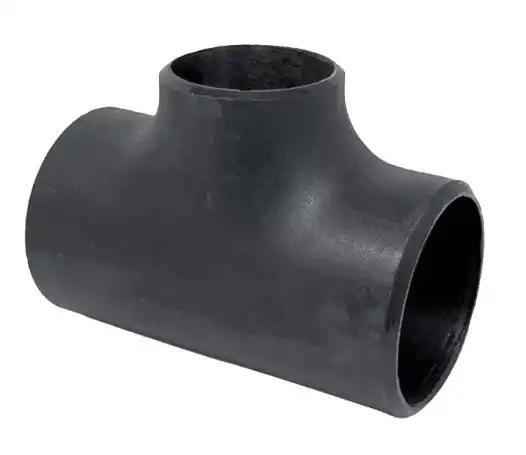
Understanding Industrial Pipe Tees: Basics and Key Specifications
Industrial pipe tees are basic branch link fittings that let flow go in three different directions through complicated pipe networks. These parts make junctions where main pipes can split into secondary branches or where different flows meet to form a single stream. The T-shaped design keeps the structure strong while keeping the hydraulic economy high in a wide range of industry settings.
Primary Functions and Design Principles
Pipe bends make it easier to change the direction of flow in systems that distribute oil, chemicals, and gas. Their design works with both equal and reducing configurations, so engineers can keep flow patterns uniform even when handling pipes of different sizes in the same network. The geometric structure keeps noise and pressure drops to a minimum, which makes sure that fluids move smoothly through branch links.
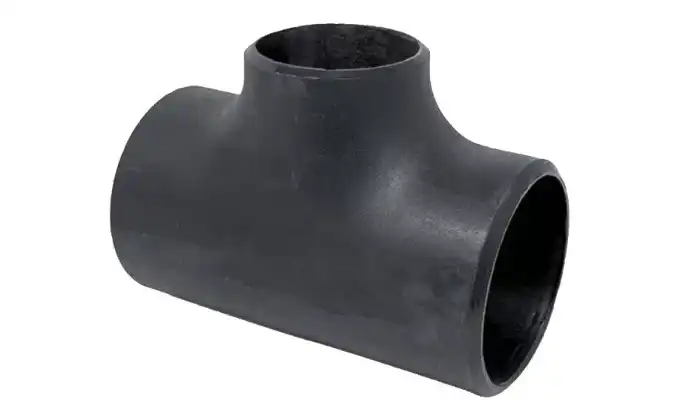
Standard Dimensions and Industry Codes
International standards like ASME B16.9, ISO 3419, and DIN 2605 are used to set the requirements for manufacturing. These numbers spell out the required wall thickness, dimensional limits, and pressure values that make sure systems and makers can work together. The diameters of standard sizes run from 1/2 inch to 48 inches, but unique sizes can be made for specific uses. ASME standards set the rules for the American market, while ISO standards set the rules for compatibility around the world. DIN guidelines are often used as a guide in European projects, especially in chemical and power plants. Knowing these differences helps procurement teams choose the right parts that meet project needs and area compliance standards.
Material Classifications and Properties
Depending on the needs of the application, Industrial Pipe Tee components use different types of steel. For normal temperature and pressure, carbon steel types like A234 WPB offer cost-effective options. Different types of stainless steel, like 304L and 316L, are better at resisting rust in harsh chemical conditions. In power plants and factories, high-temperature jobs are done with alloy steels like A234 WP11 and WP22. The choice of material affects mechanical qualities like tensile strength, yield strength, and resistance to pressure. Most tees made of carbon steel can handle pressures up to 3000 PSI. Tees made of stainless steel, on the other hand, can handle higher pressures and higher temperatures. Configurations made of alloy steel work best in places with temperatures over 1000°F.
Essential Criteria to Consider When Selecting a Pipe Tee
To choose the right pipe tee, you need to carefully consider the conditions of use and the performance standards. In workplace settings, engineers have to look at a lot of things that affect long-term dependability and safety at work.
Operating Pressure and Temperature Analysis
The highest working pressure that is safe to use is set by the pressure number. There are standard pressure classes of 150#, 300#, 600#, 900#, 1500#, and 2500#. Each one matches a certain mix of warmth and pressure. For higher pressure levels, walls need to be thicker and made of better materials, which affects both the cost and the way the work is done. Material choice and thermal expansion estimates are affected by temperature. Stainless steel t-shirts can handle temperatures up to 1500°F, while carbon steel t-shirts can work in temperatures between -20°F and 650°F. In extreme temperature situations, the structure may need a special heat treatment or an unusual metal material to stay strong.
Fluid Compatibility and Corrosion Resistance
When working with acidic media or specialized fluids, chemical compatibility is very important. To keep things from breaking too soon, acidic conditions need stainless steel or special treatments. Materials with better sulfur protection may be needed for hydrocarbon uses to stop hydrogen sulfide corrosion. For chloride protection, water treatment plants often use 316L stainless steel. For high-temperature hydrogen service, oil companies may ask for chrome-moly metals. Understanding the properties of fluids helps choose the right types of materials for long-term success that you can count on.
Dimensional Precision and System Integration
Pipe schedule consistency makes sure that the wall thicknesses of tees and linked pipes are the same. The labels Schedule 40, 80, 160, and XXS set standards for wall thickness that affect pressure values and how to weld. Schedules that don't match up can cause stress and possible failure points. Butt-weld, socket-weld, and threaded setups are all types of end connections. Butt-weld connections are the strongest for high-pressure uses, while socket-weld choices make fitting easier for systems with a smaller diameter. Thread links make field assembly easier, but they can't handle a lot of pressure.
Installation, Welding, and Maintenance Best Practices
Professional fitting methods make sure that joints don't leak and extend the life of Industrial Pipe Tees. Following the right steps can lower the cost of installation while keeping the system's stability throughout its operating lifecycle.
Preparation and Alignment Procedures
Cleaning the ends of the pipes and getting rid of any rust, oil, or dirt that could affect the quality of the weld is part of surface preparation. For the best weld joint shape, the land sides should be 37.5 degrees, and the beveling should be done correctly. Correct alignment stops stress clusters and makes sure that the wall thickness is the same at all connection places. Before welding starts, fit-up processes make sure that the dimensions are correct. Gap measures should stay the same around the whole circle. For most uses, 1/8-inch spacing is fine. Tack welding keeps parts in place and keeps them from warping during the final welding steps.
Welding Techniques and Quality Control
Qualified welding methods make sure that structures are Industrial Pipe Tee and that they meet building codes. In cold places or for thick-wall uses, carbon steel products may need to be heated up first. In serious situations like high-pressure steam systems, post-weld heat treatment gets rid of any remaining stresses. Radiographic, ultrasound, or penetrant testing are all types of non-destructive testing that check the quality of a repair. These checks look for problems inside the machine that might make it less reliable in the long run. Different types of projects need different kinds of documentation. For example, nuclear and industrial projects need a lot of quality records.
Preventive Maintenance and Inspection Protocols
Scheduled regular inspections find possible problems before they become major problems. Visual inspections find problems with the support system, rust on the outside, or mechanical damage. Ultrasonic measures of thickness can track wall loss in corrosive settings, which lets repair plans to be planned ahead of time. Pressure testing makes sure the system works during planned downtime. For hydrostatic testing, water at 1.5 times the design pressure is usually used. For systems that can't hold liquids, compressed air or nitrogen is used for pneumatic testing. These steps make sure that the process stays safe and that it is in line with the rules.
Comparing Pipe Tee Options: Finding the Best Fit for Your Industrial Application
Different pipe tee designs are better for different uses and fitting situations. Engineers can improve efficiency and cut costs in a wide range of workplace settings by understanding these differences.
Equal Tee Versus Reducing Tee Applications
Equal tees keep the diameter the same across all three holes, which makes it easier to figure out flow rates and keep track of supplies. It is possible to get even flow splits with these setups in distribution heads. In branching uses, the symmetrical shape cuts down on pressure losses and turbulence. Using reducing tees, you don't need to buy separate reducers for each size of pipe because they can fit inside the same fitting. The branch link usually has a smaller width than the main run. This lets secondary systems receive controlled flows. This design lowers the cost of installation while keeping the hydraulic efficiency high in networks of complicated pipes.
Manufacturing Process Comparison
Through hot forming methods, seamless manufacturing turns solid pipe pieces into tees. This method makes the grain structure constant and gets rid of any possible weld flaws. This makes seamless tees perfect for high-pressure uses. The production method limits the sizes that can be made, but it gives the products better mechanical qualities. Welded building uses automated welding methods to join pieces that have already been made. With this method, prices stay low while accommodating bigger sizes and custom designs. Modern welding methods make parts that are strong and meet strict quality standards in most commercial settings.
Forged tees are made with heavy casting techniques that make the grain structures thick and smooth. This way of making things makes parts that are very strong and can handle very high temperatures and pressures. Forged construction is usually used for smaller sizes, where the highest level of stability supports the higher cost.
Custom Versus Standard Configuration Benefits
Standard Industrial Pipe Tee sizes cut down on wait times and stocking costs while still meeting most application needs. Manufacturers keep popular sizes and materials in stock so that upkeep and building projects can get what they need quickly. Standardization also makes buying things easier and makes building less complicated. Custom setups are used when an application needs special materials, non-standard sizes, or design features that are built right in. Longer wait times and higher costs are balanced out by better performance and easier installation steps. For big projects with specific technical needs, custom solutions often work out cheaper.
Procurement Strategy: How to Source and Buy Industrial Pipe Tees Efficiently?
Strategic methods for buying make sure that both cost and quality are optimized while also making sure that the supply chain works reliably. Price, delivery, quality, and the supplier's skills are just some of the things that need to be balanced for buying to go well.
Supplier Evaluation and Certification Requirements
An evaluation of manufacturing potential looks at things like technical know-how, production capacity, and quality systems. ISO 9001 approval shows that quality management systems are in place, and special equipment licenses show that a company is following the rules for making pressure vessels. These qualifications make sure that sellers can always deliver goods that meet requirements. Testing and checking skills make sure that providers can do the quality control steps that are needed. In-house labs allow testing and certification to be done quickly, which cuts down on shipping delays and makes sure that material standards are met. Comprehensive quality checks are made possible by high-tech testing tools like spectrometers, hardness testers, and ultrasound inspection systems. Having experience with making products around the world gives you the confidence to handle foreign projects with different technical needs. Suppliers who have a history of exporting know what paperwork is needed, how to ship goods, and the quality standards that are used around the world. This knowledge lowers the risks of buying and makes sure that the project runs smoothly.
Cost Optimization and Volume Purchasing
Using economies of scale, volume buying methods can lower unit costs while still making sure there are enough items in stock. In return for a promise to buy a certain amount, annual supply deals often offer better prices. These deals are good for everyone because they make demand regular and keep prices fixed. Material approval and tracking paperwork are valuable because they make sure that the project specs and government rules are followed. Mill test papers give information about a material's chemistry and mechanical properties that are needed for quality control systems. Full documentation packages help with building plans and commissioning processes. Coordinating delivery schedules helps suppliers make sure their products meet the needs of the project, which cuts down on storing and stocking costs. Just-in-time delivery cuts down on the need for working capital while making sure that supplies get to the job site when they are needed. Clear communication and flexible supplier skills are needed for cooperation to work well.
Conclusion
To choose the best Industrial Pipe Tee, you need to carefully consider the working conditions, the materials you need, and the supplier's skills. Engineers have to find a mix between technical requirements and cost, all while making sure that industry norms are followed. Picking the right materials, making sure the measurements are correct, and getting quality certification all have a direct effect on how reliable and long-lasting a system is. Strategic methods to buying things that focus on evaluating suppliers, buying in bulk, and coordinating deliveries cut down on project costs and speed up the execution process. To be successful, you need to know what the specific needs of the application are and work with experienced makers who have a history of providing high-quality industrial fittings that work in harsh conditions.
FAQ
What are the standard sizes available for industrial pipe tees?
Following the dimensions set by ASME B16.9, typical pipe tee sizes run from 1/2 inch to 48 inches in diameter. The most common measurements are 1", 2", 3", 4", 6", 8", 12", 16", 20", and 24". Customers can choose from sizes up to 48 inches for certain uses, and custom sizes can also be made to meet specific needs.
How do I determine the correct pressure rating for my application?
Check the ASME B16.5 flange rating tables to see how pressure classes (150#, 300#, 600#, etc.) relate to the highest pressures that can be used at different temperatures. The design pressure should include safety margins above normal operating conditions, which are usually 10–25%, depending on how important the application is.
What material should I choose for corrosive environments?
For most chemical uses, stainless steel grades 316L or 321 are very good at resisting corrosion. Duplex stainless steels are stronger and better at resisting chloride in marine environments. Extremely corrosive conditions may need super austenitic grades or rare alloys like Hastelloy or Inconel. Talk to corrosion engineers to get specific advice on which media will work best.
Can pipe tees be customized for specific project requirements?
Custom pipe tees can be made to fit non-standard sizes, special materials, built-in design features, or special end connections. Manufacturers can modify standard designs for specific pressure ratings, temperature needs, or dimensional constraints. Custom solutions usually have longer lead times and minimum order quantities, but they work best for certain uses.
Partner with Oudi for Superior Industrial Pipe Tee Solutions
Oudi is a reliable Industrial Pipe Tee manufacturer that has been providing high-quality carbon steel, stainless steel, and alloy steel fittings to markets around the world for over 25 years. Our ISO 9001-certified facility produces 16,000 tons of fittings every year using cutting-edge manufacturing equipment and strict quality control systems. With comprehensive ASME, DIN, JIS, and BS standard compliance, we serve over 300 customers in over 40+ countries in the chemical, power generation, water treatment, and petroleum industries, and our experienced engineering team provides technical support and custom solutions that are made to fit your specific project needs. Contact our experts at oudi-04@oudiguandao.com to talk about your Industrial Pipe Tee supplier needs and find out how our competitive pricing, reliable delivery, and high quality can help you make the best decisions about your purchases.
References
1. American Society of Mechanical Engineers. "ASME B16.9 - Factory-Made Wrought Buttwelding Fittings." ASME International Standards, 2018.
2. International Organization for Standardization. "ISO 3419 - Non-alloy and alloy steel butt-welding fittings." ISO Technical Committee, 2019.
3. Smith, R.K. "Industrial Piping Systems Design and Material Selection." McGraw-Hill Professional Engineering, 2020.
4. Chen, L.M. "Corrosion Resistance of Steel Pipe Fittings in Chemical Processing Applications." Journal of Industrial Materials Science, Vol. 45, 2021.
5. Johnson, P.T. "Welding Procedures and Quality Control for High-Pressure Piping Systems." American Welding Society Technical Publication, 2019.
6. Williams, D.R. "Procurement Strategies for Industrial Pipe Fittings: A Comprehensive Guide." Industrial Supply Chain Management Quarterly, 2022.

Need help finding the right solution with our experts. Please contact us.

SINCE 1998 Your Reliable Pipeline Manufacturer



