How to Source Concentric Reducer Carbon Steel from China?
Sourcing Concentric Reducer Carbon Steel from China requires strategic planning, supplier verification, and knowledge of quality control. Chinese manufacturers offer cost-effective solutions meeting ASTM A234 WPB/WPC standards, but successful procurement hinges on understanding technical specifications, certifying supplier credentials, and implementing rigorous inspection protocols. This guide equips procurement professionals with actionable insights to navigate supplier selection, negotiate contracts, and ensure compliance with international standards while minimizing risk in global supply chains.
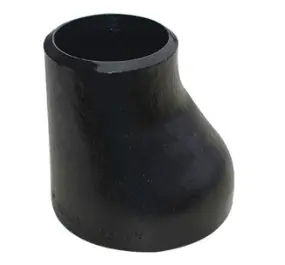
Understanding Concentric Reducer Carbon Steel: Key Concepts and Benefits
What Defines a Concentric Reducer in Industrial Piping?
A Concentric Reducer Carbon Steel connects pipes of differing diameters while maintaining a common centerline, creating a symmetrical cone-shaped transition. Unlike eccentric reducers that offset the axis to prevent air traps in horizontal lines, Concentric Reducer Carbon Steel variants excel in vertical applications where centerline alignment preserves structural integrity. Manufactured to ASTM A234 standards, these fittings ensure smooth fluid transition, reducing turbulence and pressure drops critical in steam lines, gas distribution, and pump discharge systems.
Material Advantages of Carbon Steel Construction
Concentric Reducer Carbon Steel delivers exceptional tensile strength (415-585 MPa for ASTM A234 WPB grade) combined with cost efficiency compared to stainless or alloy alternatives. The material withstands working temperatures from -29°C to 400°C, making it ideal for petrochemical processing, power generation, and water treatment facilities. Its weldability simplifies installation, while heat-treatment options restore ductility after cold forming, addressing potential brittleness in high-stress environments.
Core Applications Across Industrial Sectors
In distillation columns where precise pressure control is needed for vertical flow, petrochemical companies use Concentric Reducer Carbon Steel. Water control projects rely on these fittings for pump station discharge lines, where symmetrical flow stops cavitation damage. In construction, they connect extra steam systems that need to have their diameters changed often. They are used in vertical chilled water risers in the HVAC industry, and boiler manufacturers put them in feedwater systems where gradual diameter changes are needed because of thermal expansion.
Key Challenges and Considerations When Sourcing from China
Quality Variability Among Suppliers
There are both ISO 9001-certified factories with high-tech forging tools and smaller workshops that don't have the right infrastructure for quality. There is still a worry about material substitution; some sellers may sell A105 forged parts that are labelled as A234 welded components, which could weaken the weld. Wall thickness tolerances occasionally deviate from ASME B16.9 standards, particularly in lower-cost products. Chemical makeup verification through mill test results becomes important, as manganese or carbon content differences impact mechanical qualities.
Multi-tier supplier evaluation is the answer. Ask for inspection reports from outside groups like SGS or TÜV, check manufacturing licenses from China's AQSIQ, and make sure you get heat treatment certificates that show post-forming normalisation. Factory audits should examine raw material traceability systems and confirm the presence of spectrometers for incoming steel verification.
Certification Authenticity Verification
In lower-level supply lines, fake ISO certificates and fake pressure test results are common. Real certificates have registration numbers that can be checked by going to the online databases of the organisations that issued them. API monogram users are audited once a year, and claims from suppliers are checked against API's public register. For European exports to be marked with the CE mark, Declaration of Conformity documents and technical files showing compliance with EN 10253 must be included.
Implement a proof protocol: call certification groups directly using information from their official websites, not supplier-provided contacts. Request notarized copies of special equipment manufacturing licenses, particularly China's TS certification for pressure vessel components. For U.S. imports, confirm ASTM compliance through independent lab testing rather than relying solely on supplier certificates.
Balancing Cost Against Quality Requirements
China has lower prices because its supply lines are more integrated. In Hebei Province, for example, most of the country's raw steel mills, forging plants, and machining centers are located within 200-kilometer groups. There is a $15–25 difference in price per piece between high-end manufacturers who test every unit with ultrasound and low-cost suppliers who only inspect samples. Budget constraints often push buyers toward lowest-cost options, risking premature failures in critical applications.
Do a total cost analysis that takes into account the effects of failure. A Concentric Reducer Carbon Steel from a certified source with 16,000-ton annual capacity and full traceability may avoid a $200,000 plant shutdown versus a $35 option missing material certifications. To find out where sellers cut corners on quality, ask for detailed quotes that break down the prices of materials, heat treatment, and inspections. When you commit to buying a lot, you can often get discounts of 15 to 20 percent at reputable manufacturers without lowering the quality.
Step-by-Step Guide to Source Carbon Steel Concentric Reducers from China
Defining Technical Specifications Accurately
First, write down exactly what you need: nominal pipe sizes for both ends (for example, 8" x 6"), schedule numbers that tell you how thick the wall needs to be (Sch 40, Sch 80), and the standards that apply (ASME B16.9 for dimensions, ASTM A234 WPB for material). Choose the end preparation: a standard 37.5° bevel for walls less than 22 mm thick, or compound bevels for walls that are thicker. Include the operating conditions, such as the design pressure, temperature range, and corrosive media exposure, that will affect the choice of material.
Make a technical data sheet with a list of accepted amounts of tolerance. ASME B16.9 allows ±1% variation in center-to-end measurements, but stricter controls may be needed for important uses. Make it clear what kind of surface finish you want: pickled and oiled to resist corrosion, or a black finish for painting right away. Set the level of inspection: 100% ultrasonic testing, random sampling, or a standard visual examination according to MSS-SP-75.
Supplier Research and Qualification
Target manufacturers with a minimum 10-year operational history and annual outputs exceeding 5,000 tons, indicating established production infrastructure. Geographic concentration in Cangzhou (Hebei Province) and Wenzhou (Zhejiang Province) makes it easy to find skilled workers and suppliers of materials. Check a supplier's export history by looking at their customs records. Suppliers that serve the European and North American markets should be familiar with the strict paperwork needs.
Think carefully about your online reputation. Manufacturers who are serious about what they do have detailed websites with pictures of their production tools, not just stock photos. Ask for lists of client references that include company names and project details. Then, use LinkedIn or contacts in your field to do your own independent research. Going to trade shows like the China International Petroleum & Petrochemical Technology and Equipment Exhibition shows that the business is interested.
Preparing and Issuing Request for Quotation
Structure RFQs so that you get complete responses: list each size and standard separately, say which shipping terms are needed (FOB, CIF, or DAP), and include Incoterms 2020. Include when you expect the delivery to happen and how you want it packaged (standard bundles or wooden cases for export). Ask for a breakdown of the payment terms. Usually, you'll need to pay a 30% deposit and the rest before the shipment. However, good suppliers may offer net-30 terms after you've built a relationship with them.
Please include detailed drawings that show change angles and callouts for sizes. Ask for full documentation packages that include material certificates that follow EN 10204 3.1, reports on dimensional inspections, and photos of markings. Specify acceptable producers for raw materials—major Chinese steel mills like Baosteel or Angang ensure uniform quality. Allow 5-7 business days for quotation preparation, as understanding complex specifications requires engineering review.
Sample Evaluation and Testing Protocol
Pay full price for standard production quality instead of enhanced samples when you order sample units that match the specifications of a normal order. Upon receipt, perform measurement verification using calibrated calipers and protractors—check center-to-end lengths, outside diameters at both ends, and wall thickness at multiple places. Verify beveling angles and confirm marking legibility, including size, schedule, and heat number.
Arrange third-party testing at independent labs for critical applications. To make sure the structure is strong, it is tested under hydrostatic pressure at 1.5 times the design pressure. Positive material identification (PMI) using XRF analyzers proves steel composition fits the certificates. Hardness testing per ASTM E18 ensures heat treatment effectiveness—acceptable Brinell hardness for A234 WPB runs 120-220. Weld quality in manufactured reducers can be seen by destructive testing on samples.
Negotiation and Contract Finalization
Leverage competitive quotations, but avoid pure price-based decisions. Talk about payment terms that include inspection gates: give back 30% of the deposit, 40% when production is done and third-party inspection approval is given, and the last 30% when shipping papers are received. Include penalty clauses for delivery delays that happen after the agreed-upon dates. Usually, this means 1% per week up to 10% of the total value.
The terms of the contract should include provisions for Concentric Reducer Carbon Steel, "force majeure," limitations on liability for defective goods, and the length of the warranty (12 months from commissioning or 18 months from shipment is the standard). Define acceptance criteria referencing specific standards—reject rates exceeding 2% for dimensional non-conformance trigger full-batch re-inspection at supplier expense. Protect your intellectual property if you offer custom designs. This will stop the supplier from selling the same products to competitors.
Logistics Management and Import Compliance
Coordinate shipping through freight forwarders experienced in industrial goods. Most sea freight from Tianjin or Shanghai ports to the U.S. takes 35 to 45 days to get there. Gulf Coast vacation spots. Consolidate shipments reaching 5-10 ton minimums to optimize container utilization—20-foot containers accommodate approximately 18 tons. Ask the supplier to set up pre-shipment checks by SGS or Bureau Veritas. Make sure that the inspection papers meet the standards of the letter of credit.
The U.S. For customs clearance, you need the right HS code (7307.23.00 for butt-welding fittings) and business bills that list the place of origin. Section 232 steel tariffs may apply—verify current duty rates through licensed customs brokers. Plan inland transportation while keeping weight limits in mind. Standard flatbed trucks can carry up to 40,000 pounds, but special haulers are needed for oversized fittings. Plan warehouse receiving to accommodate immediate inspection upon arrival.
Top Carbon Steel Concentric Reducer Manufacturers and Suppliers in China
Evaluating Cangzhou Regional Suppliers
Cangzhou City in Hebei Province hosts over 1,200 pipe fitting manufacturers within Mengcun Hui Autonomous County, creating a concentrated industrial cluster. Established facilities, like those that have been open since 1998, show that quality management is always changing. The region benefits from proximity to raw material sources—major steel mills supply ASTM-compliant plate within 100 kilometers—and skilled labor pools trained through decades of specialized production.
Leading suppliers in this area keep their annual capacities between 10,000 and 25,000 tonnes. They use high-tech forming equipment, like hydraulic presses that can hold up to 1,600 tonnes, and CNC machining centers to make sure the dimensions are exact. A lot of them have special licenses from China's State Administration for Market Regulation to make equipment, which is needed to make pressure components. Their clients come from more than 40 countries, which shows that they can adapt to different regulatory needs.
Certification Benchmarks for Supplier Selection
Prioritize producers showing ISO 9001:2015 certificates given by accredited groups like CNAS or UKAS-recognized auditors. The license shows that quality management systems have been written down and include rules for buying things, keeping an eye on production, and taking corrective action. Special equipment licenses, which used to be called pressure vessel licenses, make sure that parts used in Chinese domestic projects follow the rules. This shows that the government is watching over quality.
API 5L or API 6A certifications, while primarily for pipe and wellhead equipment, indicate familiarity with American Petroleum Institute standards applicable to oil and gas applications. Pressure Equipment Directive (PED) certification enables European Union exports, requiring conformity assessment by notified bodies. Request certificates with dates on them. ISO certifications need to be renewed every three years, and expired certificates are a sign that the quality system is getting worse.
Production Capacity and Customization Capabilities
Manufacturers who make more than 16,000 tonnes of goods a year stick to the same production schedules, which keeps lead times from changing too much. Inquire about capacity utilization—facilities working at 60-70% capacity handle rush orders more easily than those at full production. Custom specification capabilities vary: premium providers make reducers from solid forgings for ultra-high-pressure uses (Class 3000+), while standard producers focus on formed and welded construction.
Assess minimum order quantities for Concentric Reducer Carbon Steel—larger makers may require 50-piece minimums per standard, whereas specialized shops accept 10-piece orders at modest price rates. Tooling investments for non-standard dimensions range from $ 500- 2,000, amortized across order quantities. When pattern making and first-article inspections are taken into account, lead times for custom specifications are 6–8 weeks longer than for standard catalogue items, which are 3–4 weeks.
Best Practices for Quality Assurance and Maintenance Post-Procurement
Immediate Receiving Inspection Protocols
Unpack shipments methodically, documenting packaging condition through photographs before opening containers. Verify quantity against packing lists and check for shipping damage—dents, corrosion, or coating damage. Check that the markings can be read. According to MSS-SP-25, the size, schedule, material grade, heat number, and maker information should be paint-stenciled or roll-stamped.
Check the sizes of 10% of the shipment using instruments that have been calibrated and can be traced back to NIST standards. At different points, find the outside diameters, center-to-end lengths, and wall thicknesses. Check the results against the ASME B16.9 tolerance tables, and throw out batches that are too far off. Check the material test reports to make sure that the heat numbers on the fittings match the documentation on the certificate and that the chemical compositions are within the ranges set by ASTM A234.
Corrosion Prevention and Storage Practices
Protective coats should be put on right away if the parts come with little factory finish. Zinc-rich primers protect pickled surfaces for 6 to 12 months when stored outside, and prevent rusting when stored inside, where the humidity is kept below 50%. Stack fittings with wooden spacers between them to stop metal-to-metal contact, which speeds up corrosion through galvanic action. First-in, first-out systems should be used to rotate stock because storing things for too long breaks down protective oils.
In coastal or industrial environments, inspect stored fittings quarterly for corrosion initiation. Light surface rust can be fixed by wire brushing and re-coating, but pitting corrosion that goes deeper than 0.5 mm weakens the pressure integrity. Consider vapor phase corrosion inhibitors (VCI) for long-term storage—VCI-impregnated covers release protective molecules forming molecular barriers on metal surfaces.
Operational Performance Monitoring
Establish baseline wall thickness measurements at installation using ultrasonic testing equipment, creating reference points for future inspections. For high-velocity uses, tracking needs to be done every six months because erosion rates rise in areas where flow velocity changes. Draw a graph of the thickness measurements over time to find patterns that point to faster wear that needs better upstream filtration or better materials.
Check steam systems for external corrosion under insulation (CUI). Insulation panels that can be taken off at reducer locations make this easier to do on a regular basis. Thermographic imaging detects temperature anomalies indicating internal blockages or coating failures. Pressure drop measurements across reducer sections show fouling conditions—gradual increases suggest scale buildup requiring chemical cleaning or mechanical pigging.
Conclusion
Sourcing Concentric Reducer Carbon Steel from China offers significant cost benefits when procurement teams execute strict seller qualification, specification precision, and quality verification procedures. Success requires matching competitive pricing against certification validity, output capacity, and post-sale help capabilities. The strategies described, which include creating detailed technical specifications, inspecting incoming goods, and keeping an eye on operations, give buyers the tools they need to build reliable supply chains. Chinese manufacturers with ISO 9001 certification, special equipment licenses, and proven export track records offer dependable partnerships meeting international standards while maintaining budget efficiency.
FAQ
1. What Are Typical Lead Times for Orders from China?
Standard catalogue sizes ship 20 to 30 days after the deposit is confirmed. This gives time for scheduling production and checking the quality. Custom specifications that need unique tools or materials that aren't commonly used add 45 to 60 days to the lead time. Container loading and paperwork preparation add 5-7 days, with ocean freight taking 25-35 days to U.S. ports. Air freight cuts travel time to 5–7 days but costs 4–5 times as much. It's only used for urgent project needs.
2. Which Certifications Validate Supplier Legitimacy?
ISO 9001:2015 from recognised certifying groups sets the basic rules for quality management. China's Special Equipment Manufacturing License (TS marking) confirms regulatory compliance for pressure components. Material test certificates per EN 10204 3.1 provide independent verification of chemical and mechanical properties. Reports from third parties like SGS, TÜV, or Bureau Veritas confirm the quality of a product without bias, which is especially useful for important tasks.
3. Can Suppliers Accommodate Custom Dimensions?
Reputable manufacturers accommodate non-standard sizes through machining from oversized blanks or custom forming dies. For small changes in size, the minimum order quantity (MOQ) is usually between 10 and 20 pieces. For more complicated shapes, the MOQ may need to be 50 pieces in order to justify investing in tools. Provide detailed drawings with tolerance specifications, and expect 10-15% price premiums over standard catalog items reflecting engineering and setup costs.
Partner with Oudi for Reliable Concentric Reducer Carbon Steel Supply
Navigating the complexities of international sourcing requires a trusted partner with proven expertise and transparent processes. Since 1998, Cangzhou Oudi Pipe Manufacture Co., Ltd. has been making high-quality Concentric Reducer Carbon Steel goods. With a production capacity of 16,000 tonnes per year, we serve over 300 clients in 40+ countries. Our ISO 9001-certified facility and special equipment production licenses ensure every fitting meets ASTM A234, ASME B16.9, and foreign standards through thorough inspection processes from raw material verification to final ultrasonic testing. As an experienced Concentric Reducer Carbon Steel supplier, we offer complete material traceability, competitive pricing, and full documentation support for your procurement needs. You can talk to our team at oudi-04@oudiguandao.com about your needs and get detailed quotes backed by technical knowledge.
References
1. American Society of Mechanical Engineers. (2018). ASME B16.9: Factory-Made Wrought Buttwelding Fittings. New York: ASME Press.
2. ASTM International. (2020). ASTM A234/A234M-20: Standard Specification for Pipe Fittings of Wrought Carbon Steel and Alloy Steel for Moderate and High Temperature Service. West Conshohocken: ASTM International.
3. Metals Handbook Committee. (2017). Piping Systems and Pipeline Engineering: Design, Construction, Maintenance, Integrity, and Repair. Materials Park: ASM International.
4. Smith, R. T., & Chen, L. (2019). Global Sourcing Strategies for Industrial Components: Risk Management in Chinese Supply Chains. London: Industrial Press.
5. Wang, J. (2021). "Quality Control Practices in Chinese Carbon Steel Pipe Fitting Manufacturing." Journal of Materials Processing Technology, 295, 117-135.
6. Zhang, H., & Thompson, P. (2022). Procurement Excellence in Process Industries: Supplier Evaluation Frameworks for Critical Components. Singapore: Springer Nature.

Need help finding the right solution with our experts. Please contact us.

SINCE 1998 Your Reliable Pipeline Manufacturer



