How to Verify Corrosion-resistant carbon steel elbow Quality Standards?
Verifying corrosion-resistant carbon steel elbow quality standards requires a systematic approach that includes examining certification documents, conducting material testing, and evaluating manufacturing processes. Industrial buyers must confirm compliance with international standards such as ASTM, ASME, and ISO while scrutinizing mill test reports, chemical composition analysis, and non-destructive testing results. Engaging with manufacturers who maintain ISO 9001 certification and special equipment manufacturing licenses ensures traceability and accountability throughout the supply chain, protecting your investment in critical piping infrastructure.
Understanding Corrosion-Resistant Carbon Steel Elbows and Their Quality Requirements
Industrial piping systems face relentless challenges from corrosive environments, making the selection of proper fittings critical to operational success. Carbon steel elbows designed for corrosion resistance serve as essential components in complex fluid transport networks across multiple industries.
What Defines a Corrosion-Resistant Carbon Steel Elbow
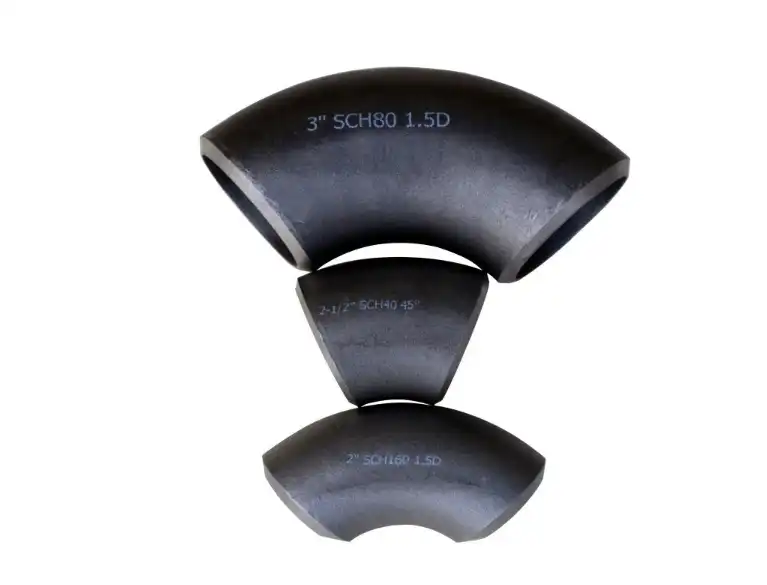
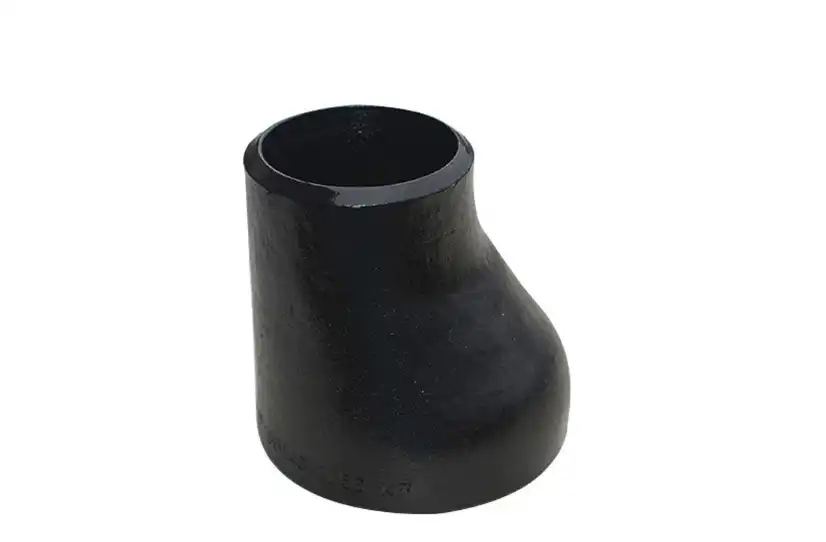
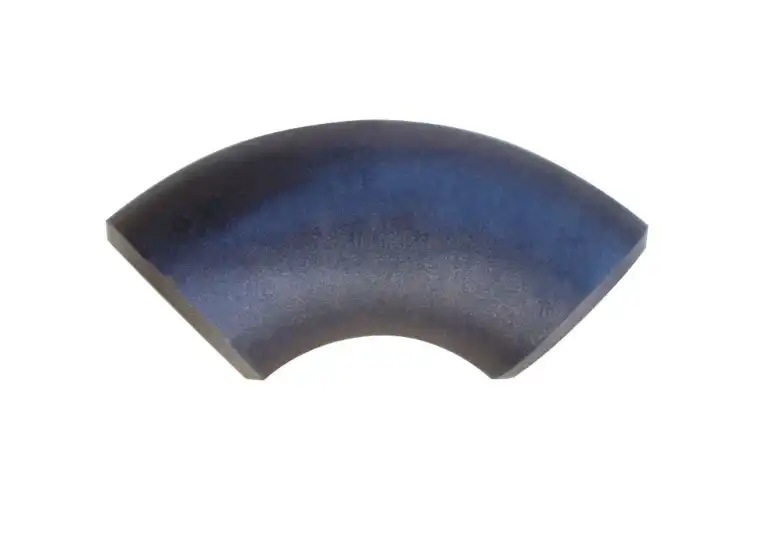
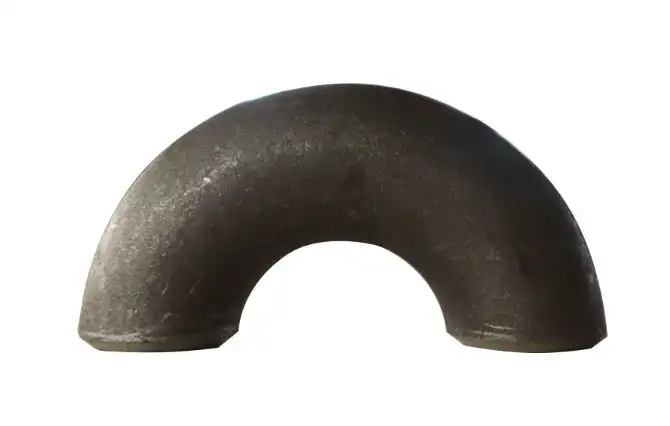
These specialised fittings are carbon steel with improved protection against deterioration due to chemicals, moisture, and caustic substances. Protective coatings, galvanised layers, or particular alloying elements are included in them, unlike regular fittings, which build barriers against corrosive substances. The manufacturing technique makes a difference. Hot forming processes such as hot pressing and hot heating bending produce seamless structures that lack weak spots where corrosion generally starts. Butt welded elbows and socket welding types have their own benefits based on application requirements and pressure ratings.
Industrial Applications Demanding Quality
These components are used in large amounts in oil transformation facilities, natural gas distribution plants, chemical processing plants, and water conservancy projects. Power generating facilities and boiler systems work at tremendous temperatures and pressures where a fitting failure might lead to disastrous results. Shipbuilding and construction operations need fittings that can endure saltwater and environmental stress. The variety of uses highlights the need to see quality assurance as not a formality but as a strategic guarantee for operational continuity.
International Standards Governing Quality
ASTM standards include criteria on chemical composition and mechanical qualities for Corrosion-resistant carbon steel elbows. ASME standards provide dimensional tolerances and pressure ratings that assure interoperability in pipe systems. The producers need to put in place quality management systems according to ISO standards. Grades of material such as ASTM A105 carbon steel provide particular properties for high pressure, and various grades are available for other temperature and chemical conditions. Procurement teams that know these requirements may create clear quality benchmarks before approaching vendors.
Corrosion Resistance Mechanisms
Corrosion protection may be achieved in several ways. Surface coatings serve as a physical barrier to corrosive agents, preventing them from reaching the base metal. Galvanising is the process of applying sacrificial zinc coatings to steel for protection. Natural resistance to certain chemicals may be enhanced by alloying metals in the steel composition. The metallurgical structure is modified by heat treatment procedures to increase the mechanical strength and resistance to environmental damage. These mechanisms function together or separately, and their success relies on correct execution throughout production, which must be checked by quality assurance.
Step-by-Step Guide to Verifying Quality Standards of Carbon Steel Elbows
Procurement professionals need structured approaches to assess supplier capabilities and product quality. Thorough verification reduces the risk of premature failure and ensures compliance with project specifications.
Identifying Applicable Standards and Certifications
First, you have to decide which standards are relevant for your individual application. Each of these standards has technical differences and regional preferences. ANSI, JIS, DIN, and BS. In your project specification, you should clearly specify the needed requirements so that you can explain exactly what you want from possible vendors. Third-party certification agencies give an impartial confirmation that producers achieve these criteria reliably. We are certified with the ISO 9001:2000 quality management system and the special equipment production license of the People’s Republic of China. These are not just paper certifications--these are validated procedures and documented quality controls that safeguard your purchase investment.
Material Testing and Inspection Methods
Verifying quality is more than checking the paperwork. It also means physically inspecting supplies and final goods. The chemical composition of the steel is in accordance with the prescribed grades, and the material has the required corrosion resistance qualities, as confirmed by chemical analysis. Mechanical properties including tensile strength, yield strength, and hardness are tested to confirm the elbow can take the pressures of operation. Salt spray or immersion tests are conducted to evaluate corrosion resistance in long-term exposure to harsh conditions. Non-destructive testing procedures are used to find internal faults or surface fissures that cannot be seen by visual inspection. These techniques include ultrasonic examination, radiographic inspection, and magnetic particle testing. We have the latest detection technology to suit a range of testing needs, carrying out thorough inspections from receipt of raw material to release of final product. This multi-pronged strategy prevents quality problems from ever reaching your facilities.
Reviewing Manufacturer Documentation
The mill test reports are the birth certificates of each batch of Corrosion-resistant carbon steel elbow fittings, recording the chemical composition, mechanical qualities, and heat treatment parameters. Certificates of compliance certify that items fulfil defined standards and needs of clients. These records track completed items back to particular raw material batches and manufacturing runs. What counts as genuine documentation are test findings from certified labs, not self-declarations of manufacturers. If you need independent verification for quality assurance, ask for certifications that reflect the outcomes of third-party inspections. A check of the documentation should also include reviewing the production licence and the quality management system certifications, which prove that the supplier is working under organised quality controls.
Validating Through Client References and Testing
Talking to current customers gives you a feel for what happens in the real world that specs can’t tell you. References speak to the longevity of elbows, the speed at which the provider resolves difficulties, and the consistency of quality over several purchases. You may try out the products yourself, or do a pilot run before ordering big quantities. Small-scale testing helps you to validate dimensional correctness, integrity of coatings, and compatibility with your current pipe systems. These practical validations are in addition to the evaluation of paperwork and testing of materials, providing assurance before substantial purchase commitments are made.
Comparing Quality Aspects: Corrosion-Resistant Carbon Steel Elbows vs Alternatives
Material selection decisions profoundly impact project economics and operational reliability. Understanding comparative quality aspects helps optimize total cost of ownership.
Carbon Steel Versus Stainless and Alloy Steel
Carbon steel elbows with protective treatments are more economical than stainless steel and give enough corrosion resistance for many applications. Stainless steel has better intrinsic corrosion resistance but costs a premium that may not be justified if adequate protection can be achieved with carbon steel. Alloy steel elbows include materials such as chromium and molybdenum to improve characteristics but tend to have a greater material cost. These materials are different in mechanical strength qualities; alloy steels generally have better high-temperature performance. It’s a decision of … matching material capabilities to particular service requirements. It’s not just a matter of better options being more costly materials.
Impact of Protective Coatings and Galvanizing
The service life of the coating in a corrosive environment depends largely on its quality. They have epoxy coatings, polyurethane applications, and specialised chemical-resistant layers suitable for diverse exposure circumstances. In order to offer dependable protection, coating thickness, adhesion strength, and application uniformity have to satisfy specified requirements. Hot-dip galvanising provides metallurgically bonded zinc coatings that give good protection in various industrial settings. Galvanising process temperature and purity of the zinc affect the quality and lifetime of the coating. The quality of the coating of elbows is verified by adhesion tests, thickness measurements, and visual examination of coating faults. In our 66,600 square metre facility, we take great care to supervise the coating processes so that all surfaces on the fitting are uniformly protected, since we know that even slight coating failures may trigger corrosion that puts whole fittings at risk.
Selecting Materials for Demanding Environments
High temperature applications (> 400 °C) demand materials and treatments that preserve mechanical characteristics and corrosion resistance under heat stress. In chemical processing, materials resistant to the particular chemicals used are required, which may be either acid or alkaline. Material grade selection for service circumstances requires assessment of exposure temperatures, chemical compositions, pressure ratings, and estimated service life. ASTM standards have set temperature and pressure limitations for several types of carbon steel. Knowledge of these constraints avoids mistakes in material selection that lead to early failure. Grade-specific testing criteria that confirm compatibility with planned service conditions may be tailored to application needs for quality standards.
Procurement Best Practices for Ensuring Quality in Corrosion-Resistant Carbon Steel Elbows
Strategic procurement practices minimize supply chain risks while securing reliable Corrosion-resistant carbon steel elbow quality. Established since 1998, our experience serving over 300 customers across more than 40 countries has taught us what procurement teams value most.
Selecting Certified and Trusted Suppliers
Supplier certification provides the foundation for quality assurance. ISO 9001 certification indicates structured quality management systems that consistently produce compliant products. Special equipment manufacturing licenses demonstrate regulatory approval and capability verification by authorities. Supplier reputation built through years of reliable performance offers assurance that certifications translate to actual quality. We have established self-management import and export authority, enabling direct communication and streamlined logistics that benefit international customers. Evaluating supplier technical capabilities includes reviewing production equipment specifications, inspection instrumentation, and workforce qualifications. Our advanced production equipment and strong technical force enable us to meet diverse specifications across carbon steel, stainless steel, and alloy steel pipe fittings. Authorized distributor status matters when brand-specific products are specified, ensuring genuine articles rather than counterfeits.
Negotiating Quality-Focused Contracts
Contract language should explicitly define quality requirements, referencing applicable standards and acceptable tolerance ranges. Include inspection rights allowing your team or third-party inspectors to witness testing and examine production processes. Warranty provisions establish supplier accountability for quality defects discovered during installation or initial operation. Minimum order quantities affect pricing but should balance cost savings against inventory risks and capital tie-up. Lead times influence project scheduling, yet rushing production can compromise quality controls. We maintain an annual output capacity of 16,000 tons, allowing us to accommodate substantial orders while maintaining quality standards through systematic production planning. Logistics arrangements must protect product integrity during transportation, specifying proper packaging, handling procedures, and environmental protection during shipping.
Leveraging Digital Tools for Transparency
Modern procurement increasingly relies on digital platforms that facilitate real-time documentation access. Cloud-based systems enable instant sharing of test reports, certificates, and production updates. Digital track-and-trace systems provide visibility into order status from production through delivery. Video conferencing allows remote factory inspections when travel proves impractical, letting procurement teams observe facilities and processes without international trips. Electronic quality documentation with digital signatures and blockchain verification prevents document tampering while enabling rapid authentication. These technologies enhance supply chain transparency, building trust between buyers and suppliers while accelerating communication that traditionally required weeks of correspondence.
Summary and Key Takeaways for Quality Verification of Corrosion-Resistant Carbon Steel Elbows
Industrial investments and operational safety are protected by quality verification. Before talking to suppliers, procurement teams should check ISO 9001 and special equipment production permits. Reviews of mill test reports, certificates of conformity, and third-party testing findings ensure product traceability and standard compliance. Chemical analysis, mechanical property assessment, and non-destructive testing uncover quality flaws before installation. Avoid frequent mistakes by insisting on real paperwork rather than manufacturer self-certifications without verification. Long-term partnerships with dependable suppliers increase quality and provide priority during supply shortages. In global industrial procurement, organised verification techniques improve operational safety, lower total cost of ownership, and boost vendor dependability.
FAQ
1. What certifications should I look for when sourcing corrosion-resistant carbon steel elbows?
ISO 9001 quality management system certification demonstrates that manufacturers maintain documented processes for consistent quality. Special equipment manufacturing licenses issued by national regulatory authorities confirm legal authorization and technical capability. ASME certification for pressure vessel components may be required for specific applications. Third-party inspection certificates from recognized bodies like Lloyd's Register or Bureau Veritas provide independent quality verification.
2. How can I test corrosion resistance before installation?
Salt spray testing exposes samples to accelerated corrosive conditions, simulating years of service in compressed timeframes. Immersion testing in solutions matching your specific chemical environment reveals material compatibility. Coating adhesion tests ensure protective layers remain bonded under operational stresses. Requesting sample fittings for pilot testing allows evaluation under actual operating conditions before committing to large orders.
3. What lead times should I expect from reputable manufacturers?
Standard specifications typically require 4-6 weeks from order confirmation to shipment, accounting for production scheduling, quality testing, and preparation for export. Custom specifications or special materials may extend lead times to 8-12 weeks. Rush orders can sometimes be accommodated but may compromise optimal quality controls or incur premium pricing. Planning procurement timelines with adequate lead time ensures manufacturers can maintain proper quality processes.
Partner with Oudi for Certified Corrosion-Resistant Carbon Steel Elbows
Quality verification becomes straightforward when you work with established corrosion-resistant carbon steel elbow manufacturers committed to transparency and excellence. At Cangzhou Oudi Pipe Manufacture Co., Ltd., we have specialized in producing American, Japanese, German, and British standard pipe fittings since 1998. Our comprehensive product range includes bends, flanges, tees, reducers, and caps manufactured from carbon steel, stainless steel, and alloy steel to meet diverse industrial requirements. We maintain ISO 9001:2000 certification and special equipment manufacturing licenses, implementing strict quality systems from raw material inspection through finished product testing. Our advanced detection equipment fully meets various testing requirements, supporting the full inspection system and nondestructive flaw detection that we apply throughout production.
Serving petroleum, chemical, natural gas, water conservancy, construction, shipbuilding, and electric power sectors, we understand the critical nature of quality in these demanding applications. Our products reach customers across Europe, the Americas, Africa, Southeast Asia, and the Middle East, with our diversified marketing approach ensuring responsive service regardless of location. Contact us at oudi-04@oudiguandao.com to discuss your specific corrosion-resistant carbon steel elbow requirements. Whether you need assistance with specification selection, quality documentation review, or customized solutions for challenging environments, our technical team provides the expertise that transforms procurement challenges into supply chain advantages.
References
1. American Society for Testing and Materials. (2021). ASTM A234 Standard Specification for Piping Fittings of Wrought Carbon Steel and Alloy Steel for Moderate and High Temperature Service. ASTM International.
2. American Society of Mechanical Engineers. (2020). ASME B16.9 Factory-Made Wrought Buttwelding Fittings. ASME Standards Collection.
3. International Organization for Standardization. (2019). ISO 9001:2015 Quality Management Systems — Requirements. ISO Central Secretariat.
4. National Association of Corrosion Engineers. (2022). Corrosion Control in the Oil and Gas Industry: Practices and Standards. NACE International Publications.
5. British Standards Institution. (2018). BS 1965 Specification for Butt-Welding Pipe Fittings for Pressure Purposes: Carbon Steel. BSI Standards.
6. Deutsches Institut für Normung. (2020). DIN 2605 Steel Butt-Welding Pipe Fittings: Technical Delivery Conditions. DIN Standards Committee.

Need help finding the right solution with our experts. Please contact us.

SINCE 1998 Your Reliable Pipeline Manufacturer