Why Choose Cost-effective carbon steel elbow for OEM Projects?
When choosing the appropriate pipe fitting for OEM projects, it’s important to examine the performance of the material, financial considerations, and long-term dependability. Cost-effective Carbon Steel Elbows are a smart alternative for enterprises searching for reliable pipe solutions without sacrificing financial efficiency. The fittings have a combination of strong mechanical qualities and reasonable price and may be used in petroleum, chemical, natural gas, and water conservancy fields. They have deep experience in construction, shipbuilding, and power generation.
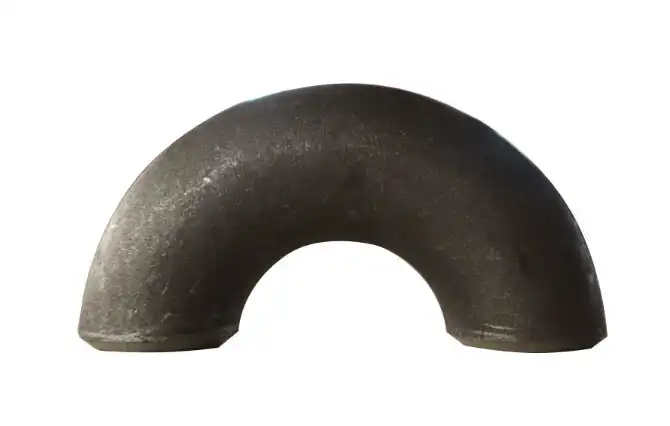
Understanding Cost-effective Carbon Steel Elbows
Material Composition and Industry Standards
Manufactured in accordance with ASTM, ASME, and DIN standards, carbon steel elbows are the basic components of many industrial plumbing systems. The material is iron alloyed with a certain carbon concentration, often from 0.05% to 2.0%, which directly affects strength and weldability. For high-pressure projects, we typically offer grades such as ASTM A105, and for common plumbing projects, we recommend grades such as ASTM A234 WPB since they fulfil strict international specifications but are also affordable.
Common Variants and Configuration Options
The final properties of each elbow depend on the manufacturing process. Methods such as hot pushing and heat-bending methods of hot-forming result in smooth elbows with greater structural integrity. Butt weld elbows are welded to pipe ends. They make leak-free junctions and are appropriate for high-pressure applications. Alternative connection techniques are available for certain project needs in socket weld and threaded versions. Short radius elbows are more convenient for confined space installations, whereas long radius versions reduce fluid turbulence and pressure loss. Reducing elbows are used when a change in dimension is needed to go from one size of pipe to another in one fitting.
Key Performance Parameters
Pressure ratings are crucial criteria for OEM applications. Standard carbon steel elbows may accept pressures from 150LB to 2500LB class ratings, but specialised goods like the ASTM A105 2000LB threaded elbow are meant for harsh situations including steam, gas, and petroleum. The temperature tolerance ranges are normally -29°C to 400°C; however, certain grades may exceed these limitations. Wall thickness calculations are in accordance with schedules 10 to XXS for perfect matching to system specifications. Dimensional precision is critical to assembly efficiency, and good manufacturers can achieve tolerances of ±1% of the given dimension.
How to Choose the Right Carbon Steel Elbow for Your OEM Project
Assessing Project-Specific Operating Conditions
The first step to making an educated choice is to understand the environment in which your Cost-effective carbon steel elbow system will be operating. The thickness of the wall and the grade of material are based on pressure requirements. Metallurgical concerns also include operating temperatures. Materials may lose strength and corrosion resistance when exposed to high heat. The chemical composition of the transmitted medium affects whether corrosion protection can be achieved with conventional carbon steels or if extra surface treatments are required. Ambient variables such as moisture levels and air pollutants affect long-term performance.
Core Selection Metrics
Material grade selection is a trade-off between mechanical characteristics and budget parameters. ASTM A234 WPB grade is for general-purpose applications and is a cost-effective option. A420 WPL6 is for improved low-temperature toughness for cryogenic use. Normalising, quenching, and tempering heat treatment techniques change the grain structure to increase strength and ductility. Installation labour costs and system dependability are affected by dimensional correctness. When the elbow specs are exactly the pipe specs, you have no field adjustments and less chance of leaks at the connecting sites.
Comparing Alternative Materials
Elbows made from stainless steel are more resistant to corrosion but cost more to purchase. Alloy steel versions provide added strength for harsh pressure or temperature situations but need unique welding methods. Carbon steel elbows are a realistic compromise for many OEM applications, especially if corrosion issues are addressed by the use of protective coatings or cathodic protection systems. Where hundreds of fittings are required in big-scale projects, the cost benefit is great.
Supplier Evaluation Criteria
Certification verification means compliance and responsibility. ISO 9001:2000 quality management systems provide proof of consistent production processes. Special equipment manufacturing permits mean that the production of pressure vessel parts is allowed with regulatory permission. Ask for mill test results for each batch, including chemical composition and mechanical qualities. Warranty terms and availability of technical help are further risk mitigators. Delivery dependability is a significant aspect that affects project deadlines. Unit cost is not the only consideration. Supplier capacity and logistical capabilities are critical concerns.
Manufacturing and Quality Assurance of Cost-effective Carbon Steel Elbows
Primary Production Methodologies
Hot forming methods are the preferred method for making Cost-effective carbon steel elbows because they can maintain the integrity of the material while producing complicated designs. Hot push is when sections of pipe are heated to forging temperatures and then mechanically deformed over mandrels to the required bend angle and radius. The approach produces smooth elbows with consistent wall thickness and good mechanical qualities. Heat bending uses localised heat applied to specified pipe sections to provide controlled angle adjustments. Pre-formed segments are connected by automated or manual welding procedures, with welded elbows providing flexibility for non-standard layouts.
Heat Treatment and Mechanical Enhancement
Controlled thermal processing makes it possible to modify the microstructure to attain optimum performance characteristics. Normalisation results in a finer grain structure, more homogeneity and durability following hot working. Stress relieving techniques eliminate residual tensions from forming and welding processes, hence reducing the likelihood of deformation in later service. Some grades are designed for quench and temper sequences that maximise strength for acceptable ductility. These thermal procedures need precise temperature control and time to achieve the specified criteria.
Quality Verification Protocols
Before additional testing, visual examination detects surface flaws, dimensional inconsistencies, and weld quality problems. Ultrasonic inspection is used to find interior discontinuities that are not apparent to the naked eye. Critical applications need permanent records of weld integrity, which radiographic testing offers. Hydrostatic pressure testing is a bench test that certifies structural integrity under controlled circumstances above design pressures. The chemical analysis indicates the material composition conforms to the grade standards. Mechanical tests are used to ensure that tensile strength, yield strength, and elongation qualities are in line with standard criteria.
Protective Surface Treatments
By preparing the surface and applying a coating, the service life in a corrosive environment is extended. Black oxide coatings give a limited degree of corrosion protection for controlled atmospheres. Galvanisation offers sacrificial protection with zinc layers for fairly hostile environments. Epoxy and polyethylene coatings provide barrier protection for buried or submerged systems. Properly prepared surfaces for paint systems provide economical protection against exposure to the atmosphere. The choice of solutions varies according to the environmental problems encountered by each project.
Procurement Strategies for Bulk and Custom OEM Carbon Steel Elbow Orders
Identifying Reliable Manufacturing Partners
Evaluating potential suppliers requires systematic assessment of multiple factors. Manufacturing capacity directly impacts delivery reliability for large orders. At Oudi, our 16,000-ton annual output ensures consistent supply for projects of varying scales. Production equipment sophistication affects quality consistency and specification range. Advanced forming machinery and precision machining centers enable tight tolerance maintenance across production runs. Quality control infrastructure, including testing laboratories and inspection equipment, demonstrates commitment to specification compliance.
Managing Volume Orders Effectively
Bulk purchasing negotiations leverage order size for favorable pricing while ensuring Cost-effective carbon steel elbow quality standards remain uncompromised. Minimum order quantities vary among manufacturers, affecting procurement flexibility for smaller projects. Production lead times require careful coordination with project schedules. Standard products typically ship within 30-45 days, while custom specifications may extend timelines to 60-90 days. Establishing framework agreements with preferred suppliers streamlines repeat ordering and stabilizes pricing across multiple projects.
Customization Capabilities
OEM projects often demand specifications outside standard catalogs. Custom angle elbows accommodate unique routing requirements. Non-standard dimensions match proprietary piping systems. Special material grades address unusual operating conditions. Manufacturers with engineering support capabilities assist in specification development, offering technical consultation to optimize designs. Review supplier experience with similar customization projects to assess capability and reliability.
Logistics and After-Sales Considerations
International shipping coordination becomes crucial when sourcing from overseas manufacturers. Container optimization reduces freight costs for large orders. Documentation accuracy prevents customs delays. Delivery reliability affects project timelines and overall costs. After-sales support, including technical assistance and warranty claim processing, provides risk mitigation. Suppliers with established distribution networks in your region often deliver superior service responsiveness compared to distant manufacturers without local representation.
Why Leading OEMs Prefer Cost-effective Carbon Steel Elbows
Reliability Under Demanding Conditions
Carbon Steel Elbows provide reliable performance in a variety of industrial applications. They are mechanically strong for high-pressure applications in petroleum refining, chemical processing, and natural gas distribution systems. Temperature variations in power generating and district heating networks are due to thermal stability. Structural integrity withstands cyclic loads in shipbuilding and offshore platform installations. Its renowned dependability minimises maintenance needs and extends the life of the system, helping to cut overall ownership costs.
Operational and Inventory Advantages
The standard sizes make it easier for OEM producers to maintain their inventories. If you have stock of standard sizes and angles in carbon steel, you can schedule the assembly on very short notice. The material is generally available; therefore, the supply chain is robust, as opposed to speciality alloys, which have restricted sources of manufacture. Compatibility with traditional welding equipment and methods minimises training and labour expenses. Such pragmatic considerations result in considerable savings during the life cycles of projects.
Environmental and Support Considerations
Today in manufacturing, performance and sustainability go hand in hand. Responsible manufacturers will use energy-efficient techniques and waste minimisation in the manufacturing process. Carbon steel is recyclable, thereby supporting the circular economy since scrap material has value to be reprocessed. Technical help from experienced vendors boosts project success. Engineering advice helps to choose the specifications and advise on installation, avoiding expensive mistakes during the building phase.
At Oudi, we recognise that these criteria influence purchase choices. Since 1998, we have serviced over 300 clients in 40 countries, and have developed experience in OEM needs for oil, chemical, natural gas, and water conservancy sectors. We are committed to quality assurance and have ISO 9001:2000 accreditation and Special Equipment Manufacturing License. With advanced manufacturing equipment and complete testing facilities, every elbow is guaranteed to fulfil worldwide standards like ANSI, JIS, DIN, BS and so on. Our entire variety of products, including bends, flanges, tees and reducers in carbon steel, stainless steel and alloy materials, gives the ease of one-stop procurement.
Conclusion
Cost-effective carbon steel elbows for OEM applications provide great value, balancing performance, dependability and economic efficiency. Material requirements, production processes and selection criteria are understood, leading to better informed purchase choices and optimised project results. The key to effective project execution is strategic supplier alliances with manufacturers who have complete quality processes, technical assistance and constant capacity. Although the industrial landscape is changing, carbon steel elbows continue to be basic building blocks of infrastructure for the world’s petroleum, chemical, construction and power-generating industries.
FAQ
1. What standards do quality carbon steel elbows need to meet?
Reputable carbon steel elbows comply with international standards including ASTM A234 for wrought carbon steel fittings, ASME B16.9 for dimensional specifications, and corresponding pressure-temperature ratings per ASME B16.5. European projects may require DIN or EN standards, while Japanese applications reference JIS specifications. Manufacturers should hold ISO 9001 quality management certification and relevant pressure equipment manufacturing licenses.
2. How do I determine the correct elbow radius for my system?
Long radius elbows, with centerline radius equal to 1.5 times nominal pipe diameter, minimize pressure drop and erosion, making them suitable for most applications. Short radius elbows, with centerline radius equal to nominal diameter, fit constrained spaces but create higher turbulence and pressure loss. Calculate system hydraulic requirements and available installation space to select the appropriate configuration.
3. What wall thickness schedule should I specify?
Wall thickness selection depends on design pressure, temperature, and corrosion allowance. Schedule 40 serves most standard applications, while Schedule 80 and heavier schedules address high-pressure requirements. Consult ASME B31 piping codes specific to your industry for calculation methods, or request engineering assistance from your supplier to verify appropriate specifications.
Partner with Oudi for Your Carbon Steel Elbow Requirements
Choosing the right cost-effective carbon steel elbow supplier strengthens your project's foundation. Oudi brings over two decades of manufacturing excellence to your OEM needs, combining proven quality with competitive pricing. Our 66,600-square-meter facility near Tianjin Port ensures convenient logistics and reliable delivery schedules. With self-managed import-export capabilities and extensive experience serving Europe, the Americas, Africa, Southeast Asia, and the Middle East, we understand international procurement requirements. Contact our team at oudi-04@oudiguandao.com to discuss your specifications and receive technical consultation tailored to your application.
References
1. American Society of Mechanical Engineers. ASME B16.9-2018: Factory-Made Wrought Buttwelding Fittings. New York: ASME Press, 2018.
2. ASTM International. ASTM A234/A234M-19: Standard Specification for Pipe Fittings of Wrought Carbon Steel and Alloy Steel for Moderate and High Temperature Service. West Conshohocken: ASTM International, 2019.
3. Kumar, Rajesh and Singh, Amandeep. "Performance Analysis of Carbon Steel Pipe Fittings in High-Pressure Industrial Applications." Journal of Materials Engineering and Performance, vol. 28, no. 6, 2019, pp. 3421-3435.
4. Zhang, Wei et al. "Manufacturing Process Optimization for Seamless Carbon Steel Elbows Through Hot Forming Technology." International Journal of Advanced Manufacturing Technology, vol. 105, no. 9, 2019, pp. 3847-3862.
5. Thompson, Michael D. Industrial Piping Systems: Design, Construction, and Maintenance. Houston: Gulf Professional Publishing, 2020.
6. European Committee for Standardization. EN 10253-2:2007: Butt-welding Pipe Fittings - Part 2: Non-alloy and Ferritic Alloy Steels with Specific Inspection Requirements. Brussels: CEN, 2007.

Need help finding the right solution with our experts. Please contact us.

SINCE 1998 Your Reliable Pipeline Manufacturer



