ISO Certified Lap Joint Flange CS Manufacturers You Can Trust
Working with ISO approved Lap Joint Flange CS makers isn't just a nice thing to do when you need to get important pipe parts for industrial projects; it's a strategic must. The two-part form of carbon steel lap joint flanges makes them very useful in oil pipelines, chemical plants, and water treatment facilities. They save money and allow for a lot of operating freedom. When a company gets ISO approval, it shows that they follow strict rules for quality control, tracking, and international compliance throughout the whole production process. Since 1998, Oudi has supplied over 300 customers in 40 countries with 16,000 tonnes of carbon steel pipe fittings that meet ANSI, JIS, DIN, and BS standards. Our ISO 9001:2000 certification and special equipment production licenses back this up.
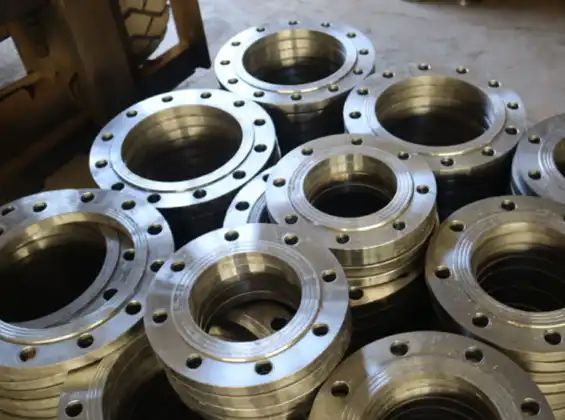
Understanding Lap Joint Flange CS: Specifications, Dimensions, and Material Properties
Lap joint flanges made of carbon steel are a smart engineering solution for pipe systems that need to be taken apart or aligned often. These units are different from rigid welded flanges because they have a metal backing ring and a separate stub end that is butt-welded to the pipe. The backing flange can move freely over the pipe and rest on the raised face of the stub end. This makes a strong seal while still letting the pipe rotate freely. This design solves one of the most important problems in industrial piping: how to line up the bolt holes correctly without putting too much twisting stress on the pipe itself.
Material Composition and Mechanical Properties
Our carbon steel lap joint flanges are made from ASTM A105 forged carbon steel, which was chosen because it is strong, easy to weld, and easy to machine. The minimum yield strength of this material is 36,000 psi, and the tensile strength ranges from 70,000 to 95,000 psi. This means that it can hold enough weight for most commercial uses. The carbon percentage is usually between 0.35% and 0.40%, which gives the metal a good level of toughness without making it harder to join. Even though carbon steel isn't as resistant to rust as stainless metals, it's a good choice for chemically active settings because it's cheap and can be used with corrosion-resistant short ends. When compared to using rare alloys throughout the process, this "duplicate metal strategy" can cut the cost of materials by 40 to 60%.
Dimensional Standards and Pressure Ratings
Our factory makes lap joint flanges that meet ASME B16.5 standards for sizes from ½ inch to 24 inches and ASME B16.47 standards for widths up to 60 inches. Pressure classes range from 150# to 2500#, so they can be used for everything from low-pressure water systems to high-pressure steam lines. The outer diameter of the flange, the diameter of the bolt circle, the number and size of bolt holes, and the bent radius on the inner diameter of the bore are all important measurements that must be met in order for the weld fillet of matched stub ends to fit. Our high-tech inspection tools make sure that the measurements are correct within 0.5mm, which means that they will fit perfectly with your existing pipework whether your project is in line with ASME, DIN, or JIS standards.
Temperature and Environmental Considerations
Carbon steel lap joint flanges work effectively in temperatures ranging from -29°C to 427°C (-20°F to 800°F), which is enough for most uses in chemical processing, power generation, and refining oil. When these limits are crossed, thermal expansion coefficients and material creep start to play a big role. Our technical team can give you thermal cycling test results and advice on the best gasket materials, such as compressed fibre for normal use and spiral-wound graphite for high temperatures. This will make sure that your flange assembly stays together even when process and seasonal temperatures change.
Comparing Lap Joint Flange CS with Other Flange Types and Materials
Understanding the performance trade-offs between different flange configurations empowers procurement teams to optimize both upfront capital expenditure and lifecycle operational costs. Each flange type addresses specific installation challenges and service conditions.
Structural Comparison with Weld Neck and Slip-On Flanges
Weld neck flanges are more structurally sound because their hubs are curved, which moves stress from the pipe to the flange face over time. Weld necks are better for heavy cyclic loading or high-pressure steam applications because they have about ten times the fatigue resistance of Lap Joint Flange CS lap joint configurations. Slip-on flanges are in the middle. They are easier to install than weld necks and last longer than lap joints even when they're used a lot. One big benefit of lap joint assemblies is that they can line up bolt holes without rotating the pipe. This is especially useful for retrofit projects that need to be done in tight spaces with lots of pipes and no way to turn the pipeline. Also, when pipes carry toxic substances, the ability to pair a pricey metal stub end with a cheap carbon steel backing plate saves a lot of money on materials, which adds up over dozens or hundreds of joints in a building.
Material Selection: Carbon Steel versus Stainless and Alloy Options
Even though carbon steel flanges are what we do best, we also make stainless steel (ASTM A182 F304/F316) and alloy steel versions when better materials are needed for things like rust protection or high temperatures. When the backing flange doesn't touch the process medium, carbon steel flanges are a good deal because they cost about 30–40% less than stainless steel parts that do the same job. Stainless steel is better at resisting rust in naval areas, food processing, and pharmacy settings where safety worries are more important than cost. Alloy steel flanges that have molybdenum and chromium in them can handle temperatures above 500°C. This is the strategy that many of our clients use: they use carbon steel backing flanges with corrosion-resistant stub ends to save money without lowering the safety or service life.
How to Choose and Purchase Lap Joint Flange CS from ISO Certified Manufacturers
Selecting a reliable flange supplier involves evaluating capabilities beyond basic product availability. The procurement decision should balance technical compliance, supply chain reliability, and post-delivery support infrastructure.
Certification Verification and Quality Assurance Systems
If a company has ISO 9001:2000 approval, it means that they have written quality control systems that cover every step of the production process, from checking the raw materials to testing the finished product. It is part of Oudi's certification process to make sure that each flange can be traced back to the steel that it came from by using stamped identifiers. We keep records of measurement checks, chemical makeup analysis, and mechanical tests for at least ten years so that they can be used in future audits or failure investigations. In addition to ISO 9001, we have a special equipment manufacturing licence from the People's Republic of China that lets us make pressure tank parts. This shows that we follow all national safety rules. When looking at possible providers, make sure you get pictures of their most recent certifications and ask specific questions about the non-destructive testing they can do. For example, radiography inspection, ultrasonic testing, and magnetic particle inspection tools all show that they are serious about quality.
Supply Chain Stability and Production Capacity
Our 66,600-square-meter building has high-tech forging, machining, and heat treatment equipment that can make 16,000 tonnes of steel every year. This ability makes sure that we can handle big orders without having to wait for long lead times that throw off project plans. Geographical advantages are very important. Being only 120 kilometres from Tianjin Port makes export logistics easier, and being close to national highways speeds up deliveries within China. When buying from outside of your country, find out how long the lead times are usually for both standard and special specs. Our stock collection keeps popular sizes in 150# and 300# pressure classes, which means that normal orders can be shipped within two weeks. However, custom orders that need special heat processes or physical changes usually take 4-6 weeks from the time they are purchased to the time they are delivered.
Customization Capabilities and Technical Support
For industrial jobs, flanges often need to have different cutting patterns, unique face finishes, or materials that aren't standard. Our engineering team works with clients to come up with unique solutions. Before production starts, they provide measurement models and material approval paperwork. This pre-production testing keeps expensive changes from having to be made in the field during installation. We also provide extra services, like applying protection coats in-house to make sure quality control. These can be hot-dip galvanising for rust resistance or epoxy treatments for certain chemical conditions. Technical support doesn't end when the sale is made; our team is still here to help you with installation instructions, torque requirements, and gasket choices. This will help your maintenance staff get the most out of the flange assembly's performance and longevity.
Installation and Maintenance Best Practices for Lap Joint Flange CS
Proper installation techniques directly influence flange assembly integrity, leak prevention, and operational lifespan. Even premium-quality flanges can fail prematurely when installed incorrectly.
Step-by-Step Installation Guidelines
Before installing a Lap Joint Flange CS, all of its parts must be carefully checked. Check the sealing face of the stub end for any scratches, gouges or weld spatter that might make it harder for the gasket to seal. The backing flange hole should be able to move over the pipe without getting stuck. Use the right chemicals to clean all surfaces and get rid of mill scale, grease, and building waste. Put the backing flange on top of the pipe before welding the short end. This is the only way to do it, and you can't go back. Keep the electrode at the right angle and travel speed while butt-welding the stub end to the pipe so that you get full penetration without adding too much support that could get in the way of the flange hole. Slide the backup flange against the shoulder of the short end and turn it to line up the bolt holes with the matching flange. Choose the right gasket material for the job. Compressed non-asbestos fibre is good for water and air services, while spiral-wound gaskets with graphite filler can handle high temperatures and chemical exposure. To make sure the pressure is spread out evenly, put in the bolts and grease the threads and nut faces. Tighten the bolts in a star design, going through several passes at 30%, 60%, and 100% of the goal pressure to make sure the gasket is compressed evenly without warping the flange.
Welding Specifications and Quality Verification
To avoid mistakes, carbon steel stub end welding needs to be carefully qualified as a procedure. When temperatures drop below 5°C, we suggest preheating the pipe to 150–200°C. This lowers the risk of hydrogen-induced breaking. If you're welding by hand, use E7018 low-hydrogen electrodes. For automatic processes, use ER70S-6 filling wire. In important situations, a post-weld heat treatment at 600–650°C for one hour per inch of thickness can get rid of any remaining stresses. Check the weld visually for cracks, holes, or partial fusion after it's done. Radiographic or ultrasonic screening is used to check the quality of pressure-containing services on the inside. Our quality control department can walk your installation contractors through the right testing procedures that meet the needs of the project and the rules.
Corrosion Protection and Routine Maintenance
Corrosion is the main problem that carbon steel has when it is in wet or chemically aggressive places. Protective coatings make things last a lot longer. For outdoor installs, hot-dip galvanising is the best way to protect against rust from the weather, while epoxy or polyurethane coats are better for chemical exposures. Set inspection times based on how bad the service is. Once-a-year checks are enough for mild services, but every three months checks are needed to avoid problems in corrosive environments. During reviews, look for rust spots around bolt holes that mean crevice corrosion. Use measured torque tools to check the tightness of the bolts and look for expansion or degradation in the seals. If you don't replace corroded bolts right away, a catastrophic gasket blowout could happen. Keep detailed maintenance records that show what was found during inspections and what was done to fix the problem. This will create a performance history that can be used to help make future choices about purchases and repairs.
Why Trust ISO Certified Lap Joint Flange CS Manufacturers?
Certification represents more than paperwork—it demonstrates systematic commitment to quality, traceability, and continuous improvement that directly impacts your operational reliability.
The Certification Process and Its Practical Impact
Achieving ISO 9001 certification requires manufacturers to document every process affecting product quality, establish objective acceptance criteria, implement corrective action systems for non-conformances, and submit to regular third-party audits. At Oudi, this system encompasses incoming raw material verification through optical emission spectrometry confirming chemical composition, hardness testing validating proper heat treatment, dimensional inspection using coordinate measuring machines, and pressure testing for welded assemblies. Each production batch receives a unique identifier linking it to inspection records, enabling rapid investigation if field issues arise. This traceability proved invaluable when a European client questioned flange performance in an ammonia service; we retrieved archived test data within hours, confirming our products met specifications and directing investigation toward installation procedures that revealed improper gasket selection as the root cause.
Client Success Stories and Performance Validation
Our experience serving chemical processors across Southeast Asia demonstrates ISO certification's practical value for Lap Joint Flange CS. A Singapore-based petrochemical facility required 450 lap joint flange assemblies for a sulfuric acid alkylation unit expansion. They specified carbon steel backing flanges paired with Hastelloy C276 stub ends to balance corrosion resistance against budget constraints. Our ISO-certified quality system ensured dimensional interchangeability across the entire order, eliminating field fit-up issues during the compressed construction schedule. The project completed two weeks ahead of schedule, partly due to our reliable delivery performance and zero defect rate. Similar success stories span African mining operations using our flanges in slurry transport systems, Middle Eastern refineries incorporating them in crude distillation units, and North American power plants employing them in condensate return lines. These relationships, some spanning over a decade, validate that ISO certification translates into tangible reliability benefits.
Future-Proofing Your Supply Chain
Regulatory landscapes continually evolve, introducing stricter safety requirements, environmental standards, and documentation expectations. Manufacturers maintaining robust quality management systems adapt more readily to these changes. Our ISO certification facilitates compliance with the European Pressure Equipment Directive (PED), ASME code requirements for U.S. projects, and emerging sustainability reporting frameworks. As carbon footprint disclosure becomes standard in industrial procurement, our documented energy management practices and waste reduction initiatives provide the transparency forward-thinking clients increasingly demand. Partnering with certified manufacturers protects your supply chain against disruptions caused by regulatory non-compliance while positioning your organisation advantageously as industry standards tighten.
Conclusion
Selecting ISO certified lap joint flange CS manufacturers fundamentally shapes project outcomes through quality assurance, supply reliability, and technical support access. Carbon steel lap joint flanges deliver exceptional value in applications requiring alignment flexibility and cost optimization, particularly when paired with corrosion-resistant stub ends. At Oudi, our 25-year manufacturing heritage, ISO 9001:2000 certification, 16,000-ton annual capacity, and proven export performance across 40 countries position us as a dependable partner for your critical piping components. Our complete quality traceability, advanced testing capabilities, and commitment to international standards ensure you receive flanges that perform reliably throughout their service life, minimizing maintenance disruptions and maximizing operational efficiency.
FAQ
What distinguishes ISO certified Lap Joint Flange CS products from non-certified alternatives?
ISO certified carbon steel lap joint flanges undergo systematic quality verification at every production stage, from raw material chemical analysis through final dimensional inspection. Certification guarantees documented traceability—each flange can be traced to its source steel heat and associated test data. Non-certified products lack this verification infrastructure, introducing risk of substandard materials, dimensional inconsistencies, or inadequate mechanical properties that manifest as premature failures. The certification also ensures manufacturers maintain calibrated testing equipment and trained personnel, directly impacting measurement accuracy and quality consistency across production batches.
Can you customize Lap Joint Flange CS specifications for unique project requirements?
Absolutely. Our engineering team regularly develops custom flange solutions involving modified bolt patterns for retrofit applications, special facing finishes matching existing equipment, non-standard pressure ratings, or alternative carbon steel grades like ASTM A350 for low-temperature services. Customization begins with technical consultation where we review your specifications, service conditions, and mating equipment details. We then produce dimensional drawings and material certifications for your approval before manufacturing begins, ensuring the final product integrates seamlessly into your piping system without field modifications.
What are typical lead times when sourcing from ISO certified manufacturers?
Lead times depend on specification complexity and order volume. Our inventory maintains common sizes (2-inch through 12-inch in 150# and 300# classes), enabling shipment within 10-15 days. Custom specifications requiring special heat treatments, non-standard drilling patterns, or protective coatings typically require 4-6 weeks from purchase order confirmation to delivery. For large-volume orders exceeding 50 tons, we recommend 6-8 weeks to ensure proper production scheduling without compromising quality standards. Rush orders can sometimes be accommodated through production priority adjustments—contact our team to discuss specific timeline requirements.
Partner with Oudi for Reliable Lap Joint Flange CS Supply
Oudi stands ready to support your next project with ISO certified carbon steel lap joint flanges manufactured to exacting international standards. Our 25-year track record serving oil refineries, chemical processors, and infrastructure developers across 40 countries reflects our commitment to quality, reliability, and customer success. We invite you to experience the Oudi difference—comprehensive material certifications, responsive technical support, and delivery performance you can depend on. Contact our team at oudi-04@oudiguandao.com to request detailed specifications, competitive quotations for your required volumes, or to discuss custom flange solutions tailored to your unique application challenges. As your trusted Lap Joint Flange CS supplier, we're committed to delivering the quality components your operations demand, precisely when your project schedule requires them.
References
1. American Society of Mechanical Engineers. (2020). ASME B16.5: Pipe Flanges and Flanged Fittings: NPS 1/2 through NPS 24 Metric/Inch Standard. New York: ASME Press.
2. Davis, J.R. (2006). Corrosion of Carbon Steels in Industrial Piping Systems. Materials Park, OH: ASM International.
3. International Organization for Standardization. (2015). ISO 9001:2015 Quality Management Systems—Requirements. Geneva: ISO.
4. Becht, C. (2009). Process Piping: The Complete Guide to ASME B31.3. New York: ASME Press.
5. Singh, R. (2017). Applied Welding Engineering: Processes, Codes, and Standards. Oxford: Butterworth-Heinemann.
6. Nayyar, M.L. (2019). Piping Handbook (8th ed.). New York: McGraw-Hill Education.

Need help finding the right solution with our experts. Please contact us.

SINCE 1998 Your Reliable Pipeline Manufacturer



