Premium Chemical industry carbon steel elbow Solutions for Industries
Chemical processing plants need reliable ways to move pipes around when temperatures and pressures are very high. This is where chemical industry carbon steel elbows step up and save the day. These precision-engineered fittings are important directional parts of pipe networks. They make it possible for flow to change smoothly while keeping the structure strong in places like drug factories, chemical plants, and oil refineries. Since 1998, Oudi has been making more than 16,000 tonnes of high-quality carbon steel pipe fittings every year. These fittings make sure that complicated chemical processing systems in more than 40 countries work safely and effectively.
Understanding Chemical Industry Carbon Steel Elbows
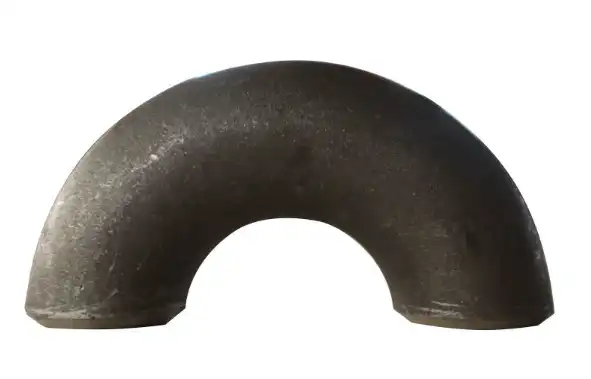
Carbon steel elbows in chemical applications represent far more than simple pipe bends. These components redirect aggressive chemical flows through processing systems while withstanding corrosive environments that would destroy lesser materials.
Core Definitions and Material Specifications
Chemical-grade carbon steel elbows are made of iron that has a carbon percentage of between 0.05% and 2.1% by weight. They also have small amounts of manganese, silicon, sulphur, and phosphorus. In contrast to stainless steel fittings, these ones get their mechanical strength from carbon rather than chromium, which makes them resistant to rust. Our factory makes elbows that meet ASTM A234 WPB standards, which is the standard grade in the industry. We also make elbows that meet A420 WPL6 standards for use in cold environments (down to -50°F) and A860 WPHY standards for high-strength uses.
The chemistry industry needs to follow many foreign rules. Dimensional standards are set by ASME B16.9, and design factors for process pipes are set by ASME B31.3. We make our products to meet American (ANSI), Japanese (JIS), German (DIN), and British (BS) standards. This gives procurement teams options when adding parts to new or existing infrastructure.
Types and Manufacturing Methods
We use hot forming methods to shape carbon steel elbows, which are what really determines how well they work. Before being pushed through dies by a machine to make the bend radius, pipe sections are heated to about 1,800°F and hot pushed. This method makes smooth elbows, has regular wall thickness, and has high pressure ratings. This makes them perfect for chemical plants that work with dangerous materials at pressures above 1,500 PSI.
On our production line, we also make welded bends from steel plates that are bent to the right angle and then joined together using submerged arc welding. These soldered versions are used in places where modest pressures (less than 600 PSI) make the cost savings appealing. Butt-welded (BW) elbows are the most common type used in chemical applications because they make stable links that won't leak through full-penetration welds. There are socket-welded and threaded choices, but they are usually only used for smaller diameter secondary lines and not for major process pipe.
Radius Variations and Dimensional Options
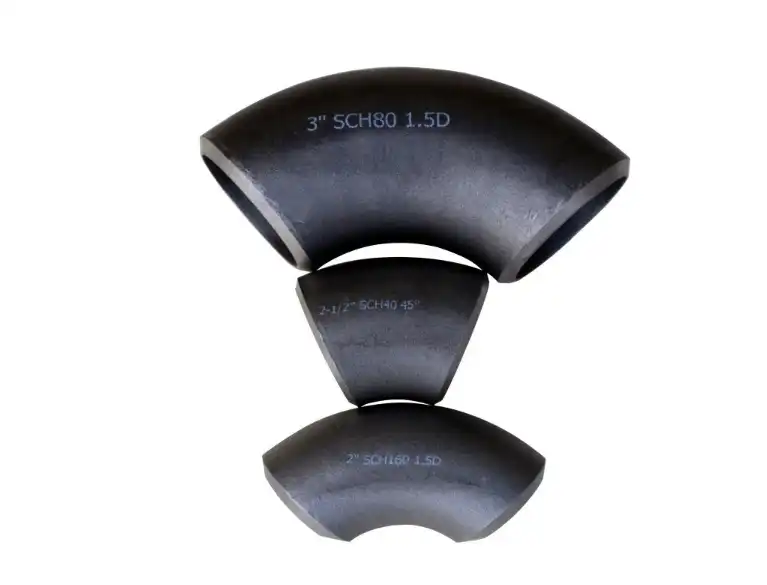
The difference between LR and SR (short radius) elbows for Chemical industry carbon steel elbows has a big effect on the hydraulics of the system. Long radius elbows have a centerline radius that is 1.5 times the nominal pipe diameter. They make gradual changes in direction that keep pressure drops to a minimum and prevent erosion from flows carrying particles. Short radius forms, whose central circles are the same width as the pipe, can fit in places with limited room but create more turbulent flow.
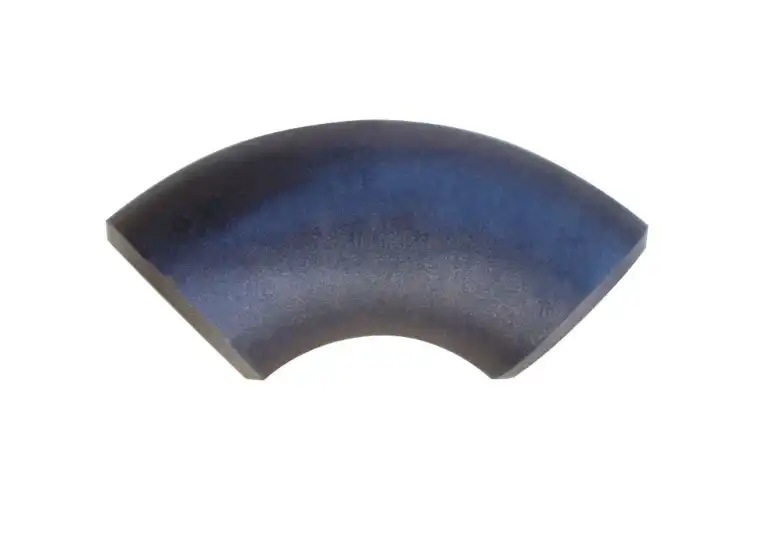
Chemical engineers usually choose LR elbows for major process lines when the extra cost of the material is worth it to keep the flow efficient. Our 45-degree and 90-degree configurations meet different layout needs. 45-degree elbows make directional changes more gradual, which is good for chemical flows that are thick, while 90-degree elbows make perpendicular routing for vertical-to-horizontal transitions that are common in reactor feed systems. For high-pressure uses, we keep sizes in stock that range from 1/2" to 48" nominal diameter and wall thicknesses from Schedule 10 to XXH.
Material Properties Critical to Chemical Service
Pressure numbers show the highest pressure that can be used at certain temperatures. At room temperature, our ASTM A234 WPB elbows can safely handle 3,000 PSI. As the service temperature approaches the upper limit of 800°F, the values decrease as expected. Chemical companies that work with high-temperature streams, like those used to make synthetic glue, need this temperature tolerance data when designing their systems to make sure they don't fail in disastrous ways.
Corrosion resistance is hard for carbon steel because it doesn't have the passive oxide layer that protects stainless alloys. Chemical plants deal with this by using protective coatings (like epoxy or phenolic), cathodic protection systems, or choosing an allowance for corrosion when figuring out the wall thickness. Our scientific team helps procurement specialists figure out the necessary rust limits based on the chemicals that will be exposed. This makes sure that even in relatively acidic settings, products will last for 20 years.
Comparing Carbon Steel Elbows to Alternative Materials and Types
Material selection directly impacts both upfront capital expenditure and lifecycle operating costs across decades of chemical plant operation.
Carbon Steel Versus Stainless and Alloy Alternatives
Carbon steel elbows are stronger for the same price as stainless steel elbows, which is hard to beat. A 90-degree elbow made of 6" Schedule 40 carbon steel costs about 30–40% less than one made of 304 stainless steel. The price difference gets even bigger when you compare it to alloys like Inconel or Hastelloy. This cost savings is very important when you're setting up whole chemical plants that need thousands of fittings.
When working with highly corrosive chemicals like sulphuric acid or chloride-bearing streams, stainless steel (especially 316L) is preferred over carbon steel, which corrodes quickly. Pharmaceutical plants that work with very pure chemicals choose stainless to keep iron from getting into the chemicals. Alloy steel elbows containing chromium-molybdenum (like ASTM A335 P11) are used for high-temperature hydrocarbon processing where carbon steel's creep resistance isn't enough above 850°F.
Seamless Versus Welded Construction
When we hot-form carbon steel elbows, they have a uniform grain structure and no weld seams that could become places where corrosion starts. We make these from solid pipe billets, which gets rid of the longitudinal weld that is present in welded versions. Chemical plants choose seamless construction for critical services like high-pressure reactant feeds or lethal service according to API 570 definitions, or when the cost of radiographic weld inspection makes seamless options more cost-effective.
In low-severity systems, welded elbows work great for cooling water circulation, process condensate return, and fire protection networks. They are safer and cost 15–25% less than seamless equivalents. Our welded elbows are 100% visually inspected and hydrostatically tested to 1.5 times design pressure to make sure they are reliable, even though they are made in a cheap way.
Short Radius Versus Long Radius Performance
SR and LR elbows are different in size, but they also have different flow characteristics that chemical engineers need to think about. Long radius elbows cause about 60% more pressure drop than short radius elbows do at the same flow rates. In chemical plants where process economics depend on minimising pumping energy, this difference in pressure loss builds up across hundreds of elbows throughout the facility.
When it comes to slurry systems, higher turbulence from short radius elbows is good because it keeps solid particles moving around instead of settling down and clogging pipes. We help procurement teams understand these tradeoffs and suggest LR elbows for mainline chemical flows and SR elbows when space is limited, or mixing is needed.
Ensuring Quality: Manufacturing, Defects, and Standards
Quality assurance differentiates reliable chemical plant components from those that cause unplanned shutdowns and safety incidents.
Manufacturing Processes and Quality Control
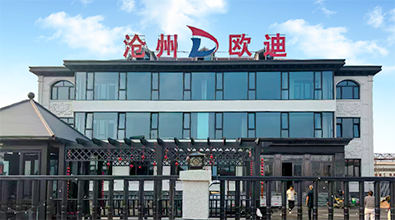
Our factory in Cangzhou uses hot pushing technology, which uses computer-controlled induction heating systems to keep precise temperature profiles during forming. This thermal control stops the metal from either overheating, which leads to grain growth and brittleness, or underheating, which leads to defects in cold working and incomplete forming. We also have strict testing protocols that make sure that every production batch is safe.
When we do hydrostatic testing on Chemical industry carbon steel elbows, we put every elbow under 1.5 times the rated working pressure for at least 10 seconds, as required by ASME B31.3 standards. This destructive test makes sure that the pressure containment is solid before the elbows get to the customer's facilities. We also do ultrasonic thickness testing on several points on each fitting to make sure that the wall thickness meets minimum values and stays uniform within certain tolerances (usually ±12.5% of nominal).
Common Defects and Detection Methods
Material flaws are very dangerous in chemical service. Laminations, which are internal separations in the steel substrate, create possible failure planes that spread under cyclic pressure loading. We find these by using ultrasonic testing, which finds internal discontinuities that can't be seen by looking at the surface. Inclusions of slag or other foreign material also weaken the material's integrity, which can be seen by metallographically examining sample sections from each heat of raw material.
Dimensional errors cause problems with installation and stress concentrations. Out-of-roundness greater than 1% of the diameter stops the fitting from fitting up properly with adjacent pipes, and wrong wall thickness means there isn't enough material to hold design pressures. We use laser-based dimensional inspection systems that measure diameter, wall thickness, and centerline radius with 0.001" accuracy, rejecting any fittings that don't meet specification tolerances.
Certifications and Compliance Protocols
Oudi keeps his ISO 9001:2000 certification, which is an international quality management standard that is often required by chemical plant procurement specifications. This license shows that we take a structured approach to quality, from checking the raw materials that come in to testing the finished product and keeping records of where they came from. We also got the Special Equipment Manufacturing License from the People's Republic of China. This lets us make pressure-bearing parts for controlled chemical processing.
Our material test certificates are in line with EN 10204 3.1 standards and give you independent proof of the chemical and mechanical qualities. Each shipment comes with these certificates, which give plant quality assurance teams the proof they need to take parts into inventory. We keep full tracking by connecting finished elbows back to the original steel mill heat numbers. This lets us find the root cause of any problems that happen in the field.
Procurement Guide for Chemical Industry Carbon Steel Elbow Solutions
Successful sourcing requires understanding both technical specifications and supplier capabilities that ensure on-time delivery of conforming components.
Application-Specific Requirements
Pipe and instrumentation diagrams (P&IDs) and line lists show how the process works, which helps chemical plant engineers choose the right elbows. To choose the right parts, procurement teams need to know the design pressure, design temperature, fluid flow, and pipe plan. Different requirements are needed for a sulphuric acid alkylation unit that works at 250°F and 150 PSI and for a cryogenic ethylene plant that works at -150°F.
Corrosion margin is extra wall thickness that isn't needed for structural reasons. It makes up for the metal that is expected to be lost over the design life. We help buyers figure out the right limits based on corrosion rate data. These are usually 0.0625" (1/16") for slightly corrosive service and 0.125" or more for strong chemicals. Investing in thickness up front keeps you from having to replace things too soon or shutting down without planning to.
Installation methods are affected by how the ends need to be prepared. Bevelled ends (usually 37.5 degrees included angle with 1/16" land) work well for butt welding, while straight ends work well for socket welding or mechanical coupling connections. One thing we can do for production is machine any end configuration to meet customer needs and plant standards.
Lead Times and Supplier Evaluation
Standard carbon steel elbows from our inventory typically ship within 7-14 business days to North American destinations, while custom specifications require 4-8 weeks depending on size and quantity. We maintain strategic stock of common sizes (2" through 12" in Schedule 40 and Schedule 80) that serve immediate plant maintenance and construction needs. Chemical plant turnarounds operate on compressed schedules where delivery delays cascade through the critical path; our inventory management helps procurement teams mitigate this risk.
Evaluating suppliers involves verifying manufacturing capabilities and quality systems. We welcome plant quality representatives to audit our Cangzhou facility, observing manufacturing processes and reviewing quality records. Our advanced production equipment includes CNC-controlled hot forming machines, automated ultrasonic testing stations, and spectroscopic analyzers that validate material chemistry. These capital investments demonstrate our commitment to consistent quality rather than batch-dependent manual processes.
Export experience matters significantly when sourcing internationally. Since 1998, we've served over 300 customers across Europe, the Americas, Africa, Southeast Asia, and the Middle East. This global footprint means we understand export documentation requirements (commercial invoices, packing lists, certificates of origin), arrange international logistics efficiently, and communicate effectively across time zones and language differences.
Cost Structures and Bulk Ordering Advantages
Chemical industry carbon steel elbow pricing depends on raw material costs (which fluctuate with global steel markets), size and wall thickness (heavier elbows consume more material and machining time), and order quantities. Current pricing for commodity grades like A234 WPB ranges from $8-15 per kilogram for smaller sizes up through $12-20 per kilogram for large-bore fittings above 24" diameter, with market conditions creating ±15% quarterly variations.
Bulk ordering generates substantial savings through economies of scale. Orders exceeding 10 tons qualify for volume discounts of 8-12%, while project quantities above 50 tons warrant customized pricing that can reduce per-unit costs by 15-20%. Chemical plant construction projects and major turnarounds should consolidate fitting purchases to capture these savings. We work with EPC contractors to forecast requirements during engineering phases, locking in pricing before steel market volatility affects project budgets.
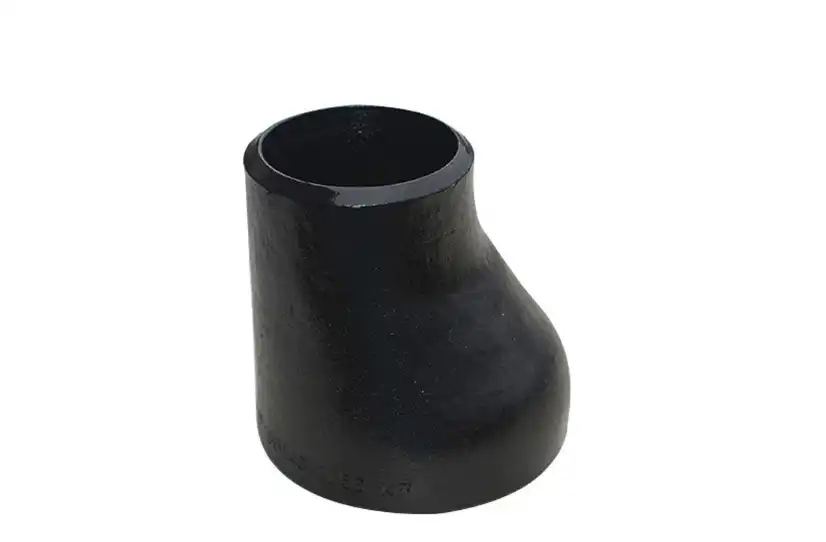
Customization opportunities extend beyond standard catalog items. We manufacture reducing elbows that transition between different pipe sizes within a single fitting, eliminating separate reducer fittings and potential leak points. Custom radius elbows (neither standard SR nor LR) solve unique routing challenges in congested pipe racks. Our engineering team collaborates with plant designers to develop optimized solutions that improve constructability and reduce installed costs.
Why Choose Premium Carbon Steel Elbows for Chemical Industries
Investing in quality components delivers returns throughout the operational life of chemical processing facilities.
Superior Durability and Safety Performance
Premium carbon steel elbows manufactured to exacting standards operate reliably for 20-30 years in properly designed chemical systems. At Oudi, our hot forming process creates a uniform grain structure that resists fatigue cracking under cyclic pressure loads. Chemical plants experience pressure fluctuations during startup, shutdown, and process upsets; inferior elbows develop fatigue cracks at stress concentration points after relatively few cycles.
Enhanced corrosion resistance comes not from the base material but from superior surface finish and dimensional accuracy. Our precision manufacturing produces smooth internal surfaces (typically 125 microinch Ra or better) that minimize corrosion initiation sites and reduce pressure drop from surface roughness. Accurate dimensions ensure proper fit-up during welding, eliminating the excessive grinding and rework that introduces surface defects and residual stresses.
Operational Efficiency and Cost Savings
Reduced maintenance represents the most compelling economic argument for premium components. Chemical plants scheduling turnarounds every 3-5 years avoid the expense and risk of mid-cycle shutdowns when reliable elbows eliminate leak-related failures. A single unplanned shutdown in a petrochemical facility costs $500,000-2,000,000 in lost production, dwarfing the marginal cost difference between premium and commodity-grade fittings.
Minimized downtime during planned maintenance stems from superior dimensional consistency. Our elbows fit the first time properly, reducing field rework that consumes scarce turnaround hours. Welders complete joints faster with fittings that align correctly, and radiographic weld inspection acceptance rates exceed 98% compared to 85-90% typical with inconsistent fittings. These time savings compress turnaround durations, returning production assets to service days earlier.
Innovation Trends and Future Developments
Material science advances continue improving carbon steel performance. Modern steelmaking practices produce cleaner metals with tightly controlled sulfur and phosphorus content, enhancing weldability and toughness. Thermomechanical processing—controlled rolling at specific temperatures—creates finer grain structures that improve low-temperature impact resistance without expensive alloying additions.
Environmentally conscious manufacturing addresses chemical industry sustainability goals. Our facility has implemented energy recovery systems that capture waste heat from hot forming operations, reducing natural gas consumption by 18% compared to conventional processes. Water recycling systems minimize discharge from hydrostatic testing operations. These initiatives align with corporate environmental objectives that increasingly influence supplier selection decisions.
Conclusion
Premium chemical industry carbon steel elbows from Oudi deliver the reliability, compliance, and performance that demanding chemical processing applications require. Our 25-year manufacturing heritage combines with ISO-certified quality systems and 16,000-ton annual capacity to serve global chemical, petroleum, and industrial markets. Whether your project involves new plant construction, capacity expansion, or maintenance turnaround support, our engineering team stands ready to specify optimal solutions that balance technical requirements with project economics. The comprehensive product range spanning American, Japanese, German, and British standards ensures compatibility with any existing infrastructure or engineering specification.
FAQ
What pressure ratings suit typical chemical plant applications?
Chemical plant piping typically operates at Class 150 through Class 600 pressure ratings, corresponding to 285-1,440 PSI at ambient temperatures for carbon steel systems. Most process applications use Class 300 (740 PSI) as a reasonable balance between safety margin and cost. High-pressure reactor feeds and lethal service may require Class 900 or higher ratings. Our elbows accommodate these ranges through appropriate wall thickness selection per ASME B16.9 dimensional standards.
Should I specify seamless or welded elbows for my application?
Seamless elbows serve high-pressure critical services, particularly where radiographic weld inspection adds high cost or regulatory requirements mandate seamless construction. Welded elbows suit moderate-pressure applications (under 600 PSI) where cost efficiency matters and the longitudinal weld doesn't create unacceptable risk. Consult with your process safety management team to classify piping systems and determine appropriate construction methods.
Can carbon steel elbows perform adequately in corrosive chemical environments?
Carbon steel serves successfully in many chemical environments with proper corrosion management. Protective coatings (epoxy, coal tar), corrosion inhibitor injection, and adequate corrosion allowance in wall thickness enable decades of service in moderately corrosive conditions. Highly corrosive chemicals like strong acids or chloride solutions above 140°F typically require stainless or exotic alloy materials. Our technical team can review specific chemical service conditions to recommend appropriate materials.
Partner with Oudi for Reliable Chemical Industry Carbon Steel Elbow Supply
Oudi combines proven manufacturing excellence with responsive technical support to serve chemical processing facilities worldwide. Our Cangzhou production facility houses advanced hot forming equipment and comprehensive testing capabilities, ensuring every carbon steel elbow meets stringent international standards. With ISO 9001 certification, Special Equipment Manufacturing License, and complete traceability documentation, we satisfy the rigorous quality requirements chemical plant procurement teams demand. Our engineering staff collaborates with project teams to optimize specifications, balance performance against budget constraints, and ensure on-time delivery that keeps construction schedules and turnaround critical paths on track. Contact our team at oudi-04@oudiguandao.com to discuss your chemical industry carbon steel elbow requirements with an experienced manufacturer and supplier who understands the technical and commercial realities of global industrial projects. We'll provide detailed quotations, material certifications, and application engineering support that simplifies procurement and enhances plant reliability.
References
1. American Society of Mechanical Engineers. (2020). ASME B16.9: Factory-Made Wrought Buttwelding Fittings. New York: ASME Press.
2. American Society of Mechanical Engineers. (2018). ASME B31.3: Process Piping Design and Construction Standards. New York: ASME Press.
3. ASTM International. (2021). ASTM A234/A234M: Standard Specification for Piping Fittings of Wrought Carbon Steel and Alloy Steel for Moderate and High Temperature Service. West Conshohocken: ASTM International.
4. Mohitpour, M., Golshan, H., & Murray, A. (2007). Pipeline Design and Construction: A Practical Approach (3rd ed.). New York: ASME Press.
5. Nayyar, M. L. (2000). Piping Handbook (7th ed.). New York: McGraw-Hill Professional.
6. Singh, R. (2017). Applied Welding Engineering: Processes, Codes, and Standards (2nd ed.). Oxford: Butterworth-Heinemann.

Need help finding the right solution with our experts. Please contact us.
SINCE 1998 Your Reliable Pipeline Manufacturer