OEM Guide to Choosing the Right ASME B16.9 Pipe Cap
The selection of the correct pipe cap for industrial applications is a key purchasing choice that affects system integrity, operational safety, and long-term performance. The ASME B16.9 Pipe Cap is the ending part of the piping system, which provides a safe seal at the conclusion of the pipe run, maintains the containment of pressure, and stops contamination. These precision-engineered pieces conform to defined dimensions and tolerances set by the American Society of Mechanical Engineers, making them compatible for a wide variety of industrial applications ranging from chemical processing to oil and gas infrastructure. Evaluating vendors and making well-informed purchase selections that meet project objectives requires understanding the technical specifications, material qualities, and quality certificates.
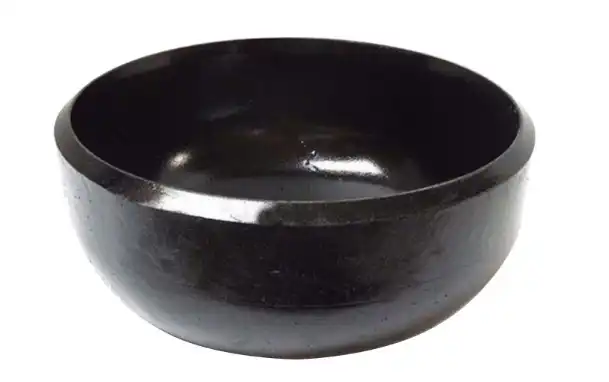
How to Choose the Right ASME B16.9 Pipe Cap for Your Application
Matching pipe cap specifications to application requirements involves evaluating several interconnected technical factors that determine suitability and service life.
Evaluating Pressure and Temperature Ratings
The choice of material and thickness of the wall for ASME B16.9 Pipe Cap is a function of the pressure-temperature relationship. Carbon steel WPB pipe caps have a full pressure rating at 400°F and derating factors at increased temperatures. For services between 650°F and 850°F (343°C and 454°C), you will need to use alloy steel grades such as WP11 or WP22 to maintain mechanical properties under thermal stress. When specifying caps for chemical processing applications, we recommend that you consider the entire service envelope, including upset conditions, thermal cycling frequency, and potential pressure surges, rather than simply base your decision on normal operating parameters. The overall strategy is thorough and does not lead to underspecification and premature failure or safety problems.
Material Compatibility with Process Media
Corrosion resistance is an important selection factor typically ignored at the time of first acquisition. Carbon steels are suitable for operation in dry gases, hydrocarbons, and non-corrosive chemical applications. However, sour gas containing H2S, chloride-bearing fluids, or acidic condensates will require an upgrade to corrosion-resistant alloys. Stainless steel 316L pipe caps provide superior resistance to pitting and crevice corrosion in marine environments, chlorinated water systems, and food processing applications. 316L has molybdenum added, which greatly improves performance in chloride-containing conditions above 304 grades. Our metallurgy expertise can assist you in picking materials appropriate for your unique process chemistry to help minimize early corrosion failures that might endanger system integrity.
Certification Requirements and Quality Documentation
There is a lot of paperwork involved in industrial procurement to prove material qualities and dimensional conformity. Type 3.1 material test reports combining chemical analysis, mechanical testing findings, and heat treatment records are the key to traceability in critical applications. Each shipment of pipe caps is backed by our ISO 9001:2000 certified quality management system with material certificates traceable back to the original mill heat number. In addition to material certifications, holding pressure equipment manufacturing licenses demonstrates regulatory compliance and technical capability. Oudi has been given special equipment manufacturing permits by Chinese regulatory agencies, which validates that our production procedures satisfy high-quality requirements that are recognized globally. This certification system gives procurement professionals the confidence to certify new suppliers or consolidate supply chains.
Dimensional Verification and Tolerance Control
Field fit-up issues are typically caused by a lack of dimensional control in manufacture. The critical inspection points are the out-of-roundness at the open end, the wall thickness uniformity, and the bevel angle preparation. ASME B16.9 provides maximum out-of-roundness tolerances to ensure proper alignment with mating pipe sections and allow for full-penetration welding. Our dimensional inspection protocol uses calibrated measuring instruments traceable to national standards to verify each dimension against specification requirements before shipment. This disciplined approach avoids the expense of field rework and delays in installation caused by parts that are out of acceptable tolerances. If your project requires tighter tolerances than usual, we may develop bespoke inspection plans to match your unique fit-up needs.
Installation and Maintenance Best Practices for ASME B16.9 Pipe Caps
Proper installation methods and preventative maintenance procedures improve the service life and ensure system safety throughout operating life spans.
Welding Procedures and Joint Preparation
Sound butt-weld connections need correct preparation of both the pipe cap and mating pipe segment. The usual bevel angle is 37.5° ± 2.5° with a root face of 1/16 inch, which promotes full penetration and sufficient fusion. Qualified welding procedures per ASME Section IX shall include suitable filler metals consistent with base metal composition, preheat if required, and post-weld heat treatment conditions. Before welding, check alignment with centering clamps and check for uniformity of the gap around the circumference of the joint. Too large a gap can reduce weld quality and necessitate extra filler runs. We provide technical documentation with suggested welding settings based on process qualification testing to enable installers to achieve uniformity of joint quality.
Non-Destructive Testing Requirements
Non-destructive evaluation is required for critical applications to confirm the integrity of the weld without damaging the component. ASME B16.9 Pipe Cap applications may require radiographic examination to identify internal discontinuities, such as absence of fusion, porosity, or slag inclusions, which can cause cracks to start growing when the component is put under strain in service. Radiography is impossible for larger wall sections, and ultrasonic testing is an alternative. Magnetic Particle Inspection finds surface-breaking fractures, especially on the tension side of formed carbon steel buttweld fittings under heavy cyclic usage. We suggest defining inspection acceptance criteria based on the applicable code requirements (ASME B31.3 for process piping or B31.1 for power piping) that ensure that the indications found are within the permissible limits.
Routine Inspection and Replacement Criteria
Preventive inspection procedures may uncover degradation before collapse. Surface corrosion, mechanical damage, or coating deterioration should be documented by visual inspection during planned shutdowns. Ultrasonic thickness measurements are done to monitor residual wall thickness. This allows trend analysis to determine when replacement will be required. Retirement criteria are established to minimize surprise failures and maximize component use. When the remaining wall thickness approaches the minimum thickness needed for the design pressure, or if corrosion rates increase suddenly, replacement planning should begin. This proactive strategy cuts down unscheduled downtime and the accompanying loss of output.
Procurement Guide: Sourcing Your ASME B16.9 Pipe Caps with Confidence
Strategic sourcing choices include trade-offs between technical compliance, delivery dependability, and total cost of ownership across the supply chain.
Evaluating Manufacturer Capabilities
Qualified producers have made expenditures on equipment and process certification as evidence of their technical expertise. Our advanced manufacturing capabilities with CNC machining machines, automated welding systems, and heat treatment furnaces with programmed temperature controls provide constant quality of products. We have an annual capacity of 16,000 tons at our Cangzhou site with manufacturing equipment capable of producing components up to 48-inch diameter. Inspection skills are another significant qualifying requirement. The existence of in-house testing labs equipped with spectrometers for PMI verification, tensile testing machines for validating mechanical properties, and NDT equipment such as ultrasonic flaw detectors and radiographic facilities demonstrates dedication to quality assurance. These expenditures allow for real-time quality verification instead of third-party testing, which delays lead times.
Understanding Pricing Structures and Value Propositions
Price comparisons should be made against the whole specification and not just the nominal measurements. Unit cost is greatly affected by wall thickness, material quality, mode of manufacture, and testing requirements. A quote that is appealing based on minimum wall thickness may not be sufficient to meet design pressure requirements and may result in an expensive replacement. Volume pricing models are advantageous for projects that need several parts or for companies that are consolidating suppliers. Our pricing structure offers economies of scale for orders above minimal quantities and flexibility for prototype numbers throughout engineering stages. The balancing method covers both project-specific procurements and the replenishment of maintenance inventories.
Lead Times and Delivery Logistics
Logistics concerns impact project timelines for global sourcing. Standard manufacturing goods from our stock normally ship in two weeks. Custom requirements needing material procurement or extra testing may take 6-8 weeks. Open communication of project timeframes facilitates production planning to satisfy critical path needs. Understanding import restrictions, paperwork requirements, and port logistics reduces customs delays. We supply comprehensive export documents including but not limited to invoices, packing lists and certificates of origin to facilitate seamless customs clearing. We have expertise exporting to over 300 clients in 40+ countries and know how to quickly handle the international trade procedures and get your components to you when you need them.
Building Strategic Supplier Relationships
Beyond transactional buys, there are benefits to long-term relationships. Preferred suppliers learn about your unique needs, quality standards, and procurement procedures. This leads to easier order processing and decreased administrative expense. Technical support connections give application engineering experience throughout the design stages and troubleshooting when field problems occur. At Oudi, we consider client relationships as partnerships, not transactions. We communicate with your procurement team and engineering group, working to optimize requirements, propose alternatives when supply is tight, and inform you on order progress. Successful supply chain relationships are known for their trust, and this collaborative strategy creates it.
Benefits and Applications of ASME B16.9 Pipe Caps in Industrial Settings
Standardized pipe caps are very versatile and reliable, which makes them necessary in several industrial fields where the integrity of the system affects the safety and efficiency of operations directly.
Performance Advantages in Demanding Environments
Properly selected ASME B16.9 Pipe Cap products provide a number of performance advantages. Wrought production processes align the grain structure of the steel, improving fatigue resistance over cast counterparts. This is important in systems subject to pressure changes or temperature cycling. The uniform wall thickness distribution provides predictable stress distribution under internal pressure and the standardized bevel preparation allows field welding to full-strength joints. The corrosion resistance depends on the material selection, but all ASME B16.9 caps have a controlled chemistry to suit their intended service. The carbon steel grades are resistant to general corrosion in dry environments and hydrocarbon services, but the stainless and alloy steel grades are resistant to harsh chemicals and extreme temperatures. This kind of material flexibility allows engineers to design parts with characteristics exact for the service circumstances.
Industry-Specific Applications
Pipe caps are widely used in chemical processing facilities to terminate process lines, instrument connections, and spare nozzles on vessels. The broad selection of corrosion-resistant materials supports a wide variety of process chemistries from mild to very aggressive. Our caps are used in huge chemical plants that handle anything from fertilizers to specialized polymers. Oil and gas operations, upstream and downstream, need components that fulfill strict quality standards for sour service, high-pressure applications, and offshore conditions. When a pipeline construction project undergoes hydrostatic testing stages, it uses thousands of caps; thus, there is a need for cost-effective alternatives that nevertheless ensure pressure integrity. Refineries and petrochemical complexes need caps at points in process units where dependability is critical to production uptime and safety performance. Power-generating plants use pipe caps in high-temperature steam systems, cooling water circuits, and fuel gas distribution networks. Alloy steel grades have high-temperature capabilities, which are critical in superheater and reheater applications that approach the limitations of the material. Our WP11 and WP22 alloy caps are used worldwide in thermal power stations to support dependable power production. Carbon steel caps are applied in water conservancy projects and municipal infrastructure such as distribution systems, pump stations, and treatment plants. Carbon steel provides a cost-effective solution with acceptable corrosion resistance provided by coatings or cathodic protection, enabling the use of these components in big systems. We provide water authority projects in large numbers with consistent quality and at a low cost.
Real-World Performance Data
Their success in the field during years of service proves the quality of the components. Our pipe caps have been in service for over 10 years in Southeast Asian petrochemical plants with no leakage or integrity concerns, proving the longevity of good material selection and superior production. Subject components in shipbuilding applications face vibration, shock loads, and marine corrosion – our stainless steel caps retain integrity across vessel service lifetimes of more than 20 years. These performance records confirm the production procedures and quality standards we have maintained since 1998. Customers often mention the dimensional correctness that aids installation, the quality of the tried-and-tested materials, and the technical assistance that answers application issues quickly. The latter is more important than marketing promises for assessing vendors for crucial applications.
Conclusion
Choosing the right ASME B16.9 pipe caps requires a thorough analysis of technical requirements, material qualities, quality certificates, and manufacturer capabilities. Understanding the link between service conditions and component needs allows for procurement choices that result in optimum performance and optimal cost. Standardized dimensions provide interchangeability and ease of specification, and material choices may cover a broad range of operating situations from ambient water service to high-temperature petrochemical applications. Comprehensive inspection processes to assist quality production components satisfy specification criteria and provide dependable long-term performance. Strategic supplier connections extend beyond just providing a product; they give a resource to the engineering team, exactly suited as a troubleshooting resource when problems develop. All these factors together affect procurement success and operational dependability.
FAQ
What materials are commonly used for ASME B16.9 pipe caps?
The most prevalent material remains carbon steel conforming to ASTM A234 Grade WPB, suitable for moderate temperature services up to 400°F in non-corrosive environments. Stainless steel grades including 304L and 316L provide corrosion resistance for chemical processing and food industry applications. Alloy steel variants such as WP11, WP22, and WP91 serve high-temperature power generation and petrochemical services where carbon steel properties degrade. Material selection depends on operating temperature, pressure, and process media chemistry. Oudi manufactures pipe caps in all standard grades with complete material traceability and certification.
How can I verify the quality certifications of ASME B16.9 pipe caps?
Request Type 3.1 material test reports documenting chemical composition, mechanical properties, heat treatment parameters, and dimensional inspection results traced to specific production batches. Verify manufacturer holds ISO 9001 quality system certification and relevant manufacturing licenses for pressure equipment. Positive Material Identification using XRF analysis confirms alloy composition matches specifications. Reputable suppliers provide complete documentation, including mill certificates, third-party inspection reports when specified, and manufacturing traceability records. These documents enable verification against purchase order requirements and project specifications.
Can ASME B16.9 pipe caps be customized for specific requirements?
Customization remains feasible within manufacturing capabilities and economic constraints. Common modifications include non-standard wall thicknesses for unique pressure ratings, special material grades, additional testing beyond standard requirements, and custom dimensions for proprietary equipment interfaces. We regularly produce custom pipe caps meeting client-specific drawings while maintaining ASME B16.9 tolerances for standard dimensions. Minimum order quantities for custom specifications typically exceed standard product orders due to setup costs and material procurement. Technical feasibility review ensures proposed modifications maintain structural integrity and code compliance.
Partner with Oudi for Your ASME B16.9 Pipe Cap Requirements
Navigating the complexities of pipe fitting procurement becomes straightforward when working with experienced manufacturers committed to quality and customer success. Oudi brings over 25 years of specialized expertise in carbon steel, stainless steel, and alloy steel pipe fittings to support your industrial projects. Our ISO 9001:2000 certified production facility in Cangzhou operates under strict quality protocols, backed by special equipment manufacturing licenses demonstrating regulatory compliance and technical capability. Whether you need standard Schedule 40 carbon steel caps for a water treatment expansion or custom alloy steel components for a high-pressure chemical process, our technical team provides application guidance, ensuring optimal specifications. We invite procurement professionals and OEMs to request detailed product datasheets, material certificates, and project-specific quotations. Contact us at oudi-04@oudiguandao.com to discuss your requirements with knowledgeable specialists who understand industrial piping demands. As a trusted ASME B16.9 Pipe Cap supplier serving customers across 40+ countries, we deliver the quality, documentation, and technical support your projects demand.
References
1. American Society of Mechanical Engineers. (2018). ASME B16.9: Factory-Made Wrought Buttwelding Fittings. New York: ASME Press.
2. ASTM International. (2020). ASTM A234/A234M: Standard Specification for Piping Fittings of Wrought Carbon Steel and Alloy Steel for Moderate and High Temperature Service. West Conshohocken: ASTM International.
3. Harvey, J.F. (2019). Theory and Design of Pressure Vessels (3rd Edition). New York: Van Nostrand Reinhold Company.
4. Becht, C. & Sims, J.R. (2017). Piping and Pipeline Engineering: Design, Construction, Maintenance, Integrity, and Repair. Boca Raton: CRC Press.
5. Mohitpour, M., Golshan, H., & Murray, A. (2016). Pipeline Design and Construction: A Practical Approach (3rd Edition). New York: American Society of Civil Engineers.
6. Singh, A. & Verma, S. (2021). Welding Metallurgy and Weldability of Stainless Steels for Pressure Vessel Applications. Materials Science Forum, 1028, 412-425.

Need help finding the right solution with our experts. Please contact us.

SINCE 1998 Your Reliable Pipeline Manufacturer



