OEM Guide to High-Temperature Carbon Steel Elbow Orders
If your business is involved in oil, gas, chemical processing, or power generation, you already know that a failure in just one high-temperature carbon steel elbow may shut down your whole production line. High-temperature carbon steel elbows are the backbone of any thermal pipe system — and getting your OEM order right from the outset saves you money and downtime. This information is all-inclusive: material qualities, comparison with alternatives, ordering procedure, installation recommendations, and why Oudi has been a trusted brand in this field since 1998.
Understanding High-Temperature Carbon Steel Elbows
Before placing an OEM order, it helps to understand exactly what you are buying and why the material specification matters so much.
What They Are and How They Work
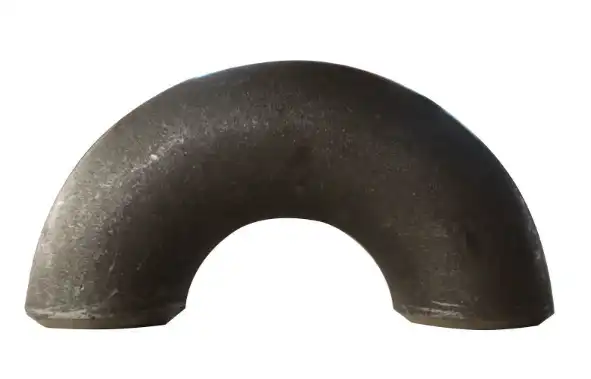
A carbon steel elbow is used to alter the direction of flow of fluid or gas in a pipe system, often in 45°, 90°, or 180° bends. In thermal conditions, this redirection must be done without creating stress concentrations or leaks. Grades such as ASTM A234 WPB are routinely specified for service temperatures up to around 425°C (800°F). These are the workhorse grades throughout petrochemical and power-generating facilities.
Key Thermal and Mechanical Properties
Carbon steel expands at around 12 × 10-6 per °C. Engineers need to take this expansion into account in their pipe stress calculations at high operating temperatures. The material retains sufficient tensile strength (often in the range of 415-585MPa for WPB grade) to withstand creep deformation under high-temperature exposure for a long period of time. These features are what keep it a default standard in boiler and heat exchanger pipes.
Common Industrial Applications
You will find these elbows in oil refineries, natural gas transmission lines, water conservancy projects, shipbuilding, and electric power plants. They work with steam, hydrocarbons, and process water. They are also easy to specify for multinational projects because of their extensive acceptance under ANSI, DIN, JIS, and BS standards.
Comparing High-Temperature Carbon Steel Elbows with Alternatives
Carbon steel is not always the only option. Here is an honest look at how it stacks up.
Carbon Steel vs. Stainless Steel
Stainless steel has superior oxidation resistance above 500 °C and is suitable for corrosive media. But it comes at a far higher cost, frequently two to four times the price per unit. For dry steam or non-corrosive hydrocarbon usage, a well-specified high-temperature carbon steel elbow provides the same mechanical performance at a fraction of the cost and is the ideal option for budget-conscious OEM projects.
Carbon Steel vs. Alloy Steel
The usable temperature range may be extended beyond that of conventional carbon steel, frequently up to 600°C or more, by using alloy steel grades such as P11 or P22. However, they demand more complicated welding processes and after weld heat treatment. Standard carbon steel is the more economical and practical material if your process temperature is below 425°C. Alloy grades are worth the expenditure only when the temperature really calls for them.
Pressure Ratings and Wall Thickness Considerations
The chosen schedule significantly impacts safety as well as cost. “Sch 40 is used for most moderate pressure applications. Sch 80 or heavier schedules are specified for high-pressure steam and gas service.” Welded and seamless options available. Seamless elbows have no weld seam, removing a possible failure point and making them desirable for critical high-pressure loops where system integrity is of utmost importance and cannot be compromised.
OEM Ordering Guide: How to Procure High-Temperature Carbon Steel Elbows
Getting the specification right before you send an RFQ saves weeks of back-and-forth. Here is a structured approach.
Step 1 — Define Your Technical Specifications
Begin with the fundamentals: nominal pipe size, wall schedule, bend radius (short radius or long radius), connection method (butt weld, socket weld, or threaded), and the appropriate dimensional standard (ANSI B16.9, DIN, JIS, or BS). Then validate the design temperature and pressure and state the grade of material. Providing a full datasheet at the inquiry stage helps to decrease lead times and quoting mistakes.
Step 2 — Verify Supplier Qualifications
A certified OEM supplier should have ISO 9001 quality management system certification and, for the Chinese market, a People’s Republic of China Special Equipment Manufacturing License. These are not optional niceties – they are the minimum. At Oudi, we already have both certifications, and our quality control includes all stages, from arrival inspection of raw materials, nondestructive testing, to final product release.
Step 3 — Clarify MOQ, Pricing, and Logistics
When volumes reach a project-level threshold, OEM purchases often get bulk pricing. Oudi has an annual manufacturing capacity of 16,000 tons; thus, we can take huge orders without affecting delivery dates. Review packaging needs, port of loading (we are 120 km from Tianjin port), lead times, and any third-party inspection needs upfront to minimize surprises at shipping.
Installation and Maintenance Best Practices for High-Temperature Carbon Steel Elbows
Even the best-specified elbow will underperform if it is installed incorrectly.
Managing Thermal Expansion at Installation
Piping systems operating at elevated temperatures expand during heat-up and contract during shutdown. Every installation should incorporate expansion loops or flexible joints at calculated intervals to absorb this movement. Failure to account for thermal growth is one of the leading causes of stress cracking and premature weld failure in high-temperature systems.
Joint Preparation and Welding Requirements
Butt-welded high-temperature carbon steel elbows require proper bevel preparation and preheat procedures, especially for wall thicknesses above 19 mm. Verify that your welders hold certifications aligned with ASME Section IX or equivalent. Post-weld heat treatment (PWHT) may be required depending on wall thickness and material grade — confirm this with your engineering team before field work begins.
Routine Inspection and Corrosion Monitoring
Schedule visual inspections and ultrasonic thickness measurements at regular intervals — annually for most industrial services, and more frequently in erosive or mildly corrosive media. External insulation should be checked for moisture ingress, which accelerates corrosion under insulation (CUI). Catching wall thinning early avoids unplanned shutdowns and keeps replacement costs manageable.
Advantages of Choosing High-Temperature Carbon Steel Elbows for OEM Projects
When procurement teams in Europe and North America are assessing pipe fitting suppliers, a number of elements repeatedly influence the ultimate selection.
The following are the main benefits that place carbon steel elbows as the recommended standard for OEM industrial projects:
- Cost at scale: Raw material prices for carbon steel are cheaper than those for alloy or stainless options, and the savings compound with large OEM orders. For projects needing hundreds or thousands of fittings, this means immediate project budget reduction without losing performance.
- Conformance to broad standards: Products built to ANSI, DIN, JIS, and BS standards may be specified on worldwide projects without redesign. Oudi meets all four standards, which makes it easier for EPC contractors working across regions to manage a worldwide supply chain.
- Stable supply chain: Oudi has a 16,000-ton yearly production capacity and a strict incoming material inspection procedure, ensuring reliable lead times even in high-demand seasons. This constancy is relied upon by more than 300 clients in 40 countries.
These benefits effectively address the key procurement risks that stall projects: budget overruns, non-conforming products, and unreliable delivery. If your pipe requirement requires high-temperature service and your budget requires accountability, the realistic option is carbon steel elbows with a verified manufacturer.
Conclusion
Finding the perfect high-temperature carbon steel elbow for an OEM project is not complex, but it does involve attention to material quality, dimensional requirements, supplier credentials, and suitable installation method. Carbon steel remains the most economical material for service temperatures below 425°C, and works dependably in oil, gas, chemical, and power-generating applications. Supplier selection is easy with Oudi’s manufacturing capabilities, accredited quality system, and worldwide export track record. Be explicit with your requirements, confirm certifications, and reach out to a certified manufacturer early in your project cycle.
FAQ
1. What certifications should I require from a carbon steel elbow supplier?
At minimum, request ISO 9001 certification and verify that the supplier holds any required national special equipment manufacturing licenses. For projects under ASME jurisdiction, material traceability to ASTM standards is also expected. Oudi holds ISO 9001:2000 certification and the PRC Special Equipment Manufacturing License.
2. How does thermal expansion affect my elbow selection?
Thermal expansion determines how much movement your piping system will experience between cold and operating conditions. This affects support spacing, anchor design, and whether you need long-radius vs. short-radius elbows. Your pipe stress engineer should perform a formal flexibility analysis before finalizing the layout.
3. Can I order elbows in custom sizes or non-standard angles?
Yes. Most qualified OEM manufacturers, including Oudi, can produce elbows in non-standard angles and sizes based on client drawings. Provide your dimensional requirements and applicable standard during the inquiry stage, and confirm the MOQ for custom runs.
4. What is the standard lead time for OEM carbon steel elbow orders?
Lead times vary by quantity, specification complexity, and surface treatment requirements. Standard production runs typically ship within four to eight weeks from order confirmation. Contact Oudi directly at oudi-04@oudiguandao.com for a project-specific schedule.
Get a Quote from Oudi — Your Carbon Steel Elbow Manufacturer Since 1998
Oudi has supplied high-temperature carbon steel elbows to clients in over 40 countries since 1998. Our products meet ANSI, DIN, JIS, and BS standards, backed by ISO 9001 certification and a 16,000-ton annual production capacity. Whether you need a large OEM order or a custom specification run, our team is ready to respond. Send your technical datasheet or project inquiry directly to oudi-04@oudiguandao.com and receive a competitive quote within one business day.
References
1. ASME B16.9 — Factory-Made Wrought Buttwelding Fittings, American Society of Mechanical Engineers, 2018.
2. ASTM A234/A234M — Standard Specification for Piping Fittings of Wrought Carbon Steel and Alloy Steel for Moderate and High Temperature Service, ASTM International, 2021.
3. Nayyar, M. L. — Piping Handbook, McGraw-Hill, 2000.
4. ASME B31.3 — Process Piping, American Society of Mechanical Engineers, 2020.
5. Becht, C. — Process Piping: The Complete Guide to ASME B31.3, ASME Press, 2009.
6. Smith, P. R., & Van Laan, T. J. — Piping and Pipe Support Systems: Design and Engineering, McGraw-Hill, 1987.

Need help finding the right solution with our experts. Please contact us.

SINCE 1998 Your Reliable Pipeline Manufacturer



