Socket Weld Pipe Tee vs Threaded Tee: Which Is Better?
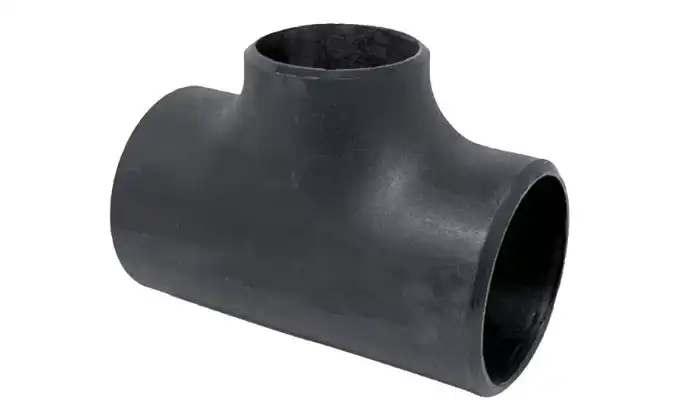
Which one you choose between a socket weld pipe tee and a threaded tee depends on how much pressure your system needs, your budget, and where you plan to put it. For high-pressure uses, socket weld tees offer better leak-proofing and structural stability, which makes them perfect for power plants, chemical plants, and oil pipelines. Threaded tees make installation faster and cheaper for moderate-pressure systems that need to be taken apart or serviced every so often. Being aware of these basic differences helps procurement teams choose the right fitting type that balances cost-effectiveness with performance reliability.
Introduction
Branch links are what hold together complicated pipe networks in factories. The type of pipe tee you choose has a direct impact on operational safety and long-term maintenance costs. This is true whether you are directing hydraulic fluids on offshore platforms or splitting steam lines in boiler systems. We've helped procurement managers in over 40 countries make this tough choice: should they buy socket weld tees for long-term installations or threaded alternatives that can be used in different ways depending on the needs of the job?
We made this comparison based on our 25 years of experience making things at Oudi, where we make over 16,000 tonnes of fittings out of carbon steel, stainless steel, and alloys that meet ASME B16.11, DIN, and JIS standards every year. Our ideas come from putting together technical specs with real-life data from clients in projects like natural gas processing, water conservation, and producing oil. The goal is simple: to help engineers and dealers choose parts that will keep expensive failures from happening and make the most of installation funds and schedules.
Understanding Socket Weld Pipe Tee and Threaded Tee
What Defines a Socket Weld Pipe Tee
Branch links are what hold together complicated pipe networks in factories. The type of pipe tee you choose has a direct impact on operational safety and long-term maintenance costs. This is true whether you are directing hydraulic fluids on offshore platforms or splitting steam lines in boiler systems. We've helped procurement managers in over 40 countries make this tough choice: should they buy socket weld tees for long-term installations or threaded alternatives that can be used in different ways depending on the needs of the job?
We made this comparison based on our 25 years of experience making things at Oudi, where we make over 16,000 tonnes of fittings out of carbon steel, stainless steel, and alloys that meet ASME B16.11, DIN, and JIS standards every year. Our ideas come from putting together technical specs with real-life data from clients in projects like natural gas processing, water conservation, and producing oil. The goal is simple: to help engineers and dealers choose parts that will keep expensive failures from happening and make the most of installation funds and schedules.
How Threaded Tees Function
Threaded pipe tees have tapered or parallel screw threads machined into each opening. This makes it possible to put them together by hand without using welding equipment. In industry, NPT (National Pipe Thread) and BSPT (British Standard Pipe Thread) configurations are most common. Thread sealants or PTFE tape are used for initial sealing. These parts are used in low- to moderate-pressure systems where labour costs can be cut by installing them quickly, and there isn't a certified welder on site.
Maintenance teams that need to access piping networks on a regular basis will like the threaded design. It is helpful to be able to take links apart without cutting lines for temporary setups, test plants, and utility systems. But the right amount of thread contact and pressure are very important to keep cross-threading or partial seals from happening, which can weaken the system over time.
Material Options and Pressure Classes
Threaded pipe tees have tapered or parallel screw threads machined into each opening. This makes it possible to put them together by hand without using welding equipment. In industry, NPT (National Pipe Thread) and BSPT (British Standard Pipe Thread) configurations are most common. Thread sealants or PTFE tape are used for initial sealing. These parts are used in low- to moderate-pressure systems where labour costs can be cut by installing them quickly, and there isn't a certified welder on site.
Maintenance teams that need to access piping networks on a regular basis will like the threaded design. It is helpful to be able to take links apart without cutting lines for temporary setups, test plants, and utility systems. But the right amount of thread contact and pressure are very important to keep cross-threading or partial seals from happening, which can weaken the system over time.
Key Differences Between Socket Weld and Threaded Pipe Tee
Installation Methodology and Time Requirements
For socket weld installation, pipes must be cut to the right lengths, inserted into sockets with the required gap, and fillet welds must be done by experienced welders approved to ASME Section IX standards. For some metal types, the process needs beveling machines, welding machines, and heat treatment after the joint. The average time to install a joint is 20 to 30 minutes, but this depends on the thickness of the material and how easy it is to get to. Visual and non-destructive tests are required as quality control steps.
Using pipe wrenches and thread sealant, threaded connections for Socket Weld Pipe Tee can be put together in 5 to 10 minutes with only basic hand tools. During the construction phase, when hundreds of branch connections need to be made quickly, the simplicity speeds up the project timelines. But the right way to clean the threads and apply the torque depends on the person doing it. Tightening too much can damage the threads, and tightening too little can make leak tracks that show up during hydraulic testing.
Structural Integrity and Leak Prevention
In socket weld tees, the welded joint fuses the fitting and pipe together, making a permanent bond that spreads stress around the whole circumference. This gets rid of the mechanical contact that comes with threaded connections. Over time, repeated loading can make the threads less tightly engaged. Socket welds are required for ASME B31.3 process piping in harsh cyclic conditions because they are rarely damaged by vibrations from nearby compressors or thermal expansion cycles.
Threaded tees depend on an interference fit between the male and female threads. Sealant materials are compressed at the thread crests to make the connection. This mechanical seal breaks down when the temperature changes by more than 200°F or when the pressure changes quickly, which happens a lot in lines that release from rotary pumps. Welded joints don't need to be re-torqued or replaced as often as threaded joints do in steam systems above 300 PSI. Threaded joints develop weeping leaks within 18 to 24 months, which means they need to be replaced or re-torqued.
Dimensional Accuracy and Flow Characteristics
Tolerances set by ASME B16.11 for socket weld tees keep socket hole diameters within ±0.015 inches. This keeps the pipe entry depth and weld gap uniform. The smooth change from run to branch inside the system reduces noise and pressure drop, which is very important in fast gas systems. Dimensional accuracy also makes prefabrication easier, letting spools be put together in the shop in a way that guarantees a good fit when they are installed in the field.
Threaded tees have bigger changes in internal diameter because of undercuts for thread relief and the chance that the threads will get damaged while shipping or storing them. The sudden change at the thread roots causes localised turbulence that speeds up weathering and rust in slurry services or flows with particles. Specifications for buying things for important uses often include requirements for the internal surface finish that threaded designs can't meet without extra cutting.
Advantages and Limitations of Socket Weld vs Threaded Tee
When Socket Weld Tees Excel
Because they are forged and have welded joints, socket weld tees are the most reliable option for situations where failure would cost more than the cost of installation. They are used in mission-critical systems because of three main benefits:
Pressure and Temperature Capability: Socket weld tees are often used at temperatures and pressures above 500°C and over 5,000 PSI, which can damage threaded connections by thermal ratcheting or thread galling. Welded joints are the only way to make sure that high-pressure steam lines that feed turbines, hydraulic control systems in subsea equipment, and supercritical fluid processing all stay sealed. By getting rid of the circular leak tracks that threads have, fugitive emissions that break environmental rules in chemical plants and factories are stopped.
Fatigue Resistance Under Cyclic Loading: Vibrations from rotating equipment, pressure pulses from positive displacement pumps, and changes in temperature during startup and shutdown sequences all cause fatigue stresses that cause threaded connections to crack. The continuous weld bead in socket weld joints spreads these loads out so there are no stress spots. This makes the joints last longer in situations where they are subjected to millions of pressure cycles. Our power production customers say that socket weld fittings in boiler feed systems last 15 years or more without leaking, while threaded fittings need to be replaced every 3 to 5 years.
Compatibility with Advanced NDT Inspection: Radiographic and ultrasound testing methods check the integrity of welds without taking the parts apart. This lets predictive maintenance programs set replacement dates based on recorded degradation instead of random dates. This visibility is very helpful on offshore platforms where unplanned shutdowns cost more than $500k per day. For threaded joints, there is no non-destructive way to check the depth of thread contact or the degradation of the sealer. This means that leak monitoring is needed, which can only find problems after they happen.
Because of these benefits, socket weld tees are the most common choice for long-term installations in utility systems, chemical processing, oil and gas production, and other places where safety rules require bonded construction. The higher price at first—usually 40–60% more than threaded alternatives—disappears when you add up the costs of maintenance labour, replacement parts, and downtime.
Where Threaded Tees Provide Value
Threaded connections are very useful when speed of installation, cost, or the need for future changes are more important than complete reliability:
Rapid Deployment Without Specialised Labour: Construction sites that are far away often don't have access to qualified welders or power sources for welding. With threaded tees, mechanical contractors can finish installations with simple tools, which speeds up project schedules during plant expansions or repairs that need to be done right away. Being able to connect things in tight areas without hot work permits also speeds up turnaround times in factories where having a fire watch would double the cost of welding.
Cost Advantages in Low-Pressure Services: Socket weld price is rarely justified for utility pipes that carry instrument air, cooling water, or drain systems. Threaded tees work well in these situations and cost 30 to 50 percent less than other types of fittings. They also save money on installation labour, which makes the savings even bigger. Based on our study of total installed costs, we found that threaded connections can be used below 600 PSI design pressure, as long as the threads are properly engaged and are retightened every so often during maintenance periods.
Maintenance Access and System Flexibility: As processes change, pilot plants, research centers, and flexible skid systems need to be rearranged from time to time. Threaded tees let you take things apart without cutting the lines, so you can reuse parts and reduce waste. This adaptability comes in handy during the commissioning stages, when changes to the design are needed to fix unexpected operational problems. This is especially common with installations that are one-of-a-kind.
When there is a lot at stake with Socket Weld Pipe Tee, the practical limits of threaded tees become clear. Wear on the threads from repeated assembly cycles breaks down sealing surfaces, making leak paths that sealants can't cover. Corrosion products building up in thread roots make it hard to take apart, and often cutting is needed even though the item is meant to be reused. Teams in charge of buying things need to be honest about whether operating conditions match the capabilities of a threaded tee or whether the stability of a socket weld makes the investment worth it.
How to Choose Between Socket Weld and Threaded Tee for Your Project
Evaluating Operating Conditions
Pressure and temperature parameters form the primary selection criteria. Socket weld tees become mandatory above 1,500 PSI or 400°F, where threaded joint integrity becomes statistically unreliable across thermal cycles. Vibration levels exceeding 0.5 inches per second similarly disqualify threaded connections, as mechanical loosening occurs regardless of initial torque application.
Fluid characteristics influence material selection and joint design. Corrosive media containing chlorides, hydrogen sulfide, or organic acids attack thread roots preferentially, creating crevice corrosion that undermines sealing surfaces. Socket weld joints minimize exposed surface area, with the fillet weld providing a corrosion-resistant barrier when proper welding procedures prevent porosity or undercut defects.
Cost-Benefit Analysis for Bulk Procurement
Unit pricing differences narrow significantly in volume orders. While individual threaded tees cost 30-50% less than socket weld equivalents, bulk pricing through established suppliers like Oudi reduces this premium to 20-30% for orders exceeding 500 pieces. When lifecycle costs factor in maintenance labor, replacement frequency, and downtime impacts, socket weld fittings often deliver lower total cost of ownership over 10-year planning horizons.
Delivery timelines and inventory strategies also affect procurement decisions. Our 16,000-ton annual production capacity ensures consistent availability across material grades, whereas exotic alloy threaded tees may require 12-16 week lead times from specialized manufacturers. Establishing vendor-managed inventory programs with qualified suppliers mitigates supply chain risks while optimizing working capital through just-in-time delivery aligned with construction milestones.
Supplier Qualification and Quality Assurance
Third-party certifications verify manufacturing capabilities and quality systems. ISO 9001 certification confirms documented procedures for material traceability, dimensional inspection, and nonconformance management. Special equipment manufacturing licenses issued by national authorities demonstrate compliance with pressure vessel codes—particularly relevant when fittings integrate into ASME Section VIII systems requiring Authorized Inspector oversight.
Advanced inspection capabilities differentiate premium suppliers from commodity vendors. Ultrasonic testing detects internal forging defects invisible to visual inspection, while Positive Material Identification prevents alloy mix-ups that have triggered multiple industry incidents. Our facility maintains spectroscopic analyzers, coordinate measuring machines, and hydrostatic test equipment, enabling 100% inspection protocols that satisfy major EPC contractor quality requirements.
Best Practices for Installation and Maintenance
Socket Weld Installation Techniques
Proper Socket Weld Pipe Tee execution begins with accurate pipe cutting, ensuring square ends that seat uniformly against socket bottoms before withdrawal to create the mandatory gap. Welding procedures qualified per ASME Section IX specify amperage, travel speed, and filler metal selection matched to base material chemistry. The fillet weld profile should achieve a smooth transition from pipe to fitting without undercut or excessive reinforcement that creates stress concentration points.
Post-weld inspection combines visual examination with magnetic particle or liquid penetrant testing to detect surface-breaking defects. Radiographic examination, while uncommon for socket welds due to geometric limitations, can verify lack of internal porosity when service severity justifies the expense. Documentation requirements include welder identification, procedure numbers, and inspection results maintained per ASME B31.3 record retention rules.
Threaded Connection Assembly Standards
Thread preparation involves wire brushing to remove mill scale and inspecting for damage that would prevent proper engagement. Applying thread sealant uniformly without over-application prevents contamination of internal flow passages while ensuring complete coverage of thread flanks. Torque specifications based on fitting size and material prevent both under-tightening that causes leaks and over-tightening that cracks fittings or gall threads.
Periodic retightening during commissioning and maintenance turnarounds compensates for sealant compression and thermal cycling effects. Inspection protocols include visual leak checks during hydrostatic testing and monitoring for weeping during initial operation. Documented torque values and inspection dates create maintenance records supporting reliability-centered programs that optimize inspection intervals based on actual degradation rates.
Conclusion
The choice between socket weld and threaded pipe tees hinges on matching fitting capabilities to service conditions and project priorities. Socket weld tees deliver superior leak resistance, pressure capacity, and longevity essential for high-consequence applications in refining, chemical processing, and power generation. Threaded alternatives provide cost and installation speed advantages in moderate-pressure utility systems where occasional maintenance access justifies accepting mechanical seal limitations. Successful procurement evaluates operating pressures, budget constraints, and supplier qualifications—factors where partnering with certified manufacturers ensures both technical compliance and supply chain reliability throughout project execution.
FAQ
What pressure ratings can socket weld tees withstand compared to threaded versions?
Socket weld tees manufactured to ASME B16.11 standards routinely achieve Class 6000 pressure ratings, corresponding to working pressures around 6,000 PSI at ambient temperature in carbon steel grades. Threaded tees typically max out at Class 3000, with practical service limits near 2,000 PSI depending on thread condition and sealing method quality.
How do bulk purchasing costs compare between socket weld and threaded tees?
Threaded tees generally cost 20-30% less than socket weld equivalents in bulk orders above 500 pieces, though this premium narrows with volume discounts from established manufacturers. Lifecycle cost analysis should include installation labor, maintenance frequency, and downtime impacts—factors where socket weld tees often prove more economical over 10-year project horizons.
Which manufacturers provide reliable supply for critical piping projects?
Industry-leading suppliers maintain ISO 9001 certification, special equipment manufacturing licenses, and documented quality systems ensuring material traceability and dimensional compliance. Oudi has served over 300 customers across 40 countries since 1998, with our 16,000-ton annual capacity supporting just-in-time delivery for major EPC contractors in petroleum, chemical, and power generation sectors.
Partner with Oudi for Your Pipe Fitting Requirements
Selecting the optimal tee configuration requires balancing technical performance with project economics—a decision our engineering team supports through application-specific consultations. As a socket weld pipe tee manufacturer with ISO 9001 certification and special equipment manufacturing licenses, we maintain complete material traceability from raw stock through final inspection. Our production capabilities span carbon steel, stainless steel, and alloy grades meeting ASME, DIN, and JIS standards, with inventory programs ensuring consistent availability for your construction schedules. Reach out to our team at oudi-04@oudiguandao.com to discuss pressure ratings, material selection, and delivery timelines tailored to your procurement requirements.
References
1. American Society of Mechanical Engineers. (2020). ASME B16.11: Forged Fittings, Socket-Welding and Threaded. New York: ASME Press.
2. Harvey, J.F. (2018). Theory and Design of Pressure Vessels, Third Edition. Berlin: Springer Publishing.
3. Ellenberger, J.P. (2019). Piping and Pipeline Calculations Manual: Construction, Design, Fabrication and Examination. Oxford: Butterworth-Heinemann.
4. Nayyar, M.L. (2017). Piping Handbook, Eighth Edition. New York: McGraw-Hill Education.
5. Smith, P.R. & Zappe, R.W. (2021). Valve Selection Handbook: Engineering Fundamentals for Selecting the Right Valve Design for Every Industrial Flow Application. Houston: Gulf Professional Publishing.
6. Becht, C. (2019). Process Piping: The Complete Guide to ASME B31.3, Fourth Edition. New York: ASME Press.

Need help finding the right solution with our experts. Please contact us.
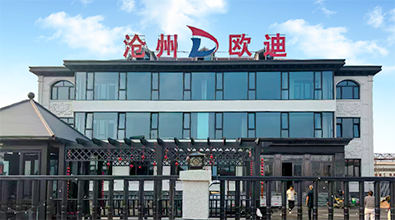
SINCE 1998 Your Reliable Pipeline Manufacturer