Steel Concentric Pipe Reducer vs. Eccentric: Which Is Best?
Engineers and procurement buyers ask this question, and the solution is not one-size-fits-all. A steel concentric pipe reducer joins two pipes of differing sizes on the same centerline, making it perfect for vertical runs and high-pressure jobs where consistent flow is a problem. An eccentric reducer offsets that centerline to maintain one side level, addressing air-trap difficulties in horizontal pump suction lines. The wrong choice of type causes cavitation, loss of pressure, or premature wear. Knowing the difference before you purchase can save your project costs and safeguard your pipeline's long-term performance.
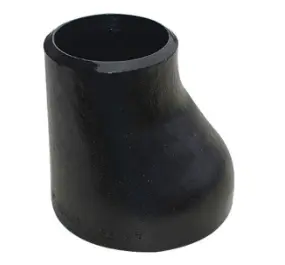
Understanding Steel Pipe Reducers: Concentric vs. Eccentric
What Is a Concentric Reducer?
Concentric Reducer – A Concentric Reducer is a cone-shaped body with the large-bore end and the small-bore end having the same central axis. The reduction is consistent across the whole circle; thus, the fitting will not create any pipe centerline misalignment. This shape reduces turbulence during velocity changes and equally distributes hoop stress, which is why the ASME B16.9 includes concentric geometry as the default for butt-welding reducers from NPS ½ to NPS 48.
What Is an Eccentric Reducer?
There is an eccentric reducer, which moves the smaller bore over to one side. One exterior face is flat; the other side tapers. That flat face, Top-Flat (TOF) or Bottom-Flat (BOF), prevents gas or liquid from building up within the fitting. The TOF orientation avoids air pockets from being trapped in the pump suction lines. The BOF orientation allows for total liquid drainage. Both orientations are constructed to the same ASME B16.9 face-to-face dimensions as their concentric counterparts to provide bolt-circle and support compatibility.
Materials and Industry Standards
Both types are produced from three primary material families:
- Carbon Steel (ASTM A234 WPB): The most cost-effective choice for general-service oil, gas, and water systems operating below 400 °F.
- Stainless Steel (ASTM A403 WP304 / 316L): Selected for corrosive chemical service or sanitary process lines where chloride resistance is required.
- Alloy Steel (ASTM A234 WP11 / WP22): Specified for high-temperature boiler, refinery, and power-generation circuits where creep resistance is critical.
Dimensional compliance follows ASME B16.9 (American), DIN 2616 (German), and API 5L-based specifications, depending on the project's regional standard. Wall thickness is defined by schedule numbers — SCH 40, SCH 80, XS, and XXS — matched to the adjoining pipe.
Performance and Application Comparison
Flow Dynamics and Pressure Management
The concentric design gives a symmetric velocity profile. Its consistent taper lowers friction loss and makes pressure drop predictable in vertical flow applications like pump discharge risers or steam headers. Research into turbulent pipe flow has shown that off-axis geometry may raise the minor loss coefficients by 15 to 30 percent in relation to aligned transitions, and so the correct choice of type has a direct impact on energy consumption.
Eccentric reducers sacrifice flow symmetry for air-management benefits. A TOF steel concentric pipe reducer on horizontal suction lines removes the vapor pocket that would otherwise develop at the crown of a concentric fitting – the root cause of pump cavitation, which, according to the Hydraulic Institute, accounts for a major proportion of premature centrifugal pump failures worldwide.
Industry-Specific Applications
Here is a side-by-side look at where each type performs best:
- Concentric reducers are standard in chemical plant headers, HVAC water mains, vertical steam lines, and high-pressure gas transmission spools where centerline alignment and uniform stress distribution are non-negotiable.
- Eccentric reducers are required on pump suction nozzles, gravity-drain lines, slurry systems, and horizontal process lines where self-venting or full-bore drainage is a process safety requirement.
These distinctions matter in real projects. An oil refinery replacing concentric fittings with eccentric ones on a vertical steam riser created recurring vibration stress at pipe supports — a direct consequence of misaligned pipe axes. Matching fitting geometry to orientation is not optional; it is a basic engineering requirement.
Corrosion Resistance Considerations
Material choice either enhances or limits performance. Wet-gas pipeline carbon steel reducers require internal coating or inhibitor programs; 304 and 316L stainless steel grades are self-passivating in most chemical conditions but are sensitive to chloride stress corrosion cracking over 60 °C. Alloy steel grades WP11 and WP22 are capable of maintaining their mechanical integrity up to 1000 °F, which is the standard material for ASME Section I boiler circuits.
How to Choose the Right Pipe Reducer: Decision-Making Framework
Assess Pipe Orientation and Flow Direction
Begin with installation orientation. Vertical lines always need a concentric reducer as gravity exerts equally on the flow. Horizontal lines carrying liquids or mixed-phase fluids will often need an eccentric reducer to handle gas pockets or to assist in drainage. Document the pipe iso before you finalize your specification.
Match Pressure Class and Schedule
Wall schedule must be the same as the connecting pipe. If you have a reducer off of a Schedule 80 line to a Schedule 40 continuation, you will need a bore to match the transition on the smaller end so the weld prep will match up appropriately. Unequal wall thickness at the weld junction generates stress concentration sites, leading to failure during hydrostatic testing and violation of ASME B31.3 Process Piping standards.
Verify Standard Compliance for Your Market
Projects in North America, by default, use ASME B16.9 and ASTM material grades. European projects apply DIN 2616 and EN 10253. In the Middle East and Southeast Asia, the EPC contracts would often take either, provided that the manufacturer has a recognized third-party quality certification. Check your project specification to see what standard your project calls for before making a purchase order.
Installation and Maintenance Best Practices
Correct Installation Procedure
Align the steel concentric pipe reducer carefully before tack welding to avoid angular misalignment that stresses the downstream pipe run. For concentric reducers, center the fitting on the pipe axis using a machinist's level on both connected spools. Apply the 37.5° ± 2.5° bevel per ASME B16.25 for wall thicknesses under 22 mm. Full-penetration butt welds are mandatory for pressure-containing joints; partial-penetration welds are not acceptable in oil, gas, or chemical service per most engineering codes.
Routine Inspection and Maintenance
Inspection intervals depend on service severity. In abrasive slurry or high-velocity gas service, perform visual and ultrasonic thickness checks every 12 months. In clean water or low-velocity steam service, 24-month cycles are generally sufficient. Pay particular attention to the taper zone, where erosion-corrosion concentrates due to the velocity increase across the reduction. Carbon steel fittings showing wall loss exceeding 20% of original thickness should be scheduled for replacement before the next planned outage.
Recognizing Wear Indicators
Early warning signs include external pitting at the taper, vibration at adjacent supports, and unexplained pressure drop increases across the fitting. Any visible external corrosion on stainless steel fittings in chloride environments warrants immediate thickness measurement — surface discoloration alone can mask severe under-deposit pitting. Catching these signs early avoids unplanned shutdowns.
Procurement Insights: Sourcing Steel Concentric Pipe Reducers
Evaluating Supplier Qualifications
If you are purchasing a steel concentric pipe reducer for industrial use, make sure the manufacturer has ISO 9001 certification and, if the pressure equipment is going to be sent to regulated markets, a Special Equipment Manufacturing License. These credentials prove that the supplier’s quality management system includes inspections of raw materials upon receipt, in-process dimensional controls, and final nondestructive assessment before export.
Since 1998, Oudi has been ISO 9001 quality management system certified and holds China’s Special Equipment Manufacturing License. Each fitting only leaves the Cangzhou facility after being subjected to the company’s full-inspection protocol — from raw material mill certificates through hydrostatic and NDE testing on finished goods. Oudi provides EPC contractors, industrial end users, and international distributors in more than 40 countries with an annual production capacity of 16,000 tons and a product range covering carbon steel, stainless steel, and alloy steel reducers in American, German, Japanese, and British standards.
Pricing and Lead Time Considerations
Bulk purchases bring the price of each product far down. Customizations such as bored-to-match ends, special bevel geometry, or non-standard alloy grades add lead time, typically two to four weeks beyond standard production cycles. We provide a full Material Test Report (MTR) with every order; Reputable manufacturers provide this at no extra charge. Look at overseas suppliers not just in terms of ex-works price but landed cost.
Conclusion
The selection of a concentric or steel concentric pipe reducer depends on three considerations: pipe orientation, flow media, and process requirements. Concentric reducers are recommended for vertical runs, high-pressure headers, and other applications where centerline alignment is critical. Eccentric reducers are applicable to horizontal pump suction lines and any system where air venting or complete drainage is a process requirement. Screw up the geometry, and you pay for it in cavitation damage, pressure loss, or failed welds. Do it right, and your pipeline will run smoothly for decades.
FAQ
1. What is the main advantage of a steel concentric pipe reducer over an eccentric type?
The concentric design keeps both pipe centerlines aligned, which distributes stress evenly and maintains a predictable velocity profile. This makes it the correct choice for vertical piping, steam headers, and high-pressure gas lines where structural symmetry and flow consistency are required.
2. Can I substitute an eccentric reducer for a concentric reducer anywhere in my system?
No. Substituting an eccentric reducer on a vertical line misaligns the pipe axis, which stresses pipe supports and creates uneven flow distribution. Each type serves a specific orientation and function. Use the type your piping isometric specifies.
3. How do I select the correct reducer size?
Match the large-bore end to the upstream pipe's nominal pipe size (NPS) and the small-bore end to the downstream NPS. Confirm wall schedule compatibility on both ends per ASME B16.9. Your piping engineer's line list is the authoritative source for these dimensions.
4. What certifications should I require from a pipe reducer supplier?
At minimum, require ISO 9001 certification and material test reports per the applicable ASTM or EN standard. For pressure equipment in regulated markets, ask for the manufacturer's Special Equipment Manufacturing License and third-party inspection records.
5. Does wall thickness change across the reducer body?
Typically, the reducer is manufactured to the schedule of the larger pipe end. In high-pressure or critical service applications, a bored-to-match transition on the smaller end aligns the internal bore with the downstream pipe wall, eliminating stress concentration at the weld joint.
Partner with Oudi for Your Next Steel Concentric Pipe Reducer Order
Oudi has supplied certified pipe fittings to over 300 customers across 40 countries since 1998. As a trusted steel concentric pipe reducer manufacturer, we offer carbon, stainless, and alloy steel reducers in ANSI, DIN, JIS, and BS standards with full documentation. Contact our team today at oudi-04@oudiguandao.com to request specifications, pricing, or a sample order.
References
1. ASME B16.9 — Factory-Made Wrought Buttwelding Fittings, American Society of Mechanical Engineers, 2018.
2. ASME B31.3 — Process Piping Code, American Society of Mechanical Engineers, 2022.
3. Hydraulic Institute — Pump Intake Design Standard, Hydraulic Institute, 2012.
4. ASTM A234 / A234M — Standard Specification for Piping Fittings of Wrought Carbon Steel and Alloy Steel for Moderate and High Temperature Service, ASTM International, 2022.
5. DIN 2616 — Concentric and Eccentric Reducers for Welding, Deutsches Institut für Normung, 2011.
6. Crane Co. — Flow of Fluids Through Valves, Fittings, and Pipe, Technical Paper No. 410, Crane Co., 2013.

Need help finding the right solution with our experts. Please contact us.

SINCE 1998 Your Reliable Pipeline Manufacturer



