Where Are High-temperature carbon steel elbow Used?
Almost every large industrial pipe system that carries fluids or gases at high heat levels uses high-temperature carbon steel elbows. From refinery process lines at 400°F and up to steam distribution headers in power plants, these fittings change flow direction at angles of 45°, 90°, or 180° without sacrificing pressure integrity. The elbow is of a special grade of carbon steel for high temperatures. Grade ASTM A234 WPB or ASTM A420. It has to be made according to the dimensions of ASME B16.9. Only in this way can the elbow work safely for a long time at high temperatures.
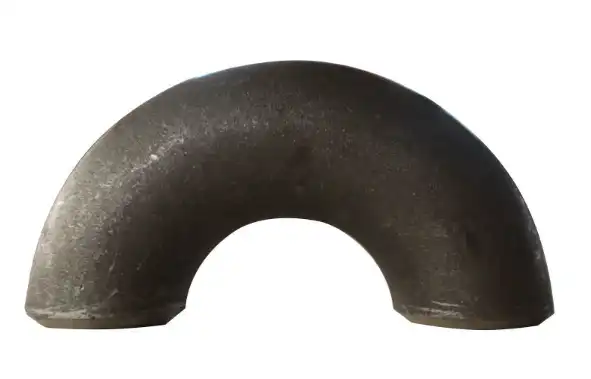
Understanding High-Temperature Carbon Steel Elbows
Before exploring where these fittings are deployed, it helps to understand what separates them from standard pipe elbows and why material selection matters so much.
What Makes Them "High-Temperature"
Not every carbon steel elbow is suitable for use at elevated temperatures. Grades like ASTM A234 WP1, WP5, and WP11 feature chromium and molybdenum additives that increase creep resistance over 750 degrees F. Standard WPB grade is good to around 800°F. Alloy grades extend the limitations of service. ASME B31.3 is the governing standard. It provides allowed stress values by temperature. Specifying the improper grade is a code violation.
Key Material Properties
Hot service compatibility is governed by three properties: thermal stability (resistance to microstructural change during prolonged heating), yield strength retention at increased temperature, and oxidation resistance on the pipe surface. When stringent chemical controls are used with carbon steel, these qualities are maintained for thousands of thermal cycles. This is why mills provide certified material test reports (CMTRs) with every heat of steel.
Manufacturing Standards That Count
The baseline standard that most engineers in the U.S. use is ASTM A234, ASME B16.9, MSS SP-75, and API 5L. Traceable heat numbers, in addition to these marks, provide procurement teams with the documentation chain for ASME pressure vessel and pipe code compliance.
Common Applications of High-Temperature Carbon Steel Elbows
These fittings show up wherever process temperatures climb, and pressure containment cannot fail. Below are the main sectors where demand is highest.
Power Generation and Steam Lines
Steam turbine feed lines, boiler headers, and superheater outlet pipework use high-temperature carbon steel elbows to reverse direction in packed turbine halls. One 500 MW coal-fired facility may have thousands of such fittings. Thermal power plants represent around 60% of domestic electricity production, according to the U.S. Energy Information Administration; therefore, there is a huge installed base of high-temperature pipe components.
Petrochemical Refining and Chemical Processing
Some fired heaters run at temperatures more than 1,000°F while crude distillation machines and catalytic crackers operate at temperatures from 300°F to far beyond 1,000°F. Fittings used in process lines for hydrogen, hydrocarbons, or corrosive acids must have documentation of heat treatment and impact test results. The elimination of a longitudinal weld seam eliminates one of the possible failure points in cyclic thermal duty. Refineries' procurement teams commonly select butt-welded, seamless elbows.
Oil and Natural Gas Transmission
Compressor station pipes and gas processing facilities operate at high temperature and load conditions continuously due to the heat produced by compression. Long radius 90° elbows (with a centerline radius of 1.5D) decrease pressure drop and limit erosion at bends, an essential consideration for operators controlling flow efficiency throughout hundreds of miles of pipeline infrastructure.
Boiler and Electric Power Equipment
Industrial boilers used in industrial facilities and district heating systems circulate pressurized hot water or steam at higher temperatures above the limitations of basic cast iron or plastic fittings. Carbon steel elbows of adequate wall thickness (SCH 40, 80, or heavier) provide these requirements at a lower installed cost than stainless alternatives and are the conventional selection for boiler room contractors nationwide.
Construction and Shipbuilding
High-temperature carbon steel elbows are used in heating systems in large commercial buildings, and in engine room steam and fuel oil pipes in naval vessels. They both need dimensional uniformity and traceability. Once construction is complete, access for replacement is difficult.
These five fields indicate the extensive uses of hot elbow. The first filter in the selection process is the temperature rating, and it is the same across all of them. Get it incorrect, and every other standard becomes useless.
Comparing High-Temperature Carbon Steel Elbows with Alternatives
Selecting the right material is a balance between performance requirements and budget. Here is how carbon steel compares against the two most common alternatives.
Carbon Steel vs. Stainless Steel
Stainless steel (grades 304, 316, or 321) has greater oxidation resistance and can endure chloride conditions that would rapidly erode carbon steel. But stainless elbows cost around two to four times more each. For dry steam service or clean hydrocarbon lines where corrosion is not a main issue, carbon steel provides appropriate service life at much reduced cost.
Carbon Steel vs. Alloy Steel
Chromium-molybdenum alloy elbows, such as ASTM A234 WP5 (5Cr-0.5Mo) or WP9 (9Cr-1Mo), raise the temperature ceiling to around 1,200°F as well as improving resistance to hydrogen attack in refinery conditions. They cost more than plain carbon steel but less than austenitic stainless grades. - Engineers use alloy fittings when operating temperatures or hydrogen partial pressures exceed the limitations for carbon steel as established in API 941 (Nelson Curves).
When Carbon Steel Remains the Right Answer
In most industrial applications below 800°F without strong corrosives, a correctly designed high-temperature carbon steel elbow fulfills code requirements, provides extended service life, and keeps project costs in control. That is the reason why carbon steel fittings always dominate the procurement volumes in oil, gas, power, and chemical projects across the globe.
How to Inspect and Maintain High-Temperature Carbon Steel Elbows
Even well-specified fittings require a structured inspection program to catch degradation before it becomes a safety event.
Visual and Dimensional Inspection
During every planned outage, technicians should examine for surface oxidation, pitting, and mechanical damage. Wall thickness measurements at extrados (outside bend radius) are particularly essential as flow-accelerated corrosion and erosion are concentrated in this area. Recommendations for baseline thickness measurements during installation and follow-up surveys based on estimated corrosion rates are provided in API 570 (Piping Inspection Code).
Non-Destructive Testing Methods
Ultrasonic testing (UT) offers precise remaining-wall-thickness information without cutting into the pipe. RT will show internal voids or weld faults that may be missed by UT. Magnetic particle inspection (MPI) is used to detect surface and near-surface fractures in ferritic carbon steel. Combined, these methodologies provide maintenance crews a comprehensive view of the status of the fit between major turnarounds.
Common Failure Modes and Prevention
Repeated heating and cooling cycles lead to the initiation of thermal fatigue cracking at the stress concentration locations. Defects in the weld zone may be generated due to poor preheat or post-weld heat treatment (PWHT) and can propagate under service load. Both failure mechanisms are significantly reduced with the use of high-temperature protective coatings and certified welding processes (per ASME Section IX) during installation.
Procurement Guide: How to Buy High-Temperature Carbon Steel Elbows
Sourcing these fittings correctly protects both project schedules and system safety.
Certifications and Standards to Verify
Require ISO 9001 certification from any supplier you consider. For U.S. projects, verify ASME compliance markings and request CMTRs for each heat of material. Special equipment manufacturing licenses, such as those required by Chinese regulatory authorities, confirm that a factory operates under a formally audited quality system—not just a self-declared one.
Evaluating Supplier Capability
Look at annual production capacity, inspection equipment on-site, and export track record. Oudi (Cangzhou Oudi Pipe Manufacture Co., Ltd.), established in 1998, produces 16,000 tons of pipe fittings annually and has served over 300 customers across more than 40 countries. The company holds ISO 9001:2000 certification and a special equipment manufacturing license, and it maintains a full inspection system from raw material intake through finished-product release—including nondestructive flaw detection at every production stage.
Pricing and Order Logistics
Material grade, wall schedule, angle, and order volume all affect unit price. Bulk orders reduce per-piece cost substantially. Oudi supplies American standard (ANSI), Japanese standard (JIS), German standard (DIN), and British standard (BS) fittings in carbon steel, stainless steel, and alloy steel, giving buyers a single-source option that simplifies logistics and documentation for international projects.
Conclusion
High-temperature carbon steel elbows are workhorses in power generation, petrochemical processing, oil and gas, boiler systems, and shipbuilding. The three stages that make the difference between a good installation and an expensive failure are choosing the proper grade, checking standard compliance, and working with a qualified supplier. For procurement experts, validated certificates, traceable materials, and proven export expertise provide a supplier such as Oudi with the confidence to fulfill orders and maintain projects on time.
FAQ
1. What is the maximum operating temperature for a carbon steel elbow?
Standard ASTM A234 WPB elbows are generally rated to approximately 800°F (427°C) under ASME B31.3. Above that threshold, engineers specify chromium-molybdenum alloy grades such as WP5 or WP9, which extend the temperature ceiling to around 1,100–1,200°F depending on pressure class and wall thickness.
2. How often should high-temperature pipe elbows be inspected?
API 570 ties inspection intervals to calculated corrosion rates. A typical refinery or power plant schedules thickness surveys every two to five years for high-temperature carbon steel lines. Systems with higher corrosion rates or a history of anomalies require shorter intervals. Always defer to your site's written inspection plan and the governing piping code.
3. Can high-temperature elbows be custom-sized for unique pipeline layouts?
Yes. Manufacturers like Oudi produce elbows in short-radius (1D) and long-radius (1.5D) configurations across a wide range of nominal pipe sizes and wall schedules. Custom angles, reducing configurations, and special end preparations (butt-weld, socket-weld, or threaded) are available for non-standard pipeline geometries.
Get a Quote from Oudi — Your Trusted High-Temperature Carbon Steel Elbow Manufacturer
Oudi has supplied certified pipe fittings to industries across four continents since 1998. Our high-temperature carbon steel elbow products meet ANSI, DIN, JIS, and BS standards, backed by ISO 9001 certification and a special equipment manufacturing license. Contact our team today to request product specifications or a bulk-order quote: oudi-04@oudiguandao.com
References
1. ASME B31.3 Process Piping Code, American Society of Mechanical Engineers, 2022.
2. API 570 Piping Inspection Code: In-Service Inspection, Rating, Repair, and Alteration of Piping Systems, American Petroleum Institute, 2016.
3. ASTM A234/A234M Standard Specification for Piping Fittings of Wrought Carbon Steel and Alloy Steel for Moderate and High Temperature Service, ASTM International, 2021.
4. API 941 Steels for Hydrogen Service at Elevated Temperatures and Pressures in Petroleum Refineries and Petrochemical Plants (Nelson Curves), American Petroleum Institute, 2016.
5. U.S. Energy Information Administration, Electric Power Annual, U.S. Department of Energy, 2023.
6. ASME Boiler and Pressure Vessel Code, Section IX: Welding, Brazing, and Fusing Qualifications, American Society of Mechanical Engineers, 2021.

Need help finding the right solution with our experts. Please contact us.

SINCE 1998 Your Reliable Pipeline Manufacturer



