Top Custom Carbon Steel Elbow Manufacturers for Industrial Projects
When sourcing industrial piping components, quality and reliability define project success. Custom carbon steel elbows represent critical elements in pipeline systems across petroleum, chemical, and power generation facilities. These engineered fittings enable directional changes while maintaining flow integrity under extreme pressure and temperature conditions. Selecting proven manufacturers becomes paramount—particularly when compliance, delivery consistency, and technical support directly impact operational timelines and safety standards.
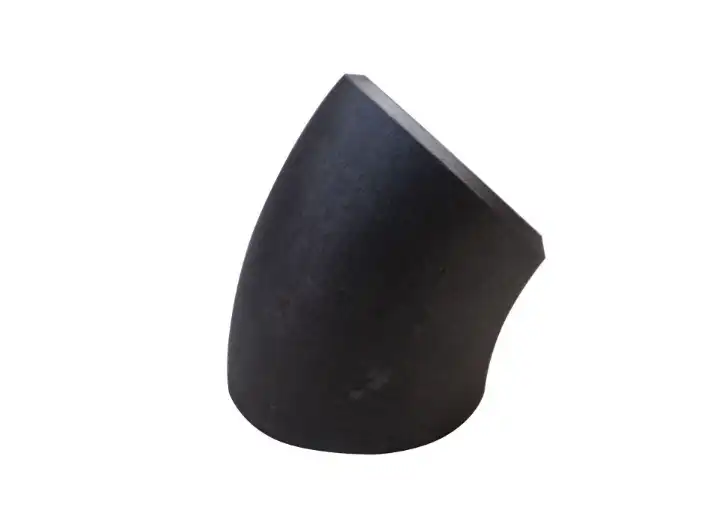
Understanding Custom Carbon Steel Elbows: Key Features and Benefits
Pipeline configurations rarely follow straight paths. Custom carbon steel elbows solve directional challenges in complex industrial environments, offering engineered solutions that balance performance with cost efficiency.
Types and Manufacturing Methods
The way carbon steel elbows are made affects their structural stability and how well they work in certain situations. The main way things are made is by hot forming, which includes hot pressing and thermal bending. These steps make smooth bends that work great in oil and gas lines where high pressure is needed. Welded versions made from steel plates are used in moderate-pressure settings where cost is very important. Socket welding and butt welding are two different ways to connect pipes. Socket welds work best for smaller pipes in places with a lot of shaking, while butt welds are stronger for large gearbox lines.
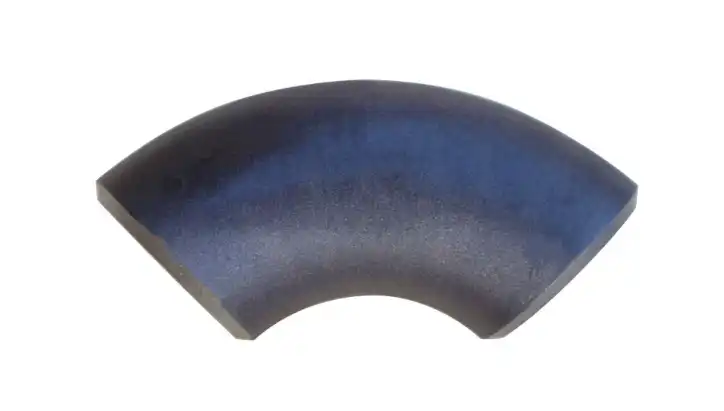
Common Angles and Radius Specifications
For industrial pipes, accurate angles are needed. The 45-degree short radius elbow works great in tight areas where there isn't much room for fitting. This style is used a lot in ships and chemical processing plants because it is made from high-quality materials. Ninety-degree bends are used in about 80% of all elbow uses and are common parts for changing directions. It is easy to switch the flow direction in heat exchangers and heating systems with the 180-degree return elbow. Choosing the right radius has a big effect on hydraulic efficiency. Elbows with a long radius reduce pressure drop and noise, while elbows with a short radius make better use of room but have higher flow resistance.
Material Advantages and Performance Characteristics
Carbon steel elbows have a very high tensile strength, which can be anywhere from 415 MPa to 550 MPa based on the grade. This mechanical strength helps with tough jobs in petroleum companies and water treatment facilities. Surface treatments and covering methods that make something more resistant to corrosion can make it last longer in harsh chemical conditions. The ability to customise means that engineers can choose wall thicknesses from Schedule 10 to Schedule XXS, diameters from half an inch to 48 inches, and pressure values up to ANSI Class 2500. Compared to stainless steel options, carbon steel works just as well and costs less in situations where high rust protection isn't needed. It can cut material costs by 40–60% while still keeping structural integrity.
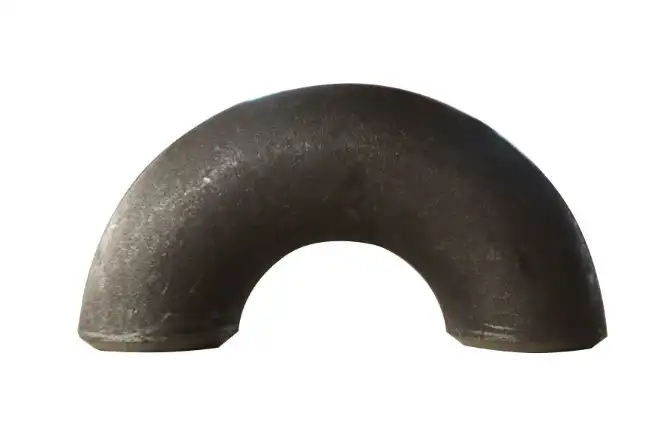
How to Choose the Right Custom Carbon Steel Elbow Manufacturer
Manufacturer selection for Custom carbon steel elbows directly influences project outcomes. The decision framework should evaluate production capabilities, quality systems, and service infrastructure to mitigate supply chain risks.
Production Technology and Standards Compliance
Leaders in a field are set apart from basic sellers by their advanced manufacturing equipment. Our building has hot-forming equipment that can make flawless joints with a width of up to 36 inches, as well as precise welding systems for parts that have already been made. The yearly production capacity of 16,000 tonnes makes sure that there is always enough for big projects. Compliance with standards is the basis of quality assurance. Manufacturers must show that they follow the ASTM A234 material specs, the ASME B16.9 measurement requirements, and the ISO 9001:2000 quality management procedures. Checking special equipment manufacturing licenses, especially those given by regulatory bodies for pressure tank parts, proves that the company is following the law and has the right technical skills.
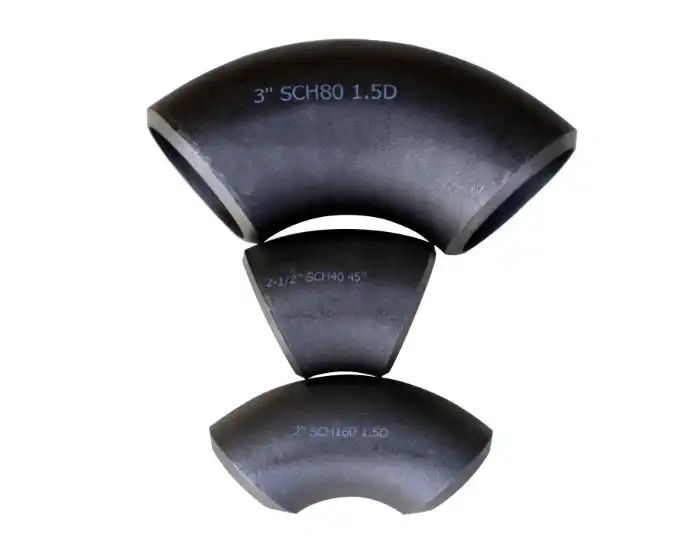
Quality Control Systems
Comprehensive checking procedures separate sellers who are reliable from those who are just looking for business. The first step in our quality control method is to check the raw materials. To do this, we use spectrographic analysis to prove their chemical makeup. During production, coordinate measuring tools are used to make sure that the dimensions match the plan specs to within ±1%. Hydrostatic testing at 1.5 times the original pressure is used to confirm the pressure and temperature ratings. The quality of the welding is given extra attention; flaws are found before they are shipped by using non-destructive testing methods like ultrasound and radiography examination along with 100% eye inspection. From receiving the raw materials to delivering the finished goods, this full inspection system keeps track of everything, so every production batch can be tracked.
Supplier Reliability Indicators
Beyond professional skills, the success of a relationship depends on how reliable the operations are. Lead time flexibility shows how deep our production goes. Our normal delivery time of three weeks for stock specs and six to eight weeks for special orders means we can meet both urgent needs and long-term plans. A dedication to after-sales service, such as expert support and guarantee coverage, shows that the maker trusts the quality of the product. A brand's image, which comes from consistently meeting the needs of 300 customers in over 40 countries, is proof of its ability to give quality over time. Our location, just 120 kilometres from Tianjin Airport and next to the Beijing-Shanghai highway, makes handling easier and lowers the number of problems that come up with transportation.
Top Custom Carbon Steel Elbow Manufacturers for Industrial Use
Manufacturer selection requires evaluating proven performers who combine production scale with technical excellence and global service capabilities.
Cangzhou Oudi Pipe Manufacture Co., Ltd.
Established in 1998, Oudi has built a reputation for delivering engineered pipe fittings to demanding industrial sectors for Custom carbon steel elbows. Our 66,600-square-meter production facility in Mengcun Hui Autonomous County integrates modern manufacturing equipment with systematic quality control. The company specialises in producing American, Japanese, German, and British standard components, offering carbon steel, stainless steel, and alloy steel elbows across complete specification ranges.
Production capacity reaches 16,000 tons annually, supporting projects from small-scale installations to major infrastructure developments. The seamless elbow production line handles sizes from half-inch to 24-inch diameter, while the welded elbow division accommodates larger dimensions up to 48 inches. Material grade selection spans ASTM A234 WPB for general service, A234 WP11 and WP22 for elevated temperature applications, and A420 WPL6 for low-temperature service.
Certification credentials include ISO 9001:2000 quality management system approval and the People's Republic of China special equipment manufacturing license—documentation that satisfies stringent international procurement requirements. Our advanced detection equipment enables complete in-house testing, eliminating reliance on third-party inspection services that delay delivery schedules.
The company maintains self-managed import-export authority, streamlining international transactions and communication. Products serve over 300 customers across Europe, North and South America, Africa, Southeast Asia, and the Middle East, with established distribution channels in Iran, Singapore, and Greece. This global footprint demonstrates capability managing diverse regulatory environments and customer specifications.
Comparative Manufacturing Approaches
Different manufacturers emphasise distinct production philosophies. Some focus exclusively on seamless technology, targeting high-pressure applications in oil and gas transmission. Others concentrate on welded production, optimising cost efficiency for water treatment and building services. Our balanced approach maintains both seamless and welded capabilities, providing procurement teams with single-source convenience for mixed-specification projects. This flexibility proves particularly valuable for EPC contractors coordinating complex installations requiring multiple elbow types and grades within unified quality and delivery frameworks.
Pricing and Delivery Considerations
Cost structures vary based on manufacturing method, material grade, and order volume. Seamless elbows typically command 15-25% premiums over welded equivalents due to raw material costs and production complexity. Bulk purchasing generates economies of scale—orders exceeding 100 tons often receive 8-12% discounts compared to small-lot pricing. Custom sizing incurs additional tooling charges, generally 5-10% of order value for non-standard dimensions. Lead time expectations should account for production scheduling—standard items ship within three weeks, while custom specifications require six-to-eight-week manufacturing cycles. Understanding these variables enables realistic budgeting and project timeline planning.
Applications and Industry Standards for Custom Carbon Steel Elbows
Industrial sectors impose demanding requirements that custom carbon steel elbows reliably satisfy across diverse operational contexts.
Sector-Specific Applications
Oil and gas facilities utilise high-pressure carbon steel elbows in wellhead assemblies, gathering lines, and refinery process piping. The material's strength-to-weight ratio and weldability support economical construction of extensive pipeline networks. Petrochemical plants specify elbows resistant to acidic and alkaline media, often selecting specialised grades with enhanced corrosion inhibitors. Power generation facilities install carbon steel elbows in boiler feed systems, condensate return lines, and cooling water circuits, where temperature cycling resistance proves essential. Water treatment infrastructure employs these fittings in raw water intake systems, distribution networks, and wastewater conveyance, benefiting from the material's durability in aggressive aqueous environments containing chlorides and dissolved solids.
Regulatory Standards and Specifications
Manufacturing quality conforms to internationally recognised codes ensuring safety and interoperability. ASTM A234 governs material chemistry and mechanical properties for wrought carbon steel and alloy steel fittings, specifying minimum tensile strength, yield strength, and elongation values. ASME B16.9 establishes dimensional standards including centre-to-end distances, outside diameters, and wall thicknesses, enabling component compatibility across manufacturers. European EN 10253 standards provide equivalent specifications for markets requiring CE marking compliance. Pressure rating classifications follow ANSI B16.5 designations—Class 150, 300, 600, 900, 1500, and 2500—each corresponding to maximum allowable working pressures at specified temperatures.
Specification and Measurement Guidelines
Accurate technical communication prevents costly errors. Procurement specifications should identify nominal pipe size, schedule or wall thickness, bend angle, radius type, material grade, applicable standards, pressure-temperature rating, end preparation requirements, and surface treatment preferences. Dimensional verification during receiving inspection should confirm outside diameter within ASME B16.9 tolerances, centre-to-end dimensions per standard tables, and wall thickness meeting minimum schedule requirements. These practices ensure delivered components integrate properly with existing piping systems and satisfy design pressure conditions.
Making the Purchase: Procurement Tips for Custom Carbon Steel Elbows
Strategic sourcing approaches for Custom carbon steel elbows optimise cost, quality, and delivery performance while building supplier relationships that support long-term operational success.
Sourcing Strategies
Direct factory engagement offers multiple advantages over distributor channels. Manufacturers provide technical consultation during specification development, ensuring selected components match application requirements. Factory-direct pricing eliminates intermediary markups, typically reducing costs 12-18% compared to distributor channels. Communication proximity with production teams facilitates custom modifications and accelerates issue resolution when clarifications arise. Our company's self-managed export operations simplify international transactions, providing unified points of contact for quotations, order processing, and shipment coordination.
Cost Optimisation Approaches
Volume consolidation generates substantial savings. Combining multiple project requirements into unified purchase orders qualifies for bulk pricing tiers unavailable to fragmented buying. Custom sizing decisions should weigh tooling charges against material costs—sometimes selecting next-larger standard sizes proves more economical than precise custom dimensions. OEM relationship development unlocks preferential pricing and priority scheduling. Establishing annual agreements with baseline volume commitments secures favourable rates while maintaining ordering flexibility for specific project releases.
Quality Assurance Practices
Supplier qualification should precede purchase commitments. Requesting sample components for dimensional verification and metallurgical testing validates manufacturing capability before large orders. Factory audits, either conducted directly or through third-party services, confirm quality system implementation and production conditions. Establishing approved vendor lists based on documented performance metrics streamlines future procurement while maintaining quality standards. Material test reports and dimensional inspection certificates should accompany every shipment, providing traceability and quality evidence for project documentation.
Conclusion
Selecting the right custom carbon steel elbow manufacturer determines project success across cost, schedule, and performance dimensions. Quality manufacturing capabilities, comprehensive standards compliance, and reliable delivery systems distinguish industry leaders from basic suppliers. Oudi's 26-year track record producing engineered pipe fittings for global markets demonstrates the technical expertise and operational consistency that procurement professionals require. Our integrated production systems, rigorous quality controls, and international service infrastructure support projects from initial specification through final installation, providing the confidence that comes from partnering with proven performers.
FAQ
1. What factors influence custom carbon steel elbow durability?
Material grade selection, manufacturing quality, and operating conditions primarily determine service life. ASTM A234 WPB grade suits general applications, while elevated temperature service requires WP11 or WP22 alloy grades. Proper heat treatment during manufacturing relieves residual stresses that otherwise cause premature failure. Operating parameters including internal pressure, temperature cycling, and fluid chemistry affect degradation rates—corrosive media accelerates wall thinning, while thermal cycling induces fatigue cracking. Regular inspection programs monitoring wall thickness and surface condition enable predictive maintenance before failures occur.
2. How can buyers verify manufacturer compliance with industry standards?
Request copies of current ISO 9001 certification and special equipment manufacturing licenses, verifying issuing authority and validity dates. Review material test reports confirming chemical composition and mechanical properties meet ASTM specifications. Examine dimensional inspection reports demonstrating conformance with ASME B16.9 requirements. Third-party verification through independent inspection agencies provides additional assurance—services like SGS, TÜV, and Bureau Veritas conduct factory audits and product testing.
3. Are custom sizes and specifications readily available?
Reputable manufacturers accommodate custom requirements through flexible production systems. Non-standard dimensions, special material grades, and unique end preparations represent routine capabilities. Lead times extend approximately three weeks beyond standard items to account for tooling preparation and production scheduling. Minimum order quantities for custom specifications typically range from 50 to 100 pieces depending on size and complexity, making customisation economically viable for most industrial projects.
Partner with Oudi for Your Custom Carbon Steel Elbow Requirements
Oudi delivers engineered piping solutions backed by 26 years of manufacturing excellence and global project experience. Our 16,000-ton annual production capacity, comprehensive quality systems, and ISO 9001 certification provide the reliability your industrial projects demand. As a leading custom carbon steel elbow manufacturer, we serve petroleum, chemical, power generation, and water treatment sectors across 40 countries with products meeting ASTM, ASME, and international standards. Contact our technical team at oudi-04@oudiguandao.com to discuss your specifications, request detailed quotations, and discover how our manufacturing capabilities and responsive service support your project success with competitively priced, certified pipe fittings delivered on schedule.
References
1. American Society of Mechanical Engineers. (2018). ASME B16.9: Factory-Made Wrought Buttwelding Fittings. New York: ASME Press.
2. ASTM International. (2020). ASTM A234/A234M: Standard Specification for Piping Fittings of Wrought Carbon Steel and Alloy Steel for Moderate and High Temperature Service. West Conshohocken: ASTM International.
3. Nayyar, M. L. (2019). Piping Handbook (8th ed.). New York: McGraw-Hill Education.
4. Mohitpour, M., Golshan, H., & Murray, A. (2007). Pipeline Design and Construction: A Practical Approach (3rd ed.). New York: American Society of Mechanical Engineers.
5. Singh, R. K. (2017). Pipeline Integrity Handbook: Risk Management and Evaluation. Houston: Gulf Professional Publishing.
6. European Committee for Standardisation. (2016). EN 10253: Butt-Welding Pipe Fittings: Part 2 Non-Alloy and Ferritic Alloy Steels with Specific Inspection Requirements. Brussels: CEN.

Need help finding the right solution with our experts. Please contact us.

SINCE 1998 Your Reliable Pipeline Manufacturer



