Top Lap Joint Flange CS Manufacturers: A Buyer's Guide
When sourcing Lap Joint Flange CS (carbon steel) components for industrial piping systems, procurement professionals must navigate a complex landscape of quality standards, production capabilities, and supplier reliability. These specialized two-piece assemblies—comprising a backing flange and a stub end—serve critical roles in oil refineries, chemical plants, water treatment facilities, and shipbuilding operations worldwide. Selecting the right manufacturer directly impacts project timelines, safety compliance, and long-term operational costs. This buyer's guide provides actionable insights into evaluating manufacturers, understanding technical specifications, and making informed purchasing decisions that align with your organization's requirements for quality, certification, and supply chain dependability.
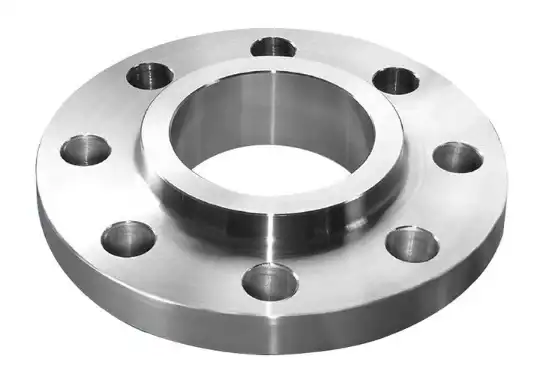
Comparing Lap Joint Flange CS to Other Flange Types
Structural Strength Considerations Across Flange Designs
Welded neck flanges offer better structural integrity for high-temperature and high-pressure applications, and their stress distribution features allow them to handle cyclic loading conditions. Their tapered hub and slow change in thickness make their wear resistance about ten times higher than that of lap joints. Lap joint flanges, on the other hand, only have about 10% of the fatigue strength of a welded neck. This means they are better for low- to moderate-pressure applications than for harsh cyclic services. Slip-on flanges are in the middle. They are easier to install than welded neck types, but they can't be aligned as easily as lap joint types. Knowing these differences in strength helps buyers match the right type of Lap Joint Flange CS to the needs of a system.
Cost-Benefit Analysis for Different Industrial Scenarios
When it comes to big projects, material prices are a big deal. One 12-inch 300# welded neck flange made of stainless steel 316L could cost three times as much as the same lap joint assembly made with a carbon steel backing flange and a stainless stub end. When there are hundreds of links in chemical plants or offshore sites, this cost-benefit adds up. Lap joint flanges work best in motionless or low-cycle situations because they have less wear resistance. Buyers shouldn't just look at the initial purchase price; they should also think about the total costs of ownership, such as installation labor, ease of maintenance, and frequency of replacement.
Application Suitability Based on Operating Conditions
There are three situations where lap joint plates really shine. In chemical processing with a lot of corrosion, the dual-metal strategy keeps costs down while protecting against aggressive media. During regular cleaning cycles, water treatment systems work better when they can be taken apart quickly. When a room doesn't allow the pipe to rotate, the rotational alignment feature is used in confined retrofit settings. Welded neck flanges are still needed for high-pressure steam service, thermal cycles, and important process lines where failure would be so bad that the extra cost is worth it. Socket weld flanges are good for small-bore instrumentation lines, and blind flanges end pipe runs or make entry places for servicing easier.
Top Lap Joint Flange CS Manufacturers: Selection Criteria
Quality Management Systems and Certification Requirements
Manufacturers with a good reputation keep their ISO 9001:2015 license as proof of their quality management standards. This international standard makes sure that procedures for checking raw materials, controlling the production process, and inspecting the finished product are written down. When buying flanges, buyers should make sure that the companies that make them have special equipment manufacturing licenses from national regulatory authorities. This is especially important when the flanges will be used in pressure vessels or places with strict safety oversight. Material test reports that list every heat of steel and link it to the mill certificate are important for keeping track of project quality files and future maintenance records.
Production Capacity and Delivery Reliability
The amount of goods that a company makes each year shows how well it can handle big orders without missing delivery dates. A factory that makes 16,000 tons of goods a year is big enough to handle big project needs while keeping quality consistent through process standardization. Buyers should ask how much of the manufacturer's current capacity is being used. During busy production times, when manufacturers are close to full capacity, they may have trouble with rush orders or quality issues. Lead time clarity is just as important; dependable providers give accurate schedules instead of making false delivery claims that cause project delays later on.
Technical Capabilities and Inspection Equipment
Precision and consistency of products are directly affected by new technologies used in manufacturing. CNC machining centers keep tolerances tighter than manual work, which makes it easier to install parts in the field without any problems. Spectroscopic testers check the chemistry of a material, and hydraulic test equipment checks the stability of the pressure. Non-destructive testing methods, such as ultrasound examination, magnetic particle inspection, and radiographic testing, can find problems inside things that can't be seen with the naked eye. When manufacturers buy automated inspection equipment, they show that they care about quality above and beyond what is required by law. This equipment finds flaws before they get to the customer's facility.
Geographic Considerations and Supply Chain Logistics
Our factory in Cangzhou, which is 120 kilometers from Tianjin Port and directly connected to the highway, has been making carbon steel pipe fittings since 1998. This geographical benefit makes it easier for buyers in North America and Europe to handle the business of exports, since containers can get to major ports on time. Our 66,600-square-meter production campus has integrated operations from getting raw materials to final packing. This means that there are no supply chain risks that come with outsourcing processes. The facility is close to China's steel mills, which makes it easy to get raw materials. Also, the company has established relationships with freight forwarders that give it competitive shipping rates that lower the total landed costs for international customers.
Oudi's production infrastructure supports a wide range of products, such as bends, tees, reducers, and full Lap Joint Flange CS portfolios, made to meet American, Japanese, German, and British requirements. This range means that buyers don't have to arrange with multiple sellers, which makes the buying process easier and lowers the cost of administration. Our self-managed import-export authority makes customs paperwork easier, and our English-speaking technical staff makes it easier to communicate during the order processing and quality verification stages.
Customization Flexibility and Volume Pricing Strategies
Catalog items can be used for many things, but for more complicated projects, they often need to be sized differently or made of a different material. Manufacturers who offer customization options, like non-standard bore sizes, unique facing finishes, or different steel alloys, give engineered systems a lot of useful flexibility. When people order a lot of flanges, the prices should reflect economies of scale. Whether they buy hundreds or thousands, the cost should go down in proportion to the size of their order. Pricing models that are clear and separate costs for things like materials, labor, inspection fees, and packaging make budgeting easier and make bidding more competitive.
Supplier Reputation and After-Sales Support Services
Manufacturers that have been in business for decades show that they are stable and have a lot of experience. In addition to marketing claims, customer recommendations from similar businesses can tell you a lot about how well a product or service really works. After-sales support features, such as technical advice for installation questions, the availability of replacement parts, and quick communication channels, set superior suppliers apart from transactional vendors. Buyers should think of makers as long-term partners instead of one-time suppliers, especially when they need to do upkeep, repairs, and operations at more than one facility.
How to Procure Lap Joint Flange CS Efficiently
Preparing Comprehensive Specification Documents
To buy something correctly, you need to start with detailed specification sheets that list all of your technical needs, such as the nominal pipe size, pressure class, facing type, material grade, relevant standards, any special markings, and testing needs. Include dimensional drawings for non-standard shapes and sizes, and make sure the tolerances are clear. Clear specifications cut down on misunderstandings that lead to late deliveries or products that don't meet standards. Refer to project rules and standards (ASME, API, ASTM) that control the properties of materials and how they are made. This will help sellers understand what is expected of them from the start of the quote process.
Material Certification and Documentation Verification
Ask for certified material test records (CMTR) with every shipment. These reports should list the chemical make-up and mechanical features of every production heat. These certificates should list specific ASTM standards and show real test results, not just the bare minimum. Third-party inspection services can make sure that factory standards are met before a package goes out, which lowers the risk of rejection upon delivery. Keep all of your quality paperwork in order for project files, regulatory audits, and future upkeep.
Negotiation Strategies Focused on Total Value
Comparing prices per piece doesn't give a full picture of the value of procurement. Figure out the total cost of ownership, which should include freight, customs taxes, inspection fees, the cost of keeping goods, and the possible outcomes of a failure. A slightly higher unit price from a reputable maker might be a better deal than low-cost providers whose quality records aren't always clear or whose delivery times are hard to predict. Talk about payment terms that meet both the buyer's and the supplier's needs for cash flow and risk management. For example, balances are due after inspection approval, and deposits are due when the order is confirmed.
Managing Lead Times Within Project Schedules
Standard goods usually ship in four to six weeks, but custom designs can take eight to twelve weeks, based on how hard they are to make and how long it takes to get the materials. Include enough "buffer" time in your project schedules to account for the fact that delays can happen even with the best planning. Keep lines of communication open with your suppliers about the state of the production and ask for information at key points in the process, such as when the materials arrive, the machining is finished, the testing is done, and the shipment is ready to go. Proactive tracking lets you know about possible delays early on, giving you time to make plans for what to do if something goes wrong.
Leveraging Established Supplier Networks
Having long-term relationships with manufacturers that you know you can trust lowers the risk of buying something because you know what quality standards to set and how to communicate with them. When buyers are in charge of multiple projects, they can get better deals on supplies when they buy from fewer suppliers. It's also easier to manage these suppliers. Digital platforms for buying things are making it easier to find suppliers and manage orders. However, for complex technical products, it's still best to deal directly with manufacturers, as this lets you have more in-depth technical conversations than with automated ordering systems.
Conclusion
To find the best Lap Joint Flange CS maker, you need to think about a lot of things, such as quality certifications, production capacity, specialized skills, location, and the possibility of a long-term relationship. Lap joint flanges made of carbon steel are a cheap way to solve problems in moderate-pressure situations where alignment freedom and easy upkeep are important. Because they are made of two pieces, material optimization strategies can be used to lower project costs without affecting performance. In addition to the initial price, buyers need to look at the total cost of ownership, the reliability of delivery, and the help provided after the sale when evaluating providers. Manufacturers with ISO certification, the right amount of production capacity, high-tech inspection tools, and open communication can build long-term relationships with buyers from a wide range of industries.
FAQ
1. What pressure ratings are typical for carbon steel lap joint flanges?
Product specifications for carbon steel lap joint flanges made to ASME B16.5 standards range from 150# to 2500# in pressure classes, with 150#, 300#, and 600# being the most common. At room temperature, the 150# class can handle working pressures of up to about 285 psi, and the 300# class can handle up to about 740 psi. Following the de-rating curves set out in ASME standards, the actual pressure limits go down as the operating temperatures go up. Buyers need to make sure that the pressure class they choose fits the design conditions of the system and leaves enough room for error.
2. How does carbon steel compare to stainless steel for corrosion resistance?
Carbon steel doesn't rust in dry places or with process fluids that don't rust, but it oxidizes quickly in wet places, acidic compounds, or chloride-containing atmospheres. In mildly corrosive environments, protective coatings make things last longer. 304, 316, and higher types of stainless steel are better at resisting rust and chemical attack, which is why they cost more in corrosive applications. The lap joint flange design lets you choose the right material for the job. For example, you can use carbon steel backing flanges and stainless steel stub ends for fluid contact to make a cost-effective hybrid assembly.
3. Can manufacturers produce lap joint flanges to non-standard dimensions?
Well-known companies can still make custom flanges that fit odd bolt patterns, special bore sizes, or changed face dimensions that aren't available in their standard catalogs. For custom manufacturing, you usually need engineering sketches that show all of the sizes and tolerances that are needed. Lead times are longer for custom goods because they need special tools or materials that can't be found easily. For custom designs, there may be a minimum order quantity needed to cover setup costs. The exact limits depend on the maker and the level of complexity.
Partner with Oudi for Your Lap Joint Flange CS Requirements
Since 1998, Oudi has been a reliable Lap Joint Flange CS seller to more than 300 customers in 40 countries. They offer high-quality goods that are backed by ISO 9001 certification and licenses to make special equipment. Our annual production capacity of 16,000 tons ensures that big orders are always filled, and we keep strict quality control from checking the raw materials to inspecting the finished product. We make all kinds of pipe fittings out of carbon steel, stainless steel, and alloy steel that meet American, Japanese, German, and British standards. These fittings are used in oil, chemical, natural gas, water treatment, and power generation projects. You can email our technical team at oudi-04@oudiguandao.com to talk about your specific needs, get detailed quotes, or set up factory tours. We'd love the chance to show you how our manufacturing skills and customer-focused service can help you reach your procurement goals.
References
1. American Society of Mechanical Engineers. (2020). ASME B16.5: Pipe Flanges and Flanged Fittings: NPS 1/2 through NPS 24 Metric/Inch Standard. New York: ASME Press.
2. ASTM International. (2019). ASTM A105/A105M-19: Standard Specification for Carbon Steel Forgings for Piping Applications. West Conshohocken: ASTM International.
3. Becht, C. (2018). Process Piping: The Complete Guide to ASME B31.3 (4th ed.). New York: ASME Press.
4. Mokhatab, S., & Towler, B.F. (2021). Handbook of Natural Gas Transmission and Processing: Principles and Practices (4th ed.). Houston: Gulf Professional Publishing.
5. Parisher, R.A., & Rhea, R.A. (2020). Pipe Drafting and Design (4th ed.). Cambridge: Gulf Professional Publishing.
6. Smith, P.R., & Zappe, R.W. (2017). Valve Selection Handbook: Engineering Fundamentals for Selecting the Right Valve Design for Every Industrial Flow Application (6th ed.). Oxford: Gulf Professional Publishing.

Need help finding the right solution with our experts. Please contact us.

SINCE 1998 Your Reliable Pipeline Manufacturer



