What Is a CS Concentric Reducer and Where Is It Used?
A CS Concentric Reducer is a cone-shaped carbon steel pipe fitting designed to connect two pipes of different diameters while maintaining a symmetrical centerline alignment. This symmetrical design ensures smooth fluid transitions from larger to smaller diameters, minimizing turbulence and pressure loss. CS concentric reducers are extensively used in vertical piping systems across oil, chemical, natural gas, and water conservancy industries, where balanced flow distribution and structural stability are essential. The carbon steel construction provides exceptional strength, durability, and cost-effectiveness, making it a preferred choice for demanding industrial applications worldwide.
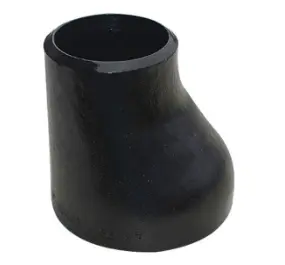
Applications and Advantages of CS Concentric Reducers
I've seen how carbon steel circular reducers solve specific technical problems in a wide range of industrial settings over the years as I've worked with clients in the chemical processing, oil and gas, and power generation sectors. The concentric geometric form and the qualities of carbon steel make it very useful in many situations.
Industrial Applications Across Major Sectors
In oil and gas facilities, vertical pump discharge lines are one of the main places where concentric CS Concentric Reducers work really well. In these setups, the reducer changes the diameter of the pipe from the pump outlet diameter to the pipeline diameter while keeping the pressure on the pipe supports equal and reducing vibrations. Power plants use concentric reducers to handle steam at pressures higher than 250 bar in their high-pressure steam distribution systems. The even layout stops the wear and tear that happens when fast-moving steam hits uneven surfaces.
In reactor feed lines where various fluid sources mix, chemical processing columns use concentric reducers a lot. The concentric shape keeps the laminar flow patterns that are needed for steady chemical reaction rates and stops the solids that are suspended in the liquid from settling during vertical slurry transport. These fittings are used in water conservation projects in places like water treatment plants, pumping stations, and distribution networks where vertical risers and drop pipes change sizes. When there are vertical pipe runs that need to change diameters, the construction and shipbuilding industries use concentric reducers in HVAC systems, fire suppression networks, and ballast systems.
Material Advantages of Carbon Steel Construction
Mechanical strength, low cost, and easy access are all great reasons why carbon steel is the material of choice for many industrial piping uses. ASTM A234 WPB carbon steel has a tensile strength that is usually between 60,000 and 85,000 psi. This means that it can hold up well under high temperatures and pressures. Carbon steel is very easy to weld, so it can be installed in the area without any special tools or methods. Because the material is compatible with different pressure classes, a single grade can be used for more than one thing.
Carbon steel concentric reducers are very helpful for industrial pipe systems in the following ways:
- Cost-effectiveness: Carbon steel delivers superior value compared to stainless steel or exotic alloys, reducing project costs by 40-60% while maintaining performance in non-corrosive environments. This cost advantage becomes substantial in large-scale projects requiring hundreds of fittings.
- High-temperature performance: Carbon steel maintains mechanical properties at elevated temperatures up to 427°C (800°F), making it suitable for steam systems, thermal fluid circuits, and high-temperature process applications without material degradation.
- Structural strength: The material's high tensile strength and ductility provide resistance to pressure surges, water hammer, and mechanical stress, ensuring long-term system reliability even under demanding operational conditions.
- Universal availability: Carbon steel pipe fittings are manufactured globally with standardized specifications, ensuring consistent supply chains, interchangeability between manufacturers, and reduced procurement lead times for both routine and emergency replacements.
All of these benefits help procurement managers meet their main goals, which are to balance performance needs with budget limitations, make sure the supply chain is reliable, and follow all industry standards.
Installation Best Practices and Common Pitfalls
When installed correctly, concentric reducers work as intended for the whole time they are in use. To get ready for welding, you need to keep the bevel angle and root gap at the right levels. These levels are usually 1/16 inch to 1/8 inch, based on the thickness of the wall. Welders who are qualified should follow the steps in ASME Section IX when they do butt-welds. They should then do a visual and X-ray inspection if the code requires it. The part should be put in place so that both sides have enough support to keep the offset stress from building up.
Misalignment during fit-up is a common installation mistake that can lead to stress concentrations and possible leak paths. If you don't purge enough when welding stainless-lined or clad steel reducers, the inside surface can become sugared, which makes them less resistant to corrosion. As we already said, another common mistake that causes problems is using circular reducers in horizontal pump flow applications. Orientation is very important. For vertical installations, concentric designs work best, while horizontal installations usually need eccentric alternatives.
Comparing CS Concentric Reducers with Other Reducer Types
When buying, teams know how carbon steel circular reducers stack up against other choices, and they can make smart choices that meet technical needs and stay within budget.
Structural and Operational Differences Between Reducer Types
The main difference between concentric and eccentric reducers is how the centerlines are aligned and how the flow behaves as a result. Concentric reducers keep axial symmetry by spreading flow evenly around the pipe's outside diameter, even when the diameter changes. This uniformity stops preferred flow routes and keeps velocity profiles consistent, which is very important for situations where there are suspended solids or multiple-phase flows. Eccentric reducers move the axis out of the way to keep one side flat, either top-flat (TOS) or bottom-flat (BOS). This keeps air from building up or sediment from collecting, based on the direction.
From a structural point of view, circular reducers spread out internal pressure loads evenly, which makes designing supports and analyzing stress easier. When you use eccentric reducers, you get uneven loading patterns that need careful support placement and sometimes extra support. Making concentric CS Concentric Reducers is easier; they just need to be pressed or rolled. But making eccentric types requires special tools, which can change the price and availability.
Carbon Steel vs. Stainless Steel: Material Comparison
When looking at different types of materials, carbon steel and stainless steel each have their own benefits. Carbon steel is more cost-effective than 304 or 316 stainless steel because the materials used to make it are usually 50–70% less expensive. In non-corrosive environments, carbon steel's strength-to-weight ratio makes it a better choice. In some cases, it can give the same pressure values at lower wall thicknesses. It takes less training and special tools to weld and fix carbon steel than other metals.
When it comes to corrosive conditions, stainless steel is the best. It is very resistant to chemical attack, oxidation, and stress corrosion cracks caused by salt. The material keeps its mechanical properties over a wider range of temperatures, from very cold environments to service at temperatures above 500°C. Pharmaceutical and food processing industries often have to use stainless steel even if it costs more because it looks better and is better for hygiene. In the end, the environment decides which material to use: carbon steel is best for fuel service, steam systems, and water applications with the right covering; stainless steel is best for corrosive chemicals, marine environments, and applications that need surfaces that are free of contamination.
Performance Benchmarking and Market Positioning
In heavy industrial settings, carbon steel concentric reducers are the best choice because they offer the best mix of performance, longevity, and cost. When compared to ductile iron fittings, carbon steel ones can handle more pressure and are easier to weld, but they cost a little more. Compared to polymer alternatives like HDPE or PVC, carbon steel has superior high-temperature performance and mechanical strength, which justifies its use even though it costs more. Exotic alloys like Inconel and Hastelloy are better than carbon steel in very corrosive environments, but they cost 10–20 times as much, so they can only be used when carbon steel fails.
Carbon steel concentric reducers are a great long-term investment because they have a low total cost of ownership. The initial cost of the materials is still moderate; the installation is easy because the workers are familiar with the welding process, and there isn't much maintenance needed as long as the equipment is used properly. Service life is usually 20 to 30 years for systems that are properly built and have enough rust protection. Carbon steel is the measure against which other materials are judged because it lasts a long time, is easy to find, and is standardized.
How to Choose the Right CS Concentric Reducer for Your Project
To find the right concentric reducer, you have to look at a lot of technical factors and the supplier's abilities to make sure they work well and are a good value.
Critical Technical Parameters for Specification
When choosing a reducer, precise size matching is the first step. Both lines must have the same outside diameter and schedule (wall thickness) for the joint to fit. A 6-inch to 4-inch reducer that lists both pipe schedules makes sure that the fit-up and weld preparation are done correctly. Pressure rating compatibility is also very important. The reducer should match or exceed the pressure class of the pipe system, which is based on wall thickness instead of flange class ratings. Material grade approval shows that the carbon steel meets the requirements of ASTM A234 WPB or a similar standard. Material test records (MTRs) show how the steel was made and how much heat it absorbed.
The temperature of the service environment affects the choice of material and the amount of heat treatment needed. For uses above 400°C, a normalizing heat treatment may be needed to improve the structure of the grains and make sure the mechanical properties are maintained. Dimensional standards must match the overall piping specification to make sure they can be used interchangeably and meet the code. These standards could be ASME B16.9, DIN 2605, or JIS B2311. The bigger pipe diameter determines the face-to-face length, which changes the layout of the pipes and the distance between supports.
Evaluating Suppliers for Quality and Reliability
Comparing prices is only one part of evaluating a supplier. Quality assurance skills and operational dependability are also important. Quality certificates are the building blocks. For example, ISO 9001:2000 certification shows that the company manages quality in an orderly way, and special equipment manufacturing licenses show that the company follows the rules for making pressure equipment. Production capacity is very important. Suppliers with large annual outputs, like plants that make 16,000 tons a year, offer supply chain stability and economies of scale that smaller businesses can't match.
Planning purchases and keeping inventory costs in check are affected by lead times and minimum order quantities. Long-standing companies that make a standard range of products can usually offer shorter lead times for popular sizes and can work with customers to make custom specs for big orders. Dimensional correctness and mechanical properties are guaranteed by technical skill, which can be seen in the advanced production tools and testing facilities. The fact that radiographic testing, ultrasound checking, and hydrostatic testing can be done shows that quality control is complete. Exporting to big markets like North America, Europe, and Asia shows that you know about international rules and the paperwork that is needed.
Cost Considerations and Procurement Strategy
Understanding what causes costs is important for negotiating and managing budgets well. The prices of raw materials change with the steel market, and they usually make up 50 to 65% of the cost of a finished fitting. Depending on how complicated they are, customization needs like non-standard sizes, special materials, or more testing can add extra costs of 15% to 40%. For international purchases, logistics costs like shipping, customs fees, and packaging can make up 10 to 20 percent of the final price.
When you buy in bulk of standard sizes, volume-based pricing can save you a lot of money. Compared to small-quantity orders, bulk purchases can cut unit costs by 20–35%. When you buy directly from the factory, you don't have to pay the middleman. This cuts costs by 15 to 25 percent and gives you direct access to expert help and quality documentation. Long-term supply deals with well-known manufacturers keep prices stable and give priority to certain items when the market is short. OEM partnerships let distributors serve specific market segments, customize and brand their products, setting them apart from competitors.
Manufacturing Process and Quality Standards of CS Concentric Reducers
Knowing the steps taken to make something, from the raw material to the finished fitting, can help you understand quality issues and how reliable the performance is.
Fabrication Methods and Production Stages
The first step in making a carbon steel concentric reducer is choosing the raw materials. Steel plates or seamless pipes that meet ASTM A234 specifications are bought, and their chemical makeup and mechanical properties are checked. Hot pressing or cold forming is usually used for the forming process, depending on the size and wall thickness. When you hot press, you heat the material to forging temperature, which is about 1150°C, and then use hydraulic presses with special dies to make it into a cone. For bigger sizes and thicker walls, this method is better because it makes reducers that are seamless and don't have any weld seams.
Cold forming is used for smaller sizes and thinner walls. High-tonnage presses slowly shape material that is at room temperature into the lower outline. This process makes the material more difficult to bend, so it needs to be normalized and heated again to make it flexible again and improve the structure of the grains. To make welded reducers, steel plates are rolled into cone-shaped pieces, the seam is butt-welded, and the finished measurements are machined. This method works well for very large diameters where seamless fabrication is not possible.
Bevel cutting is used in machining to get the weld ends ready according to ASME B16.25 standards. The root face should be 37.5° ± 2.5°. To finish the surface, shot blasting may be used to get rid of mill scale, and then, if needed, a protective coating may be applied. Marking includes the size, material grade, heat number, and manufacturer's name, which makes it possible to track goods all the way through the supply chain.
Quality Control and Testing Protocols
Tough quality control at several stages of production makes sure that the dimensions are correct and the machine works properly. Chemical makeup is checked using spectrographic analysis, and mechanical qualities are checked using tensile tests. This makes sure that the material meets ASTM standards. During the forming process, calibrated gages and coordinate measuring tools are used for in-process measurement checks to make sure that the wall thickness is regular, the outside width is in line, and the face-to-face length is correct.
Visual inspection for surface flaws, measuring dimensions against drawing standards, and hydrostatic pressure testing to confirm structural integrity are all parts of a non-destructive examination. Pressure testing usually uses 1.5 times the design pressure for a set amount of time to make sure there are no leaks. Radiographic or ultrasonic testing is done on welded reducers to find gaps or breaks inside them. Testing for hardness makes sure that fittings that have been cold-formed or heat-treated meet certain maximum hardness values, usually 197 HB for carbon steel. This keeps the fittings from breaking easily.
During the final inspection, the shape of the bevel angle, the quality of the surface finish, and the legibility of the markings are all checked. Each shipment comes with a material test record (MTR) that lists the chemical analysis, mechanical properties, and heat treatment factors. This gives buyers and code officials the tracking they need. When mentioned in buy orders, independent verification can be done by third-party inspection by companies like Lloyd's Register, Bureau Veritas, or SGS.
Material Grades and Certification Requirements
ASTM A234 WPB is the standard material specification for wrought carbon steel fittings, such as concentric reducers, that can be used at both low and high temperatures. The standard sets minimums for chemical makeup (carbon, manganese, phosphorus, sulfur, silicon) and minimums for mechanical properties (tensile strength, yield strength, elongation). For low-temperature use or important uses, extra standards like Charpy V-notch impact testing at certain temperatures may be needed.
If a company has ISO 9001 certification, it means that they have a quality management system with written rules, regular checks, and ways to keep making things better. API 5L certification covers materials used for line pipes and fittings that are used in pipeline applications. It needs specific tests and paperwork. Regulatory authorities in major markets issue special equipment manufacturing licenses to make sure that regulations for pressure equipment are followed and to allow production for code-stamped service. For European markets, CE marking is needed, and for North American markets, ASME code stamps are needed for pressure vessels. Other certifications may be needed depending on the end use and the jurisdiction.
Conclusion
CS Concentric Reducers are important parts of industrial pipe gauges that need to change the diameter of a pipe while keeping the flow symmetrical. Their cone-shaped shape, centerline alignment, and carbon steel construction make them safe for use in oil, chemical, natural gas, water conservation, and power production. By knowing the technical differences between concentric and eccentric types, the benefits of carbon steel as a material, and the right way to use it, buying professionals and engineers can choose parts that meet system needs while keeping costs low. Dimensional accuracy, mechanical integrity, and a long service life are all ensured by good manufacturing processes, strict testing protocols, and adherence to international standards. Carbon steel concentric reducers are still a good choice for industrial projects that need stable, cost-effective pipe solutions. They are backed by decades of field experience and ongoing manufacturing innovation.
FAQ
1. When Should I Choose a Concentric Reducer Over an Eccentric Reducer?
Choose concentric reducers for vertical pipe runs where centerline alignment keeps the structure balanced and stops supports from being loaded unevenly. Eccentric reducers work well in horizontal situations, like in pump suction lines, where keeping the top flat stops air pockets from forming that can damage equipment and cause cavitation.
2. How Is the Pressure Rating Determined for Concentric Reducers?
There are no set pressure class values for butt-welded concentric reducers in the style of flanges, such as 150# or 300#. In fact, they are rated to withstand the same amount of internal pressure as seamless pipe made of the same material grade and schedule (wall thickness). This makes sure that the whole piping system is compatible and structurally sound.
3. Can Schedule 40 and Schedule 80 Pipes Connect Directly with a Concentric Reducer?
A direct link needs to be set up first. To match the inside diameter of the mating pipe, the reducer bore must be tapered or counterbored on the inside. This gets rid of any steps that could cause flow problems, a drop in pressure, or corrosion. The best performance and a smooth flow transition are guaranteed by proper machining.
4. What Heat Treatment Is Required for Carbon Steel Concentric Reducers?
It is common for ASTM A234 WPB carbon steel reducers that were hot-formed or cold-formed to need a normalizing heat treatment. This process improves the structure of the grains, lowers internal stresses, and keeps hardness levels below the maximum requirement of 197 HB. This keeps the material from breaking and makes sure it can be shaped safely.
Partner with Oudi for Premium CS Concentric Reducer Solutions
Since 1998, Oudi has been making high-quality carbon steel pipe fittings. With a production capacity of 16,000 tons per year, we serve over 300 users in 40 countries. We can supply CS Concentric Reducers that meet American, Japanese, German, and British standards in sizes from 1/2 inch to 60 inches. All of these come with ISO 9001:2000 approval and licenses to make special equipment. We keep an eye on quality from the time we inspect the raw materials until the last test is done. We use high-tech production and inspection tools to make sure that every fitting meets international standards. Please email our team at oudi-04@oudiguandao.com for expert advice, low factory-direct prices, and dependable shipping schedules that fit your project's needs and your budget.
References
1. American Society of Mechanical Engineers. (2020). ASME B16.9: Factory-Made Wrought Butt-Welding Fittings. New York: ASME Press.
2. ASTM International. (2021). ASTM A234/A234M: Standard Specification for Piping Fittings of Wrought Carbon Steel and Alloy Steel for Moderate and High Temperature Service. West Conshohocken: ASTM International.
3. Nayyar, M. L. (2019). Piping Handbook (8th ed.). New York: McGraw-Hill Education.
4. Mohitpour, M., Golshan, H., & Murray, A. (2007). Pipeline Design & Construction: A Practical Approach (3rd ed.). New York: ASME Press.
5. Singh, R. (2017). Applied Welding Engineering: Processes, Codes, and Standards (2nd ed.). Oxford: Butterworth-Heinemann.
6. Ellenberger, J. P. (2018). Piping and Pipeline Calculations Manual: Construction, Design, Fabrication, and Examination. Oxford: Butterworth-Heinemann.

Need help finding the right solution with our experts. Please contact us.

SINCE 1998 Your Reliable Pipeline Manufacturer



