Where to Buy Lap Joint Flange CS for Industrial Piping?
US B2B customers may choose from a wide range of options when purchasing Lap Joint Flange CS for their industrial pipe requirements. The most dependable way is to work directly with ISO certified manufacturers that have strong quality control systems and special equipment production permits. Oudi and other companies have a full variety of products that fulfil ANSI, DIN, and JIS requirements. The annual production capacity is 16000 tonnes, and the manufacturing experience is more than 20 years. These suppliers have long-term relationships and can provide material traceability, third-party inspection services, and reliable delivery dates, which are vital for project timetables in the oil, chemical, and water conservancy industries.
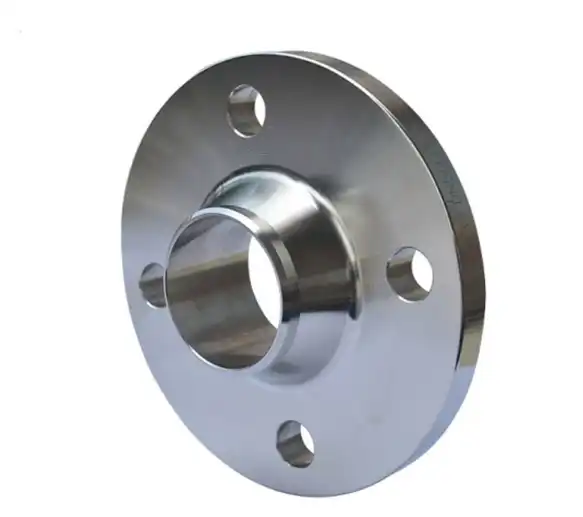
Comparing Lap Joint Flange CS with Other Flange Types and Materials
Material Selection: Carbon Steel Versus Stainless Alloys
Lap Joint Flange CS lap joint flanges deliver cost advantages that become significant in large-scale projects requiring hundreds of connection points. A typical ASTM A105 flange costs 60-70% less than equivalent 316L stainless steel components, making them economically attractive for applications where corrosion resistance requirements remain moderate. The material performs reliably in water service, natural gas distribution, and low-concentration chemical handling at temperatures below 650°F. However, carbon steel requires protective coatings in humid environments or when exposed to chlorides, adding $15-25 per flange to lifecycle costs depending on coating specification.
Stainless steel alternatives provide superior corrosion resistance in marine environments, pharmaceutical processing, and food-grade applications where product contamination concerns outweigh initial cost considerations. The choice between materials depends on fluid characteristics, operating temperature, and maintenance access frequency rather than pressure rating alone.
Structural Comparison with Welding Neck and Slip-On Designs
Lap joint flanges possess approximately 10% of the fatigue strength that welding neck flanges offer, limiting their suitability to low-to-moderate pressure applications and services without severe cyclic loading. Welding neck flanges feature a long tapered hub that reinforces the pipe connection, distributing stress across a larger area and providing superior performance under thermal expansion cycles and vibration conditions. This structural difference makes welding neck designs mandatory for high-pressure steam service above 600 psi or critical hydrocarbon processing units.
Slip-on flanges share dimensional similarities with lap joint components but lack the radius that accommodates stub end geometry. Installation procedures differ significantly—slip-on flanges require two fillet welds (inside and outside the pipe), creating permanent joints, while lap joint assemblies depend on the stub end butt weld for structural integrity. The rotational capability of lap joint designs provides alignment advantages that slip-on configurations cannot match, particularly valuable when connecting prefabricated piping spools in congested industrial spaces.
Face Types and Gasket Compatibility Considerations
Lap joint flanges typically feature flat face configurations that mate with corresponding stub end surfaces, requiring full-face gaskets for proper sealing. This differs from raised face designs common on welding neck and slip-on flanges, which use ring gaskets and concentrate sealing force over a smaller area. The flat face geometry distributes bolt load more evenly, reducing gasket crushing in applications using softer sealing materials like rubber or PTFE. Engineers must specify gasket materials compatible with both pressure class and process fluid—fiber-reinforced compressed sheets for general water service, spiral-wound metal gaskets for hydrocarbon applications, and Viton or Kalrez elastomers for chemical resistance.
How to Choose the Right Lap Joint Flange CS Supplier for Industrial Projects
Certification Verification and Quality Management Systems
Supplier evaluation begins with documentation review confirming ISO 9001:2015 certification and jurisdiction-specific manufacturing licenses. We prioritize manufacturers holding Special Equipment Manufacturing Licenses issued by regulatory authorities, demonstrating compliance with pressure vessel and piping component safety standards. Request copies of current certificates rather than relying on website claims—fraudulent certification representations occur frequently in international trade. Legitimate suppliers provide mill test reports (MTRs) for each production batch, documenting chemical composition, mechanical properties, and heat treatment procedures traceable to raw material lots.
Third-party inspection arrangements through agencies like Bureau Veritas or TÜV SÜD add verification layers that protect against non-conforming products. Suppliers confident in their quality systems accommodate witness testing and factory audits without resistance. Oudi's facility in Cangzhou maintains open-door policies for client inspections, with advanced detection equipment including ultrasonic thickness gauges, spectroscopic analyzers, and hydrostatic testing stations that verify dimensional accuracy and structural integrity before shipment.
Production Capacity and Supply Chain Reliability
Annual production capacity directly impacts delivery reliability during peak construction seasons when multiple projects compete for manufacturer attention. Suppliers operating at maximum capacity cannot accommodate expedited orders or specification changes without delaying scheduled shipments. A manufacturer producing 16,000 tons annually maintains buffer capacity to absorb demand fluctuations while supporting clients with predictable lead times—typically 4-6 weeks for standard specifications and 8-10 weeks for customized pressure classes or special coatings.
Evaluate inventory practices that indicate supply chain maturity. Manufacturers maintaining raw material stocks equivalent to 2-3 months of production demonstrate financial stability and insulation from steel market volatility. This preparedness translated to measurable benefits during the 2021 steel shortage, when suppliers with strategic inventories fulfilled commitments while competitors imposed force majeure delays. Request production schedules showing current order backlog and projected completion dates to assess realistic delivery windows.
Technical Support and Engineering Collaboration
Supplier technical capabilities extend beyond manufacturing to include engineering support during specification development and troubleshooting. We value manufacturers who assign dedicated technical contacts familiar with ASME codes, pressure-temperature ratings, and material selection principles for products such as Lap Joint Flange CS. These resources prove invaluable when projects encounter design challenges requiring component modifications or when procurement teams need guidance selecting appropriate pressure classes for specific service conditions.
Oudi's engineering team assists clients with flange selection for applications spanning ambient water service to elevated-temperature hydrocarbon processing, drawing on experience serving oil, chemical, and natural gas sectors across 40 countries. This expertise helps procurement managers avoid over-specification that inflates costs unnecessarily or under-specification that compromises safety margins. Technical support also accelerates project approvals by providing documentation packages that satisfy engineering review requirements in EPC contractor workflows.
Installation and Maintenance Guide for Lap Joint Flange CS
Proper Assembly Procedures and Alignment Techniques
Begin proper installation by examining the mating surfaces for cleanliness, flatness, and any damage that might prevent the gasket from sealing. The stub end should be butt-welded to the pipe using approved welding processes and trained welders. Weld integrity shall be verified by radiographic or ultrasonic inspection as required by ASME B31.3. When the weld is finished and post-weld heat treatment has been performed, if necessary, installers move the backing flange over the pipe to rest on the stub end shoulder. At this point, the ability to rotate the flange enables the bolt holes to be precisely aligned with the mating flange, without the need to torque the piping system.
Gaskets must be centred and compressed properly on installation. Position the gasket so that it covers the whole area of the flat face. Make sure that there are no gaps between the gasket perimeter and the flange outer diameter. Lubricate the bolt threads and bearing surfaces to maintain constant torque levels for uniform gasket compression. In a star pattern, tightening occurs from 30% to 60% to 100% of target torque over three passes to provide uniform load distribution and avoid gasket deformation.
Recommended torque values are a function of bolt size, material grade, and pressure class. ASME PCC-1 has extensive torque tables. Typical values for 150# Class flanges with 3/4-inch ASTM A193 B7 bolts are in the 150-175 ft-lbs range with normal lubricants. Installers should check that the torque parameters on the project engineering drawings are in agreement with those recommended by the gasket manufacturer to prevent over-tightening, which may crush gaskets, or under-tightening, which can allow leakage.
Common Installation Challenges and Solutions
The most common installation problem remains misalignment of pre-fabricated spools, especially on retrofit jobs when field dimensions differ from design drawings. Lap joint flanges have rotational capacity to help solve this problem – if the bolt holes are not aligned initially, the backing flange may be rotated around the stub end to get it in the correct place without having to modify the pipe. Severe misalignment, in excess of ±5 degrees, might be an indication of upstream issues that need to be corrected before continuing.
Gasket blow-out at first pressurisation is usually due to insufficient bolt torque or incorrect tightening sequence. Always retorque bolts when the system achieves working temperature. Thermal expansion removes initial preload. We advised checking the tightness of the bolt after 24 hours of operation and again after one week of operation. If you have torqued correctly and have continued leaking, the gasket material is not compatible with the process fluid. Review the chemical resistance charts and consider upgrading to a spiral-wrapped or multi-layer metal gasket.
Maintenance Practices to Extend Service Life
The inspection schedule is dictated by service severity and regulatory requirements. Annual visual examination for corrosion, bolt integrity, and gasket degradation is beneficial for most industrial applications. High-consequence services such as hydrogen or dangerous chemical handling need quarterly inspections with leak detection surveys. Inspect the stub end weld region thoroughly, utilising magnetic particle or dye penetrant testing for stress cracking due to temperature cycling or vibration.
Corrosion resistance is dependent on the upkeep of protective coatings. In service, zinc-rich primers and epoxy topcoats normally used for carbon steel flanges are exposed to weathering and mechanical deterioration. Any coating defect should be repaired within 30 days to avoid rapid corrosion of exposed regions. For example, cathodic protection systems for buried or submerged flanges in maritime situations where electrolytic corrosion may develop fast without mitigation.
Do not reuse compressed gaskets when disassembling – leakage and system integrity are compromised when gaskets have been compressed. Maintain spare gasket inventories for all installed sizes and pressure classes of flanges to save downtime during unscheduled repairs. Maintain records of the gasket specs and installation torque values to maintain consistency over time and across different mechanics.
Where and How to Buy Lap Joint Flange CS: Procurement Channels and Tips
Direct Manufacturer Relationships Versus Distributor Networks
Working directly with manufacturers like Oudi has benefits in terms of customisation, price clarity, and access to tech support that distribution intermediaries cannot supply. Big savings on large-volume purchases of over 50 flanges by eliminating intermediate markups, typically 20-35%. Special coatings, non-standard pressure classes, or dimensional changes may all be accommodated by manufacturers without the communication delays of multi-tier supply chains. This flexibility is important when technical changes arise throughout the course of a project or when application-specific needs call for a customised solution.
Lead times for production via direct involvement are normally 4-8 weeks, depending on the intricacy of the specification and the size of the order. Manufacturers will offer information on when they will be manufacturing items, enabling purchasing agents to plan delivery to coincide with building milestones. Our export department, Oudi, is familiar with North American business processes and can provide paperwork in English, answer technical questions within 24 hours, and do quality checks at our Cangzhou site before shipping.
When cost is secondary to fast delivery or when a project requires modest quantities that do not justify meeting the minimums of the manufacturer, distributor networks might be used to meet procurement demands. Distributors provide standard sizes (150# and 300# Class, 2-inch to 12-inch diameters) and offer same-day or next-day shipment from regional warehouses. Convenience comes at a cost, in higher per-unit pricing and less technical assistance. Distributors seldom have engineering professionals on hand to answer difficult application problems or resolve specification issues.
International Sourcing Considerations and Import Logistics
Tariffs, customs processes, and freight difficulties associated with carbon steel flanges imported from China all affect overall landing costs and delivery timelines. The tariffs for HTS code 7307.91.5010 are 0-6.2% depending on the product’s unique features and whether it qualifies for trade agreements. To properly compare with domestic sourcing possibilities, total landed cost estimates should include ocean freight ($1,200-1,800 per 20-foot container to U.S. East Coast ports), customs broking costs ($125-200 per cargo), and interior transit and duty payments.
Lead time planning includes manufacturing time, plus 25-35 days of maritime transit to U.S. ports and 3-7 business days for customs processing. Experienced vendors will provide a commercial invoice, packing list, bill of lading, and mill test report to assist with customs clearance and avoid demurrage penalties. Oudi’s logistics coordinators manage export processes, freight forwarding, and shipment monitoring updates throughout the shipping cycle, alleviating administrative stress on procurement teams.
Payment period as per international trade practice: 30% deposit on confirmation of order, 70% balance upon copy of shipping papers. Suppliers that are well established and have good financial standing may be able to provide longer terms or letters of credit for big purchases, but these agreements need to be credit-checked and may add 1 to 2 percent to transaction expenses. We propose that you get references from current US customers and also check the supplier’s financial standing via trade credit reports before making large purchase orders.
Bulk Ordering Strategies and Cost Optimization
Order levels over $25,000 are eligible for volume discounts, with 8-12% better prices for a commitment of supplies for a six-month period. Where many project stages are combined for procurement, or where procurement is synchronised with sister facilities, purchasing power may be used for more advantageous terms. Manufacturers see large-volume agreements as critical partnerships that are worth sustaining with preferred pricing, priority manufacturing slots, and higher service levels.
Don't accept conventional conditions. Negotiate payment terms that match the cash flow of the project. Payments based on production milestones (30 percent on order confirmation, 40 percent on production completion, 30 percent before shipping) lower working capital needs compared to requests for 100 percent upfront payments. Blanket purchase orders with specified release dates for yearly needs give cost certainty while keeping the ability to change the timing of delivery when project plans change.
Concentrate on the overall cost of ownership vs. unit pricing. Receiving inspection expenses may be reduced, and material approval procedures sped up if suppliers provide full mill test report packages, dimensional inspection reports, and photographic evidence. Manufacturers may also stock excess inventory for duplicate requirements to allow for emergency supplies during unanticipated outages, saving costly production downtime that can significantly surpass material cost differentials.
Conclusion
The selection of a Lap Joint Flange CS provider is a trade-off of certification legitimacy, manufacturing capacity, technical support capability, and overall landed cost concerns. We have described the technological basics that make these components different from other kinds of flanges, emphasised the criteria for selecting materials according to the environmental conditions of the application, and described the assessment techniques that differentiate respectable producers from opportunistic dealers. If you want to be successful in B2B procurement, you want to ask comprehensive questions about quality processes, require paperwork to prove claims, and create relationships with suppliers that see partnerships as long-term commitments and not transactional exchanges. Your choice of supplier will affect project schedules, system dependability, and lifetime costs. Do your due diligence now to prevent costly fixes down the road.
FAQ
1. What operational advantages do lap joint flanges offer in industrial piping systems?
The primary operational benefits include rotational alignment flexibility that eliminates fit-up challenges during installation, and cost optimization through material substitution where expensive alloy stub ends pair with economical carbon steel backing flanges. These advantages prove particularly valuable in maintenance-intensive services requiring frequent disassembly, reducing downtime by 30-40% compared to welded connections. The design accommodates angular misalignment up to ±5 degrees without requiring pipe modifications, solving practical field challenges that rigid flange types cannot address efficiently.
2. How can I verify product quality from lap joint flange suppliers?
Request current ISO 9001:2015 certificates, Special Equipment Manufacturing Licenses, and sample mill test reports documenting chemical composition and mechanical properties. Reputable suppliers accommodate third-party inspection arrangements through agencies like Bureau Veritas before shipment. Review production facility photographs showing testing equipment—spectroscopic analyzers, hydrostatic test systems, and dimensional inspection stations—to indicate serious quality infrastructure. Ask for reference contacts at existing clients in similar industries to gather first-hand performance feedback. We maintain transparent quality documentation and welcome factory audits from prospective clients.
3. What corrosion protection approaches work best for carbon steel flanges in aggressive environments?
Zinc-rich epoxy coating systems provide reliable protection in atmospheric exposure and mild chemical environments, with typical service life exceeding 10-15 years. Hot-dip galvanizing offers superior corrosion resistance in marine or high-humidity conditions, though coating thickness may require machining adjustment to maintain dimensional tolerances. Consider upgrading to corrosion-resistant alloy stub ends (316L stainless or Alloy 625) while retaining carbon steel backing flanges in highly corrosive services—this hybrid approach balances performance with cost efficiency in chemical processing applications.
Partner With Oudi for Reliable Lap Joint Flange CS Supply
Cangzhou Oudi Pipe Manufacture Co., Ltd. delivers certified carbon steel lap joint flange solutions backed by over 25 years of manufacturing excellence, serving oil, chemical, and water conservancy industries worldwide. Our ISO 9001-certified facility produces 16,000 tons annually using advanced forging equipment and comprehensive inspection systems that verify compliance with ANSI, DIN, and JIS standards. We maintain strategic raw material inventories, ensuring 4-6 week lead times even during market volatility, protecting your project schedules from supply disruptions. Our engineering team provides specification assistance and technical support throughout procurement, installation, and service life. As a trusted Lap Joint Flange CS manufacturer exporting to over 40 countries, we understand the quality expectations and documentation requirements of North American projects. Contact our export team at oudi-04@oudiguandao.com to discuss your requirements and receive detailed quotations with material certifications and production timelines tailored to your specifications.
References
1. American Society of Mechanical Engineers, "ASME B16.5: Pipe Flanges and Flanged Fittings NPS 1/2 Through NPS 24 Metric/Inch Standard," 2020 Edition.
2. ASTM International, "ASTM A105/A105M Standard Specification for Carbon Steel Forgings for Piping Applications," Annual Book of ASTM Standards, 2019.
3. Becht Engineering Company, "Flange Joint Assembly: Proper Procedures and Best Practices for Industrial Piping Systems," Technical Bulletin Series, 2018.
4. Manufacturers Standardization Society, "MSS SP-43: Wrought Stainless Steel Butt-Welding Fittings," Standards Publication, 2017.
5. Pressure Vessel Research Council, "Bolted Flange Joint Assembly Guidelines for Industrial Applications," PVRC Technical Report 2021-03, Welding Research Council.
6. Shah, V.N. and MacDonald, P.E., "Aging and Life Extension of Major Light Water Reactor Components: Piping and Pressure Vessel Fittings," Elsevier Science Publishers, 2019.

Need help finding the right solution with our experts. Please contact us.

SINCE 1998 Your Reliable Pipeline Manufacturer



