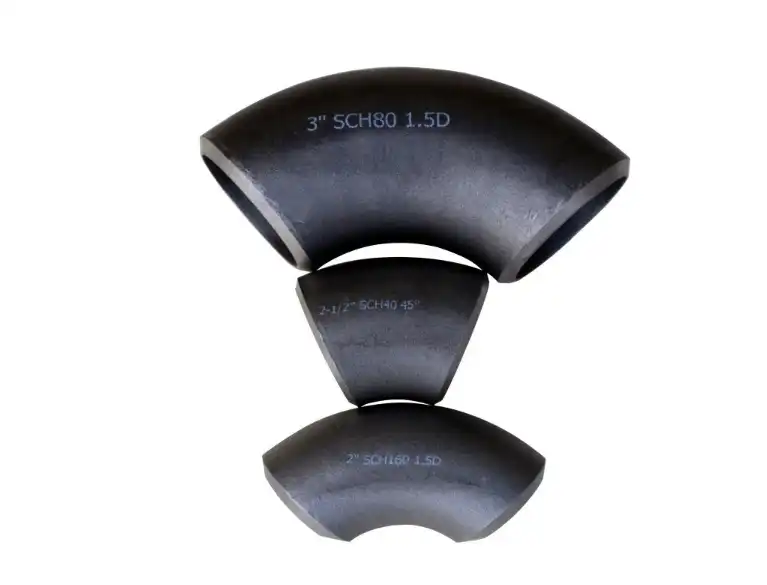
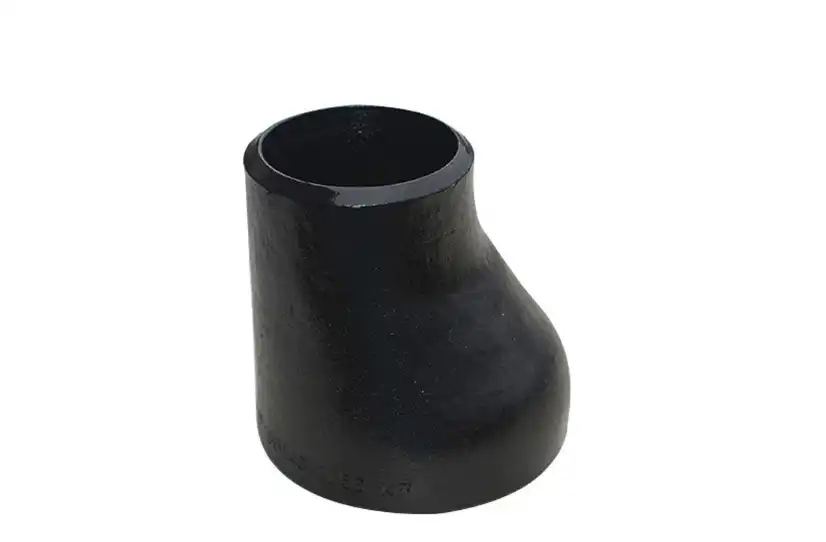
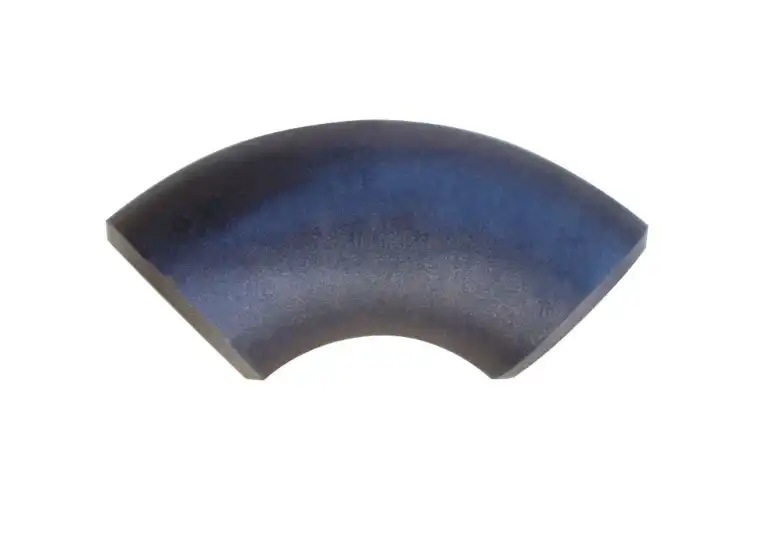
What Certifications Matter for Chemical industry carbon steel elbow?
When purchasing Chemical industry carbon steel elbows for the chemical industry, buyers must put certifications that prove the material is safe, the dimensions are correct, and the product meets safety standards at the top of their list. Some important licenses are ASTM A234 WPB for material makeup, ASME B16.9 for measurement standards, ISO 9001 for quality management systems, and PED for following European rules. Third-party testing certificates, which include non-destructive testing (NDT), hydrostatic pressure tests, and mill test reports (MTR), show that elbows can handle the harsh chemicals, high temperatures, and high pressures that are common in chemical processing environments.
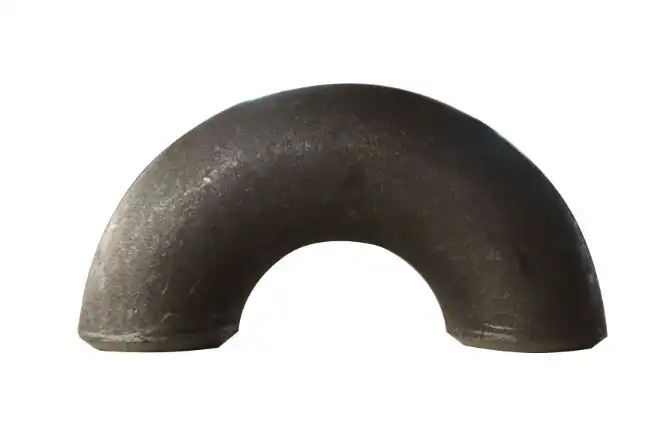
Understanding Carbon Steel Elbow Certifications in the Chemical Industry
When it comes to the chemical industry, certifications are the language of trust between buyers and sellers. These papers prove that carbon steel elbows meet strict quality standards. This makes sure that they work consistently in places where failure could cause dangerous chemical leaks, production delays, or major safety issues. Since 1998, Oudi has known that certifications are more than just papers; they show that a company is dedicated to technical quality and operating safety.
The Role of Certification Bodies
The rules for making carbon steel elbows are set by a number of international organisations. The American Society of Mechanical Engineers (ASME) sets the standards for dimensional tolerances and pressure ratings in ASME B16.9. The American Society for Testing and Materials (ASTM) sets the standards for material composition in ASTM A234. ISO 9001 is a quality management standard set by the International Organisation for Standardisation (ISO). The Pressure Equipment Directive (PED) controls the products that can be sold in Europe. Knowing which certification groups oversee the markets you want to reach helps buying teams avoid gaps in compliance that could cause projects to run late or require expensive rework.
Material Versus Product Certifications
Buyers often get confused about the difference between material certifications and product certifications. For example, material certifications check that the steel's carbon content, manganese levels, tensile strength, and yield strength meet certain grades like A234 WPB. Product certifications, on the other hand, check that the finished elbow is the right size, has a smooth surface, was welded correctly, and can hold pressure. Both types of certification work together to make sure that quality is fully assured. Our factory in Cangzhou has both systems for tracking materials and rules for inspecting finished products. This lets us offer full certification packages that meet the strictest requirements of the chemical industry.
Core Certification Types Relevant to Chemical Industry Carbon Steel Elbows
Selecting the right carbon steel elbows requires understanding which certification categories directly impact safety and compliance in chemical processing applications. The certification landscape encompasses material verification, manufacturing process validation, and performance testing documentation.
Material Composition Certifications
In chemical service, ASTM A234 is the most important material standard for carbon steel elbow pipe joints in the chemical industry. This standard spells out the minimum and maximum chemical compositions and mechanical properties needed for parts made of worked carbon steel and alloy steel that will be used at normal and high temperatures. The most common type, Grade WPB, has controlled amounts of sulphur (0.040%), manganese (0.29–1.06%), carbon (0.30% maximum), and phosphorus (0.035% maximum). These exact chemical controls for Chemical industry carbon steel elbows make sure that the metal will weld well and not rust. As part of our process for getting raw materials, we analyse each batch of steel using spectrometry. The results are written down on mill test certificates that are sent with every shipment. This material tracking goes from the steel mill to the finished elbow, making a quality record chain that doesn't break.
Dimensional and Manufacturing Standards
ASME B16.9 sets the size requirements for butt-welding fittings made in a factory from wrought carbon steel and alloy steel. Tolerances are set by this standard for centre-to-end measurements, wall thickness, width, and angularity. Tolerances must be strictly followed in the chemical business because differences in dimensions can lead to stress concentration spots, bad sealing surfaces, or flow turbulence that speeds up acid wear. Hot forming methods, such as hot pushing and hot heating bending, are used to make carbon steel elbows that always meet ASME B16.9 tolerances. Before products leave our 66,600-square-meter factory, our laser measurement systems check that the dimensions are correct. The inspection records are included with the certification package.
Third-Party Testing and Verification
In addition to self-certification by the producer, customers in the chemical business are increasingly asking for proof of tests by a third party. Non-destructive testing (NDT) checks the product's internal soundness without breaking it. Ultrasonic testing (UT) finds laminations and changes in wall thickness. Radiographic testing (RT) finds problems with weld seams in welded elbows, and eddy current testing finds breaks in the surface. In hydrostatic pressure testing, each elbow is put under forces that are 1.5 times the original pressure. This makes sure that there are no leaks when the system is under stress. Our quality control group does full check routines, which include hydraulic testing and NDT. They keep records that show they are following the safety rules for the chemical business. We've been able to serve over 300 customers in over 40 countries, including some of the most demanding markets in North America, Europe, and the Middle East, thanks to this thorough testing method.
How to Evaluate Carbon Steel Elbow Certifications for Chemical Industry Procurement
Effective procurement extends beyond simply requesting certifications—it requires critically evaluating documentation against your specific application parameters and validating supplier credibility. This evaluation process protects your organization from substandard products that could compromise plant safety or trigger regulatory violations.
Matching Certifications to Operating Conditions
The temperature ranges, pressure levels, and toxic contact in places where chemicals are processed for the chemical industry carbon steel elbow are very different. When moving concentrated sulphuric acid at high temperatures, a carbon steel elbow needs different material qualities than when moving water-based solutions at room temperature. To start your evaluation, write down the working factors for your application, such as the highest and lowest temperatures, design pressure, fluid makeup, flow speed, and projected service life. Compare these factors with the mechanical qualities listed in the certificates for the materials. The minimum tensile strength of ASTM A234 WPB is 60,000 psi, and the minimum yield strength is 35,000 psi. This makes it ideal for moderate-pressure chemical work. Our technical team offers consulting services that help buyers match certification requirements with real-world conditions, which lowers the risk of failure before its time.
Verifying Supplier Certification Authenticity
The rising number of fake licenses is becoming a bigger problem for buying pipe fittings around the world. In order to get contracts, dishonest providers will sometimes give fake mill test certificates or changed inspection reports. Set up verification procedures to keep your company safe. Instead of going through middlemen, ask the manufacturers directly for the certification documents. When you can, cross-reference certificate numbers with the labs or certification bodies that issued them. Check papers for mistakes in the way they are formatted, signed, or the scientific information they contain. We have been honest about our certification processes ever since we got our ISO 9001:2000 certification and special equipment production licence from the People's Republic of China. Buyers can be sure that every certificate we issue is real because we provide full traceability documentation and welcome third-party audits of our quality management systems.
The True Cost of Uncertified Products
Buying carbon steel elbows that aren't approved might seem like a good way to save money at first, but it usually ends up costing a lot more. Products that aren't approved don't have quality assurance that can be checked, which makes it more likely that they will fail early, leak, or burst in a catastrophic way. One problem in a pipeline used for chemical handling can cause production to stop, which can cost thousands of dollars per hour, as well as cleanup costs, fines from regulators, and even lawsuits. Besides these direct costs, goods that aren't approved make insurance claims more difficult and may be against the rules for running a business. We've seen buying teams that were originally drawn to cheaper, non-certified options come back looking for certified choices after having quality problems. With a production capacity of 16,000 tonnes per year, we can provide approved goods at reasonable prices, so you don't have to waste money on choices that aren't certified.
Leading Certified Carbon Steel Elbow Standards and Their Market Impact
Global standards create consistency in manufacturing practices, enabling international trade while protecting end-users from substandard products. Understanding the major standard families and their regional prevalence helps procurement teams specify appropriate requirements for their target markets.
ANSI/ASME Standards Dominance
The American National Standards Institute (ANSI) and ASME standards are the most common way to define things for the chemical industry carbon steel elbow in North and South America, and they are becoming more popular around the world. ASME B16.5 talks about flanges, and ASME B16.9 talks about the sizes of factory-made parts. These guidelines spell out the limits for making, the pressure-temperature ratings, and the testing requirements that make sure parts from different makers can be used together. Chemical plants all over the Americas use elbows that are approved by ASME because they are standardised, which makes upkeep easier, keeps inventory simpler, and makes sure that everything works when the plant grows. Our production methods strictly follow the rules set by ASME B16.9. This is reflected in our quality paperwork, which makes it easy to connect to American-standard pipe systems.
European and International Standards
European markets follow EN (European Norm) rules, such as EN 10253 for butt-welding fittings. The Pressure Equipment Directive (PED) sets important safety standards for pressure equipment sold in the European Union. Products with the CE mark show that they comply with the PED, which is needed to legally sell them in EU member states. ISO standards are used as standards all over the world, and ISO 9001 quality management system approval is a sign of excellent industry quality everywhere. We keep our licenses up to date across several standard families, including ANSI, EN, and ISO. This lets us serve customers in a wide range of locations. Multinational chemistry businesses that want to standardise their buying across sites in Europe, the Americas, Africa, and Southeast Asia have found this multi-standard compliance to be very useful.
Certification Trends Among Leading Manufacturers
Leaders in their fields set themselves apart by having extensive certification files and clear recording processes for quality. Not only do top manufacturers keep basic product certifications, but they also keep environmental management systems (ISO 14001), occupational health and safety certifications (ISO 45001), and industry-specific credentials like API monograms for oil applications. This dedication to multidimensional licensing shows a way of life that values always getting better and holding everyone accountable. This certification philosophy is supported by the money we've spent on high-tech production tools and detection tools. We have strict quality control from the time we receive the raw materials until the time we give the finished product. Full testing methods and non-destructive flaw detection make sure that every elbow meets the requirements. We have built long-term ties with chemical makers, EPC contractors, and shippers who value stability as much as the original buy price because we look at quality in a wide range of areas.
Conclusion
Certifications do a lot more than just meet legal requirements; they are essential proof that carbon steel elbows will work safely and reliably in tough chemical industry situations. A complete quality framework is made up of material certifications (ASTM A234), measurement standards (ASME B16.9), quality management systems (ISO 9001), and testing reports from third parties. Professionals in procurement who know about these types of certification, check the legitimacy of suppliers, and make sure that specifications are met in real-world situations protect their companies from the big risks that come with parts breaking. Because the chemical industry has a "zero tolerance" policy for safety incidents, validating certifications is an important part of buying responsibly.
FAQ
What distinguishes material certifications from product certifications for carbon steel elbows?
Material certifications verify the chemical composition and mechanical properties of the steel used to manufacture the elbow, confirming it meets specifications like ASTM A234 WPB. These certificates document carbon content, tensile strength, yield strength, and elemental composition. Product certifications validate the finished elbow's dimensional accuracy, pressure rating, welding quality, and conformance to manufacturing standards like ASME B16.9. Both certification types provide complementary assurance—material certificates confirm you're getting the right steel grade, while product certificates confirm that steel was properly formed into a compliant fitting.
How frequently should certification documents be updated or reverified?
Certification requirements depend on project specifications and regulatory environments. Material certifications typically remain valid for the specific production batch or heat lot documented in the mill test certificate. Quality management system certifications like ISO 9001 require periodic surveillance audits and recertification every three years. Chemical industry projects often require current certification documentation at the time of product delivery rather than accepting outdated certificates from previous production runs. Establish clear requirements in your purchase orders specifying that certifications must reflect the actual materials and testing performed on your specific order.
What risks arise from using uncertified carbon steel elbows in chemical applications?
Uncertified elbows introduce multiple serious risks. Without verified material composition, you cannot confirm corrosion resistance or mechanical strength, increasing failure probability under operational stress. Dimensional non-conformance creates leak paths or stress concentrations that accelerate deterioration. Regulatory violations may result if your facility's operating permits require certified components. Insurance coverage could be denied if incidents involve uncertified materials. Beyond these tangible risks, uncertified products lack the traceability necessary for root cause analysis when problems occur, complicating corrective action and exposing your organization to ongoing liability.
Partner with Oudi for Certified Chemical Industry Carbon Steel Elbows
We understand that chemical processing demands uncompromising quality in every component. As an experienced carbon steel elbow manufacturer with production heritage dating to 1998, we offer comprehensive certification packages that satisfy the most stringent procurement requirements. Our ISO 9001-certified quality management system, special equipment manufacturing license, and rigorous testing protocols ensure every elbow delivers verified performance. Whether you need ASME B16.9 butt-welded elbows, socket-welded fittings, or specialized configurations for corrosive service, our 16,000-ton annual capacity supports projects of any scale. Contact our team at oudi-04@oudiguandao.com to discuss your chemical industry carbon steel elbow requirements, request sample certification documentation, or arrange technical consultation for your upcoming project. Let us demonstrate how certified quality from a trusted supplier reduces your procurement risk while supporting operational excellence.
References
1. American Society of Mechanical Engineers. (2018). ASME B16.9: Factory-Made Wrought Buttwelding Fittings. New York: ASME Press.
2. ASTM International. (2020). ASTM A234/A234M-20: Standard Specification for Piping Fittings of Wrought Carbon Steel and Alloy Steel for Moderate and High Temperature Service. West Conshohocken: ASTM International.
3. European Committee for Standardization. (2017). EN 10253: Butt-Welding Pipe Fittings. Brussels: CEN.
4. International Organization for Standardization. (2015). ISO 9001:2015 Quality Management Systems—Requirements. Geneva: ISO.
5. Pressure Equipment Directive. (2014). Directive 2014/68/EU on the Harmonisation of the Laws of the Member States Relating to the Making Available on the Market of Pressure Equipment. Brussels: European Parliament.
6. Smith, J.R. & Williams, P.T. (2019). Materials Selection for Chemical Process Industries: Quality Assurance and Certification Requirements. Houston: Gulf Professional Publishing.

Need help finding the right solution with our experts. Please contact us.

SINCE 1998 Your Reliable Pipeline Manufacturer