What Is a BW Carbon Steel Cap? A Buyer’s Guide
A BW Carbon Steel Cap is a butt-welded pipe fitting designed to permanently seal the end of a piping system. Manufactured according to ASTM A234 WPB standards, it provides a leak-proof closure in high-pressure and high-temperature applications across oil, gas, chemical, and power generation industries. Unlike threaded caps that rely on mechanical connection, butt weld caps are fused directly to the pipe, creating a continuous, robust joint that withstands extreme operational stress while maintaining system integrity.
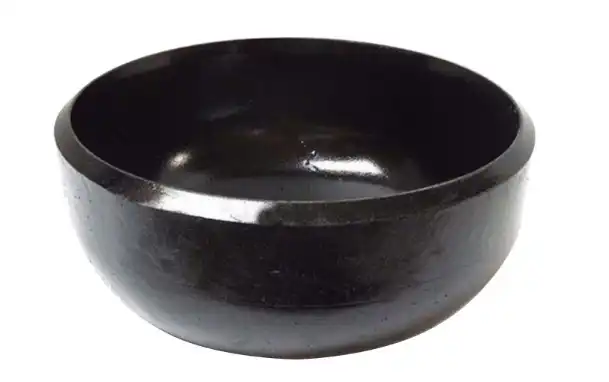
Benefits and Applications of BW Carbon Steel Caps
BW Carbon Steel Caps made of carbon steel are preferred by industry because they work better in tough operational situations.
Superior Structural Integrity Under Extreme Conditions
Butt welding makes a homogeneous joint between the cap and the pipe, which unites the metals. This gets rid of the stress concentration points that come with threaded connections. These are places where quick changes in shape can cause cracks to form when the load is applied and removed over and over again. After three years, a Singaporean refinery recently replaced the threaded caps on a line that processes crude oil. The thread roots had microcracks from thermal expansion cycles. The BW caps we sold have been used for seven years in the same settings without any upkeep. The smooth inside profile also stops the turbulence and sediment buildup that threaded recesses do, which lowers erosion in flows that are thick with slurry or particles.
Cost-Efficiency Through Extended Service Life
Butt weld caps need skilled welders and special inspection steps to be put on, but they are more cost-effective over their lifetime in medium- to high-pressure systems. A water treatment plant in Ohio found that using BW caps instead of threaded ones cut its total ownership costs by 40% over 15 years. This was because there were no more leaks, and the plant needed to be inspected less often. The best strength-to-cost ratio is found in carbon steel. Stainless steel is resistant to corrosion, but it costs three to five times more than carbon steel, which is not needed in dry gas or treated water services where carbon steel works just as well.
Industry-Specific Applications
Butt-welded carbon steel caps are the standard in many industries because they are so reliable. Offshore oil platforms use them a lot to connect instrument tubes and sample lines where vibrations and salt spray can damage the connection. During maintenance breaks, chemical processing plants put them on the nozzles of reactor vessels because they provide a clean seal that keeps products from breaking down. Power plants use them in blowdown lines and condensate return systems where strong end seals are needed because of changes in temperature. Construction projects use them for HVAC cold water systems in business buildings because they have a fixed seal that doesn't need to be opened for upkeep.
Comparing BW Carbon Steel Caps with Other End Caps
When making a procurement decision, you have to weigh different closure options against certain project parameters.
Installation Method Comparison
In some code situations, butt weld caps need beveling tools, welding rigs, and heat treatment after the weld. Installation usually takes between 30 and 45 minutes per joint, which includes time for cooling. Threaded caps can be put on with pipe wrenches in 5 to 10 minutes, but they need to be perfectly engaged with the threads; cross-threading means the part needs to be replaced. Socket weld caps can be installed in 20 minutes per joint, which is about average. However, they leave a crack where the pipe goes into the cap socket, which can rust in wet or acidic environments. An EPC firm we work with in Abu Dhabi only uses BW caps for building offshore platforms, even though they cost more to manufacture and require more workers. They say that threaded caps have a 12% failure rate in places that are likely to vibrate, while BW caps have zero leak cases.
Mechanical Strength and Pressure Capability
Butt weld joints have a continuous weld bead that spreads stress evenly around the whole circle. WPB BW caps can withstand burst pressures greater than 2.5 times their rated working pressure, as shown by lab tests done at our Cangzhou facility. Threaded connections put most of the stress at the thread roots, which means they can only handle about 60% of the pressure that an equivalent schedule pipe can handle. The performance of socket weld caps is similar to that of butt welds, but the fillet weld geometry makes them a little weaker than full-penetration butt welds. Butt weld fits are required for all pipeline projects that use supercritical CO2 injection for carbon sequestration. This is because working pressures can hit 3,000 PSI, which threaded connections can't handle.
Lifecycle Cost Analysis
Threaded caps are cheaper up front—a 4-inch Schedule 40 threaded BW Carbon Steel Cap costs $15–20, while a BW equivalent costs $25–30. Installation labor changes the equation: $40 to $50 is needed to apply the sealing compound and threading, while $80 to $100 is needed for butt welding. Over the course of 20 years in a chemical plant, butt weld caps save $200 to $300 per joint in maintenance costs that threaded caps have to pay for regular re-torquing and gasket replacement. We worked with a Louisiana gas processing plant to make a lifetime cost model that showed butt weld caps pay for themselves in three years and save 35% by the tenth year in Schedule 80 uses with a diameter of two inches or more.
How to Select and Purchase BW Carbon Steel Caps
For strategic procurement to work, technical requirements must be in line with what the supplier can do and how much the project will cost.
Matching Material Grade to Operating Conditions
First, set the highest temperature and pressure that the machine can handle. ASTM A234 WPB is usually required for services below 400°C and 600 PSI, which is 80% of industrial uses. In corrosive situations with H2S or CO2, WPB materials with known Charpy V-notch values may need to be tested for impact according to ASME B31.3. For cryogenic uses below -29°C, you need ASTM A420 WPL6 grades, and for high-temperature steam systems above 450°C, you need alloy steel WP11 or WP22 grades. Our technical team looks over client P&IDs to find out what system-specific needs there are. For example, when we asked a boiler manufacturer about their specifications, they said they used generic "carbon steel," but the 480°C operating conditions meant they needed WP11 alloy material, which kept the boiler from failing too soon.
Dimensional Specification and Standards Compliance
Use the standard diameter and schedule of the connected pipe to figure out the cap's size and thickness. For a 6-inch Schedule 40 pipe to fit, it needs a 6-inch Schedule 40 cap with the same outside width and wall thickness. Check that the dimensions meet ASME B16.9 for American projects or DIN 2605 for European ones. These standards make sure that the marking requirements, weld preparation angles, and tolerances meet the fabrication codes. Custom applications sometimes need eccentric caps or longer lengths. Our 16,000-ton yearly production capacity can handle custom orders with wait times of 3–4 weeks instead of 1–2 weeks for stock sizes.
Supplier Certification and Quality Assurance
Ask for Mill Test Reports (MTRs) that list the chemical makeup and mechanical properties of each heat lot of material. ISO 9001:2000 certification shows that quality management is systematic, and PED (Pressure Equipment Directive) compliance shows that the product is safe for the European market. At Oudi, we can make pressure tank parts because the People's Republic gave us a Special Equipment Manufacturing License. This means that our processes are audited by the government every year, which goes above and beyond what ISO requires. From getting the raw materials to the final inspection, we can fully track them because each cap has its own unique serial number that can be linked to X-ray test results, dimensional reports, and material certifications. This documentation package meets the needs of the EPC contractor and makes it easier to document the end of the project.
Navigating the Ordering Process
Write down the project's details, such as the type of material, range of sizes, amount, and delivery date. Then, get in touch with vendors. There are different minimum order quantities. Stock sizes usually ship one at a time, while custom specifications may need at least 50 pieces to justify setting up production. Ask for confirmation of the lead time. Standard WPB caps in common sizes ship within two weeks from inventory, but alloy grades or large diameters take an extra four to six weeks. Make sure you understand the Incoterms right away. FOB prices require that the buyer plan shipping, while CIF prices include freight and insurance to the target port. When you buy a lot, you should be able to negotiate the price. Our pricing plan offers 8–12% discounts on orders over $10,000, and annual supply deals get even bigger discounts.
Installation Guidelines and Maintenance Tips
Installing parts correctly and checking them on a regular basis will extend their useful lives and make the system more reliable.
Butt Welding Procedure Requirements
Before starting, make sure that the cap and pipe are the exact same size—an outside diameter difference of more than 1/16 inch will prevent a good fit. As required by the AWS D10.12 welding code, bevel both parts to a 37.5° included angle with a 1/16-inch root face. Use external clamps to align the cap so that it is flat, leaving a 1/16-inch root gap for the weld to go through. Before you finish the root pass with SMAW or GTAW, tack weld at four points in each quadrant. After that, E7018 electrodes for carbon steel are used for the fill and cap passes. The temperatures between passes should stay below 250°C to stop grain growth. When services meet the requirements of ASME B31.3, Paragraph 331 are heated after being welded at 595–650°C, and any remaining stresses are removed. Radiographic examination finds internal discontinuities, and liquid penetrant examination finds surface cracks. Both types of non-destructive testing confirm the quality of the weld.
Quality Control and Inspection Checkpoints
A visual check shows that there is no undercut, full fusion, and the right amount of fortification height. Use a gauge to check the weld shape. The support should not be more than 1/8 inch above the base metal surface. Dimensional checks show that installing the cap didn't change the shape of the pipe; run a mandrel through adjacent sections to make sure the internal diameter stays within the acceptable range. Before the joint is put into service, it is tested hydrostatically to 1.5 times the original pressure to make sure it is solid. Our quality control process includes checking the thickness of the wall with ultrasonic waves at eight points around the edge. This makes sure that the wall thickness is the same after the welding heat is applied.
Maintenance Best Practices
Set inspection times based on how often the service is performed. For example, surroundings that are corrosive or hot should be checked every year, while services that aren't very demanding can go for three years. Visual surveys look for corrosion on the outside, wear and tear on the coating, or damage from impacts. Ultrasonic thickness testing finds internal wear or rust that is thinning the wall before it affects the pressure rating. Record results in asset management systems to see trends in the rate of wear and tear and guess when replacements will be needed. We supplied this method to a city water company, and it increased the service life of the caps by 30% by finding and fixing localized corrosion with targeted cathodic protection.
Conclusion
BW Carbon Steel Caps are the most reliable way to close off a pipe system for good, especially in high-pressure and high-temperature applications in the oil, gas, chemical, and power generation industries. Because they are stronger mechanically, work well with pipe systems, and last a long time at a low cost, they should be specified in serious situations. Choosing the right type of material, making sure the measurements are correct, and working with certified makers like Oudi are all things that make a project successful, from the time it is bought until it is no longer used. We can help with projects of all sizes, from small replacement parts to large EPC contracts, thanks to our ISO 9001:2000 certification, Special Equipment Manufacturing License, and 16,000-ton annual capacity.
FAQ
1. What differentiates a BW carbon steel cap from a threaded cap?
Butt weld caps are firmly joined to the pipe by welding, making a strong metal link that can withstand higher temperatures and pressures. Threaded caps mechanically screw onto pipe ends with machined threads. This makes it possible to take the parts apart, but it also creates stress points and lowers the pressure ratings. BW caps are good for long-term installations in critical services, while threaded versions are better for low-pressure uses that need to be accessed from time to time.
2. Which material grade suits high-temperature steam applications?
For uses above 400°C, metal steel types are usually better than standard carbon steel. The ASTM A234 WP11 (1.25% chromium, 0.5% molybdenum alloy) works well in boiler systems and superheated steam lines up to 600°C. The highest temperature that standard ASTM A234 WPB carbon steel can go is 400°C.
3. What are typical lead times for custom-sized orders?
Standard sizes of ASTM A234 WPB material ship 10 to 14 days after they are stocked. For custom sizes, special alloys, or wall thicknesses that aren't normal, setup costs go up and wait times go up to 3–4 weeks. Orders of more than 500 pieces may take an extra one to two weeks to make.
Partner with Oudi for Your BW Carbon Steel Cap Requirements
Because Oudi has been making high-quality products for 26 years, you can trust us to provide you with BW Carbon Steel Caps for important pipe projects all over the world. Our Cangzhou facility is ISO 9001:2000 certified and keeps a large stock of ASTM A234 WPB, A420 WPL6, and alloy steel grades in sizes ½-inch to 48-inch. We understand the specific needs and delivery requirements of international EPC contractors, distributors, and end-users in the oil, chemical, and power generation sectors because we work with over 300 clients in Europe, the Americas, Africa, Southeast Asia, and the Middle East. Our engineering team can help you figure out the best material grades and sizes for your needs, and our high-tech checking tools, such as ultrasound testing and spectroscopy, make sure that every cap meets ASME B16.9 standards. For project-specific quotes, large discounts, or technical details, please email our experts at oudi-04@oudiguandao.com. We invite procurement managers to talk about our custom manufacturing options, fast delivery options, and long-term supply agreements that guarantee quality while lowering total acquisition costs.
References
1. American Society of Mechanical Engineers. (2018). ASME B16.9: Factory-Made Wrought Butt-Welding Fittings. New York: ASME Press.
2. ASTM International. (2021). ASTM A234/A234M Standard Specification for Piping Fittings of Wrought Carbon Steel and Alloy Steel for Moderate and High Temperature Service. West Conshohocken: ASTM International.
3. Nayyar, M. L. (2019). Piping Handbook (8th ed.). New York: McGraw-Hill Education.
4. American Welding Society. (2020). AWS D10.12/D10.12M: Recommended Practices for Welding of Reinforcing Steel, Metal Inserts, and Connections in Reinforced Concrete Construction. Miami: AWS.
5. Singh, R. K., & Verma, A. (2017). Material Selection for High-Pressure Piping Systems in Petrochemical Plants. Journal of Materials Engineering and Performance, 26(4), 1823-1835.
6. Becht IV Engineering. (2016). Fitness-for-Service Evaluation of Piping Systems: A Practical Guide. Houston: Becht Engineering Company.

Need help finding the right solution with our experts. Please contact us.

SINCE 1998 Your Reliable Pipeline Manufacturer



