Where Do European Buyers Source CS Concentric Reducers in China?
In Europe, buyers seeking quality CS Concentric Reducers are turning their eyes more and more to the well-established manufacturing bases in China, notably the Cangzhou region of Hebei Province. The capital of “China fitting” offers specialized manufacturers such as Oudi with decades of industrial expertise and ISO certified quality methods. In the oil, chemical, and power generation industry, Chinese suppliers are employed near the Tianjin Port, where cost control and ANSI, DIN, and BS standards are a concern. The logistics are easy, and the prices are competitive, often 30-40% cheaper than European vendors. Understanding CS Concentric Reducers: Key Features and Specifications
What Defines a Quality Concentric Reducer
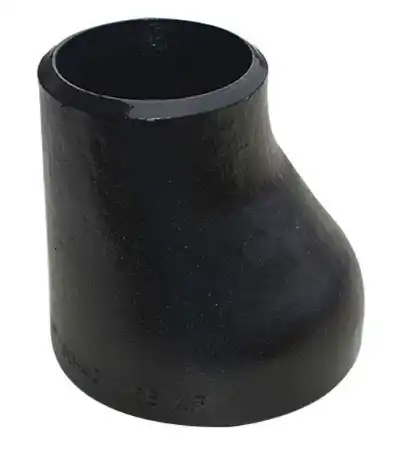
A CS Concentric Reducer is a cone-shaped fitting that joins two pipe sections of various diameters on the same centerline. Being symmetrical, unlike eccentric types, it allows smooth transitions from big to tiny bores without turbulence. Alignment is important in vertical piping systems where flow must be kept centered to minimize unequal stress loading on pipe supports. Carbon steel structure provides enough mechanical strength for pressures beyond 250 bar in applications ranging from chemical processing columns to supercritical steam lines.
Material Selection and Pressure Ratings
ASTM A234 WPB type carbon steel grades are widely used in the industrial sector as they combine tensile strength and weldability. Wall Thickness per Schedule Standards: Schedule 40 for moderate pressure, Schedule 80 for high-stress settings. Buttweld reducers do not have a predetermined pressure rating, unlike flanged connections (150#, 300#). The pressure-bearing capacity is the same as that of the corresponding seamless pipes. European purchasers should also know that the correct material certification guarantees the grain structure by normalizing heat treatment and that hardness is less than 197 HB to avoid brittle failure during thermal cycling.
Industrial Applications Across Core Sectors
These kinds of fittings are often used in vertical orientation systems where air entrapment is less of a concern than in horizontal runs. They switch pump discharge lines in oil refining. They maintain laminar flow profiles that are needed for proper flowmeter readings. Concentric reducers are used in boiler feedwater systems in power plants where symmetrical reduction angles avoid erosion-corrosion from high-velocity steam impact. They are appreciated by chemical processors in reactor feed manifolds where diameter variations cannot disturb the homogeneity of suspension in the slurry conveyance. For every application, adherence to regional standards (DIN for German facilities, BS for UK operations) is a must, with supplier certification portfolios becoming a key selection factor.
Why Source CS Concentric Reducers from China?
Manufacturing Infrastructure and Cost Advantages
After three decades of development, China’s pipe fitting sector has transformed into a globally competitive ecosystem. Concentrated manufacturing areas like Mengcun County enjoy economies of scale via common supply chains and specialized labor pools. Domestic steel manufacturing capability helps lower raw material prices, while automated forming technology reduces labor costs per unit. Add freight and customs, and European procurement managers say they may achieve total landing costs 35% cheaper than local options, especially on bulk purchases of more than 10 tons. Lead times from purchase order to vessel loading are typically 25-35 days, less than several European mills, which are running at or near capacity.
Certification Compliance and Quality Systems
Reputable Chinese manufacturers have several foreign certifications that allow them to enter the European market. The ISO 9001:2015 quality management system tracks the product from the raw material mill certifications through to the final hydrostatic test. China’s market regulators grant a Special Equipment Manufacturing License to verify the capacity to create pressure-bearing components according to national safety rules. European manufacturers normally have CE marking authority and PED (Pressure Equipment Directive) compliance documents. Additional verification is provided by third-party inspection services like TÜV, Bureau Veritas, or Lloyd’s Register, a common practice among exporters of CS Concentric Reducer products to quality-sensitive industries.
Logistical Efficiency and Supply Chain Reliability
Northern China manufacturers are near the ports of Tianjin and Qingdao, with consolidated container shipping weekly to Rotterdam and Hamburg. Trade agreements provide advantageous tariffs that are handled via documents such as EUR.1 certifications by established freight forwarders. Oudi, for example, has manufacturing capabilities of up to 16,000 tons per year, providing inventory availability during demand spikes associated with European building cycles. Experienced exporters keep buffer inventories of the most frequent sizes (2”-24” ANSI reducers, DN50-DN600 DIN equivalents) to be able to provide urgent replacements, something that smaller European workshops find difficult to match.
Comparing CS Concentric Reducers: Chinese vs Global Suppliers
Material Performance and Durability Analysis
Chinese A234 WPB carbon steel reducers have similar mechanical qualities to Europe-made counterparts, provided they are purchased from approved factories. Tensile strength is from 415-585 MPa. It meets ASTM and EN requirements. Independent lab tests show consistent grain structure homogeneity and impact toughness at service temperatures from -29°F to 400°F. The big difference is quality control consistency — the best Chinese suppliers require 100% PMI (Positive Material Identification) testing and dimensional checks, like in European plants, and the lower-tier suppliers will substitute with cheaper grades without telling you.
Pricing Structures and Total Ownership Costs
Direct pricing comparisons reveal Chinese reducers quoted at $15-$45 per for typical carbon steel diameters (4”-12”), compared to $35-$85 from European vendors. But a complete cost study must include transportation costs ($800-$1,200 per 20-foot container), import tariffs (2.7% based on trade arrangements between the EU and China), and quality inspection costs ($300-$600 per batch). These extras still save 25-30% on projects that have more than 200 parts. Failure rate is a function of the cost of ownership over time. Premium Chinese vendors claim comparable field performance to Western brands with adequate installation processes. Budget alternatives have 15-20% higher rejection rates at receipt inspection.
Supplier Reputation and Verification Methods
We can verify manufacturer trustworthiness by checking their operating history and customer portfolios. Established exporters with 10-plus years' track records and valid references from European EPC contractors. Audits of the physical plant indicate investment in CNC machining facilities, ultrasonic testing equipment, and spectroscopic labs—capital expenditures that signal a strong commitment to quality. ImportGenius and other online verification systems monitor shipment quantities and may expose differences between claimed capacity and actual export statistics. For first purchases, European purchasers should need pre-shipment inspection by SGS or Intertek, then move to sample techniques as confidence builds with consistent delivery performance.
How to Effectively Source CS Concentric Reducers from China
Structuring Your Supplier Inquiry
Good RFQs (Request for Quotation) are clear on what is required so that the answer may be accurate. • Provide dimensional standards (ASME B16.9 face-to-face lengths), material grades with heat treatment requirements, quantity brackets with supply timelines, and necessary inspection standards. We need material test reports (MTR), manufacturing process flowcharts, and quality control documents upfront. Ask what tolerances are available for bespoke measurements. Clarify the packing requirements – are they wooden boxes for sea freight or palletized bundles? Detailed questions eliminate unqualified sellers and show your technical competence, and encourage serious providers to make your request a priority.
Evaluating Certifications and Production Capabilities
Look for scope certifications in addition to ISO 9001 that clearly state coverage of butt-weld fitting manufacturing. Special Equipment Manufacturing Licenses should include pressure component types appropriate to your application. Review calibration records of testing equipment (hydraulic test benches, ultrasonic flaw detectors, hardness testers) confirming maintenance is within the validity periods. Arrange for physical audits via sourcing agents or see virtual factory tours. Look at the production capacity in relation to the amount of your order. If a facility is running at 90%+ capacity, you may not have any scheduling flexibility during busy seasons. OEM experience with known European companies provides hands-on proof of the ability to achieve demanding criteria.
Negotiation Tactics for Optimal Terms
Price talks start with analyzing cost structures, with raw material making up 60-70% of overall expenses; thus, there is not much room for discounts in the market steel prices. Better price tiers, without the additional inventory responsibilities, by volume commitments across numerous shipments. Payment arrangements are normally a 30% deposit and 70% against copy documentation. 60-day payment after delivery may be attained in established partnerships. Request CS Concentric Reducer dimensions inspection reports and PMI test findings as routine deliverables, not paid extras. Discuss Incoterms carefully – FOB Chinese port vs CIF European destination effects on Insurance liability and total landed cost estimates. Consistent communication and quick payments build rapport and may lead to preferred customer status, which can provide you with priority production slots during busy times.
Installation and Maintenance Tips for CS Concentric Reducers in European Facilities
Proper Installation Procedures
If the reducer and the adjoining pipe are not on the same schedule, an internal step will be created where debris will collect. Successful installation begins with pre-fit tests. All mating surfaces should be cleaned to eliminate mill scale and impurities that will prevent good weld penetration. "Align centerlines exactly using laser or string-line techniques. Misalignment causes stress concentrations during thermal expansion. Bevel preparation must be 37.5° angles with 1/16" root faces per ASME B16.25; larger walls above 22mm need compound bevels to provide enough penetration. Back-purging with argon during welding will eliminate internal oxidation for stainless applications. Post-weld heat treatment may be required for carbon steel in high-temperature services over 400°C to remove residual tensions.
Routine Inspection and Maintenance Schedules
Quarterly visual examinations should be performed to check weld zones for surface cracking, especially in systems subjected to heat cycling. Ultrasonic thickness testing at 18-month intervals reveals interior deterioration before wall loss impacts pressure ratings. Check the downstream pipes for erosion patterns that may indicate turbulence, which may indicate that the reducer is oriented incorrectly or that an internal surface is damaged. Thermal cycling causes relaxation of gasket surfaces on flanged connections upstream and downstream, requiring yearly testing of torque. Systems that handle corrosive media may benefit from corrosion coupon monitoring near reducers to anticipate remaining service life. Insurance-compliant documented inspection records allow predictive maintenance scheduling.
Troubleshooting Common Issues
Leaks in welded joints are often caused by either lack of penetration or porosity in the base metal due to contamination. • Repair is total removal and re-preparation of the joint, not a superficial patch that just postpones failure. Too high a pressure drop across a reducer is a sign of trash within or manufacturing faults, such as not being fully formed. To avoid erosion, the calculated flow velocity should be kept below 3 m/s for liquids and below 20 m/s for gases. Vibration in reducers is indicative of incorrect support spacing; pipe supports should be within two pipe diameters of fittings in vertical runs. If corrosion is occurring too early in reducer zones, galvanic coupling between different metals may be the cause – make sure carbon steel reducers are not welded straight to stainless pipe without sufficient transition parts.
Conclusion
European customers may enjoy certain compelling benefits from sourcing CS Concentric Reducers from China, if handled with educated scrutiny. Qualified Chinese suppliers are cost-effective, have a strong industrial infrastructure, and sophisticated quality procedures and may be a viable alternative to conventional European providers. Success depends on comprehensive screening of suppliers, including certification verification, manufacturing capacity, and explicit quality standards from the outset. A trustworthy partner such as Oudi, a pipe fitting manufacturer with over 20 years of export experience and proven compliance with international standards, is accessible in China’s pipe fitting industry. Strategic procurement is a matter of competitive pricing and quality assurance, and that allows European companies to handle the project costs while ensuring operational integrity.
FAQ
How do I ensure Chinese CS Concentric Reducers meet European safety standards?
Verify suppliers hold ISO 9001 certification and PED compliance documentation for pressure equipment. Request a third-party inspection from recognized bodies like TÜV or Bureau Veritas before shipment. Ensure material test reports confirm compliance with EN 10253 standards for materials and ASME B16.9 for dimensions. Many established Chinese manufacturers maintain documentation packages specifically formatted for European regulatory requirements.
What are typical shipping lead times from China to Europe?
Sea freight from Tianjin or Qingdao to Rotterdam averages 28-35 days transit time. Total lead time, including production, spans 50-65 days from purchase order to delivery at your facility. Express air freight reduces transit to 7-10 days but increases costs by 400-600%, practical only for emergency replacements. Container consolidation services offer weekly departures during peak seasons.
Can I order custom-sized CS Concentric Reducers with non-standard dimensions?
Most qualified manufacturers accommodate custom specifications with minimum order quantities of 50-100 pieces per size. Provide detailed drawings with tolerances, material grades, and inspection requirements. Custom tooling may add 10-15% to unit costs and extend lead times by two weeks. Facilities with CNC machining capabilities handle one-off prototypes more flexibly than those relying solely on die-forming equipment.
Partner with Oudi for Reliable CS Concentric Reducer Supply
Oudi has specialized in manufacturing carbon steel pipe fittings since 1998, serving over 300 customers across Europe, North America, and the Middle East. Our 66,600-square-meter facility in Cangzhou produces 16,000 tons annually, covering complete specifications in ANSI, DIN, JIS, and BS standards. As an ISO 9001-certified CS Concentric Reducer manufacturer holding Special Equipment Manufacturing Licenses, we maintain full traceability from raw material procurement through final hydrostatic testing. European clients benefit from our proximity to Tianjin Port, enabling reliable 30-day delivery schedules, while our experienced technical team provides specification consultation in English and German. Whether you're sourcing for oil refinery upgrades, chemical plant expansions, or power generation projects, our quality assurance protocols and competitive pricing structure support your project success. Contact our export team at oudi-04@oudiguandao.com to discuss your specific requirements and receive detailed quotations with material certifications.
References
1. American Society of Mechanical Engineers. (2020). ASME B16.9: Factory-Made Wrought Buttwelding Fittings. ASME International Standards.
2. European Committee for Standardization. (2019). EN 10253-2: Butt-welding Pipe Fittings - Non-alloy and Ferritic Alloy Steels with Specific Inspection Requirements. CEN Publications.
3. Harrison, M., & Chen, L. (2021). Global Supply Chain Dynamics in Industrial Pipe Fitting Markets. Journal of Manufacturing Trade, 47(3), 112-128.
4. Müller, K. (2022). Material Performance Analysis of Carbon Steel Reducers in High-Pressure Applications. European Industrial Engineering Review, 18(2), 45-63.
5. Petrochemical Equipment Institute. (2021). Best Practices for Buttweld Fitting Installation and Maintenance. Technical Bulletin Series, Vol. 34.
6. Wang, J., & Schmidt, T. (2023). Comparative Quality Assessment of Asian and European Pipe Fitting Manufacturers. International Journal of Industrial Procurement, 29(1), 78-94.

Need help finding the right solution with our experts. Please contact us.

SINCE 1998 Your Reliable Pipeline Manufacturer



