Where Is a CS Concentric Reducer Used in Piping Systems?
CS concentric reducer is utilized in piping systems when a smooth, symmetrical diameter change is required on the same pipe centerline. It may be found in vertical pump discharge lines, high-pressure steam distribution networks, chemical processing columns, oil and gas pipelines, and water treatment facilities. The entrance and outflow are on the same axis, which maintains a minimum of flow turbulence, pressure loss, and a balanced structural strain on pipe supports. Engineers and procurement specialists procuring carbon steel pipe fittings know precisely where this fitting goes, which saves both time and money.
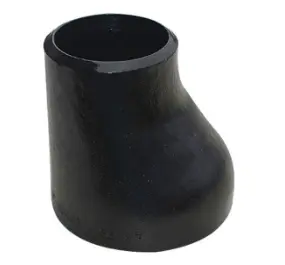
Understanding CS Concentric Reducers: Design, Function, and Specifications
What Makes the Concentric Design Different
A concentric reducer is a pipe fitting used to join two pipes of various sizes. It has both ends aligned on the same centerline. This cone-shaped form leads to a progressive, symmetrical bore shift that gently directs fluid from a big pipe to a smaller one — or vise versa. Eccentric reducers, however, shift the centerlines to maintain one flat side level, and that is a whole new thing.
Material and Mechanical Properties
These fittings have good tensile strength, thermal stability to about 425°C, and good service under high pressures, which is provided by carbon steel, usually ASTM A234 WPB grade. Much cheaper in material cost than stainless steel and the preferred option for cost-sensitive applications where corrosion conditions are not severe.
Key Specifications to Know
Oudi Carbon Steel Concentric Reducers are made according to ASME B16.9 dimensional requirements and are available from ½ inch to 48 inches. Wall thickness schedules are based on the linked pipe (Sch 10 through Sch 160 / XXS), and pressure ratings are based on the matching pipe schedule, not a set class number. Products conform to American (ANSI), German (DIN), Japanese (JIS), and British (BS) standards.
Common Applications of CS Concentric Reducers in Piping Systems
Oil, Gas, and Petrochemical Pipelines
In oil and gas facilities, circular reducers are used in the vertical pump discharge lines to connect the pump output to the main pipeline diameter. The symmetrical shape distributes the load equally on the pipe supports, reducing vibration and fatigue cracking over time. This is one of the most common things we see from our consumers in the Middle East and Southeast Asia.
Power Generation and Steam Distribution
Supercritical power plants use steam at pressures more than 250 bar. In these circumstances, the design of the concentric fitting avoids erosion-corrosion by high-velocity steam in contact with an uneven reduction angle. An eccentric fitting in a vertical steam line would generate an irregular flow profile and increase localized wear – something no plant operator would want to deal with mid-cycle.
Chemical Processing and Water Treatment
In chemical reactor feed lines, you frequently have many fluid streams that need to be combined at certain flow rates. The concentric shape maintains laminar flow profiles when pipe diameters vary, which maintains chemical reaction rates. The same idea applies to water treatment and water conservancy projects. Symmetrical bore transitions decrease pressure drop throughout the system and increase pump service life.
Comparing CS Concentric Reducers with Other Pipe Fittings
Concentric vs. Eccentric Reducers
The rule of thumb is straightforward. Use a concentric CS Concentric Reducer for vertical pipe runs where flow symmetry matters. Use an eccentric reducer (flat side up, or "top of pipe" orientation) on horizontal pump suction lines to prevent air accumulation and pump cavitation. Installing a concentric reducer on a horizontal suction line traps air at the top of the cone, which can damage the pump impeller — an avoidable and costly mistake.
Carbon Steel vs. Stainless Steel
Carbon steel costs considerably less than stainless steel and handles most oil, gas, steam, and neutral-fluid applications without issue. Stainless steel becomes the better option when the process fluid is corrosive, when operating temperatures are extremely high, or when the end product must meet food-grade or pharmaceutical standards. For the majority of heavy industrial pipelines, carbon steel is the practical, proven material.
Butt Weld vs. Threaded and Socket Weld Connections
Butt weld concentric reducers, manufactured per ASME B16.9, are the standard for large-bore, high-pressure, and high-temperature pipelines because welded joints match the pressure rating of the pipe itself. Threaded or socket-weld reducers fit smaller-diameter, lower-pressure applications. For critical service lines in oil refineries or power plants, butt weld is not just preferred — it is typically specified by the engineer.
Procurement Insights: How to Source the Right CS Concentric Reducer
Verify Certifications First
The quality management certification of ISO 9001 and special equipment manufacturing license should be available for every credible provider of CS Concentric Reducers. We have both at Oudi – our ISO 9001:2000 accreditation and People’s Republic of China Special Equipment Manufacturing License protect every product leaving our plant. And we have our own import and export authority, so paperwork for overseas purchasers is easier.
Evaluate Production Capacity and Quality Control
Their yearly production will inform you whether they can do your volume without affecting lead times. Our Cangzhou factory manufactures 16,000 tons of pipe fittings annually in the carbon, stainless, and alloy steel product lines. Each item is thoroughly inspected and nondestructively flaw-detected from the time it is received as raw material until it is sent as a completed product. That traceability is important when your downstream contractor wants test results on the item.
Consider the Full Product Range
By buying carbon steel concentric reducers from a supplier that also makes flanges, elbows, tees, pipe caps, and bends, you save on freight expenses and vendor qualification, and you may combine orders. Oudi’s whole product category includes all standard pipe fitting types in American, German, Japanese, and British requirements – one supplier for one project, no matter how complicated the fitting schedule is.
Installation and Maintenance Best Practices
Pre-Installation Checks
Before welding, check the wall thickness and schedule of both pipe ends and the reducer bevel to make sure they match. Standard End Bevel: 37.5°± 2.5° (per ASME B16.25) with a 1/16" root face. When you are joining pipes of different schedules, the bore on the thick end has to be tapered (counter-bored) to match the internal diameter of the mating pipe. If this step is missed, we get a flow step, which increases localized corrosion.
Welding and Alignment Procedures
Tack the reducer in place, making sure that it is on the same centerline as the connected pipes. For carbon steel material, preheat requirements are based on wall thickness and carbon equivalent, according to the corresponding process pipe code in ASME B31.3. For A234 WPB fittings created at high temperatures, post-weld heat treatment (normalizing) is typically required to restore grain structure and maintain hardness below 197 HB.
Ongoing Inspection and Maintenance
Periodically visually and ultrasonically verify thickness, particularly in operation with high-temperature steam or corrosive fluids. Document the date, method, and results of each inspection cycle. Early diagnosis of wall thinning or cracking of the weld line avoids unnecessary shutdowns. If wear is detected, it is far less costly to replace a single fitting than to restore downstream equipment that was damaged by a failed connection.
Conclusion
Use a CS concentric reducer when your pipe system requires a symmetrical, centered diameter transition, especially for vertical runs, high-pressure steam lines, chemical feed systems, and oil and gas discharge headers. System dependability and long-term running cost are a direct result of the selection of the proper grade, schedule, and connection type from a recognized manufacturer. Oudi’s reputation is based on offering just that: proven quality, complete traceability, and a product variety wide enough to serve any project from a single source.
FAQ
1. When should I choose a concentric reducer over an eccentric reducer?
Choose a concentric reducer for vertical pipe runs where flow symmetry and balanced pipe support loads matter. Use an eccentric reducer (top flat) on horizontal pump suction lines to prevent air pocket formation and cavitation. The wrong choice in either location creates operational problems that are expensive to fix after installation.
2. How is the pressure rating of a butt weld concentric reducer determined?
Butt weld reducers do not carry a fixed pressure class as flanges do. Their pressure rating matches the pipe of the same material grade and wall-thickness schedule. A carbon steel reducer in Schedule 80 handles the same internal pressure as a Schedule 80 pipe of the same material.
3. Can a CS concentric reducer handle high-temperature steam service?
Yes. ASTM A234 WPB carbon steel is rated for continuous service up to approximately 425°C. For temperatures above that threshold, alloy steel grades (such as WP11 or WP22) are the appropriate upgrade.
4. What standards govern the dimensions of concentric reducers?
ASME B16.9 governs the face-to-face length and end-bevel dimensions for butt weld fittings. Length is fixed by the larger pipe's outside diameter, ensuring interchangeability between manufacturers. Oudi produces reducers to ANSI, DIN, JIS, and BS standards to meet project specifications worldwide.
5. Does wall thickness stay uniform across the reducer?
Typically, the wall thickness matches the schedule of the larger inlet pipe. In high-pressure applications, manufacturers may taper the bore at the smaller end ("bored to match") to align with the downstream pipe's inside diameter and eliminate flow disruption.
Get Your CS Concentric Reducer Quote from Oudi — Trusted Since 1998
Oudi has supplied certified carbon steel pipe fittings to over 300 customers across 40+ countries since 1998. As an experienced CS concentric reducer manufacturer, we offer ASME B16.9-compliant fittings in carbon steel, stainless steel, and alloy steel, backed by ISO 9001 certification and a 16,000-ton annual production capacity. Send your specifications to oudi-04@oudiguandao.com and get a competitive quote today.
References
1. ASME B16.9 — Factory-Made Wrought Buttwelding Fittings, American Society of Mechanical Engineers, 2018.
2. ASME B31.3 — Process Piping Code, American Society of Mechanical Engineers, 2022.
3. ASTM A234 — Standard Specification for Piping Fittings of Wrought Carbon Steel and Alloy Steel for Moderate and High Temperature Service, ASTM International, 2021.
4. Nayyar, M. L. — Piping Handbook, 7th Edition, McGraw-Hill, 2000.
5. Smith, P. & Zappe, R. W. — Valve Selection Handbook, 5th Edition, Gulf Professional Publishing, 2004.
6. Swaffield, J. A. & Galowin, L. S. — The Engineering Guide to Fluid Flow in Pipelines, Research Studies Press, 1992.

Need help finding the right solution with our experts. Please contact us.

SINCE 1998 Your Reliable Pipeline Manufacturer



