Why Choose an ASME B16.9 Pipe Cap for Industrial Piping?
If you work in oil, gas, chemical processing, or water treatment, you know that every component in a pipe system weighs something – physically and operationally. ASME B16.9 pipe cap is a butt-welding fitting that is used to close the open end of a pipe permanently. These caps are manufactured to the ASME B16.9 standards and should fit the pipe wall thickness, material grade, and bevel shape. They provide burst strength equivalent to the pipe it connects to, meaning they are a reliable option for high-pressure, high-temperature service lines where threaded plugs or slide-on end caps won’t do.
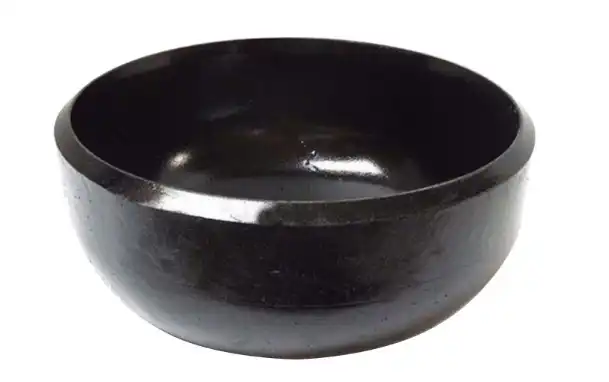
Understanding ASME B16.9 Pipe Caps: Definitions and Standards
What Exactly Is an ASME B16.9 Pipe Cap?
A pipe cap under ASME B16.9 is a wrought fitting with a curved or flat closing end which is welded to the pipe by means of a full penetration groove weld in accordance with ASME B16.25. Sizes are available from NPS ½ to NPS 48 (DN 15 to DN 1200). Unlike a threaded end cap, it is now a permanent part of the system, metallurgically attached. No gaskets, no threads, no leak pathways.
Key Material Grades and Pressure Ratings
ASME B16.9 pipe caps are made from three basic material families: carbon steel (ASTM A234 WPB), stainless steel (ASTM A403 WP304/316), and alloy steel (ASTM A234 WP5/WP9 for elevated-temperature use). Pressure rating is not assigned a set class like flanges. The cap is rated to the same burst strength as a straight length of pipe of the same schedule and grade. This is a practical rating that has a direct relationship to your pipe specification.
Manufacturing: Seamless vs. Welded, and Quality Certifications
Seamless caps are made from a single billet, hot-formed to a uniform wall with no weld seam and ideal for critical pressure applications. Welded caps are made from plate and are economical for lower-pressure systems. The manufacturer must be ISO 9001 quality management certified and, if relevant, have the People’s Republic of China Special Equipment Manufacturing License for pressure vessel components. Third-party inspection and non-destructive testing (NDT) procedures such as ultrasonic and magnetic particle examination are typical in the final stage.
Advantages of Using ASME B16.9 Pipe Caps in Industrial Applications
Choosing the right end-closure fitting directly affects system safety and service life. Here are the core advantages that set butt-weld ASME B16.9 pipe caps apart from alternative solutions.
- Pressure integrity matching the pipe itself: Because the cap's wall thickness aligns with the pipe schedule, its design burst pressure mirrors that of the pipe run. ASME B31.3 process piping code accepts this approach for systems operating well above 2,000 PSI.
- Corrosion resistance matched to process media: Carbon steel caps handle dry hydrocarbon and neutral water service. Stainless steel grades 304 and 316 resist chloride-rich environments and acidic chemicals. Alloy grades like WP9 (9% Cr, 1% Mo) serve steam and hydrogen-service lines at temperatures exceeding 1,000°F.
- Smooth internal geometry: The dished interior profile generates no dead-leg pockets that trap corrosive media, a real-world concern in chemical and refinery piping where crevice corrosion shortens service life.
These advantages translate directly into lower maintenance frequency, fewer unplanned shutdowns, and reduced total lifecycle cost for oil, gas, chemical, and power generation operators.
Field installation follows ASME B16.25 bevel preparation (37.5° standard bevel) and the applicable welding procedure specification under AWS D1.1 or ASME Section IX. If the pipe wall thickness or alloy grade triggers PWHT requirements under ASME B31.3, the field weld — not the fitting itself — requires post-weld heat treatment. Always verify the heat number marked on the cap against the material test report before welding.
How to Choose the Right ASME B16.9 Pipe Cap for Your Industrial Needs
Match Pipe Schedule and Material to Operating Conditions
Start with the nominal pipe size and schedule of the pipe, then verify that the cap has the same or heavier wall. For sour service (H2S conditions), NACE MR0175/ISO 15156 restricts hardness — indicate a cap meeting those hardness criteria in the mill test report. Specify impact-tested material at design temperature for cryogenic service.
Seamless vs. Welded: Which Should You Specify?
Seamless caps are more expensive, but are the usual solution for refinery, power generating, and offshore applications since there is no chance of a weld seam. Welded Caps: For above-ground utility pipe, water treatment headers, and lower-pressure construction applications when budget is a hard constraint. Prior to ordering, confirm that the cap type is specified in the pipe material specification.
Evaluating Suppliers: Certifications and Capabilities
An established pipe cap provider will be ISO 9001 certified and provide complete material traceability from raw stock to final product. Ensure the manufacturer has in-house NDT equipment, such as ultrasonic thickness gauges, hydrostatic test rigs, and spectrometer analysis, to confirm materials. Annual production capacity also matters: a supplier that produces 16,000 tons a year can handle peak orders without stretching out lead times much.
Procurement Insights: Sourcing ASME B16.9 Pipe Caps Efficiently
Bulk Purchasing and Lead Time Planning
Bulk orders, often above 5 metric tons per size run, are eligible for material cost reductions and reduced per-unit lead times. For EPC contractors on industrial facilities, setting unit rates against a project bill of materials 12 to 16 weeks ahead of installation secures the schedule. Carbon steel WPB ASME B16.9 pipe caps in standard schedules (STD, XS, XXS) ship quicker than alloy grades due to particular heat treatments and longer manufacturing cycles.
Export Compliance and Custom Orders
If your project is in the Middle East, Southeast Asia, or Europe, ensure that the supplier has self-managed import/export authority and can produce the required country of origin documentation, EN 10204 3.1 or 3.2 material certificates, and PED compliance records where the EU Pressure Equipment Directive applies. You can get custom sizes beyond the normal NPS range by hot forming with special equipment, but be sure to specify the dimensional drawings up front to prevent expensive rework.
Why Partner with Oudi
Cangzhou Oudi Pipe Manufacture Co., Ltd. has been manufacturing ASME B16.9 pipe caps and a comprehensive line of butt-weld fittings since 1998. Oudi is located in Cangzhou, an appropriate manufacturing base in China. Oudi covers an area of 66,600 m2, and has passed the ISO 9001 certification and Special Equipment Manufacturing License. Oudi’s yearly production of 16,000 tons, product lines that include carbon steel, stainless steel, and alloy steel, and active export contacts in more than 40 countries provide the supply consistency and material documentation that industrial procurement teams need.
Conclusion
An ASME B16.9 pipe cap has one purpose – to seal a pipe end – but the specification, material selection, and supplier behind that cap will decide whether it operates safely for 20 years or is a maintenance liability in two. The most critical selections are matching the cap schedule and material to your operating circumstances, specifying seamless vs. welded appropriately, and buying from a recognized manufacturer with verifiable paperwork. Backed by 25 years of manufacturing history, ISO 9001 certification, and 16,000-ton yearly capacity, we can serve your procurement needs from regular orders to challenging bespoke requirements.
FAQ
1. What is the difference between an ASME B16.9 pipe cap and an ASME B16.5 cap?
ASME B16.5 covers flanged fittings with defined pressure classes (150# through 2500#). ASME B16.9 covers butt-weld fittings, including pipe caps, which carry no fixed pressure class — their rating equals the burst strength of the connected pipe at the same schedule and grade.
2. How do I determine the correct pipe cap size?
Match the cap's NPS and schedule to the pipe it closes. Cross-reference the pipe's outside diameter per ASME B36.10M (carbon/alloy steel) or B36.19M (stainless steel). The cap's wall thickness must be equal to or greater than the pipe wall.
3. Is post-weld heat treatment required after installing a butt-weld pipe cap?
PWHT requirements depend on your piping code (typically ASME B31.3), material grade, and wall thickness. The cap itself is heat-treated during manufacturing. The field weld connecting it to the pipe may require stress relief based on service conditions — check your piping specification.
4. What welding standard applies to fitting installation?
Field welding follows a qualified welding procedure under ASME Section IX. Bevel preparation follows ASME B16.25. The welder must hold a current qualification for the applicable process and material group.
Get a Quote from Oudi — Your Trusted ASME B16.9 Pipe Cap Supplier
Oudi has supplied carbon steel, stainless steel, and alloy steel pipe fittings to customers across 40+ countries since 1998. Whether you need standard NPS caps in bulk or custom alloy grades for a specialized project, our team provides full material certification, competitive pricing, and reliable delivery. Contact us today at oudi-04@oudiguandao.com to request a product catalog or project-specific quote for ASME B16.9 pipe caps.
References
1. American Society of Mechanical Engineers. ASME B16.9: Factory-Made Wrought Buttwelding Fittings. ASME, 2018.
2. American Society of Mechanical Engineers. ASME B31.3: Process Piping Code. ASME, 2022.
3. ASTM International. ASTM A234: Standard Specification for Piping Fittings of Wrought Carbon Steel and Alloy Steel for Moderate and High Temperature Service. ASTM, 2021.
4. ASTM International. ASTM A403: Standard Specification for Wrought Austenitic Stainless Steel Piping Fittings. ASTM, 2022.
5. NACE International / ISO. NACE MR0175 / ISO 15156: Petroleum and Natural Gas Industries — Materials for Use in H₂S-Containing Environments. ISO, 2020.
6. European Parliament. Pressure Equipment Directive 2014/68/EU. Official Journal of the European Union, 2014.

Need help finding the right solution with our experts. Please contact us.

SINCE 1998 Your Reliable Pipeline Manufacturer



